
Оригинал материала
Servicing illegal gambling
Hello! This week our main story is our investigation into Russia’s illegal gambling business and how it moves its money offshore. We also look at the difficulties faced by investigative media outlet The Insider after its chief editor was briefly arrested and the second quarter financial results of three Russian tech giants.
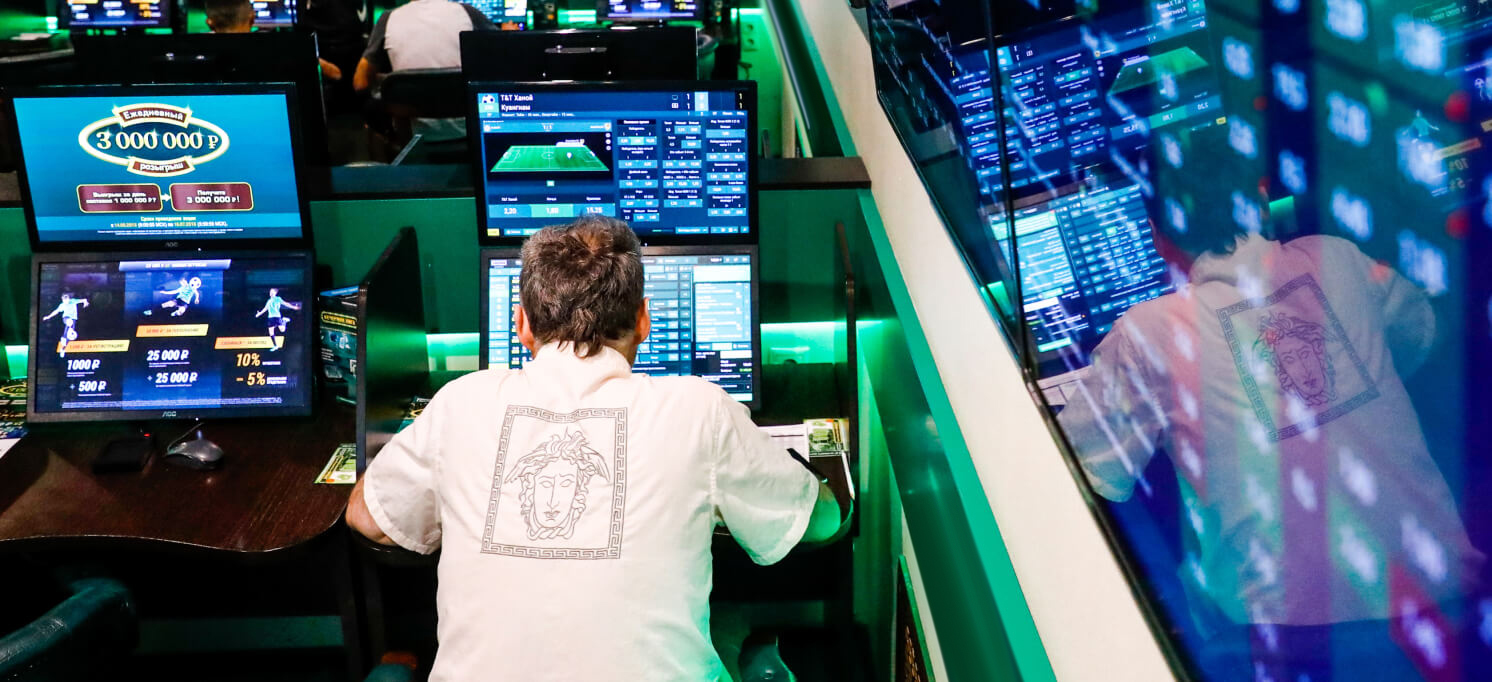
How banks and payment systems serviced illegal gambling
This week The Bell published an investigation (full text in Russian) describing the part of Russia’s finance systems that profits from the transfer abroad of earnings from illegal online casinos and bookmakers. Below we have a summary of the investigation.
How Russia cracked down on gambling
There’s an old saying: ‘What kind of Russian doesn’t like driving fast?’ and, for many Russians, risk appetites are high. The annual value of the Russian gambling market is estimated at 1.25 trillion rubles ($17.1 billion), but much of it is shrouded in secrecy. For years, the authorities have battled the gambling industry without much obvious success.
Russia had more than 6,000 casinos before 2006. But then President Vladimir Putin decided to restrict gambling to four special zones (including the Western exclave of Kaliningrad and the remote Altai region in southern Siberia). Within six weeks, the relevant legislation was passed and gaming halls across the country shuttered.
This new reality forced everyone in the gambling business to move online. And a raft of auxiliary businesses appeared: developing software, driving traffic, aggregating content and devising ever more complex schemes to bypass the restrictions enforced by the Central Bank and avoid the attention of the intelligence services.
Banking sector complicity
Dozens of major financial market players helped create a network of ‘grey’ cross-border payment systems, according to multiple sources in the banking industry.
This included some of the country’s biggest state-owned banks, which acted as acquirers and provided so-called ‘miscoding’ (each bank transaction has its own code and payments from online casinos should be labelled with code 7995, but corrupt bank staff would swap this code for another, enabling the transaction to proceed safely).
For these schemes to function, each bank needed a manager who waved through high-risk operations under the guise of safe transactions, one of our sources explained. “This person could earn up to 0.1 percent of the turnover of these operations. All together, it amounted to a corrupt scheme on a nightmarish scale,” he said.
Then, smaller banks got involved — they took responsibility for checking the final recipient and earned hefty commission for covering their tracks. In particular, small banks made connections with specialist payment portals set up by companies that simplify international money transfers. As a result, the cash typically ended up in foreign banks (Latvia’s Rietumu Banka and LPB were most often used), and from there was moved to the casino’s offshore accounts.
Major fin-tech companies were also involved. About 60 percent of payments going through Russia’s most popular electronic wallets (local equivalents of PayPal) since the mid-2010s were payments to casinos, bookmakers and other gambling organizations, according to The Bell’s sources. At first, the payment companies themselves were often unaware of whom they were dealing with.
“These guys came to us as gaming services,” said a former manager of one of Russia’s biggest payment services. “But when we conducted an internal audit it became clear under the hood were only casinos and gambling. Then we understood what fin-tech is all about. All the payment companies earn profits from foreign exchange, betting and gambling.”
International help
The crucial link in the chain spiriting casino profits out of the country were companies specializing in international money transfers. There were at least a dozen of these on the market, according to The Bell’s sources. Some were created by bookmakers themselves – for example RoyalPay was developed by bookie 1xbet. Other systems, such as WinPay or Ukraine’s Pay-Trio, operated independently. Three separate sources named European firm Ecommpay as one of the biggest and most sophisticated players in the cross-border market of the late 2010s.
Ecommpay positions itself as an international payment system with an IT infrastructure for online payments. The company itself has said Russia is far from its only market. But more than 60 percent of the site’s traffic in the last 12 months came from Russia.
Ecommpay is registered in the United Kingdom, but it has dozens of affiliated legal entities, including one in Cyprus. Little is known about Ecommpany’s owner, 39-year-old Latvian Alexejs Sjarki, who also lives in Cyprus. “These are really smart guys. For years, the Central Bank has been unable to do anything about its schemes. While the regulator adopted one amendment, they came up with three or four alternatives,” said one Ecommpany client. “Ecommpay’s commission for its software used to be 0.7 percent, but the turnover cleared tens of billions of rubles every month,” said another source.
The state’s counter-blow
For a long time, the government could not find an answer to the ‘grey’ payment market and online casinos prospered despite the ban. When their websites were blocked, they deployed mirror sites and continued taking bets. But all that changed this year.
The Central Bank went on the attack on New Year’s eve. First, the regulator revoked the licenses of three small banks that had played active roles in transferring profits from online casinos and brokers. But the market did not really panic until the Central Bank banned some cross-border transactions linked to leading payment systems such as Qiwi and YooMoney (previously Yandex Money).
After that, the biggest banks rushed to distance themselves from ‘high risk’ operations, according to three separate sources in the payments market. The checks continue and, since April, the regulator has revoked the licenses of three more small banks.
The shake-up made it impossible for online casinos and illegal bookmakers to accept payments via cards or electronic wallets — and crypto-currency bitcoin was left as almost the only way to fund a bet. Some online casinos simply shut down.
The timing of this blow against the gambling industry coincided with a political decision that will reshape Russia’s legal gambling market. According to current legislation, bookmakers can operate legally if they have a Russian license. They have to work with special operators, pay taxes and donate part of their profits to Russian sports leagues.
But a group of politicians from the ruling United Russia party pushed through a law last year that overhauls the existing regulatory framework, specifying that bookies must give 1.5 percent of all bets to the state. A new regulator will also control payments.
Umar Kremlev, an official at the Russian Boxing Federation, took the credit for the legislation. Not much is known about him, but the Boxing Federation has some political heavyweights on its supervisory board including head of presidential security Alexei Rubezhnoi; Igor Sechin, the president of state-owned oil giant Rosneft; and Timur Prokopenko, deputy head of the Kremlin’s internal policy department.
Why the world should care
There is a myth that any dirty Russian cash that turns up in Western banks must have come from Putin or his inner circle. In reality, the billions flowing out of Russia could just as well be the proceeds from simple criminality.
The Insider under pressure amid Dutch blogger defamation case
Prominent investigative outlet The Insider appears to be the latest target for officials in Russia’s ongoing crackdown on independent media. Editor-in-chief Roman Dobrokhotov was briefly detained by police Wednesday as part of a defamation case brought by controversial Dutch blogger Max van der Werff.
- Dobrokhotov’s detention came just a few days after The Insider was designated a ‘foreign agent’ by the Justice Ministry — a label that not only requires an organization to identify itself as such on all published material, but can lead to financial problems and hinder the work of journalists. Dobrokhotov initially appeared nonchalant about the decision: “The outlet has no representative office in Russia, so all these crazy laws don’t apply to The Insider. We’ll keep working as we always have,” he told MBK Media.
- But this looked optimistic Wednesday morning when Dorbrokhotov’s apartment was searched by police, he was detained and all his electronic devices and passport were seized.
- The Insider is perhaps best known for its partnership with Western investigative outlet Bellingcat that has exposed dozens of Kremlin secrets, including how Federal Security Service (FSB) operatives carried out the 2020 poisoning of opposition leader Aleksei Navalny. Dobrokhotov was supposed to fly out of Russia later Wednesday to “work on a series of new investigations,” according to Bellingcat’s Christo Grozev. But he was unable to do so without his passport.
- After searching his apartment, police questioned Dobrokhotov in relation to defamation charges filed in April. He was later released. If Dobrokhotov is found guilty, he could face up to two years in jail for falsely reporting that Van der Werff has links with the GRU, Russia’s military intelligence agency, Van der Werff’s lawyer Stalina Gurevich told state news agency TASS. The lawsuit also alleges Dobrokhotov defamed “individually indeterminate persons” within the GRU.
- Van der Werff featured in a joint Bellingcat and The Insider investigation last year that showed how he coordinated with the GRU to publicise ‘alternative narratives’ about the downing of Malaysia Airlines flight MH17 over Eastern Ukraine in 2014. In particular, The Insider and Bellingcat looked at Bonanza Media, which Van der Werff founded in 2019 with Yana Erlashova, a journalist who used to work at state-controlled RT.
- Bonanza Media released a 28-minute documentary — MH17: Call For Justice — in 2019 questioning the version of events accepted in the West (that MH17 was shot-down by a missile fired from a Russian anti-aircraft system in territory controlled by Russian-backed separatists). Then, last year, Bonanza Media published leaked materials that supposedly vindicated Russia. Bellingcat and The Insider found — from examining the hacked email accounts of intelligence officers — that Bonanza Media’s work was closely coordinated with the GRU.
- Van der Werff’s activities began to get attention from pro-Kremlin media outlets as far back as 2015, according to independent media outlet Meduza. And his wild claims have been recycled in Russian state-owned media ever since. When Bonanza Media came along, Van der Werff was already calling himself a ‘journalist’, even though no news outlet had ever employed him. Sure enough, Russian state-owned media started to identify him as a ‘Dutch journalist’ and a ‘documentary filmmaker’. In fact, the Dutch Association of Journalists did not allow Van der Werff to renew his press credentials in 2019.
- Bellingcat and The Insider are long-term partners, although it is sometimes unclear what role is played by The Insider in their joint investigations. A recent video report on how Dobrokhotov and Grozev uncovered the FSB unit behind the Navalny poisoning shed some light on their work together. According to Grozev, Bellingcat does most of the searching for personal data — so as to protect The Insider journalists from breaking Russian law. Dobrokhotov also denied allegations that they cooperate with foreign intelligence services. And he said that the most important source of funds for both The Insider and Bellingcat is donations and grants. Contrary to popular belief in pro-Kremlin circles, Dobrokhotov maintained The Insider has never received any money from exiled tycoon Mikhail Khodorvsky.
- Yet, Dobrokhotov remains something of a mysterious figure. He started out in the mid-2000s as a political activist, founding several small anti-Kremlin movements and actively participating in protests. Famously, he interrupted a speech by then-president Dmitry Medvedev in 2008 about the Russian constitution, which Medvedev had just proposed to amend to extend presidential terms to six years. Dobrokhotov was fired from radio station Govorit Moskva the same day. A few years later, Dobrokhotov found his calling in investigative journalism. He has said he was a fan of Sherlock Holmes when growing up.
Why the world should care
The investigations carried out by Bellingcat and The Insider have made headlines across the world — and this new pressure on The Insider will make it harder for them to continue their work together.
Tech giants Q2 results point to economic recovery
State-owned banking giant Sberbank and internet giants Yandex and Mail.ru are leading the market in developing their own ‘ecosystems’ that cover areas from banking and fintech to ridesharing, driverless cars, artificial intelligence, food delivery, virtual assistants and media streaming. We had a look at their second quarter results to see how they’re doing — and what their numbers suggest about the economy as a whole.
- YANDEX. After reporting strong Q2 results, Yandex announced it was upping its e-commerce investment plan for this year to about $650 million. Its results showed that volumes for its e-commerce businesses jumped 155 percent compared to the same period last year, while strong growth in new areas like food delivery pushed the share of advertising in their total revenue below 50 percent for the second successive quarter.
- MAIL.RU. Offering mostly online communication products and entertainment services, Mail.ru reported a net loss in the second quarter — mainly due to the performance of its joint ventures. The company’s revenues grew 17 percent year-on-year to 22 billion rubles.
- SBERBANK. The banking giant made 41.1 billion rubles in the second quarter from non-financial activities (including e-commerce, taxi services, an online cinema and food delivery). This means that, in the first six months of 2021, Sberbank’s non-financial businesses generated more revenue than all of last year. Overall, Sberbank posted record quarterly results and is planning to hit 1 trillion rubles in net profit this year (a pre-pandemic target it missed in 2020). To achieve this, it needs Russia's economic recovery to continue (Sberbank expects the economy to expand 4.2 percent this year, the IMF projects 4.4 percent).
Why the world should care
Boosted by last year’s lockdowns, e-commerce is increasingly becoming a Russian success story. Some of the most popular services — like Yandex’s online grocery delivery — have already launched outside of Russia.