
Оригинал материала
The Real Russia. Today.
How the Pentagon helps Ukraine kill Russian generals, a top Kremlin official dedicates a monument in Mariupol, and Lilia Yapparova reports from the Donbas
Wednesday, May 4, 2022
For ongoing coverage of the invasion of Ukraine and its consequences back in Russia, follow Meduza’s live updates. Please note that the authorities are now blocking our website in Russia, and we’re turning to you, our global audience, for financial support.
In today’s newsletter:
- Latest news
- The NATO prospects for Finland and Sweden, according to Kirill Shamiev
- Lilia Yapparova reports from the heart of the Donbas
- Ukraine’s new presidential representative in Crimea dissects Moscow’s attitude
- The tricky work of organizing evacuations in Mariupol
- The Kremlin denies rumors about a looming full-scale mobilization
- A glimmer of nepotism in a frontline medal ceremony
Major recent events in Russia and Ukraine
- 👁️ Uncle Sam’s helping eye: The United States has provided intelligence about Russian units that has allowed Ukrainians to target and kill roughly a dozen Russian generals, senior American officials told The New York Times. The targeting help is part of a classified effort by the Biden administration to provide real-time battlefield intelligence to Ukraine. According to National Security Council spokeswoman Adrienne Watson, however, the intelligence is not provided to the Ukrainians “with the intent to kill Russian generals.”
- 🕯️ Even deadlier than they said: A new investigation by The Associated Press found that the Russian bombing of the Donetsk Academic Regional Drama Theater in Mariupol on March 16 killed nearly 600 people inside and outside the building — almost double the official death toll. The AP recreated what happened inside the theater on that day from the accounts of 23 survivors, rescuers, and people familiar with the theater’s role as a bomb shelter.
- 👵 Saluting Ole Granny Anya: Putin’s domestic policy czar Sergey Kiriyenko joined United Russia General Council Secretary Andrey Turchak and “DNR” head Denis Pushilin at a ceremony in Mariupol on Wednesday to unveil a monument to “Granny Anya,” the elderly woman who greeted Ukrainian troops with a Soviet flag, mistaking the soldiers for Russians. (The woman, whose true identity remains unknown, has become a national icon in Russia, personifying how the Ukrainian people have supposedly welcomed “de-Nazification.”) In a brief speech, Kiriyenko described the woman as a “symbol of the Russian world” and “the right to speak Russian,” among other things.
- 🥔 Hot potato: After deals with BMW, Kia, and Hyundai collapsed due to Russia’s invasion of Ukraine, the Kaliningrad-based automobile manufacturer Avtotor announced a program to award 11,000-square-foot garden plots to factory workers. The company also says it’s arranged to sell “high-quality seed potatoes” to its workers “to ensure the future harvest.”
- 🧑⚕️ You’d have to be crazy to oppose this war: Police in Yekaterinburg reportedly plan to force activist Nadezhda Sayfutdinova into psychiatric care after she protested with a sign that read, “We can’t remain silent!” She also sewed her own mouth shut.
- 📺 The clumsy Kremlin: Investigative journalists at Proekt published a report about catastrophically under-equipped Russian soldiers in Ukraine, state propagandists’ scramble to sustain public support for the war, and the Kremlin’s own bumbling internally. For example, Vladimir Putin allegedly really didn’t realize or accept initially that conscripts were being sent into battle in Ukraine. (Proekt suggests that the military ultimately did manage to remove these men from combat, with the Navy achieving this last, hence the draftees among the sailors killed aboard the Moskva.) Additionally, the Russian president has demonstrated little commitment to the negotiations with Kyiv, often refusing for long stretches to speak directly to his chief negotiator, Vladimir Medinsky, who’s been left in the dark and dragged through the mud for saying what he’s told to say. The state media has apparently handled squabbling among senior state officials by delaying coverage until the Kremlin’s marching orders are clear. Supposedly, quoting outspoken Chechen ruler Ramzan Kadyrov now requires a formal okay from executives.
🛡️ What would Finland and Sweden joining NATO mean for Russia? Meduza asks political scientist Kirill Shamiev. (18-min read)
According to media reports, both Finland and Sweden are set to join NATO as early as this summer. If these two countries become part of the alliance, the total length of the borders Russia shares with NATO member states will double. To find out what Finland and Sweden’s NATO accession could mean for the alliance and for the Kremlin, Meduza turned to Kirill Shamiev, a political scientist specializing in civil-military relations.
🪖 ‘Grandpa, did you kill people?’ Meduza reports from the ground in the Donbas, the war’s current epicenter (31-min read)
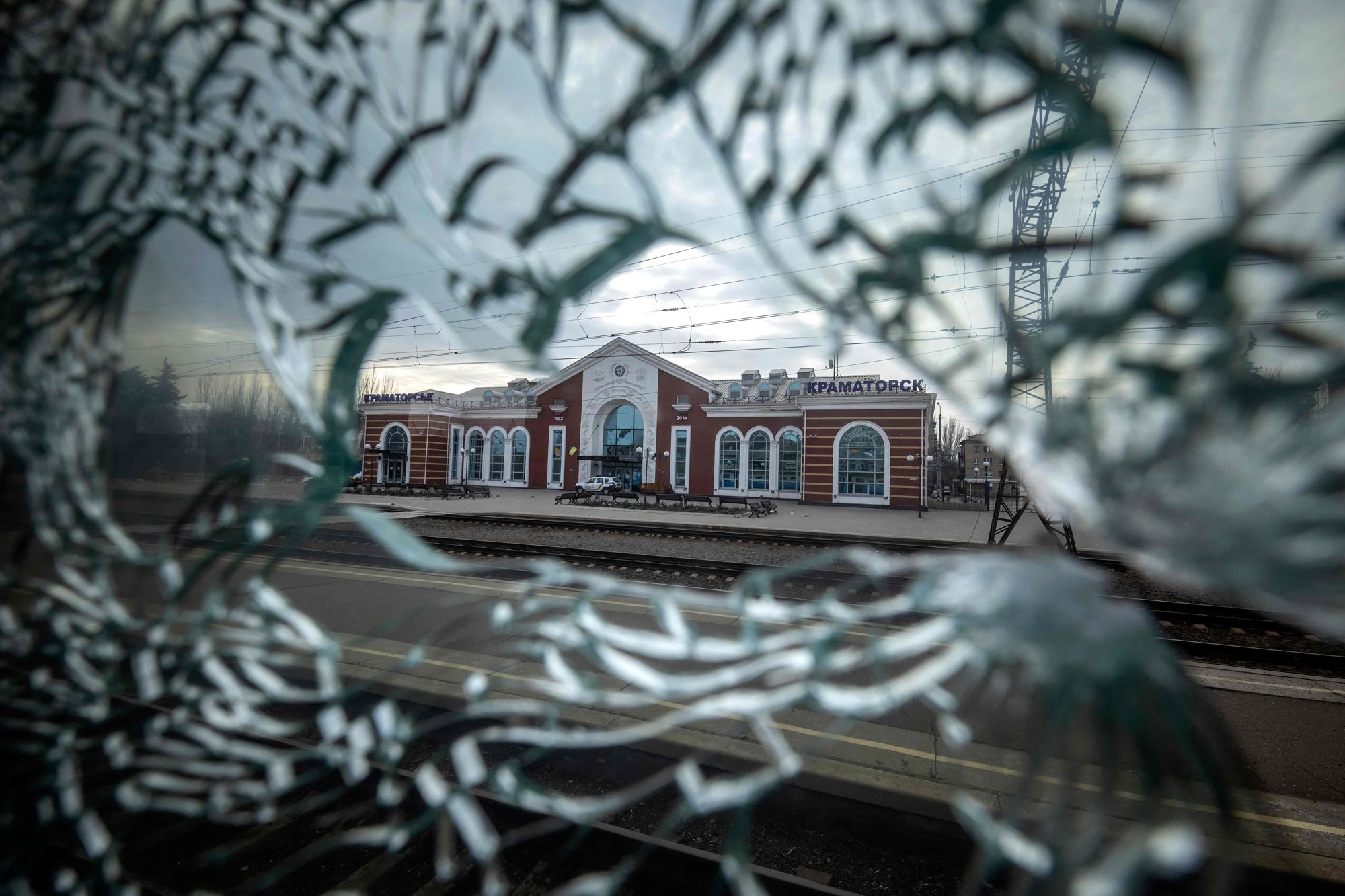
On the evening of April 18, Ukrainian President Volodymyr Zelensky announced that Russia’s assault on the Donbas had begun. Several days later, the Russian Defense Ministry announced that Russia plans to “establish complete control over the Donbas.” Meduza special correspondent Lilia Yapparova traveled to Kramatorsk, Slavyansk, and other parts of the Donetsk and Luhansk regions to get a better understanding of how the war’s pivotal battle is playing out — and how it looks through the eyes of Donbas residents.
📍 ‘For Russia, Crimea is just a military base’: Meduza’s interview with Tamila Tasheva, Ukraine’s new Presidential Representative in Crimea (19-min read)
The office of the Permanent Representative of the Ukrainian President in Crimea has been around since 1992. Before 2014, the agency’s main job was to make sure the Crimean authorities were adhering to the Ukrainian Constitution. Now, of course, its role has changed; its current main purpose is to maintain contact between Ukraine and residents of Crimea, providing services such as document assistance and consulting. Meduza spoke with the current representative, Tamila Tasheva, about the agency’s work, Crimea’s history and future, and whether the sanctions that followed the Russia’s 2014 annexation of Crimea have been effective.
🪖 Ukrainian civilians evacuated after weeks of hiding in Azovstal steel plant (2-min read)
On the evening of May 3, UN Resident and Humanitarian Coordinator in Ukraine Osnat Lubrani announced that evacuees from the Azovstal steel plant in Mariupol had successfully made it to Zaporizhzhia. The operation to rescue the civilians, who spent weeks hiding in the plant without basic necessities, was a high priority for Ukraine’s leadership; on May 1, Ukrainian officials referred to it as a great success that they had achieved in cooperation with the UN and the International Red Cross. Organizing the evacuation entailed UN Secretary General António Guterres speaking with the Presidents of both Ukraine and Russia; eventually, according to the Ukrainian side, Russia agreed to a ceasefire.
🪖 Russia’s maybe-mobilization: The Kremlin’s spokesman calls it ‘nonsense,’ but speculation is mounting that Putin is poised to expand the war against Ukraine (6-min read)
Vladimir Putin may announce Russia’s full military mobilization at this year’s Victory Day parade in Moscow on May 9, according to multiple state officials and media analysts in Europe and the United States. Only mobilization, in their view, would permit the Russian army to replenish its reserves and break the current stalemate in Ukraine. On May 4, however, Kremlin spokesman Dmitry Peskov called this speculation “untrue” and “nonsense.” Meduza has assembled a timeline of statements made about mobilization in Russia, noting who said what and when they said it.
🎖️ Russian general visits frontlines to pin a medal on his own son, who commanded attacks against Sumy and Chernihiv (2-min read)
In late March, the commander of Russia’s Central Military District, Colonel General Alexander Lapin, awarded his son Denis, the commander of the 1st Guards Tank Regiment, with a medal for courage and valor during the war in Ukraine. Journalists at BBC Russia described the ceremony in an investigative report published on May 4.
Yours, Meduza