
Оригинал материала
The Real Russia. Today.
Washington’s $40 billion, wounded Azov fighters plead for evacuation, and anthropologist Alexei Yurchak discusses Putin
Tuesday, May 10, 2022
For ongoing coverage of the invasion of Ukraine and its consequences back in Russia, follow Meduza’s live updates. Please note that the authorities are now blocking our website in Russia, and we’re turning to you, our global audience, for financial support.
In today’s newsletter:
- Latest news
- Anthropologist Alexei Yurchak breaks down the Putin regime
- A woman in the Tomsk region tests local loyalty to the regime and the war
- Photos of Mariupol’s last-standing defenders
- The cyberwar against Russia’s YouTube clone
Major recent events in Russia and Ukraine
- 🟡 Borderland problems: Russia’s Kursk and Belgorod regions (bordering Ukraine) extended their “yellow terrorist threat” level until May 25.
- 💰 Uncle Sam empties his pockets: On Tuesday, the U.S. House approved nearly $40 billion in military, economic, and humanitarian support for Ukraine. (The package is $7 billion more than the $33 billion President Biden requested.)
- 🚨 The FSB claims another one: Federal Security Service officials in Kaliningrad say they’ve thwarted a terrorist attack allegedly planned by a supporter of the Ukrainian extremist group Right Sector.
- 🪖 Thirsty for another annexation: Georgiy Muradov, the deputy chairman of Crimea’s Council of Ministers, said on Wednesday, “I have no doubt that the liberated territories in the south of former Ukraine will become yet another region of Russia.” The region’s institutions are already merging with Russia’s, he added, celebrating the arrival of Russian television networks, Russian textbooks, and the Russian ruble in the newly occupied territories.
- 🕯️ The “sly fox” dies: Ukraine’s first president, Leonid Kravchuk, died at the age of eighty-eight on Tuesday after suffering from a “prolonged illness.”
- ⛽ Cutting off the gas: Ukraine announced on Tuesday that it is halting Russian gas shipments to Europe through the Luhansk region, beginning on Wednesday, citing the force majeure of Russian occupation. For now, there’s another supply that can be diverted temporarily “to fulfill transit obligations to European partners.”
🧠 Anthropologist Alexei Yurchak on why Putin hates Lenin and how today’s Russia resembles the late Soviet Union (19-min read)
While waging war on Ukraine, the Russian state has intensified its already tight control over the Internet, press, and opposition at home. Meanwhile, the anti-war opposition has resorted to what are essentially guerilla tactics. Many politicians, journalists, and activists were forced to leave the country to avoid being thrown in jail under Article 207.3 — a new law that criminalizes the spread of “fake news” about the actions of the Russian armed forces. Against this backdrop, contemporary Russian society is frequently compared to the late Soviet Union. To put these comparisons in context, Meduza turned to anthropologist Alexei Yurchak, the author of “Everything Was Forever, Until It Was No More,” a well-known study on the last decades of the USSR.
⚖️ How Natalya Indukaeva ended up on trial and without a job or friends by scribbling antiwar, anti-Putin graffiti outside the rec center of her small hometown (19-min read)
In early March 2022, Natalya Indukaeva, a pensioner from the town of Kolpashevo in Russia’s Tomsk region, painted an anti-war slogan on the wall of the local community center. Within a day, she was accused of “discrediting” the Russian army. Later, she was charged with vandalism, as well. Alena Istomina, a journalist from Novosibirsk, traveled to Kolpashevo to see what life is like when you’re labeled a traitor in your hometown.
🙏 Ukraine’s Azov regiment shares photos of wounded soldiers in plea for evacuation from besieged Mariupol steel plant (1-min read)
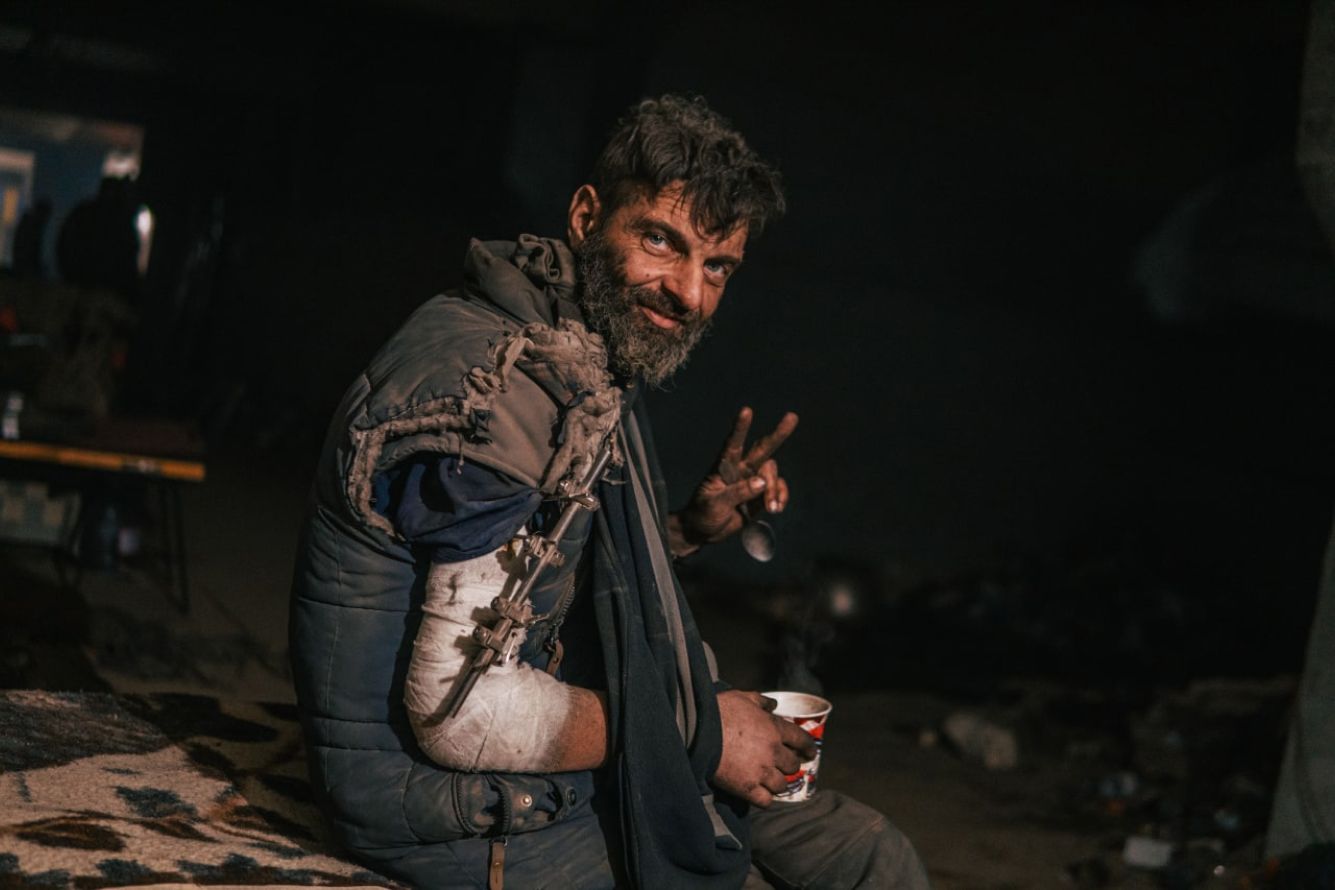
Battles for Mariupol’s Azovstal steel plant have been going on for nearly two months — Russian troops have been trying to seize this final pocket of Ukrainian resistance since mid-March. Russian President Vladimir Putin called off plans for the Russian military to storm the plant in late April, but Azovstal’s defenders regularly report renewed shelling and assaults. On May 7, Ukrainian Deputy Prime Minister Iryna Vereshchuk announced that “all” civilians had been evacuated from the besieged steel plant. The next day, soldiers from the Azov regiment, which is defending Azovstal, said in a press briefing that they too needed to be evacuated, because they had used up all of the resources they had for waging an “effective defense.”
On Tuesday, May 10, the Azov regiment published photos of their wounded soldiers and urged “the entire civilized world” to help with their evacuation. “The world should see the conditions in which the wounded, mutilated defenders of Mariupol are [living] and act,” the accompanying statement said.
👾 Russia’s YouTube ‘alternative’ down for the second day running following cyberattack (3-min read)
On the morning of May 9, the Russian video platform Rutube reported that it had fallen prey to a “powerful cyberattack.” Rutube assured that work was underway to restore access to its site and an hour later claimed to have “localized the incident.” Around 6:00 o’clock that evening, the Rutube press office reported that user data had been saved and that technical work was ongoing. A similar error message was published on the website.
Rutube later released another update on Telegram, saying that the “battle” with the hackers was ongoing. On the morning of May 10, The Village reported that Rutube’s website couldn’t be restored following the cyberattack. Rutube refuted the reports that the website’s source code had been deleted, but the website admitted that it was facing the most powerful cyber-attack in its history. Rutube is considered Russia’s main “alternative” to YouTube.
Yours, Meduza