
Оригинал материала
The Real Russia. Today.
Azovstal is evacuated, Russia and Turkey air thoughts about Nordic expansion for NATO, and Moscow recruits collaborators for ‘civilian-military administrations’ in Ukraine
Monday, May 16, 2022
For ongoing coverage of the invasion of Ukraine and its consequences back in Russia, follow Meduza’s live updates. Please note that the authorities are now blocking our website in Russia, and we’re turning to you, our global audience, for financial support.
In today’s newsletter:
- Latest news
- CSTO members meet in Moscow for closed talks on Ukraine
- Russia’s collaborators in occupied Ukraine
- Sitting down with the elderly Ukrainian woman who’s now an icon for Russia’s invasion
- The problem with Russia’s contract soldiers
- St. Petersburg police deal with opposition activists by treating them (temporarily) like potential terrorists
Major recent events in Russia and Ukraine
- 🪖 The battle ends in Mariupol: The General Staff of Ukraine’s Armed Forces confirmed on Monday that a “rescue operation” was carried out at the Azovstal iron and steel works in Mariupol where Ukrainian soldiers finally surrendered to invading Russian and Russia-backed separatist troops. According to Kyiv, 53 wounded Ukrainian servicemen were hospitalized in Novoazovsk and the remaining 211 prisoners were moved to Olenivka (both these settlements are located in territory controlled by the self-proclaimed Donetsk People’s Republic). Ukrainian officials say there is an agreement in place to exchange these men for other prisoners and return them to Ukrainian-controlled soil. In a statement released beforehand, members of the Azov Regiment said Ukraine’s high military command ordered their surrender.
- 🍿 Russia’s Silver Screen: A movie theater in Vladivostok is demonstrating the virtues of Russia’s new approach to copyright law. The cinema obtained copies of “The Batman,” “Sonic 2,” and “Turning Red” but sold tickets to “The Bat,” “Blue Hedgehog 2,” and “Red Panda.” Distribution rights for these films were not sold to movie theaters in Russia due to studios’ boycott of Russia in response to the invasion of Ukraine. Meanwhile, Russia’s cinema industry got some rough news from the Finance Ministry on Monday: the government wants additional justifications for granting movie theaters a requested 6.5 billion rubles ($100.6 million) in federal bailouts. The ministry also rejected the idea of major tax breaks.
- 🛡️ With NATO friends like these: On Monday, Turkish President Recep Erdoğan repeated his objections to NATO membership for Sweden and Finland, simultaneously criticizing these nations for supposedly failing to take a clear stance against terrorist organizations (namely, the Kurdistan Workers’ Party and its Syrian wing, the People’s Defense Units). Turkey’s consent is necessary to expand NATO to the two Nordic states.
- ⚖️ Russian war crimes: Ukrainian Attorney General Iryna Venediktova announced on Monday that her office has identified 45 people from Russia suspected of war crimes on Ukrainian soil. She singled out two Russian soldiers now in custody who allegedly targeted civilian infrastructure in airstrikes in and around Kharkiv.
- 💸 So long, McDonald’s and Renault: After more than 30 years in the Russian market, the McDonald’s Corporation is calling it quits and looking for a local buyer. The Golden Arches and all the familiar branding will disappear, but the company says it hopes to keep its 62,000 Russian employees paid at least until it sells off its franchisees. In similar news, Renault sold its AvtoVaz stake to a Russian state-backed entity for a single ruble. The French company retains the right to buy back its assets, but the price of any buyback will consider investments made in AvtoVaz while it is under the stewardship of the Russian state-backed entity. AvtoVaz and Renault’s Moscow factory were valued at $2.29 billion in late 2021.
- 🔎 Please place all items inside a bin: Russia’s Airport Association, which represents dozens of the country’s biggest airports, has petitioned the Transport Ministry to allow airports to continue using screening equipment beyond its legal decommission date. The group warns that these deadlines are fast approaching with equipment at many airports across the country, but replacements are unavailable due to Western sanctions. Without permission to keep using the old machines, security personnel will need to switch to the time-consuming and less accurate practice of “manual and visual inspection.”
- ⚖️ Damn the ECHR: Russian lawmakers have submitted legislation that would void the government’s obligations to execute rulings issued by the European Court of Human Rights after March 16, 2022, when the Council of Europe expelled Russia. The bill’s explanatory note states that the Russian Attorney General’s Office could still pay monetary compensation through to January 1, 2023, that was awarded by the ECHR before March 16. The draft law would also remove language from existing statutes that recognizes ECHR rulings as a “basis” for reviewing court orders.
- 🛂 Yandex confusion: The Russian tech giant Yandex denies reports in the Israeli media that the company plans to relocate completely to Tel Aviv. The company blamed the confusion on a supposed mistranslation of a letter from CEO Arkady Volozh to the Israeli authorities inquiring about immigration for foreign-based staff.
🛡️ Russia’s war in Ukraine discussed ‘behind closed doors’ at CSTO summit in Moscow (3-min read)
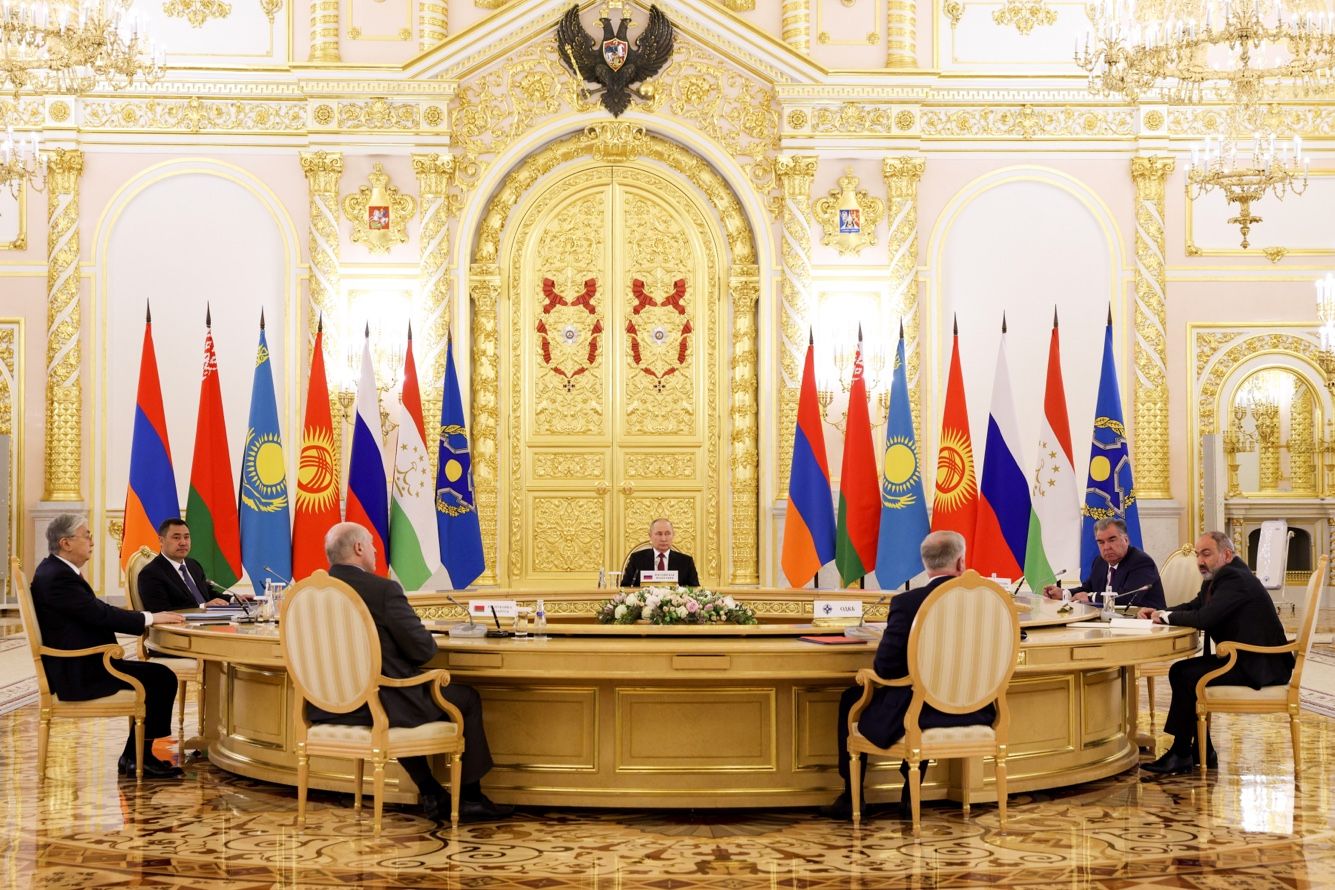
The leaders of the Collective Security Treaty Organization (CSTO) held a summit in Moscow on Monday, May 16. The meeting, which took place in the Kremlin, was attended by Russian President Vladimir Putin, Armenian Prime Minister Nikol Pashinyan, President of Kazakhstan Kassym-Jomart Tokayev, President of Tajikistan Emomali Rahmon, President of Kyrgyzstan Sadyr Japarov, and Belarusian head of state Alexander Lukashenko. CSTO Secretary General Stanislav Zas was also present. The summit was timed to coincide with the 30th anniversary of the Collective Security Treaty (also known as the Tashkent Pact) and the 20th anniversary of the Collective Security Treaty Organization.
🤝 Meet the collaborators: The Ukrainians in charge of newly Russian-occupied territories (12-min read)
The first step of Putin’s “special military operation” against Ukraine ended with the creation of an occupied bridgehead in the south of the country that’s adjacent to Russian-annexed Crimea on one side and to the self-proclaimed Donetsk People’s Republic on the other. Russia’s military has captured the majority of the Kherson region and part of the Zaporizhzhia region. In the occupied cities, Russian occupants and their collaborators have set up “civilian-military administrations,” hiding the imperial nature of the new regime. The Kremlin is currently trying to engineer a repeat of what happened in Crimea and the Donbas in 2014 — but whether it succeeds will depend on what happens on the battlefield.
👵 BBC journalists interview ‘Granny Anya,’ the elderly Ukrainian woman whose Soviet nostalgia made her an icon of Russian war propaganda (8-min read)
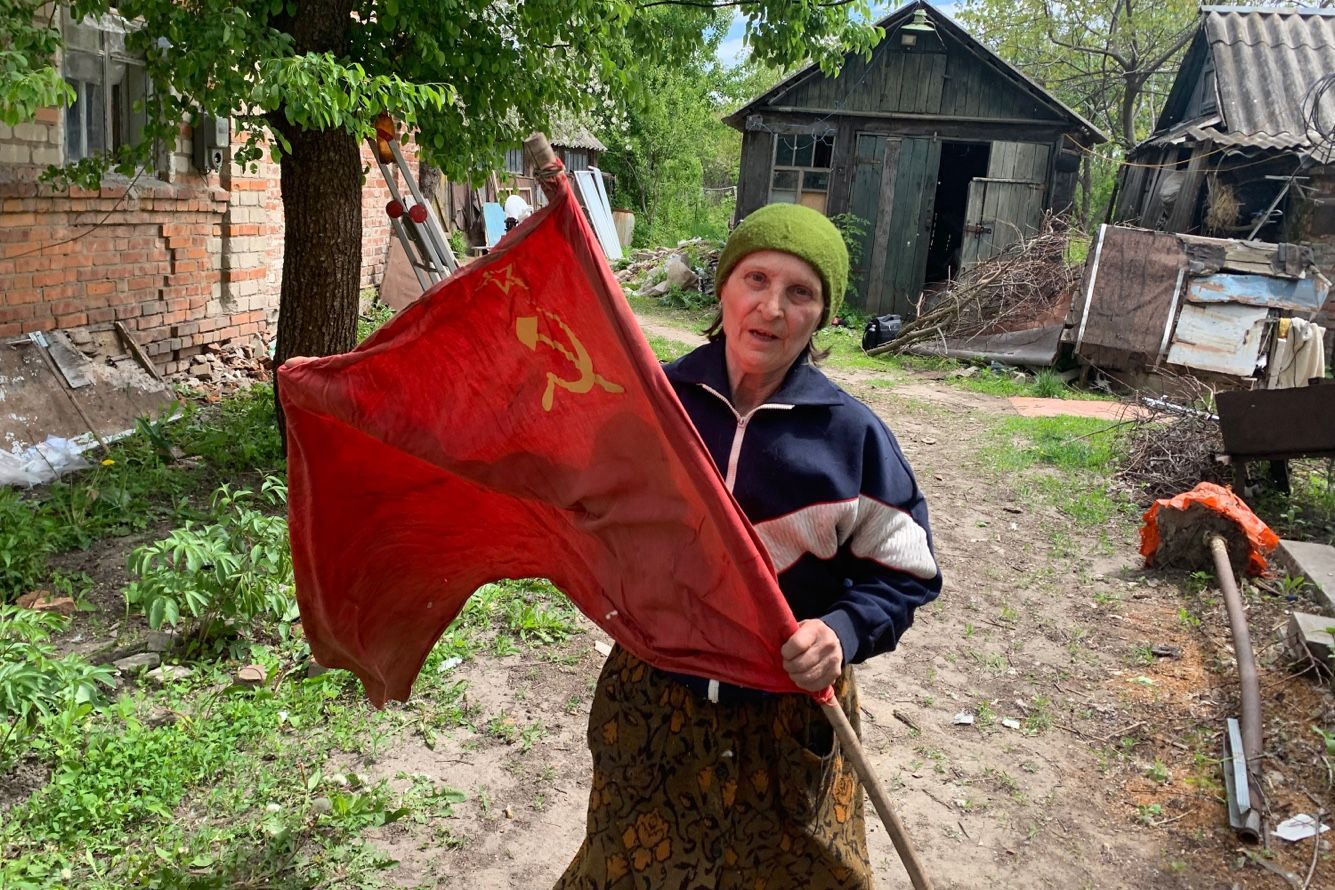
Since early April, Kremlin propaganda has celebrated “Granny Anya” as a symbol of supposed Ukrainian popular support for Russia’s “special military operation.” Anna Ivanovna Ivanova, a 69-year-old woman who lives in Velyka Danylivka (a town outside Kharkiv), became an icon in Russia after appearing in a viral Internet video where she greeted a group of soldiers with a Soviet flag and said she was praying for Vladimir Putin. More recently, however, Ukrainian officials released an interview with Ivanova, revealing that the war had forced her and her husband to flee their home. Correspondents from BBC Russia met with Ivanova (who’s returned to Velyka Danylivka) and learned that she opposes Russia’s invasion and wishes only for peace. Meduza summarizes what Anna Ivanova told the BBC.
🪖 How Russia threatens contract soldiers who refuse to fight in Ukraine (15-min read)
Moscow has yet to confirm the exact number of Russian soldiers currently fighting in Ukraine. According to various estimates, Russia’s full-scale invasion has involved up to 100,000 troops. In interviews with Meduza, several relatives of contract soldiers said that it’s impossible for these men to resign from military service — those that attempt to quit are threatened with criminal charges of desertion and treason. Meduza correspondent Sasha Sivtsova reports on how Russian soldiers are being sent into Ukraine and how they’re forced to stay there.
👮 The St. Petersburg authorities' new strategy for preventing protests (6-min read)
On May 13, the St. Petersburg news outlet Bumaga published an in-depth investigation into a new method the city’s police have devised for suppressing protests: shortly before planned protest rallies, security officials use bomb threat charges to detain large groups of activists and hold them in detention facilities for 48 hours, causing them to miss the protests. On March 5, just one day before a nationwide protest rally against the war, St. Petersburg police used this method to arrest dozens of people; the same technique was used to curtail protests on Victory Day.
Yours, Meduza