
Оригинал материала
The Real Russia. Today.
War comes to Belgorod
Thursday, April 28, 2022
For ongoing coverage of the invasion of Ukraine and its consequences back in Russia, follow Meduza’s live updates. Please note that the authorities are now blocking our website in Russia, and we’re turning to you, our global audience, for financial support.
In today’s newsletter:
- The latest news updates
- War comes to Russia’s Belgorod region
- Economist Daron Acemoglu on sanctions, Putin’s Russia, and more
Major recent events in Russia and Ukraine
- 💰 Lend-lease 2.0: The U.S. Congress approved a bill that would allow the president to lend or lease weapons to Ukraine as its army defends the country from Russian invaders. The proposal, which will go into effect once signed by President Biden, would create the first “lend-lease” program since World War II, when the Lend-Lease Act of 1941 allowed President Franklin D. Roosevelt to quickly arm Great Britain as it fought Nazi Germany.
- 👮♂️ Volgograd’s preteen security threat: An 11-year-old in Russia’s Volgograd region has been put on a “preventative watch list” for “discrediting” the Russian army on social media. Local police made the decision after coming across posts made by the child during the course of a regional “operational and preventative” event called “Your Choice” that was held in Volgograd from April 14–22.
- 💸 Meanwhile, in the tech world: Russian social media giant VKontakte has reached an agreement with Yandex to purchase its products Yandex Zen and Yandex News. Yandex experienced massive losses during the first quarter of 2022.
- 🚌 A possible evacuation from Mariupol: Ukrainian President Volodymyr Zelensky said Ukraine is prepared to negotiate with Russia on civilian evacuations from the Azovstal steelworks in Mariupol. Around 1,000 civilians are currently hiding in the Azovstal facility as Russian troops continue to shell it; Azovstal is virtually the only place left in Mariupol under a semblance of Ukrainian control. Finding a way to evacuate the civilians there was one of the main topics Zelensky discussed with UN Secretary General António Guterres during his visit to Kyiv on Thursday. Ukrainian Deputy Prime Minister Iryna Vereshchuk announced on Thursday evening that preparations for the evacuation had begun.
- 🚨 Shelling in the capital: The Russian army launched two missiles at Kyiv on Thursday, hitting an apartment building in the city’s Shevchenkivsky district and starting a fire. At least 10 people were injured. Notably, the missile strikes took place during the UN Secretary General’s visit.
- ⚠️ The show won’t go on: Vyacheslav Gladkov, the governor of Russia’s Belgorod region, announced that the annual May 9 “Immortal Regiment” parade will not be held in districts bordering Ukraine, but that officials may find another way to mark Victory Day. Local leaders recently raised Belgorod’s “terrorist threat” level to “yellow,” or medium.
- 🪖 Slow but not steady in the Donbas: Russia’s military is making “slow and uneven” progress in its fight to take complete control of southern Ukraine, though progress nonetheless, according to U.S. and NATO officials. One NATO representative expressed skepticism that Russia would manage to achieve its goals in the region after completely shifting priorities over the last few weeks, saying, “It's not a simple thing. You don't just move tanks and personnel and say, 'Now go back into the fight!’”
- 🔚 OSCE closing its Ukraine mission: The Organization for Security and Co-operation in Europe is closing its Special Monitoring Mission to Ukraine. According to OSCE Chairman-in-Office and Polish Foreign Minister Zbigniew Rau, Russia obstructed the other member states’ efforts to reach a consensus on extending the mission’s mandate. “The crucial tasks the Mission has carried out, including facilitating localized ceasefires for the repair of critical infrastructure and being our eyes and ears on the ground cannot be overestimated,” said Chairman Rau.
🏚️ How residents of Russia’s Belgorod region are learning to live with shelling. Meduza and 7×7 report. (12-minute read)
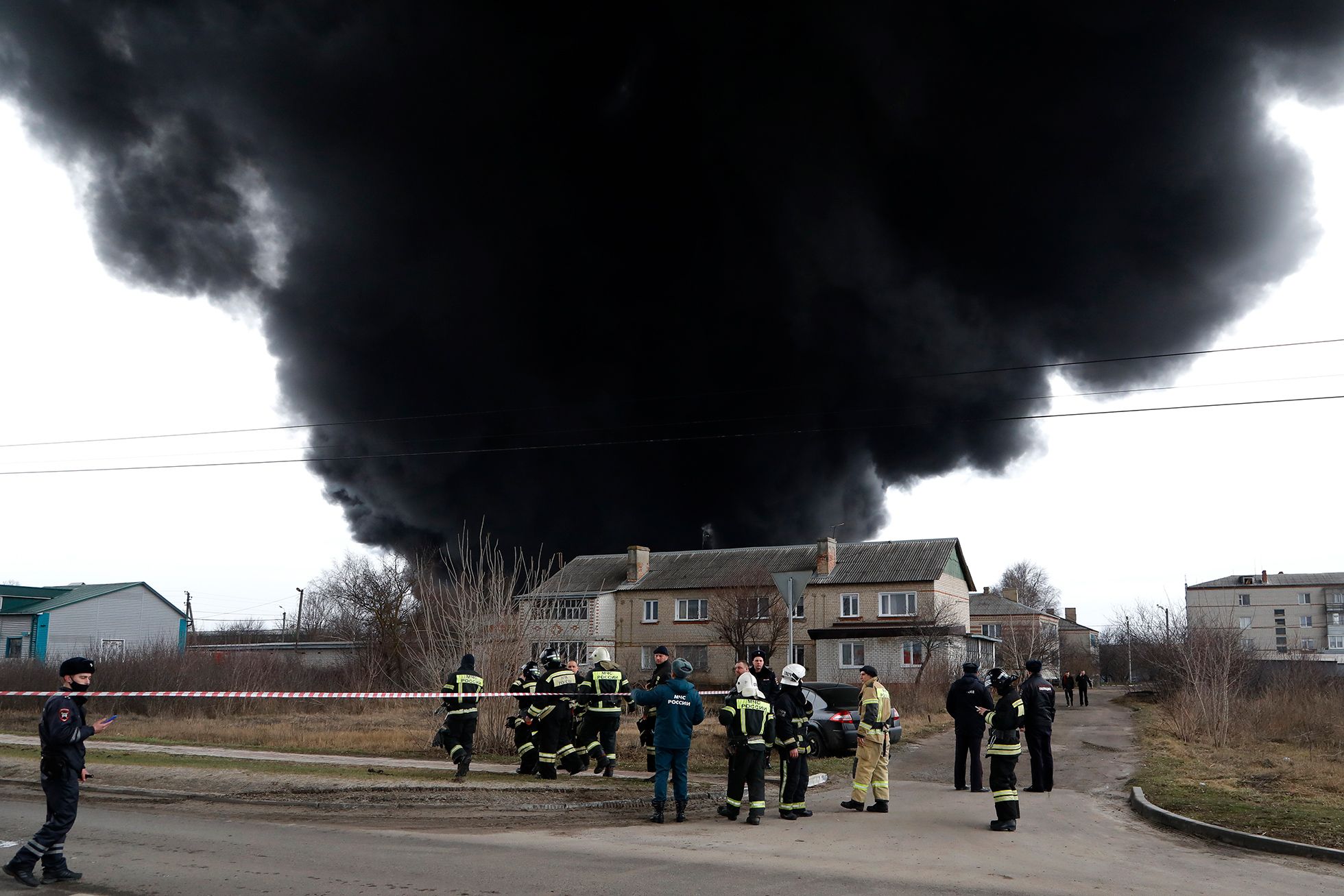
Since the first days of the war, Russia’s Belgorod region has been on the frontline. The regional center is located just 39 kilometers (24 miles) from the Ukrainian border, and its suburbs are even closer. Uniformed men and military equipment patrol the streets of Belgorod, where tent hospitals now stand alongside coffee shops and parking lots. Governor Vyacheslav Gladkov regularly reports incidents of shelling, but life goes on. In this joint report, Meduza and Russian news outlet 7x7 explore how everyday life has changed in the Belgorod region, and whether local residents are afraid of war.
📉 Economist Daron Acemoglu on stopping Putin with sanctions and the difficult path to democracy (21-minute read)
After two months of Moscow waging all-out war on Ukraine, it’s become clear that it will take more than Western sanctions to stop the Russian army. But after years of Putin’s regime tightening its grip on the country, neither Russian society, nor the elite, appear to have any influence on the Kremlin’s policy of aggression. How did Russian elites become so powerless? Could depriving Russia of oil and gas revenues bring about regime change? And is there any hope left for a democratic Russia? For answers to these and other questions, Meduza turned to economist Daron Acemoglu — a professor at the Massachusetts Institute of Technology (MIT) and the co-author of Why Nations Fail: Origins of Power, Poverty and Prosperity. Read the full interview here.
Yours, Meduza