
Оригинал материала
The Real Russia. Today.
Monday, September 19, 2022
Latest news
- 🚨 Gulagu.net founder Vladimir Osechkin says he narrowly escaped an assassination attempt in France
- 🗳 ‘DNR’ and ‘LNR’ public chambers call for referendums on Russian annexation
- 📺 Kommersant: Tired of news and lacking other options, Russians are spending more time on YouTube
- 🏳️🌈 Russian lawmaker disputes report that government rejected bill expanding ‘LGBT propaganda’ law
- ⚖️ Moscow judge shaves month from seven-year sentence of first Russian to be imprisoned for ‘disinformation’
Feature stories
- 🪖 100 killed and 137,000 evacuated: What we know about the deadly conflict on the Kyrgyzstan-Tajikistan border (5-min read)
- ⚖️ ‘We hear daily that this war is for peace’: Moscow municipal deputy Alexey Gorinov’s seven-year prison term for ‘disinformation’ has been shortened — by a month. Here’s his final court speech. (4-min read)
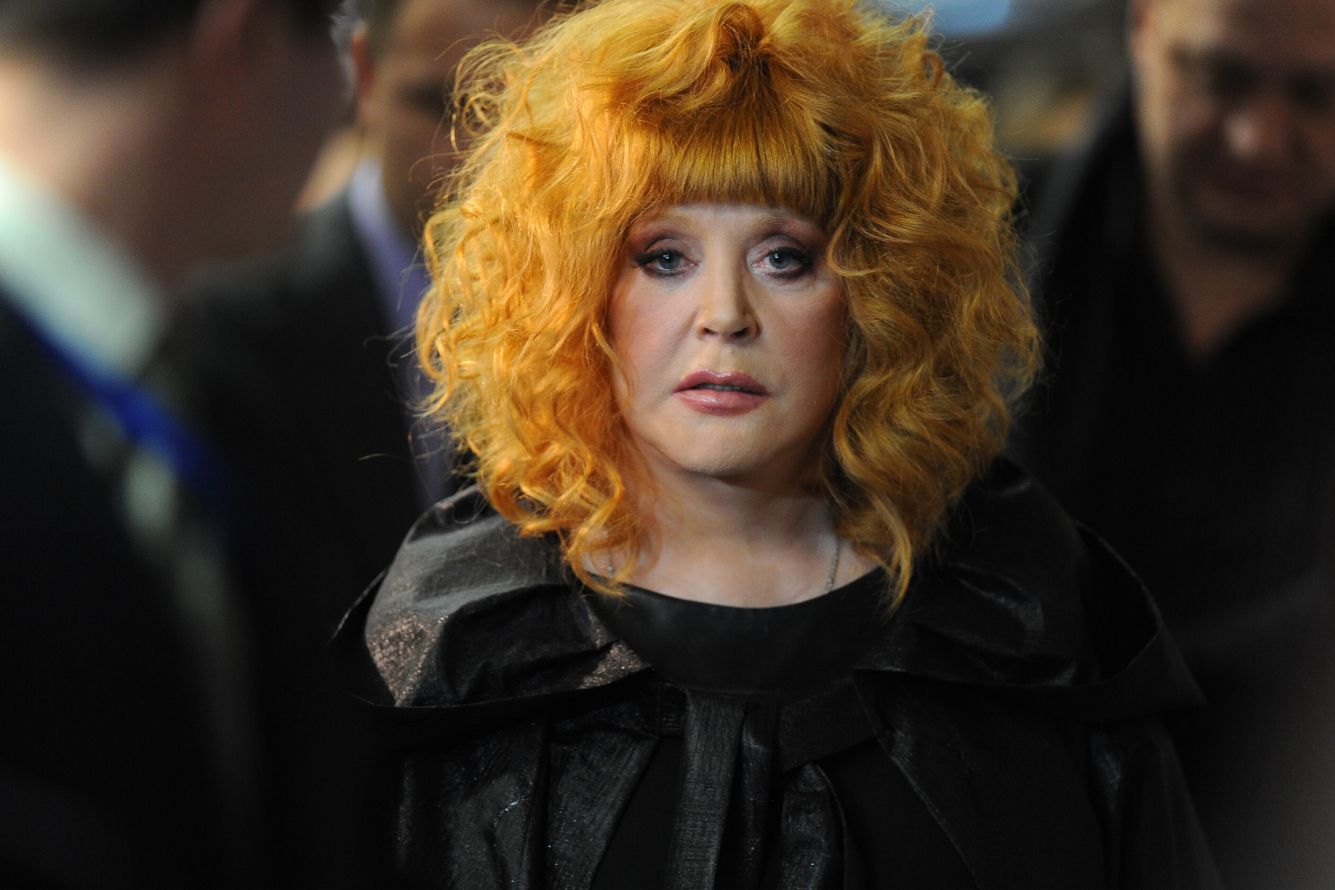
- 👩🎤 ‘We’ll win without her songs’: How Russians (and one Ukrainian) reacted to pop legend Alla Pugacheva’s anti-war statement (6-min read)
Opinion and analysis
☢️ The wild risks of Russia’s Zaporizhzhia Nuclear Power Station occupation
Columnist Yulia Latynina interviews the head of Ukraine's nuclear agency, Petro Kotin (Novaya Gazeta Europe): Kotin says the Zaporizhzhia Nuclear Power Station would be at risk of a meltdown within 90 minutes of losing the electricity needed for cooling operations. The plant is equipped with 20 diesel-powered generators in the event of a blackout and enough backup fuel for 10 days. The station also has the emergency capacity to use its own nuclear-generated electricity to power its cooling operations — but only for about two hours. Because electricity for cooling is so vital, the greatest threat to the plant isn’t necessarily direct artillery fire at its reactors but damage to the electrical lines that feed the station.
Kotin and Latynina agree that Russia alone stands to benefit from destroying the lines feeding the station, because the plant needs to be disconnected completely from Ukraine’s power grid before it can be transferred to Russia’s (due to the two energy systems’ different electrical frequencies). Kotin says representatives from Rosatom have presented this plan to Energoatom, as Russian troops have framed the Ukrainian military for attacks on the Zaporizhzhia plant’s power lines. The only safe way forward, argues Kotin, is an immediate demilitarized zone around the nuclear station, though he isn’t sure that International Atomic Energy Agency chief Rafael Grossi has the resolve or the authority to accomplish this.
▻ Maybe the Kremlin’s craziest, meanest ploy in the war: If Moscow is indeed deliberately putting the Zaporizhzhia Nuclear Power Station at risk of a disaster — all to seize the plant for its own electricity grid — it’s a wildly unsafe gambit. A meltdown here would chance the uncontrolled release of radioactive materials just 150 miles north of Crimea, not to mention much closer to other more recently occupied parts of Ukraine. Kotin also argues that Russia’s attacks on Ukraine’s energy system are designed with the “concrete aim” of weakening the grid ahead of winter, squeezing its electrical output as Ukrainians struggle to stay warm.
🪖 Putinism has been ideologically adaptive for decades, but that’s over now
Andrey Zorin, historian (Re:Russia): The Putin regime has adapted its ideological foundation throughout its lifespan, but the authorities have now painted themselves into a corner by pursuing war mobilization and peacetime normalcy at the same time. Putin’s original “ideological matrix” was “a strong state and a civilized way of life,” which appealed to both the masses who missed the predictability of Soviet life and the Europeanized urban elite.
Zorin attributes the collapse of this social consensus not to the end of Russia’s economic boom but to the Putin system’s failure to ensure the peaceful transfer of political power. As the Kremlin imposed “sovereign democracy,” the regime ditched its modernizing ideology for “traditional values,” typically reflected in aggressive homophobia and mythologizing the USSR’s victory in WWII. Talk of becoming a “normal country” morphed into a new Russian exceptionalism, which later developed into “messianic” designs on world leadership in a “coalition of autocracies.”
For mobilization capacity, Putin’s ideology has increasingly leveraged the theme of “turning defeat into victory,” trying to cultivate the belief that great sacrifice is the key to Russia’s strength. To insulate the Kremlin’s demands for sacrifice against criticism, the regime’s ideology now elevates Putin to a mythological status that ties him to the nation’s ancient history, not just to contemporary Russia (Zorin says this, not a lifetime presidency, was the highest aim of the constitutional amendments in 2020).
▻ The Kremlin’s ideological options now are all bad: While many Russians welcome these myths, they also recognize that the country lacks the means to achieve them, argues Zorin. Russia doesn’t have the “demography, economy, or social prerequisites” for successful totalitarianism. The Kremlin knows it, too, which is why the authorities have refrained from a full mobilization to fight in Ukraine (and why the police crackdown remains selective rather than mass and indiscriminate). In fact, the Putin administration even labors to convince the public that normal life continues uninterrupted. But returning to peacetime ideology will require abandoning the regime’s messianism, rejecting and insulting all the sacrifices that have been made. Leaning into the apocalypse, however, will eventually lead to “the search for enemies and traitors” at the highest state offices. In other words, Putinism has nearly lost its room to wiggle.
🧑🏫 Russia’s post-Soviet generation doesn’t do cannon fodder
Ekaterina Schulmann, political scientist (Re:Russia): Scholars typically argue that the atomization of Russian society and its “consumer cult” under Putin are obstacles to the civic mobilization needed for democratization. That rampant opportunism and aversion to solidarity, however, are also checks on “totalitarian mobilization” and susceptibility to the “propaganda of collective sacrifice,” argues Schulmann. Even the bad practices that accompany these values (“evasion, hypocrisy, and sabotage”) cause major difficulties for the Putin regime when it asks citizens for their lives.
With a sufficient monopoly on information and enough time (about 15 years), the Kremlin could use the education system to cultivate a new generation of Russians for whom the concept of “collective sacrifice” is less alien (Schulmann says this is less about brainwashing, per se, than redefining social norms and society’s perceived boundaries), but even here the authorities must confront parents and teachers who value children more “humanely.”
These adults (Russians between the ages of 30 and 50, whose formative years were before the Kremlin’s current ideological schemes) largely oppose the authorities’ plans to promote a “death cult” that glorifies sacrifice for the Motherland. Their resistance to the Kremlin manifests as silent sabotage, like the blowback that pressured the Education Ministry to curtail “patriotic” lesson plans, earlier this month. Similar social trends fueled opposition to remote learning and QR-code passports during the coronavirus pandemic. (Schulmann says the same forces were at work even in opposition to the re-criminalization of domestic violence when Russians rejected what they perceived to be the state’s meddling in family life.)
While Putinism’s anti-Western and isolationist message resonates with the average Russian (whose worldview is fundamentally Hobbesian, says Schulmann), the cynicism at the heart of this ideology complicates the regime’s efforts to mobilize mass public sacrifice.
▻ Zorin vs. Schulmann: In both these essays for Re:Russia, the authors argue that Russian society is largely reluctant to sacrifice either blood or treasure for whatever ideological mythology the Kremlin cooks up. Zorin attributes this to the public’s apparent grasp of the country’s practical limits (Russians don’t “truly believe” in the regime’s “ideological constructions,” even though they like them in theory). For Schulmann, Russia’s main obstacle to full totalitarianism is the first post-Soviet generation’s (selfish) value of life.
🙏 With Pugacheva, Russian intellectuals reexperience cultural pride and cling for dear life
Kirill Martynov and Jan Shenkman, columnists (Novaya Gazeta Europe): Martynov and Shenkman wrote separate articles, but the texts are so similar that a single summary will suffice. By criticizing Russia’s “illusory aims” in Ukraine and demanding to be designated as a “foreign agent” alongside her husband, Russian pop star Alla Pugacheva has “legalized” foreign agency “for the Russian people.” Cultural royalty for millions of Russians (or maybe it’s just the Russians who lived in the USSR), Pugacheva is perhaps the only living Russian with more social capital than Putin. She earned her reputation in the Soviet Union, which means it’s now impossible to “cancel” her because the nation that elevated her as a cultural icon no longer exists.
Her remarks about the war in Ukraine (in which she did not call it a war and did not mention Ukraine) will lead to more questioning about the invasion, eventually pressuring Putin to justify himself publicly. Pugacheva has faced some criticism in the EU and Ukraine for declining to advocate solidarity with Ukrainians, but she crafted her words carefully to have the broadest appeal inside Russia.
▻ How desperate are we? Russia’s intelligentsia (the kind of people who write columns for the news media) are clearly excited about Pugacheva’s criticism of the war. Perhaps some of the elation expressed here by Martynov and Shenkman is so exuberant that it crosses into sarcasm, but that irony is lost on this reader, if it exists. Would President Maxim Galkin have invaded Ukraine? How swiftly would Pugacheva win a presidential race? Whether these questions are meant seriously or in jest, next week’s columns will likely have moved onto Russia’s next great hope.
🚨 Meduza needs your support to break through Putin’s propaganda
If you like what you see here and believe that our independent reporting about Russia and the war in Ukraine merits support, please consider donating to Meduza. Recurring pledges are best, but any contribution helps sustain our work. Act now and contribute here.
Besides donations, you can also assist Meduza by sharing this newsletter with any friends or colleagues who might be interested in our news coverage. Forward them this email or sign them up directly using this hyperlink (they will need to verify their subscriptions before actually receiving our newsletter). And please consider encouraging others to donate to Meduza, as well. And, of course, thank you!