
Оригинал материала
The Real Russia. Today.
Lawmakers double down on foreign agents, plus hints about the arrest of Mikhail Men and a ‘palatable’ way to replace United Russia
Thursday, November 19, 2020
- New investigation reveals how a Moscow monastery’s mother superior built a family business empire
- Russia’s authorities increase pressure on NGOs with plans to strengthen ‘foreign agent’ laws
- Opinion and analysis: Novaya Gazeta hints at the politics behind Mikhail Men’s arrest, and Abbas Gallyamov proposes a way to replace United Russia
- News briefs: Prigozhin strikes again, the KGB vs. Nexta Live, Roskomnadzor is back in the news, and three Soviet-collapse deniers head to jail
Feature stories
💰 The Feofaniya clan
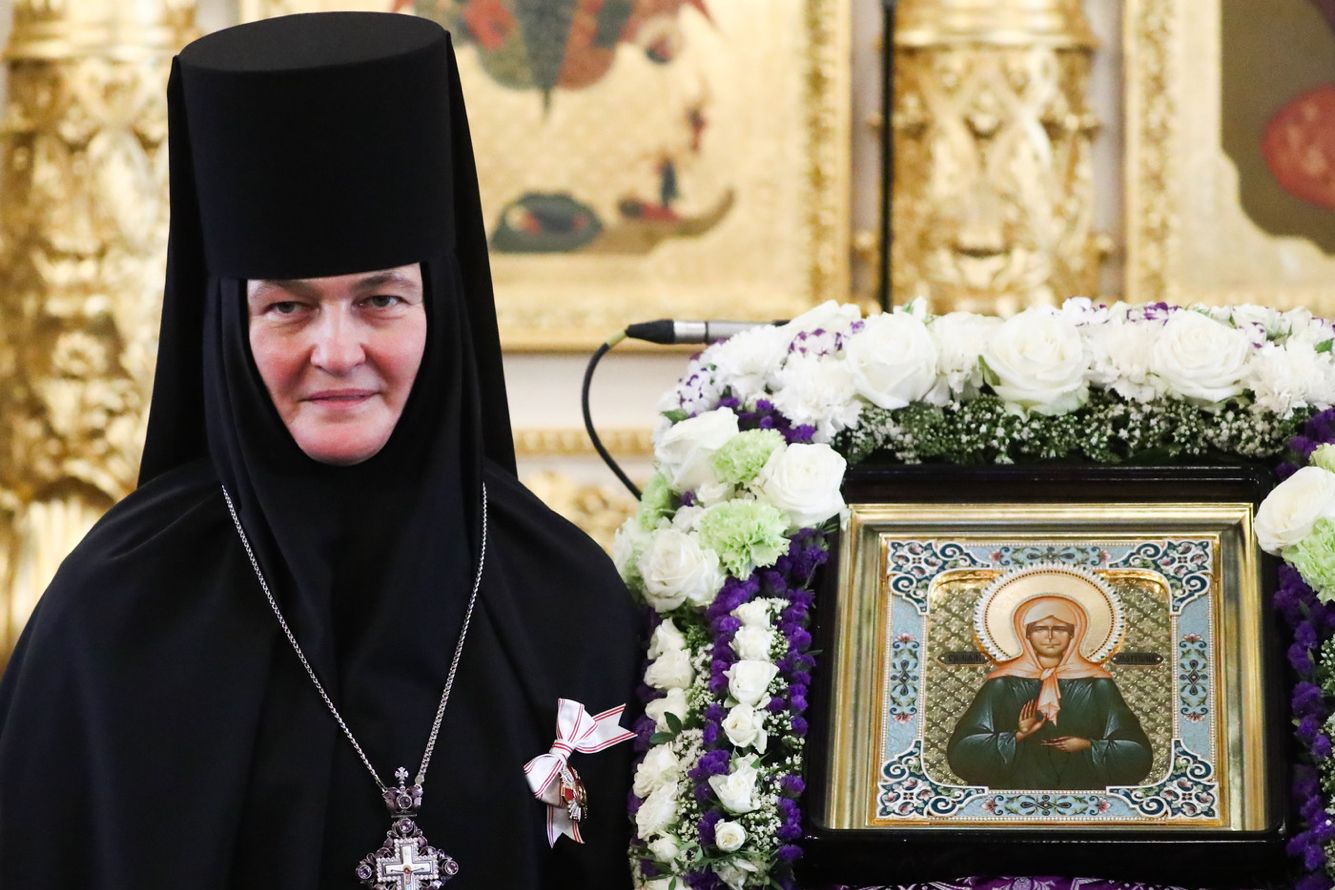
Home to the relics of St. Matrona of Moscow, the Russian capital’s Pokrovsky (Intercession) Monastery is a popular pilgrimage site visited by thousands of people every day. Since the 1990s, this monastery has been run by Mother Superior Feofaniya, who came under fire this summer when investigative journalists uncovered that she had been driving around in a pricy Mercedes-Benz sedan since 2016. Now, a new investigation from Open Media has revealed that Feofaniya’s family is a major beneficiary of the cult of St. Matrona, earning money off of icons, church utensils, and souvenirs supplied to monastery gift shops. What’s more, Feofaniya herself was directly involved in popularizing the cult of St. Matrona, turning the Pokrovsky Monastery into the Russian Orthodox Church’s wealthiest convent.
🕵️ Foreign agents redux
Russia’s Government Cabinet has submitted a bill to the State Duma on strengthening the Justice Ministry’s control over NGOs that have been labeled as foreign agents, empowering the authorities to dissolve these organizations or at the very least hinder their work. If the draft law is approved, nonprofits designated as foreign agents will be required to inform Russia’s Justice Ministry of all of the programs and events that they are planning to hold. In turn, the Justice Ministry will have the right to ban the implementation of certain programs either in full or in part. If the NGO in question ignores the ban, the Justice Ministry will be able to appeal to the courts to dissolve it.
This law will apply to all non-profit organizations listed in the government’s foreign agent registry. This includes, for example, opposition figure Alexey Navalny’s Anti-Corruption Foundation, Transparency International — Russia, as well as the Memorial Human Rights Center and Memorial International.
Meduza asked lawyer Tatyana Glushkovato explain how this new bill threatens NGOs in Russia. She answered the following questions:
- Which programs will be banned?
- Will this decision be made by a court?
- Can the authorities dissolve ‘foreign agents’ now?
- So what’s new about the draft law?
- What was the Constitutional Court’s ruling?
- So it’s not just about filing reports and using the ‘foreign agent’ label anymore?
- And what about reporting?
- Will the draft law be approved?
Opinion and analysis
🚯 Waste management is a dirty, dangerous business
Following embezzlement allegations against Accounts Chamber auditor Mikhail Men, whose house arrest was possible thanks to the Federation Council’s special permission, Novaya Gazeta republished excerpts from an interview in October where he discussed challenges in reforming how Russia processes its trash. The newspaper describes Men’s comments about landfills and recycling as the “context” for his arrest, suggesting that the case is politically motivated, though the editors are careful to point out that there’s still little information available about the investigation. Novaya Gazeta also compares Men’s case to the arrest of Khabarovsk Governor Sergey Furgal insofar as both politicians are accused of “crimes with expired statutes of limitations [sic]” (Furgal has actually been implicated in multiple homicides). It’s the “hit of the season,” the newspaper quips.
According to Novaya Gazeta, Igor Chaika’s “Khartiya” waste-management company has faced “persistent rumors” that it will be sold off, ever since Chaika’s father lost his position as Russia’s attorney general. To make matters worse for the industry, a recent report by the Accounts Chamber (prepared by Mikhail Men, no less) sharply criticized Russia’s existing approach to landfills.
In the interview excerpts, Men paints a mostly negative picture of Russia’s waste management, arguing that recycling is far below European levels and reclamations of existing landfills are too few and far between. Men also notes that tariff rates vary excessively across Russia’s regions.
🗳️ Overthrowing United Russia without rocking the boat
In an op-ed for VTimes, political analyst Abbas Gallyamov proposes that the Putin administration might have better odds of retaining control over the State Duma in next year’s elections if the Kremlin orchestrates the rise of another establishment party as an alternative to United Russia, the country’s longtime ruling group. The trick, he says, would be for the new party to attack United Russia as a bureaucratic obstacle between the people and President Putin, avoiding an actual political slugfest where the two sides debate direct responsibility for unpopular policies and economic stagnation. The message, says Gallyamov, should be that United Russia has abandoned its principles and the new group is here to revive all that, without challenging anything inherent in the Putin regime.
Whether the Kremlin does this or bets the farm on more of the same with United Russia, Gallyamov says Russia’s political class is sufficiently cynical by now (thanks largely to the Kremlin itself) that elected officials will abandon Putin and “go swim freely,” the moment they suspect the president has weakened beyond some critical threshold. There are no idealists left in Russian politics, Gallyamov warns.
Other news in brief
- ⚖️ Exercising his right to the Streisand effect. Kremlin-linked businessman Evgeny Prigozhin has filed a defamation lawsuit against journalist Maxim Shevchenko, Dovod chief editor Ilya Kosygin, and Meduza editor-in-chief Ivan Kolpakov. The litigation concerns a Meduza article from June 2016 (you can read the English-language translation here).
- 👮 ‘Terrorist’ bloggers.The Belarusian KGB has added opposition blogger Stepan Putilo (Stsiapan Putsila), the creator of the Telegram channels Nexta and Nexta Live, and the platform’s former chief-editor Roman Protasevich to its list of individuals involved in terrorist activities.
- 🔒 Block no one or everyone! Russian lawmakers want to give Russia’s state censorship agency, Roskomnadzor, the right to block access to websites that “discriminate against” or censor information coming from the Russian news media.
- ⚖️ RIP, USSR. A court in Volgograd has jailed three local residents — all of whom deny the collapse of the Soviet Union and do not acknowledge the Russian Federation’s statehood — on suspicion of organizing the activities of an extremist group.
⚗️ This day in history: Eight years ago today, on November 19, 2012, Russian science fiction writer Boris Strugatsky died in St. Petersburg at the age of 79. Together with his brother, Strugatsky wrote many beloved novels, including “Roadside Picnic” (1972), which Andrey Tarkovsky famously adapted into the film “Stalker” (1979).
Yours, Meduza