
Оригинал материала
The Real Russia. Today.
Reporting from Yerevan, looking on the bright side of Armenia’s surrender, and Trump’s last shot at a New START
Friday, November 13, 2020 👻
- Meduza correspondent Liliya Yapparova reports from Yerevan in the aftermath of the settlement in Nagorno-Karabakh
- Thousands gather to commemorate opposition protester killed in Minsk
- Russia’s Sakhalin finishes regauging railways the USSR inherited from Japan after WWII
- Opinion and analysis: Chernenko on Trump’s last chance with New START, Budberg says Armenia got what it said it wanted, and Evseyev blames the West for Yerevan’s fallout with Moscow
- News briefs: a very convenient inspection, all’s fair in war, the dirty mayor, and a new tribunal in Belarus
Feature stories
🕯️ ‘This is mourning’
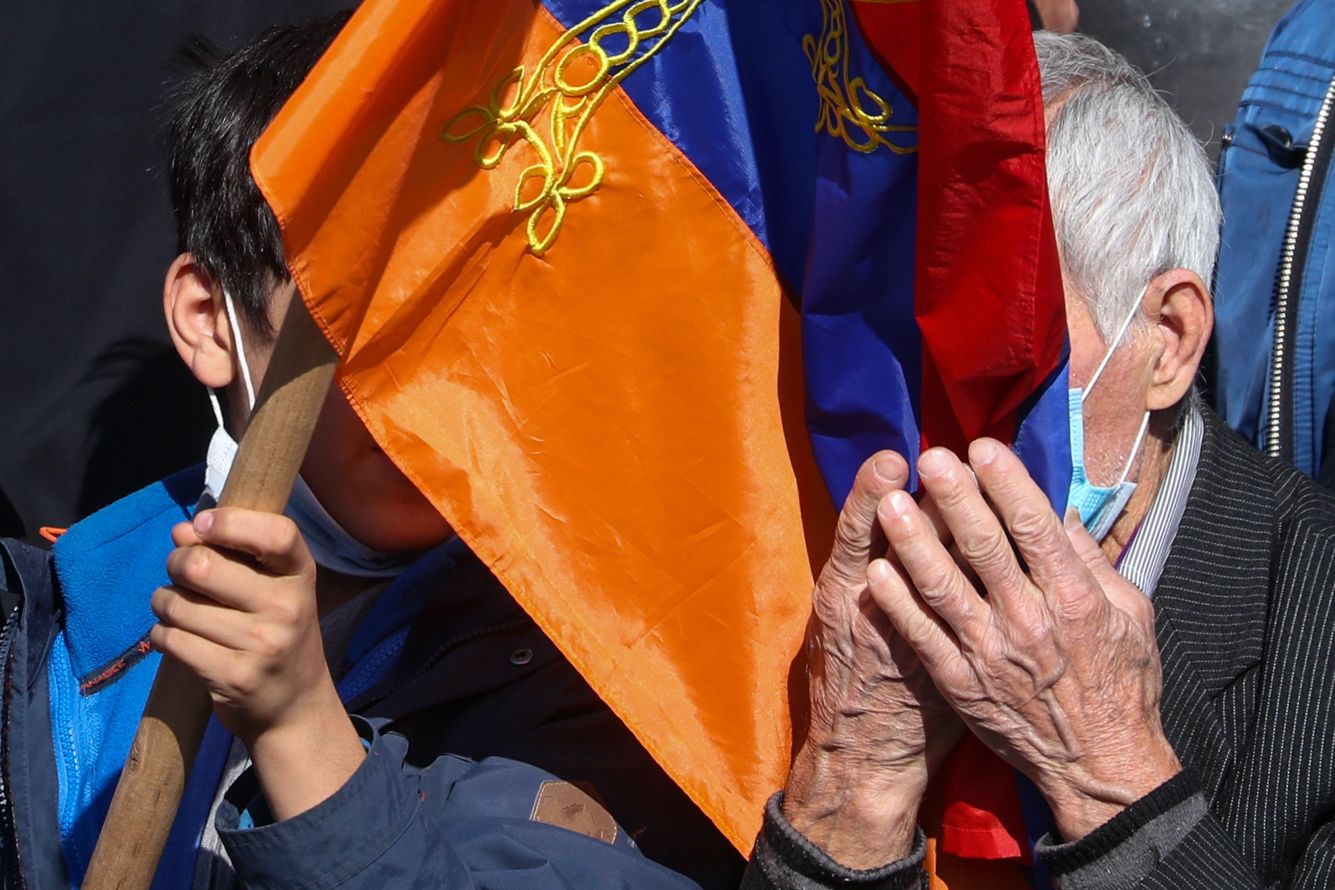
On November 7, Azerbaijani troops occupied the city of Shusha, which had been under the control of the self-declared Nagorno-Karabakh Republic since 1992. Three days later, the leaders of Azerbaijan, Armenia, and Russia signed a ceasefire agreement, according to which almost half of Nagorno-Karabakh’s territory was transferred to Azerbaijani control. A Russian peacekeeping force is now set to guard the Lachin Corridor — the only remaining land route connecting Armenia to the breakaway republic’s capital, Stepanakert. Armenian Prime Minister Nikol Pashinyan has said he had no choice but to sign the settlement, despite the fact that it effectively constituted Armenia’s capitulation; otherwise, the entire country’s defense capability would have been under threat.
The news of surrendering most of Nagorno-Karabakh sent shockwaves through Armenia. Protests broke out in Yerevan, during which demonstrators broke into the House of Government and attacked the country’s parliamentary speaker in the street. Meduza special correspondent Liliya Yapparova travelled to Yerevan to get an inside look at how the Armenian people are experiencing this defeat in the war for Karabakh.
🕯️ ‘An innocent victim of a terrible system’
Thousands of people gathered on “Changes Square” in Minsk late on November 12 to commemorate opposition protester Raman Bandarenka. The 31-year-old man died in a Minsk hospital earlier that evening from severe head trauma. Witnesses say Bandarenka was involved in an altercation with a masked man who appeared to be a plainclothes security officer. The police carried Bandarenka away from the scene of the incident around 10:00 p.m. and drove off with him in a minibus. He was delivered to hospital two hours later.
🚆 On the right track
Russia’s Sakhalin Island has finished converting its last section of railway tracks that still retained the narrower track gauge inherited from Japan after the end of the Second World War. The project, which began in 2003, was near completion in the summer of 2019. Standardizing the railway is part of another major construction project for the region: a railway bridge connecting Sakhalin Island to the Russian mainland.
Opinion and analysis
🕊️ Last chance, Donald
In an article for Kommersant, journalist Elena Chernenko writes that the Kremlin still hopes to negotiate a one-year extension of the New START arms control treaty with Donald Trump before his presidential term ends in January 2021. President-Elect Joe Biden has already signaled his support for a full five-year extension of the agreement without the conditions that the Trump administration has demanded, but Russia’s slower ratification process would make it difficult to hammer out an agreement in the two weeks between Biden’s inauguration and the treaty’s expiration. In light of the scandal caused when Michael Flynn spoke to Russian ambassador Sergey Kislyak before Trump took office, both the Kremlin and Joe Biden’s advisors are being careful not to get a head start on New START’s extension.
In the meantime, Russia hopes Donald Trump will drop the additional conditions that have stalled negotiations, so far, if only to deny his successor an early, easy diplomatic achievement. Before Trump can do that, however, he has to accept the reality that he isn’t getting a second term next year.
🎁 The gift of defeat
In an op-ed for Republic, columnist Alexander Budberg argues that Armenia overplayed its hand in Nagorno-Karabakh, occupying more territory than it needed and failing to recognize when it had fallen behind Azerbaijani military and economic might. The Armenians bought into their own heroic mythology, Budberg says, and the realization of defeat has inspired paroxysms of anger and emotion that obscure the fact that Armenian Karabakh survives with a corridor to the mainland, which is everything Yerevan ever said it wanted for the region.
Budberg also insists that Russia achieved an undeniable strategic victory by gaining a military base in Karabakh, which technically grants Moscow a sought-after outpost in Azerbaijan. Turkey has expanded its influence in the Caucasus, yes, but Russia hasn’t exerted total control over the region since the USSR’s collapse. In other words, Budberg thinks the moaning about Ankara’s encroachment is “premature” and misses the fact that Iranian and its Islamic Revolution are the six-week war’s real losers.
💔 Blame the West
In an op-ed for Izvestia, Vladimir Evseyev (an expert at the Russian Institute for Strategic Studies) argues that the West facilitated Armenia’s defeat in Karabakh by enticing Yerevan with the promise of an alternative to Russia, only to abandon the country during the six-week war. Despite various diplomatic overtures, says Evseyev, France ultimately wanted to redirect Turkey’s national interests away from Africa, while the United States was hesitant to upset its NATO ally and distracted by the 2020 presidential election. These events weakened Russian-Armenian military-political interactions and became “the main reason for Yerevan’s military failures in Nagorno-Karabakh,” argues Evseyev. Armenian Prime Minister Nikol Pashinyan, a leading proponent of pivoting the country to the West, will likely lose his office for signing the November truce, but his nation’s bad blood with Russia and the “duality of Yerevan’s politics” will tragically endure, according to Evseyev.
Other news in brief
- 🏳️🌈 Opening of LGBTQ film festival in St. Petersburg cancelled due to visit from public health authority and police
- 🚁 Azerbaijani Ambassador provokes criticism over statement about downed Russian military helicopter
- 👮 FSB officers arrest Tomsk mayor for suspected abuse of office
- ⚖️ Belarusian opposition leader announces creation of a ‘People’s Tribunal’
🎂 This day in history: 151 years ago today, on November 13, 1869, Ariadna Tyrkova-Williams was born in St. Petersburg. An activist, journalist, and feminist, she was elected to a seat on the Petrograd Duma in 1917 before later fleeing the Bolsheviks to Britain and then settling in the United States, where she died in 1962.
Yours, Meduza