
Оригинал материала
The Real Russia. Today.
Revisiting how Yeltsin and his ‘reformers’ smothered Russian democracy in the cradle, plus the Kremlin’s growing ‘bunkerization’
Wednesday, December 9, 2020
- After welcoming tourists all summer, officials in Russia’s Kaliningrad region deny rising numbers of coronavirus cases
- St. Petersburg law enforcement raid local bars for refusing to comply with coronavirus restrictions
- Opinion and analysis: Gaaze says Chubais stabbed democracy in the back before Putin could, Kolesnikov sizes up Russia’s introverted rulers, and Krasheninnikov remembers 1996 and 1993
- News briefs: post-presidential immunity, identical-office rumors, and Rossiya Bank’s dirty money
Feature stories
⚰️ Running out of coffins
In early December, Health Minister Mikhail Murashko said the country’s coronavirus situation was most dire in two regions: St. Petersburg and the Kaliningrad region. Shortly beforehand, Meduza and Mediazona uncovered that officials in Kaliningrad had published figures on deaths from COVID-19 that were nearly five times lower than those contained in the classified database used by government officials. Meanwhile, Kaliningrad’s regional authorities maintain that they aren’t hiding anything — and they actively continued to encourage tourists to visit the region throughout the fall, despite of the pandemic’s second wave. In a dispatch for Meduza, correspondents Ekaterina Medvedeva and Vadim Khlebnikov from the local newspaper Novy Kaliningrad report on how Russia’s westernmost region is coping with COVID-19.
👮 ‘Violence is a duty’
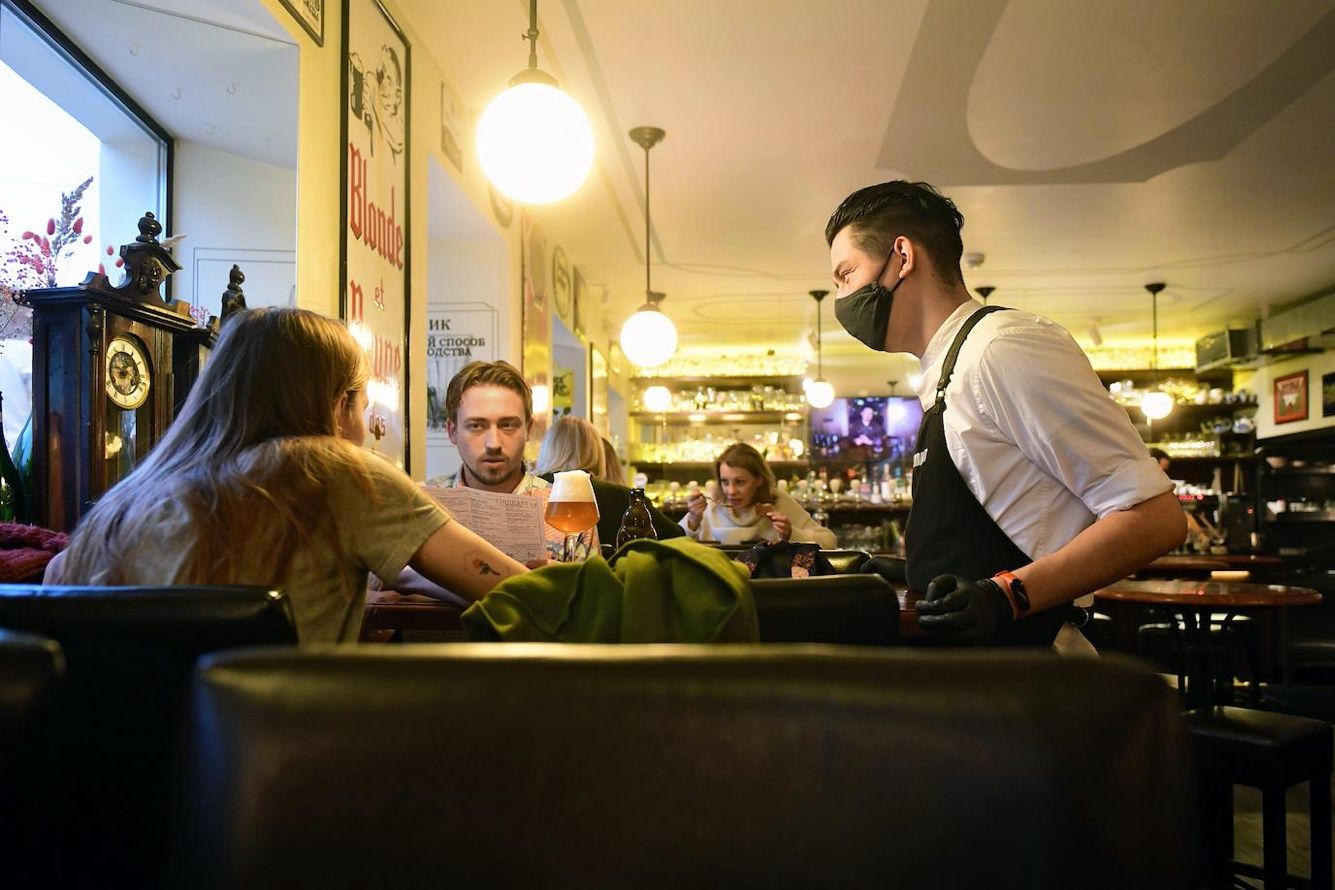
In the early hours on Wednesday, police raided several bars in St. Petersburg. The searches came after a group of dozens of local restaurants, bars, and cafes announced plans to disregard the city administration’s restrictions for the New Year holidays, which were introduced to counter the spread of COVID-19. Commenting on the raids, St. Petersburg Lieutenant Governor Evgeny Yelin said the police had every right to use force, describing violence as as their “duty.”
Opinion and analysis
💰 Bound by fear and dictatorship
Konstantin Gaaze, sociologist — *Proekt*
Anatoly Chubais and Vladimir Putin make strange bedfellows, but the relationship has endured for decades despite the former’s role in creating the oligarchs whom Putin ostensibly reigned in after coming to power. Chubais has finally been put out to pasture, stepping down from Rusnano and taking on a role as one of the president’s representatives — a position that at least makes it difficult to arrest him suddenly.
Gaaze says the neoliberal reforms Chubais engineered in the 1990s erased Russia’s working class as a social group and concentrated private property in the hands of a “fortunate few.” Enjoying no public support whatsoever, these new oligarchs were immediately dependent on political power, which kept the Yeltsin administration in office. Loans-for-shares and shock therapy also removed any boundaries between power and property, paving the way for today’s “state capitalism.”
The right-wing political philosophies that rejected economic class and motivated Russian liberals in the 1990s have since lost their intellectual currency in the West, says Gaaze. The reformers’ devotion to neoliberalism was fundamentally undemocratic, he argues, explaining that rapid privatization was always going to be unpopular, which necessitated the “dictatorial presidential powers” enshrined in Russia’s 1993 Constitution. “Its unpopularity demanded a dictatorship,” Gaaze says.
But why did Putin keep Chubais around for so long? According to Gaaze, it was partly out of respect for his pivotal role in saving Yeltsin from the Communists in 1996 (another “democratic” sacrifice to the neoliberal gods), but the president also appreciates men who have endured the existential terror of losing power and facing literal destruction. A bond like that goes a long way.
🙈 The Kremlin’s tolerable introverts
Andrey Kolesnikov, Carnegie Moscow Center senior fellow — *VTimes*
Kolesnikov has more thoughts about the Putin regime’s “shaky” reliance on society’s passive support — a theme he’s addressed now in several recent op-eds and research papers at VTimes and the Carnegie Moscow Center. He says new draft laws designed to expand restrictions on “foreign agents” and enable state officials to hide more of their personal information are part of the Russian authorities’ increasing “introversion,” “bunkerization” (waiting out the pandemic at remote locations), and “isolationism.” The Kremlin, he says, is beefing up its powers of oppression as society’s enthusiasm for its rulers wanes.
So far, the regime has successfully maintained the public support it needs, despite embracing a “humiliating” view of commoners as “cannon fodder” and “plankton” who can be bought off with crumbs between elections.
Kolesnikov recalls that isolation was a factor in the USSR’s relationship with its subjects, as well, but it was Soviet dissidents who retreated inward, not the Kremlin, he says. The Putin regime’s introversion seems to be the authorities’ response to unprecedented waves of information (like this month’s bombshell investigative reports about Putin’s private residences and wealth belonging to his alleged mistress and former son-in-law). In all this isolation, Russia’s authorities may be losing their grip on reality, says Kolesnikov, which is perhaps why Moscow’s recent publicity stunts have not resonated as well with the public. Still, though, it’s been enough to keep the lights on.
🗳️ Russia’s democracy starts when its rulers stop appointing their own adversaries
Fyodor Krasheninnikov, columnist — *Republic*
Mikhail Zygar’s new book, “You’re All Free to Go: The Story of How Elections Ended in Russia in 1996,” has his compatriots pondering the death of their post-Soviet democracy. Krasheninnikov says Yeltsin’s re-election campaign was supposed to save the system by breaking a few rules just once, but that temporary compromise became the country’s new political fixture. More than 24 years later, Russians still debate whether this was a reasonable gamble, given the dangers of a Zyuganov presidency.
Krasheninnikov says the Yeltsin administration deliberately engineered this existential crisis by allowing the Communist Party to keep its name and “brand,” endowing Zyuganov and his allies with the power to provoke nostalgia and incite panic (among Russians and Westerners alike). Whether it’s liberals during the Tsarist period or dissidents and intellectuals in the USSR, the Russian authorities have always endeavored to appoint their own adversaries, choosing opponents they know they can beat, one way or another. (Ironically, perhaps tragically, other enemies blindsided these regimes, in the end.)
If Yeltsin’s “reformers” had truly devoted themselves to democracy, says Krasheninnikov, they would have banned Communists from politics and forced Russia’s leftists to establish new groups with a stake in the new political system. The Kremlin also should have extended an olive branch to nationalists, he says, arguing that they would have been the Yeltsin administration’s natural rivals in a true democracy of the 1990s.
Yeltsin may have killed free elections in 1996, Krasheninnikov says, but he struck the initial death blow three years earlier when he forced through a new Constitution that undid the checks and balances sustaining Russian federalism. Putin has exercised his executive authority more often and more visibly, but he owes the power itself to his predecessor, says Krasheninnikov.
Other news in brief
- ⚖️ Putin’s post-presidential criminal immunity bill is nearly codified. On Wednesday, federal lawmakers passed the legislation, which creates a statute to regulate changes to the Constitution adopted earlier this year.
- 🏢 One man, one office. Kremlin spokesman has dismissed reports that Putin has secretly been working from two, identical offices (one near Moscow and one in Sochi) as “nonsense” and “not true.” Peskov accused journalists of “information attacks” against Putin.
- 🏦 Yuri Kovalchuk’s billions. Rossiya Bank earns at least 2 billion rubles (about $27 million) per year on inflated commissions for processing housing and utility payments, reported The Bell and Proekt, continuing a series of recent exposés about members of Vladimir Putin’s inner circle.
🕯️ This day in history: 12 years ago today, on December 9, 2008, Patriarch Alexy II of Moscow (Alexey Ridiger) was buried at the Epiphany Cathedral at Elokhovo. Elected Patriarch of Moscow 18 months before the USSR collapsed, he became the first Russian Patriarch of the post-Soviet period.
Yours, Meduza