
Оригинал материала
The Real Russia. Today.
The real-life characters of HBO's ‘Chernobyl’ miniseries, body-slamming a journalist in Khakassia, and pondering rumors about Surkov's ouster
Tuesday, May 28, 2019
This day in history: 32 years ago, on May 28, 1987, West German pilot Mathias Rust flew from Helsinki to Moscow, and landed a rented prop plane on Bolshoy Moskvoretsky Bridge next to Red Square. Rust said he wanted to reduce Cold War tensions, but his flight through the USSR's supposedly impenetrable air-defense system cost many senior officials their jobs. Rust served 14 months in prison for the stunt.
- HBO’s hit miniseries is ending, and here’s how its characters compare to their real-life counterparts
- Opinion: Journalist Alexander Kots thinks ‘Chernobyl’ is well-made American propaganda
- Russian boy playing on swing as inferno rages nearby proves that ‘this is fine’ in Noyabrsk
- Opinion: Columnist Oleg Kashin says Vladislav Surkov's self-made mythology is on the line, once again
- Local bureaucrat who body-slammed a journalist says the reporter committed Russia's felony offense of insulting a state official
- Lithuania arrests local ‘Sputnik’ editor-in-chief, barring him from country for five years as ‘national security threat’
- Years after disappearing from network TV, Ksenia Sobchak is reportedly poised to return to Russian state television
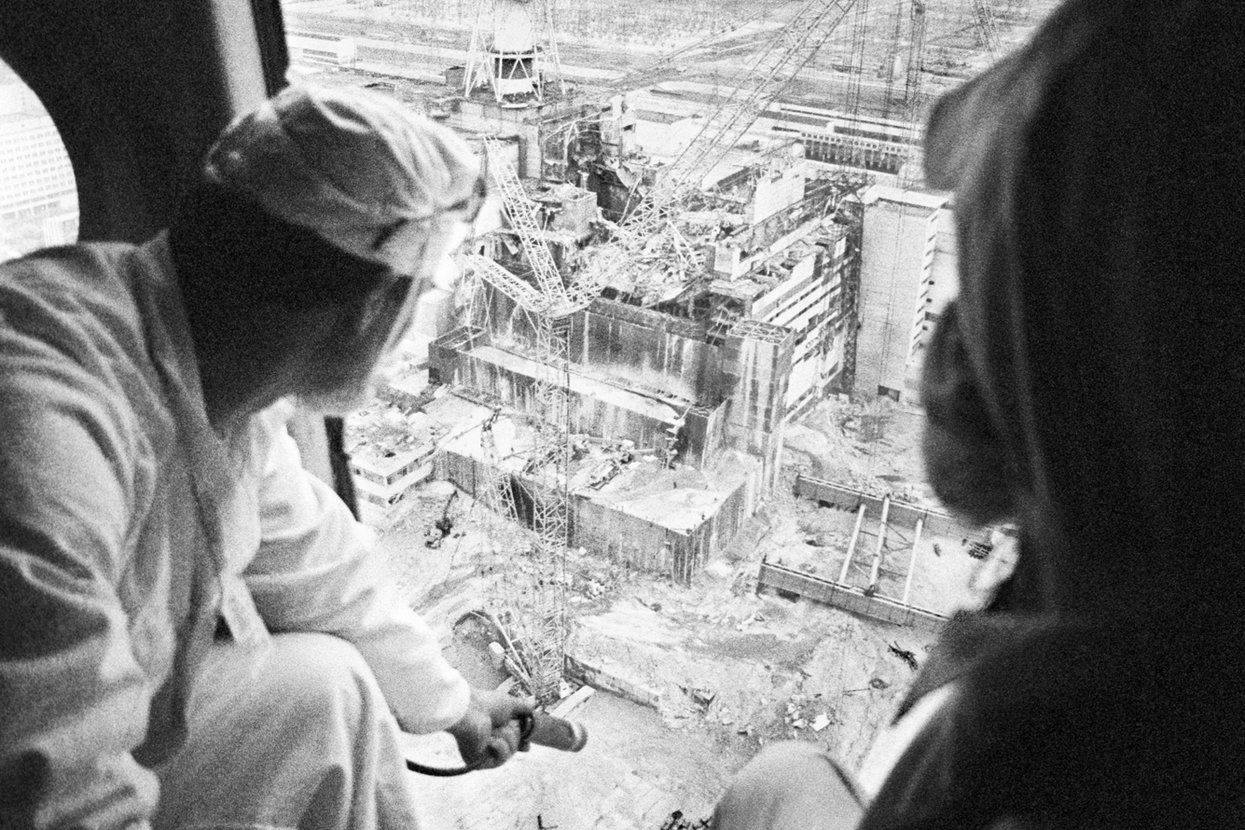
There’s just one episode remaining of “Chernobyl,” the HBO miniseries about the catastrophic nuclear accident that rocked the Soviet Union in April 1986. As the show comes to an end, many are left wondering how much of the dramatization is historically accurate, where the showrunners learned what they did about the events, and how people can find out more about the disaster. Meduza suggests some places to start.
Read Meduza's report: “HBO’s hit miniseries is ending, and here’s how its characters compare to their real-life counterparts”
👎 Opinion: HBO's show lacks that ‘human nerve’
In an editorial for Komsomolskaya Pravda, special correspondent Alexander Kots shares his thoughts about why he thinks HBO’s “Chernobyl” miniseries is American propaganda. To establish his authority on the subject, Kots starts by reminiscing about a few days he spent squatting in abandoned apartments in Pripyat in 2006 for a report about the nuclear accident’s 20th anniversary. If this sounds familiar, it’s because Dmitry Steshin — who works with Kots at KP — also wrote about the same experience in his recent criticism of the HBO show.
Sheshin argued that “Chernobyl” is part of a media campaign to undermine faith in Russian nuclear power. Kots doesn’t have as clear a conspiracy theory, but he does say that the American miniseries is “flawless, as far as propaganda goes.”
What’s Kots’s beef with the HBO show? He offers a few specific quibbles: there were no glassed-in balconies or dual-pane windows in Pripyat, he says, and the helicopter crash at the power plant actually happened in early October, not in the immediate firefighting effort. Also, based on what Lyudmila Ignatenko told Svetlana Alexievich, Vasily Ignatenko’s hospital room actually had a pretty good view of Moscow. “Chernobyl” also embraces certain gruff ethnic stereotypes about Russians, Kots says, citing two invented events: the confrontation between the coal minister and the miners, and the miners stripping nude in the summer heat while tunneling under the power plant. These scenes are “on the creators’ consciences,” he says ominously.
Kots also claims that HBO’s miniseries fails to capture the love story between Vasily and Lyudmila Ignatenko. Despite the fact that the show devotes significant screen time to Lyudmila’s devotion to her husband and the tragic final days they spent together at a hospital in Moscow, Kots says “Chernobyl” is really about soulless KGB operatives, noble scientists, “captive nations,” and Politburo careerists “saving their own skin at the expense of their enslaved people.” He says the show focuses on these political points, while ignoring the “heroism of Russians who saved the world from catastrophe.” The final product, Kots insists, “lacks the human nerve that makes the heart ache.”
These arguments are fairly predictable, given Komsomolskaya Pravda’s editorial line, but Kots finishes with an somewhat unexpected parting salvo, criticizing Russian filmmakers for failing to produce their own quality content about the Chernobyl disaster. For some reason, however, Kots doesn’t ask why Russian filmmakers haven’t answered this call already.
A two-story residential building recently burned to the ground in Noyabrsk, the largest city in Russia’s Yamalo-Nenets Autonomous Okrug. The building was evacuated in time, nobody was hurt, and the blaze attracted a small crowd of local gawkers. The spectacle didn't impress everyone, however, as demonstrated by a now viral video showing a boy playing on a swing set (with his back turned to the inferno).
Read Meduza's report: “Russian boy playing on swing as inferno rages nearby proves that ‘this is fine’ in Noyabrsk”
Opinion: Vladislav Surkov's personal mythology is being tested in eastern Ukraine ⌛
In an op-ed for Republic, columnist Oleg Kashin addresses the rumors circulating about Vladislav Surkov losing his job as the Kremlin’s “Donbas curator.” Kashin says Surkov’s “main real achievement” throughout his political career has been building up his own personal myth, which holds that he is personally essential for the operation of Russia’s “deep state” (its managed political parties, manipulated elections, “post-truth” media, and “creative accounting” across the board). Kashin calls this a myth, but he also argues that Surkov will remain an influential figure, whatever his formal or informal position in the government, until the Kremlin masters some new method for managing the political system.
Surkov’s “real story,” Kashin says, is a classic fall from grace: Surkov bet on another presidential term for Dmitry Medvedev, he lost, and he paid for the miscalculation with his job. When he finally worked his way back to the Kremlin, it was in a diminished, more informal capacity, where his “former demonic image was reproduced anew, albeit in an incomparably smaller space.”
In eastern Ukraine, Kashin says, Surkov has embraced the “gray zone” of political life he used to oversee in Russia, and this time it’s “pure” gray. The self-declared Donetsk and Luhansk People’s Republics don’t even observe the minimum visibility of a normal political process, and the only limits on Surkov’s machinations are the occasional deaths visited upon overly popular separatist field commanders. If Surkov does lose this position, it’s because he again bet on the wrong horse, steering the Kremlin’s policy in Ukraine toward another Poroshenko term, on the assumption that Moscow was better off with the devil it knows, Kashin says.
News briefs
- 🤼♂️ The head of the Shirinsky District in Khakassia, who attacked an interviewer earlier this month, has filed a police report against the television film crew that came to his office. Sergey Zaitsev accuses the reporters of the felony offense of publicly insulting a state official. According to the TV station 360, the district political council of the party United Russia met on May 28 and endorsed Zaitsev’s complaint. Watch the beat-down here.
- 🛃 Marat Kasem, the editor-in-chief of the Russian state media network Sputnik Lithuania, was arrested at when arriving at the airport in Vilnius, where he was informed that he’s been barred from entering the country for the next five years. Kasem told the news agency RIA Novosti that the Lithuanian authorities have designated him as a national security threat. Read about this dangerous editor here.
- 📺 Ksenia Sobchak, the television personality and socialite who ran for Russian president in 2018 as the election’s token “liberal” candidate, might be returning to primetime. Sources told the magazine RBC that Sobchak is in talks with the state-owned TV network Pervyi Kanal. Spokespeople for the station have confirmed the meetings with Sobchak, but they refused to reveal any further details. Read about Sobchak's grand return here.
Yours, Meduza