
Оригинал материала
The Real Russia. Today.
Sex-worker mothers in Russia’s heartland, plus more brazen silovik infighting and the drawbacks of musical chairs in the bureaucracy
Tuesday, November 24, 2020
- What happens when children find out their mother is a sex worker. A report from Russia’s heartland.
- How an ambitious software project led to Russian Deputy Energy Minister Anatoly Tikhonov’s arrest
- Meet Oksana Karas, the director of a new film about the late Elizaveta Glinka, Russia’s humanitarian icon
- Moscow City Hall seeks to expand ‘digital profiles’ of local residents through new monitoring system
- Opinion and analysis: Petrov says clan warfare is louder and more cynical now, Nikolaev calls baloney on government cutbacks, and Mereminskaya says all the reshuffling has drawbacks
- News briefs: Sputnik V scores big, that crucifixion protest outside the FSB didn’t pay off, and more bad news for Russia’s Jehovah’s Witnesses
Feature stories
💄 ‘Mom, is it true?’
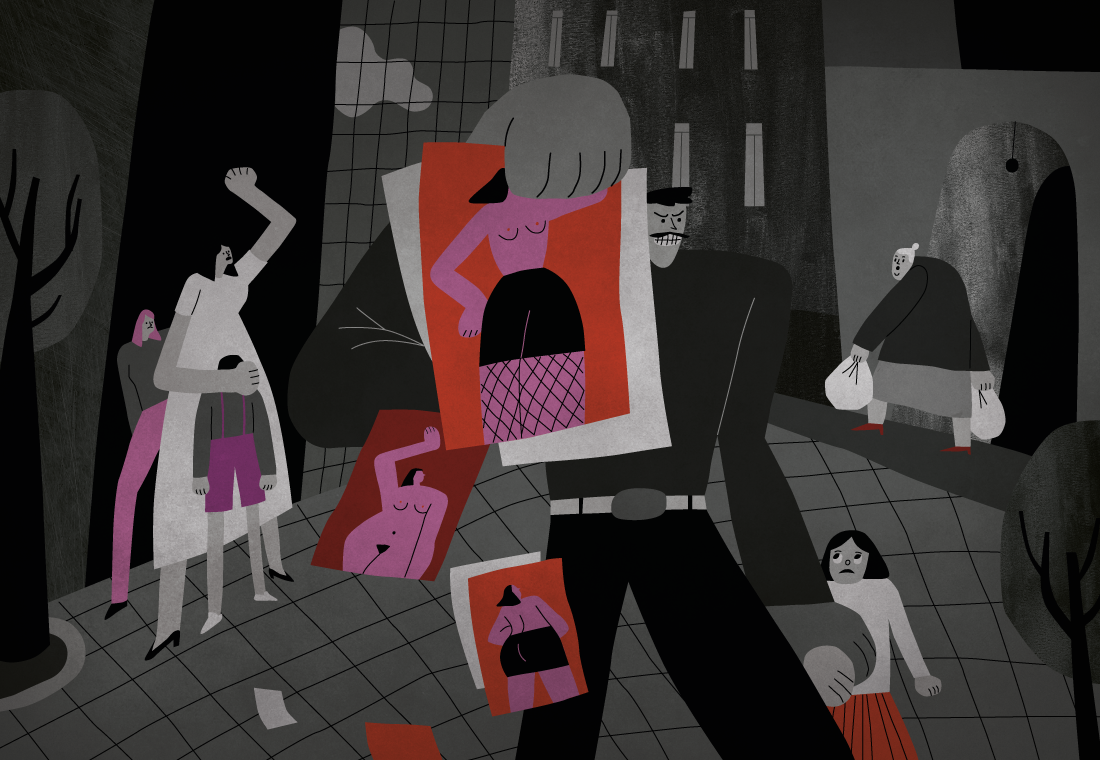
No one knows exactly how many sex workers there are in Russia, but the number is said to be in the millions. Most of these people are young women trying to pull themselves and their families out of poverty. Faced with the illegality of their labor, the dangers of the job, and the powerful social stigma that haunts prostitution, Russia’s sex workers walk a tightrope at home, where many feel compelled to conceal or justify the work that puts food on the table and keeps a roof overhead. Meduza special correspondent Irina Kravtsova traveled to Volgograd, Samara, and Ufa, where she met with three such women and spoke to their children to learn how Russia’s sex workers navigate these enormous challenges.
💰 The trashcan bribe
GIS TEK, an expensive software that compiles information about Russia’s entire fuel and energy sector, was created to help fight illegal business dealings and tax evasion. Its main result so far, however, has been an embezzlement case implicating the heads of one of Russia’s largest technology companies, LANIT, along with Deputy Energy Minister Anatoly Tikhonov. Meduza technology editor Maria Kolomichenko reports on the story, which involved secretly-recorded phone conversations and reports of bribes being transferred through a trashcan in a women’s restroom.
📽️ She had a foul mouth and a bottomless heart
Oksana Karas’s new film, “Doctor Liza,” is currently in theaters. The picture follows a day in the life of Dr. Elizaveta Glinka, a story whose protagonist manages to comfort, hug, warm, and save hundreds. Chulpan Khamatova stars in the film, which features many other prominent Russian actors, including Evgeny Pisarev, Andrzej Chyra, Konstantin Khabensky, Andrey Burkovskiy, Yulia Aug, Tatyana Dogileva, Timofey Tribuntsev, Alexey Agranovich, Elena Koreneva, and Yana Gladkikh. Karas told Meduza about what effect she hopes to achieve in Russia with a film about charity.
👁️ Now accepting bids to build Moscow’s eye in the sky
Moscow’s Information Technology Department has is soliciting bids to develop a system that will build detailed “digital profiles” for all users of municipal services, as well as constantly monitor the activities of Muscovites throughout the city and at municipal facilities. The website Open Media first reported the 280-million-ruble ($3.7-million) contract’s appearance. Although the system is reportedly designed to collect information anonymously, experts warn that it could include surveillance mechanisms and that abuse of the system could result in people’s personal information ending up on the black market.
Opinion and analysis
⚔️ Open warfare among Russia’s siloviki
In an article for Republic, Political-Geographic Research Center director Nikolai Petrov says recent turnover in Russia’s government cabinet marks the final consolidation of Prime Minister Mikhail Mishustin’s team, with the last remnants of the Medvedev era handed their hats. After a lengthy discussion of individual firings and hirings, Petrov argues that the personnel changes reinforce the Putin system’s “quasi-checks and balances,” wherein no single group is strong enough both to remove a top official from office and to choose that official’s successor. (For example, he points out that Igor Sechin reportedly advocated firing Alexander Novak as energy minister, but did not endorse Nikolai Shulginov as Novak’s replacement.)
Petrov also points out that Denis Butsuev’s return as head of the Russian Ecological Operator (REO) — the public company charged with reforming the nation’s waste management — coincides suspiciously with the arrest of Accounts Chamber auditor Mikhail Men, who was considered a strong candidate for the job. Men faces embezzlement charges that are due to expire under the statute of limitations within a few months, making it fairly transparent that the Attorney General’s case against him was a cynical ploy to knock out a competitor, says Petrov. Two years ago, federal prosecutors did the same thing to Alexey Gordeyev when boosting Butsuev to the REO for the first time.
It’s common knowledge that Russia’s police and prosecutors — the notorious siloviki — participate actively in business conflicts and that many of the politicized cases in Russia are a direct result of these disputes. What’s new, says Petrov, is how open this warfare has become and how senior the fighting has escalated inside the government.
🗑️ One step forward and two shimmies back
In an op-ed for Novaya Gazeta, economist Igor Nikolaev says the latest announced cutbacks to Russia’s state bureaucracy (supposedly affecting more than 34,000 jobs) are part of a public performance wherein the authorities claim to reduce the government’s workforce without actually firing anyone. The trick, Nikolaev explains, is that the government deliberately keeps about 20 percent of its jobs unfilled. When called on to demonstrate austerity measures, the state simply closes these vacancies and counts it as a staff reduction. As soon as targets are met, the government creates new vacancies to serve as a buffer against the next round of “optimization.” Using this sleight of hand, Russia’s bureaucracy has managed to grow consistently over the past 20 years, despite “an eternal process of cutbacks,” says Nikolaev.
♻️ Sawing the legs off your own musical chairs
In an article for VTimes, journalist Ekaterina Mereminskaya says Denis Butsuev’s return as head of the Russian Ecological Operator highlights how a game of musical chairs guides senior government appointments, elevating officials without proper expertise or experience and degrading the quality of leadership. Mereminskaya doesn’t really explain why top personnel are reshuffled so often (she calls the process “sudden and chaotic”), though she argues that the government’s zero-tolerance for mistakes forces officials to evade responsibility for bad decisions, rather than learn from their errors, in order to stave off the next reshuffle. The mismanagement of waste disposal in Russia is a case in point, says Mereminskaya.
Other news in brief
- 💉 The ‘rona ain’t all that. Russia’s “Sputnik V” coronavirus vaccine has shown more than 95 percent effectiveness 42 days after the first dose, the researchers developing the vaccine reported on Tuesday.
- 🎓 Academic freedom schmreedom. A disciplinary commission at the People’s Friendship University of Russia is expelling activist Pavel Krisevich from its Economics Department following his performance outside the FSB’s headquarters in Moscow. (Krisevich is the guy who reenacted Christ’s crucifixion to protest against political persecution.)
- 👮 Have you heard the bad news? On Tuesday, federal investigators raided the homes of several Jehovah’s Witnesses in Moscow and in another 20 regions across the country. (In 2017, the Supreme Court declared the Jehovah’s Witnesses an extremist organization and banned their activities in Russia.)
💥 This day in history: Five years ago today, on November 24, 2015, the Turkish Air Force shot down a Russian Air Force Sukhoi Su-24 fighter jet, over the Syria-Turkey border, killing one of the two pilots. A Russian marine was also killed during a subsequent rescue effort. The incident resulted in short-lived but intense tensions between Moscow and Ankara.
Yours, Meduza