
Оригинал материала
It's simple. We kill the oil exports.
Meanwhile in Russia, on Friday, February 5, 2016
- In a break with common practice, Russian police are actually listening to anti-corruption activist Alexey Navalny, rather than arresting him. (Admittedly, they're probably using him to take down a former state official with enemies in high places.)
- Putin says he has no plans with meet with Turkey's president, who's still mad about Russia continuously violating Turkish airspace.
- Police raided the office of a state-owned news agency today.
- A Duma deputy wants to end the Russian economy's oil dependence by ending oil exports. (Officials have not rushed to endorse his proposal.)
Police squad!
Russia's Interior Ministry has unexpectedly responded to a complaint filed by the Anti-Corruption Foundation (FBK), which is run by Alexey Navalny, one of the Kremlin's biggest opponents inside Russia. Navalny's organization accuses the former head of Russian Railways, Vladimir Yakunin, of laundering ill-gotten gains. Surprisingly, officials have agreed to investigate FBK's claim. “They've even asked to meet with our representative and see our evidence,” Navalny wrote on his website.
Putin to Turkish president: ‘Nope.’
Vladimir Putin refuses to meet with Turkish President Recep Tayyip Erdoğan, according to Kremlin spokesman Dmitry Peskov. The announcement comes about a week after Erdoğan declared the necessity of a meeting with Putin, to discuss Ankara's latest allegations that Russian jets are violating Turkish airspace. The most recent incident occurred on January 30. Relations between the two countries have been tense since November 24, when the Turkish Air Force shot down a Russian jet, leading to the deaths of two Russian servicemen. Since that event, Turkey has become something of an “Enemy Number One” in Russian political rhetoric, replacing the “fascist junta” in Ukraine.
Police raid a state news agency, looking for info about the general director's last job
Police raided the offices of the state-owned TASS news agency today. According to the independent television station Dozhd, officials are investigating an employee “in relation to his previous place of work.” The news site Znak.com reports that the search could be related to TASS General Director Sergei Mikhailov, who attended a meeting at the Kremlin today. Police today also raided Mikhailov's private firm, “Mikhail and Partners.” The news agency Rosbalt reports that the searches are related to an investigation into overcharging the Russian Railways for an advertising campaign. Mikhailov previously headed the company's department of corporate communications. The newspaper Vedomosti says police are more interested in his “former place of work” than Mikhailov himself.
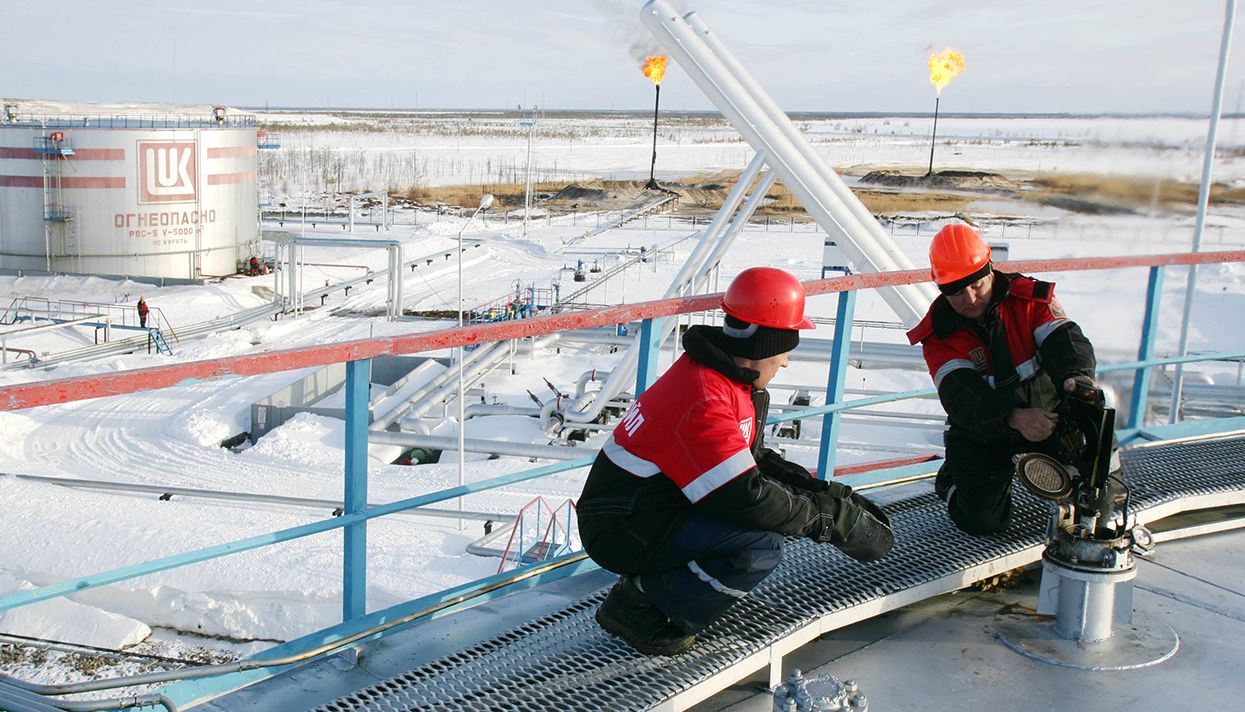
It's simple. We kill the oil exports.
A State Duma deputy is asking the Economic Development Ministry to draw up plans to halt all oil exports in the next five years. Oleg Pakholkov says the plan would break the Russian economy's oil dependence. He proposes cutting the export supply by 20 percent every year. The head of the Duma's Committee on Economic Policy, however, has already criticized Pakholkov's proposal, saying reforms are needed, but shutting down oil exports would be “punching our own ticket.”