
Оригинал материала
"Kill this one" - Astra Press
How a former tattoo artist from St. Petersburg gained power over the stormtroopers from a general, extorted millions from them, and killed those who resisted.
On August 5, the Belgorod District Court sentenced Alexey Marushchenko, the founder of the PMC “Yastreb,” to 18 years in prison. He was found guilty of organizing a murder, kidnapping, extortion, fraud, illegal arms trafficking, and abuse of official powers. According to the investigation, Marushchenko and his accomplices deceived nearly 100 military personnel who had signed contracts with the Ministry of Defense, luring millions of rubles from them under the pretext of processing documents and purchasing equipment. The court also found the episode involving the murder of Private Rashid Adzhiev and the abduction of several military personnel, including war correspondent Roman Semenov, to be proven.
ASTRA studied 30 volumes of this criminal case, spoke with the victims, witnesses, and former subordinates of Marushchenko. Our investigation showed that the verdict covers only part of what happened. The editorial team discovered new episodes that were not included in the charges, and also found out what role, according to the investigation and witness testimony, former commander of the 44th Army Corps, Major General Alexander Dembitsky, played in this story.
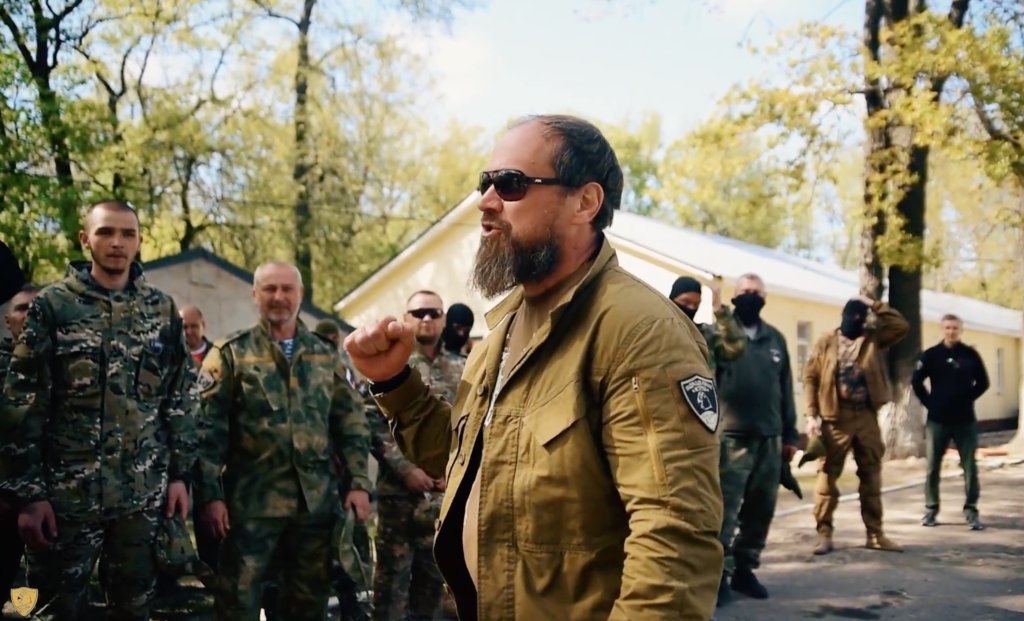
Tattoo artist collects mercenaries
Until 2014, Marushchenko owned a tattoo studio in St. Petersburg. After the start of the war in Donbas, the businessman decided to switch to creating a private military company. His PMC “MAR” became widely known after a group of Russian mercenaries was detained in Belarus ahead of the 2020 presidential elections. Marushchenko stated that he had nothing to do with this operation, and the PMC itself, according to him, ceased to exist back in 2018.
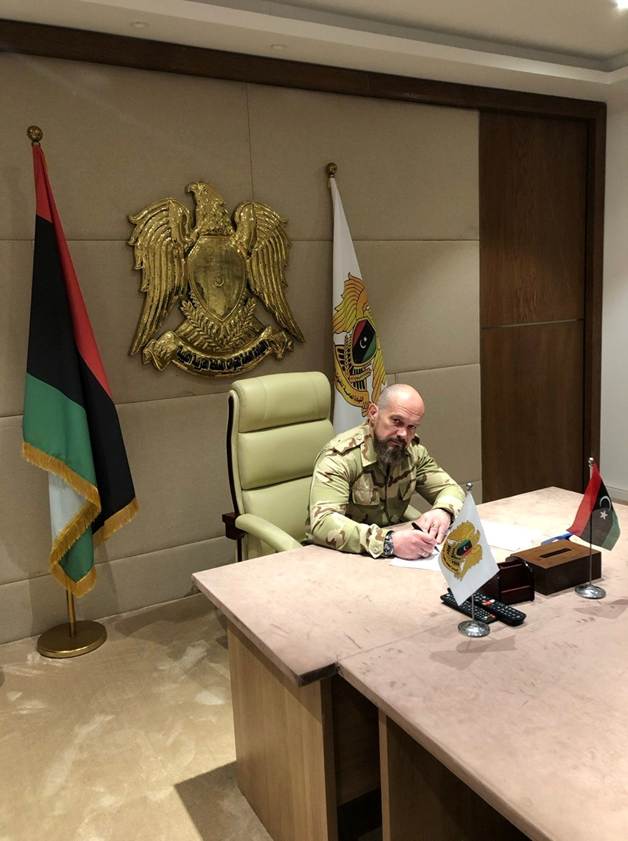
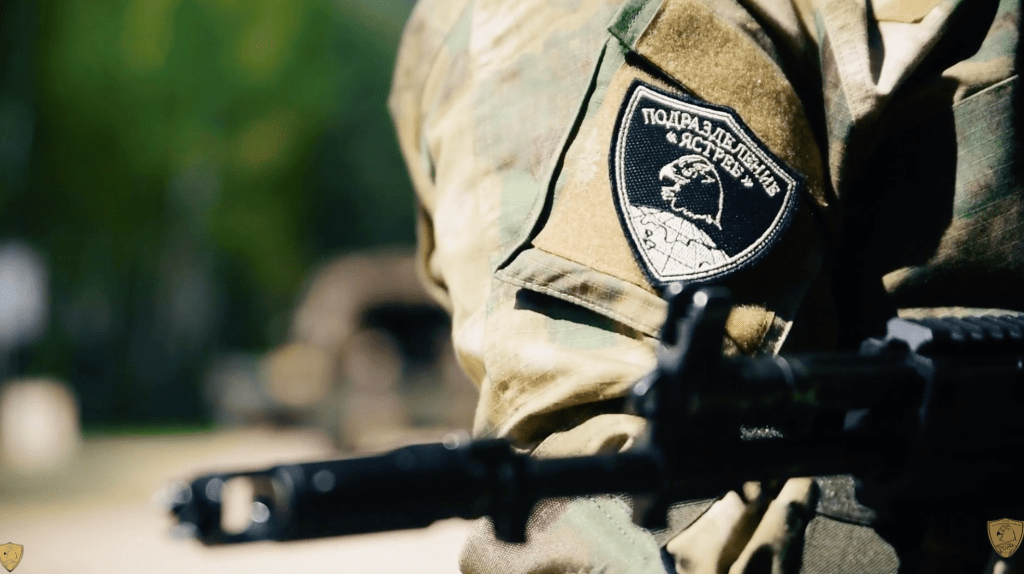
But almost immediately, Marushchenko created another PMC — “Yastreb”. In 2022, he participated in the war against Ukraine as a mercenary and managed to leave the service. In 2024, Marushchenko came up with the idea of recruiting former Wagner PMC fighters into his PMC to participate in the war, and after their service ended, to find them jobs in foreign security companies, earning a profit from this.
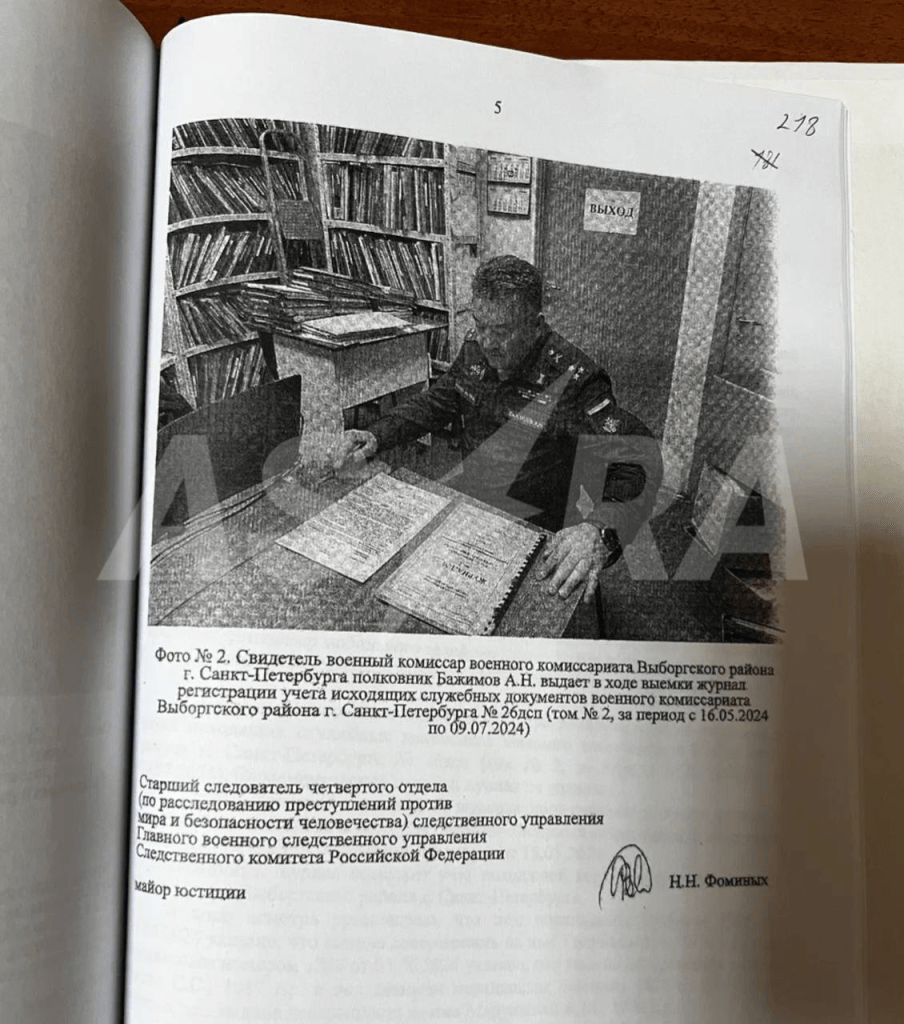
Marushchenko approached the military commissar of the Vyborg District, Colonel Alexander Bazhimov, and the commander of the 44th Army Corps of the Leningrad Military District, Major General Alexander Dembitsky, with a proposal to recruit contract soldiers for the “SVO.” With their consent, Marushchenko was given the opportunity to recruit people for the assault units of the 44th Corps.
Live tax
According to the testimony of military commissar Bazhimov, the court learned that the city’s district administrations received quotas for recruiting contract soldiers from above, and over time the quotas increased. “The administrations of administrative units, through the bodies of power of the constituent entities of the Russian Federation, receive assignments requiring them to ensure that as many people as possible join military service under a contract,” his testimony states.
Under this scheme, state and municipal enterprises were involved in the recruitment process: they hired those who expressed interest, after which the individuals signed a contract with the Ministry of Defense and received an additional allowance of 400–505 thousand rubles at the expense of these enterprises, in addition to the payments they were entitled to.
According to the case materials, the employees of the enterprises did not just process the documents but also delivered the contract soldiers to the assembly points. For example, representatives of Vodokanal accepted candidates directly at the selection point under the district administration and ensured their delivery. According to Bazhimov, the enterprises performed these functions because the St. Petersburg administration and the relevant city committees required it.
The fact that the district authorities in St. Petersburg actually required enterprises to participate in recruiting contract soldiers was reported by Novaya Gazeta back in May 2023. According to the publication, the head of the Vyborgsky District, Viktor Polunin, and Bazhimov held a closed meeting with the heads of city enterprises, where they asked each of them to provide at least five future contract soldiers — “as many as they can.” Bazhimov then referred to a meeting held by Governor Alexander Beglov with the heads of districts and representatives of the military enlistment offices, at which new target figures were announced: St. Petersburg needed to recruit one and a half times more people for contract service than had previously been called up as part of the mobilization. Just two weeks after the meeting, businessmen were asked to report how many people they had sent to the district information point.
Marushchenko, with his proposal to recruit 1,500 former Wagner Group members, fit in perfectly. He easily secured the support of the district authorities. After meeting with Bazhimov and Dembitsky, he presented his recruitment scheme to Viktor Polunin, the head of the Vyborg District administration. The official readily accepted these plans. He ordered an expansion of efforts to attract contract soldiers, allowed Marushchenko’s recruiters into the administration building, where the recruitment point was located, and even provided a hostel for the newcomers free of charge.
“Yes, I’ll sign the contract with you myself.” How money was extorted from volunteers.
In April 2024, Military Unit No. 72164 was formed as part of the Leningrad Military District. Under the pretext of joining the PMC “Yastreb,” Marushchenko recruited at least 95 people into it. All of them were enrolled in contract service and assigned to the assault companies of the 1st, 2nd, and 3rd rifle battalions of the new unit.
The military commissar of the Vyborg District, Colonel Bazhimov, admitted during interrogation that he had deliberately concealed one of the key clauses of the contract from the candidates — its automatic renewal. According to him, he only told the volunteers about the one‑year service term, since “otherwise no one would have signed the contract.” The military commissar himself stated that he had kept silent “for the good of the Motherland.”
According to the victims, Bazhimov and Dembitsky promised that “each of us would be signed a report for dismissal, citing Presidential Decree 580‑DSP, and we had no doubts about the words of the officers of the Russian Armed Forces, let alone the commander‑in‑chief of the 44th Army Corps.”
Soon, Marushchenko decided to turn the recruitment system into a source of personal income, investigators believe. To this end, he, together with his son‑in‑law Antonov (call sign “Lis”) and his acquaintance Sachko (call sign “Parus”), began collecting money from future contract soldiers right in the building of the military enlistment office in the Vyborg District of St. Petersburg.
“When we came in, he [Marushchenko] said: ‘Guys, this is all bullshit.’ We’re just formally signing a contract with the Ministry of Defense. The main contract is with ‘Yastreb.’ This [contract with the Ministry of Defense] is purely for us to be put on the payroll, so that we can receive all the payments and benefits that military personnel are entitled to. And he said: ‘I’ll be signing a contract with you guys myself.’ And he sat there with us, signing it.” That’s how we fell for it. Well, he has Bazhimov, this is a friend of his. And Dembitsky also shouted: “This is my friend, I’ve known him for a long time,” one of the witnesses told ASTRA.
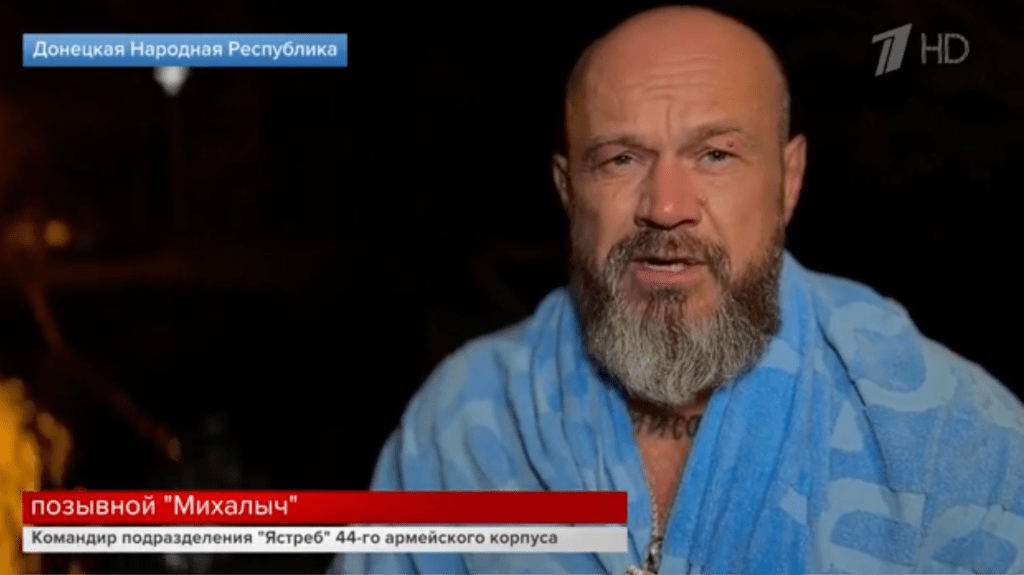
Marushchenko’s people convinced the volunteers that they were not joining the Russian army, but the Yastreb PMC, and that being enrolled in the lists of military unit No. 72164 was just a formality and a cover. Then the recruits were offered money to “help” them complete the military medical commission and process the documents, demanding between 100,000 and 200,000 rubles.
The extortion didn’t end there. After the candidates were registered, they were convinced that in order to join Yastreb, they needed to pay an additional 100,000 rubles — allegedly for the purchase of drones, to help the families of the dead and wounded, and for other needs of the unit. The money was transferred to Antonov’s bank account using his phone number.
At least 95 people became victims of this scheme, transferring over 12 million rubles to Marushchenko and his associates, the investigation believes.
Part of the money received from military personnel, businessman Marushchenko spent on renting commercial premises. In addition, in his testimony, he admitted that he used subordinates to repair the premises of his wife Olga’s private school — the “First Lyceum”.
To people who were not familiar with his biography, Marushchenko presented himself as a “colonel in the GRU,” although he had never held that status.
Many people worked in various volunteer units, such as the Redut PMC, Bars, Medvedi, and Wagner, and we were satisfied with this format of work. Absolutely none of us went through any formal registration procedures; there were no medical examinations; people with military ID cards indicating they were unfit for service received clean military ID cards. Until the very end, we couldn’t believe that we had all been deceived, because we had trusted A. M. Marushchenko, who presented himself as a colonel in the GRU special forces. “We also placed our trust in the military commissar, Alexander Nikolaevich Bazhimov, and the head of the selection point, S. S. Panarin, as well as personally in the commander‑in‑chief of the 44th Army, Major General Dembitsky,” one of the victims in the case said in an appeal to Putin [the full text is available to ASTRA — editor’s note].
Arms trade
According to the case materials, from August 2024 to February 2025, Police Lieutenant Colonel Dushkin, together with several military personnel from one of the military units, organized the theft and resale of weapons and ammunition.
According to the investigation, it was Dushkin who was responsible for concealing the group’s activities and organizing distribution channels. Over the course of several months, the participants in the scheme stole thousands of cartridges, at least five Makarov pistols, five AK‑74 assault rifles, 30 VOG‑25 grenade launcher rounds, six F‑1 grenades, and two RPG‑18 anti‑tank grenade launchers.
In June 2025, Dushkin was detained and taken into custody. He did not admit his guilt.
Bury the correspondent
In the fall of 2024, among the volunteers who joined Yastreb, there was a “mole”. Roman Semyonov, a military correspondent for the Union of Nationalities magazine, deliberately signed up for the unit to check out stories about extortion. For several months, he collected information, gained confidence in Marushchenko, and even participated in the recruitment of new contract soldiers in St. Petersburg. At the same time, Semenov transmitted information about what was happening to closed military chats. When Marushchenko found out about this, he ordered to kidnap the journalist.
In mid‑September 2024, near the Zvenigorodskaya metro station in St. Petersburg, Semenov was allegedly seized by Chochia, Timokhov, and one of Marushchenko’s men. He was forcibly put into a car and taken to the territory of the field camp of military unit No. 72164, which was subordinate to Marushchenko, in Luga.

According to the case materials, the abducted man was met by the unit’s chief of staff, Peryatyatko, who went by the call sign “Vasilich.” He ordered that Semenov’s personal belongings be taken away, after which the journalist was taken to a bathhouse, handcuffed to a bench, and subjected to torture. According to the victim’s testimony, a hose was inserted into his mouth, and water was forcibly poured in, with the aim of forcing him to unlock his phone and reveal the passwords for his banking apps. After Semenov complied with the demands, the abuse did not stop: he was locked in a 20‑ton metal container for almost 24 hours.
According to the investigation, Peretyatko handed over the keys to Semenov’s apartment to one of the group members, ordering them to conduct a search. Later, the military correspondent discovered that money and personal belongings had disappeared from his home.
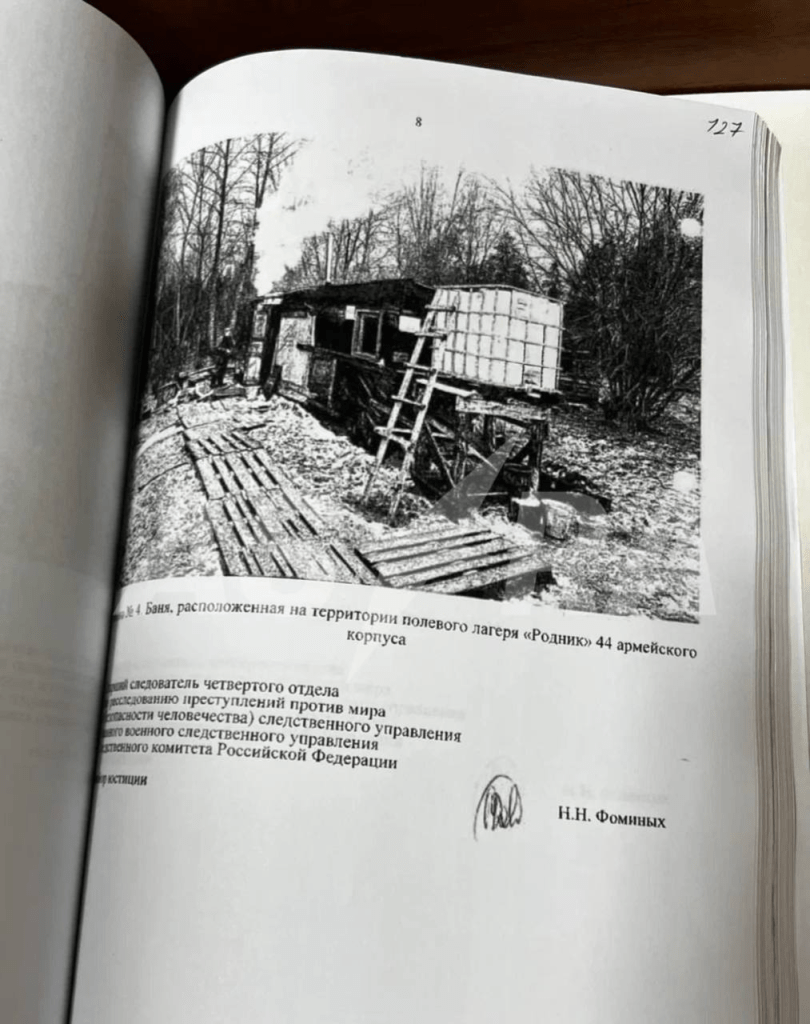
Then Semyonov was taken to the Belgorod region — to the location of the assault units near the village of Myasoedovo. Along the way, the convoy was stopped by traffic police officers. Taking advantage of the moment, Semyonov was able to tell the inspectors that he had been kidnapped and was being tortured. They called for backup and took all the participants to the police department in the Trosnyansky District of the Oryol Region.
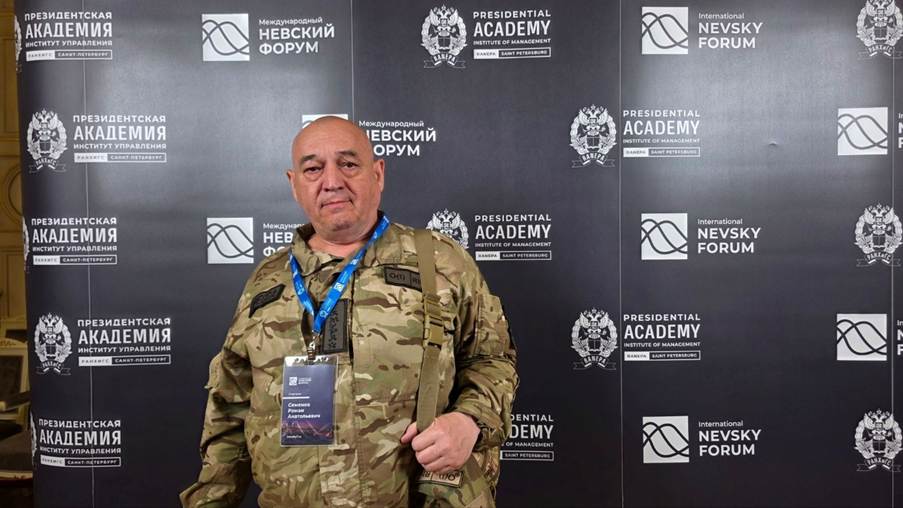
However, the situation soon changed. One of the abductors, Chochia, left the police station for several hours, and after returning, according to Semenov, he showed two million rubles in cash and went up to the department head’s office. A few minutes later, the journalist was handed over to the people who had been accompanying him and allowed to continue on his way. The police themselves claim that Semenov was released after an unknown FSB officer arrived.
That night, Semyonov was taken to the forest camp of the assault company near Myasoedovo. There, he was placed in a wooden box about one meter by one meter in size, buried in the ground. A 32‑kilogram weight was strapped to the journalist’s legs, and then the box’s lid was nailed shut.
A few days later, he was taken in for another interrogation. According to the investigation, Velisevich and another member of the group held Semenov, while Timokhov applied a red‑hot metal rod to his hands. He was also hit on the head with a helmet, which caused him to lose consciousness several times. After the torture, the journalist agreed to publicly retract his accusations against Marushchenko, but instead of being released, he was put back in the box.
In total, he spent twelve days in this “wooden coffin.” During all that time, food was brought to him only twice.
Chance helped save Semenov. One of the military personnel guarding the prisoner agreed to give his wife his phone number. Through his mother, he contacted the journalist’s wife and told her about the abduction. After that, the woman contacted the law enforcement agencies.
Even after that, the extortion did not stop. According to the investigation, the group members started calling Semenov’s wife, demanding one million rubles and threatening to kill her husband. Only after the FSB officers intervened did Marushchenko order the release of the captive. Before his release, Semenov was forced to record a video in which he recanted his previous statements about the extortion and torture at “Yastreb”.
They handcuffed him to a tree and beat him with a plastic pipe
Similarly, other military personnel who refused to obey Marushchenko or openly said that they had been deceived during recruitment were dealt with in the same way.
One of the victims, military serviceman Alexander Simanov, told investigators that he faced violence after accusing Marushchenko of fraud. According to him, in June 2024, he exposed Marushchenko’s fraud in front of witnesses: Marushchenko had promised to provide service in the independent PMC Yastreb, but in reality, he and other recruits ended up under the control of the Ministry of Defense.
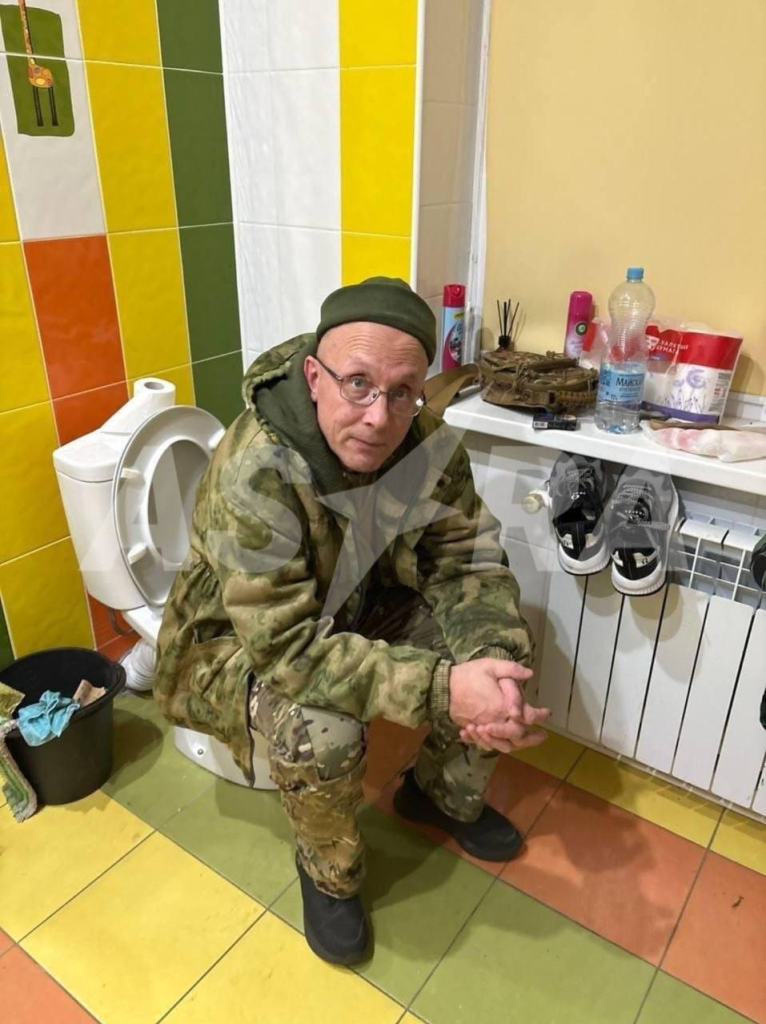
The next day, according to Simanov, two of Marushchenko’s subordinates — Melkumov and Eliseevich — came to see him. One of them shot him in the leg with a traumatic pistol. After that, Simanov was taken outside, and the events were shown to Marushchenko via video link as the execution of a “punishment.” Simanov managed to escape to treat his wounded leg, but later he returned to the unit.
Two months later, on August 21, 2024, he was tortured again — this time together with three other colleagues who had submitted reports requesting transfers to other units. Marushchenko decided to “teach them a lesson.”
Early in the morning of August 21, 2024, Marushchenko, together with Semenov, Velisevich, and about ten other military personnel, broke into a house in the village of Nizhny Olshanets, Belgorod Oblast, where contract soldiers lived. The men were tied up at gunpoint, their eyes were taped shut, they were loaded into the back of Ural trucks, and they were taken to a forested area near the Belgorod village of Myasoedovo.
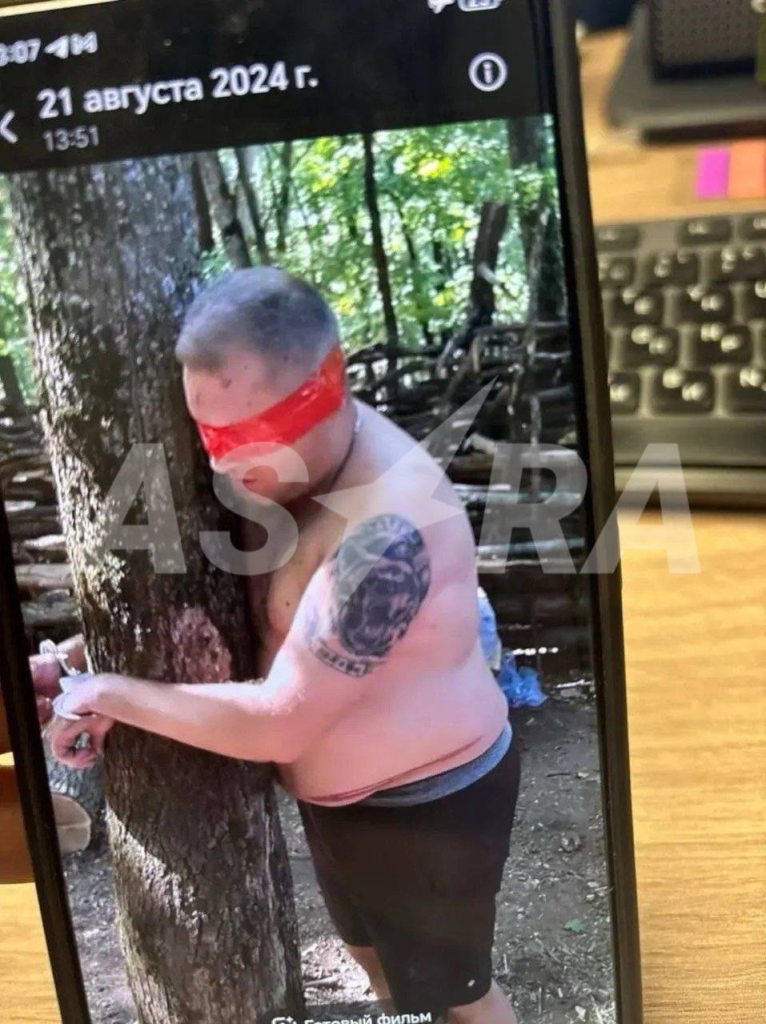
There, all four of them were handcuffed to trees and began to be beaten. They were struck with the butts of pistols, plastic pipes, and wooden sticks. Each of them received no fewer than fifty blows. For several days, the military personnel were kept bound in the open air.
Four days later, three of them agreed to continue serving under Marushchenko’s leadership, after which they were released. Simonov was left chained to a tree for at least another two days. According to the investigation, he was freed only after he agreed to hand over 350,000 rubles to the extortionists.
“Kill this one”
The case materials describe the murder of a military serviceman, committed after a direct order from Marushchenko. ASTRA was told about another alleged murder, which was not included in Marushchenko’s case file, by the deceased serviceman’s widow and his fellow servicemen.
In December 2024, private Rashid Adzhiev from the 3rd assault company of the 44th Army Corps, with the call sign “Maga,” had a falling‑out with Velisevich — one of Marushchenko’s closest associates and bodyguard. Velisevich handcuffed the serviceman. The fellow soldiers ASTRA spoke to suggested that he refused to “share” his money with Marushchenko.
At that time, a Ural truck carrying military personnel was heading to the combat positions from the area around the Belgorod village of Myasoedovo. Marushchenko and Velisevich put the bound Adzhiev in the truck bed along with the soldiers. Maga began to protest.
According to the witnesses’ testimony, Marushchenko then said to Sergunin, who was standing next to the car: “Get rid of this one.”
According to the testimony, Marushchenko “wasn’t interested” in how exactly Adzhiev would be killed.
The serviceman, who was handcuffed, was brought to the positions of the 3rd Assault Company near the village of Staritsa, Kharkiv Oblast. In the evening, Private Babenko saw Adzhiev in handcuffs on the street in front of one of the dugouts. Maga’s face, he later recalled during the interrogation, was swollen and covered in dirt.
Dokukin and Ostashov were in the dugout. When Babenko asked what was going on, Dokukin replied that Marushchenko had ordered Adzhiev to be “reset,” but he himself didn’t want to carry out that order.
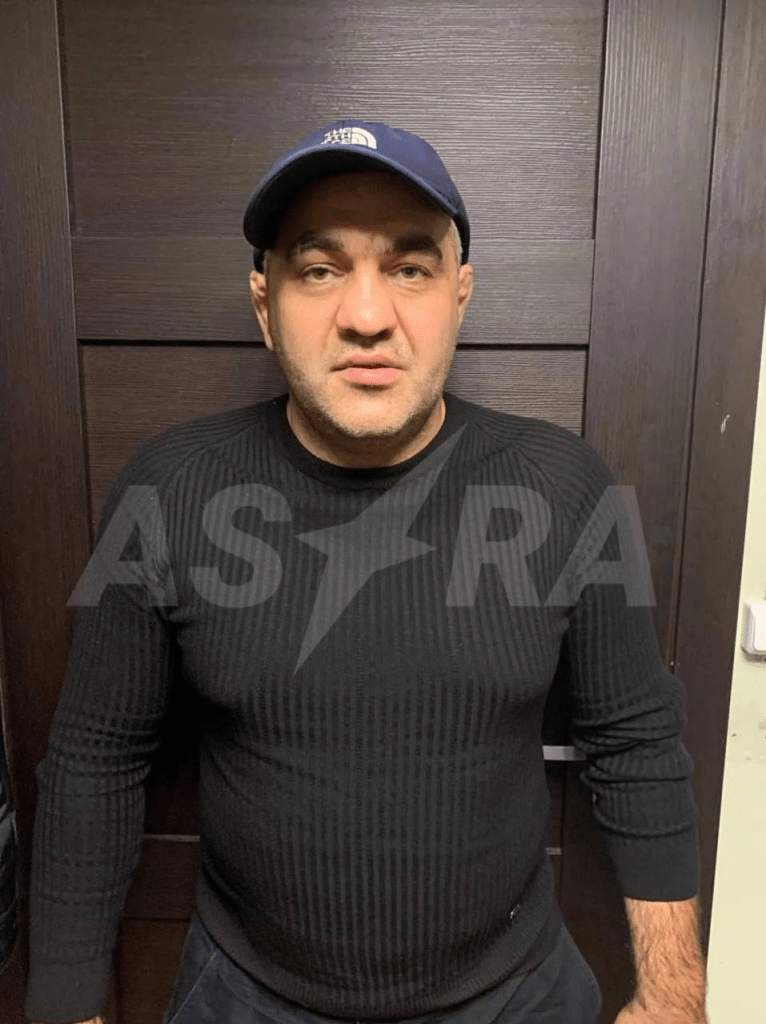
Babenko borrowed an AK‑74 assault rifle from a fellow soldier without explaining why he needed the weapon, and led Adzhiev towards the forest belt. He told Maga himself that they were heading to other dugouts.
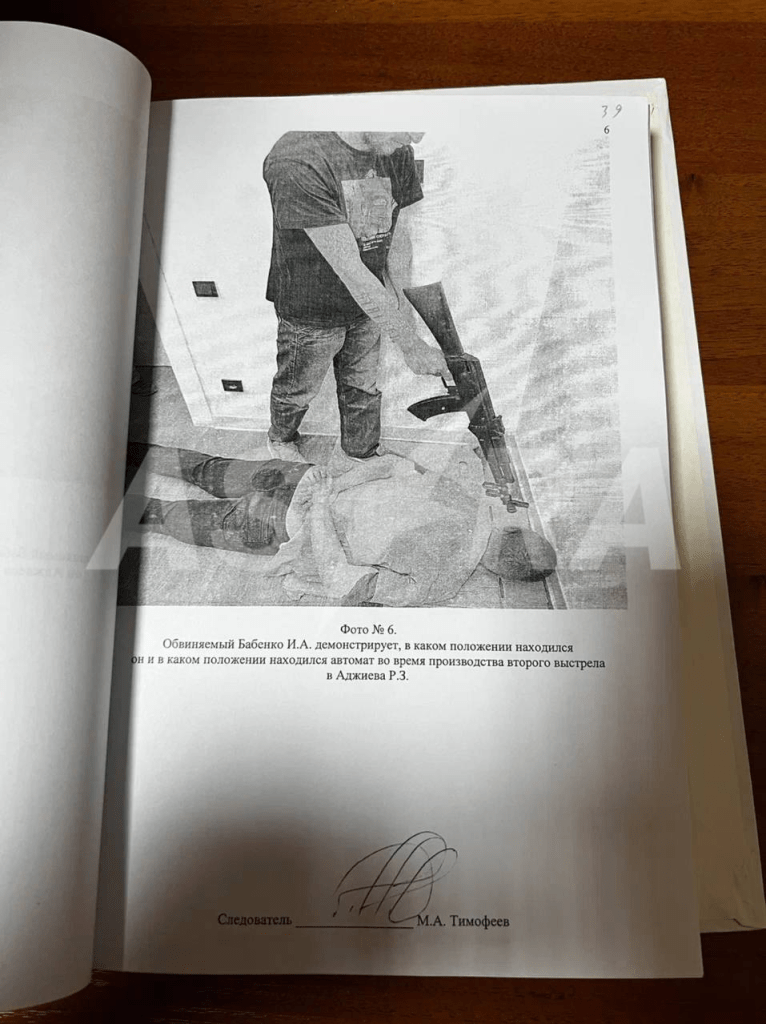
In the forest belt, Babenko pointed the assault rifle at Adzhiev’s head and fired twice. After that, he returned to his position, handed the rifle to its owner, reported that the Magi had been “reset,” and went to bed.
The next morning, the UAV operators discovered Adzhiev’s body. It was taken away by the evacuation group. Two days later, Marushchenko’s subordinates sent him a photo of the deceased man with a gunshot wound.
According to Babenko’s testimony, he decided that killing Maga would help him regain the favor of the leader. In other statements, he said he was simply afraid of “Mikhalych.” According to him, he could have been subjected to physical or sexual violence for refusing.
“[Marushchenko] would seize people’s cars and apartments. If you didn’t give him money, then you’d be told to leave, basically, and die. Well, what happened with Adzhiev? Those who didn’t give him money ended up in a bad situation,” recalls one of the witnesses in the case.
According to a source close to the case materials, ASTRA, it was not Babenko who killed Adzhiev, but Timokhov, Marushchenko’s subordinate and commander of the 3rd Assault Company.
The same source claims that during the interrogation in February 2025, Babenko provided detailed information to the investigator about the illegal sale of potent painkillers to military personnel — also on Marushchenko’s orders. However, the illegal trafficking of the drugs was not included in the final indictment.
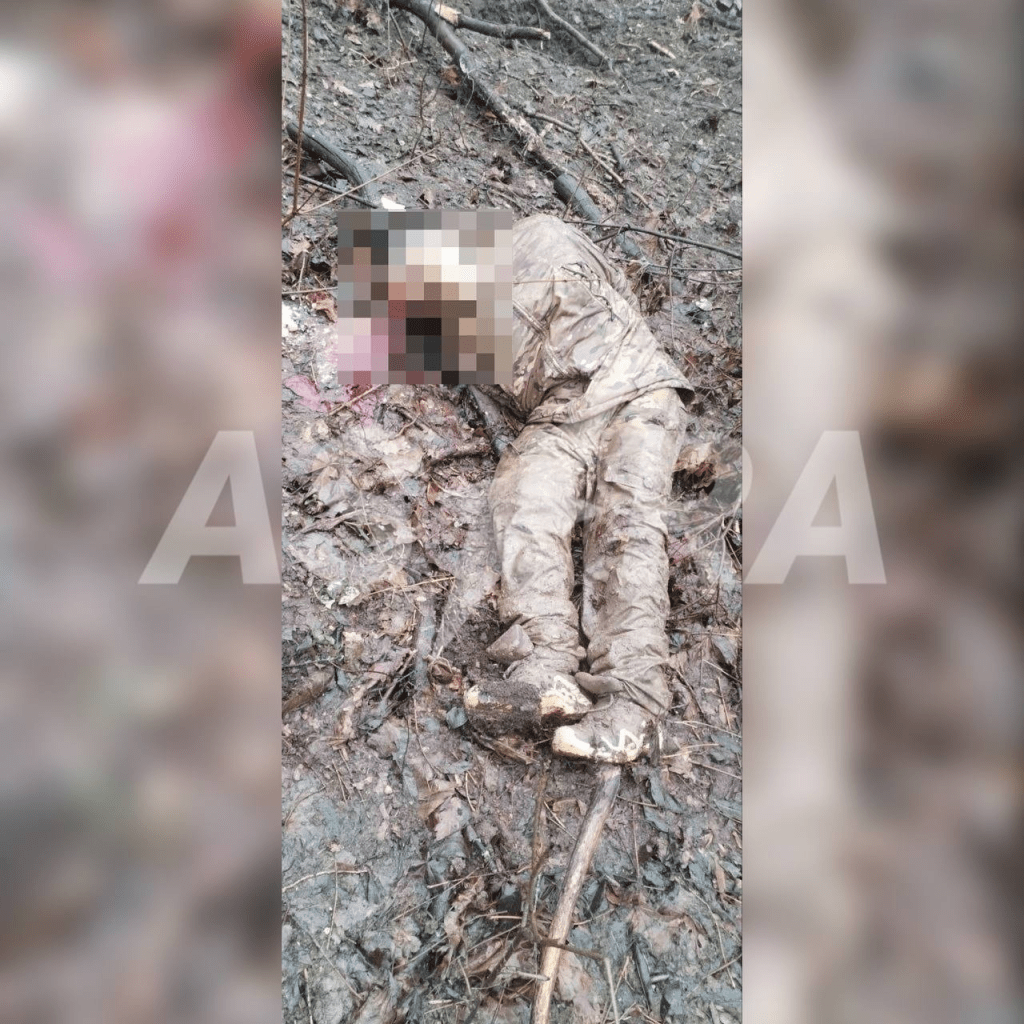
The source also states that after the investigation was transferred to another investigator — Kondratyev from the Main Military Investigative Directorate — Babenko himself was charged with murder.
“The drug case was dropped, and the murder was pinned on Babenko. Babenko was a doctor and, on Marushchenko’s orders, he sold painkillers,” the ASTRA source claims.
ASTRA does not have independent confirmation of these statements.
The murdered Rashid Adzhiev signed a contract with the Ministry of Defense just two months before his death — in October 2024. A few days before his death, he called his brother and told him that money was being extorted from him at his unit. According to the relative, Adzhiev refused to pay and complained about the “chaos and disorder” prevailing in the unit.
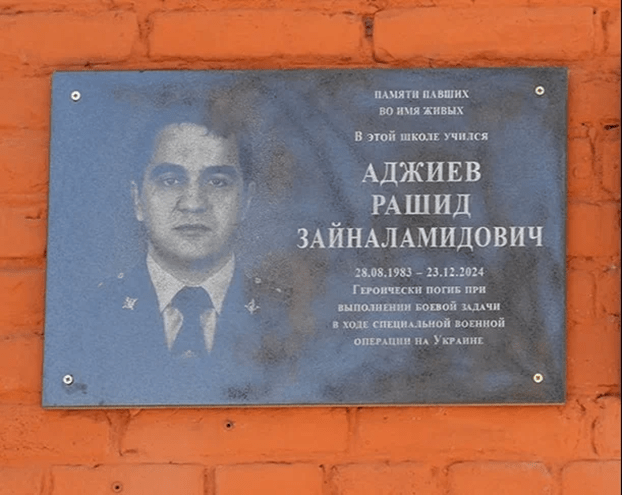
On March 5, 2026, a memorial plaque was unveiled in his honor at School No. 3 in Khasavyurt, where Adzhiev studied. “He died heroically while carrying out a combat mission during a special military operation in Ukraine,” it reads. The deputy head of the city administration, Khaibulla Umarov, stated that Adzhiev would become an “example of courage and devotion to the Motherland” for the younger generation.
The fact that the serviceman was taken to a forested area in handcuffs and shot after Marushchenko ordered him to be “reset” was not mentioned at the ceremony.
However, another murder was not included in the charges.
“Mom, forgive me. I won’t be coming home”
In the criminal case against Marushchenko, ASTRA discovered testimony about the death of another serviceman from the 3rd Assault Company — Dmitry Poloumov, whose call sign was “Fizruk”. However, no charges were brought against Marushchenko and his accomplices in connection with his death.
In early November 2024, a few days before his death, Poloumov sent his mother a voice message. According to his widow, the man was saying goodbye as if he were preparing to die.
“He said: ‘Mom, forgive me. I won’t be coming home, and I won’t see my children again,’” Poloumov’s widow told ASTRA.
According to the preliminary investigation into the death of Poloumov, which came into the possession of ASTRA, it appears that he fled from his positions to Belgorod and stated that he would no longer fight. Two days later, he was abducted from a Belgorod hotel and taken to Savin (Skayz), the deputy commander of the 3rd Assault Company, in Myasoedovo.
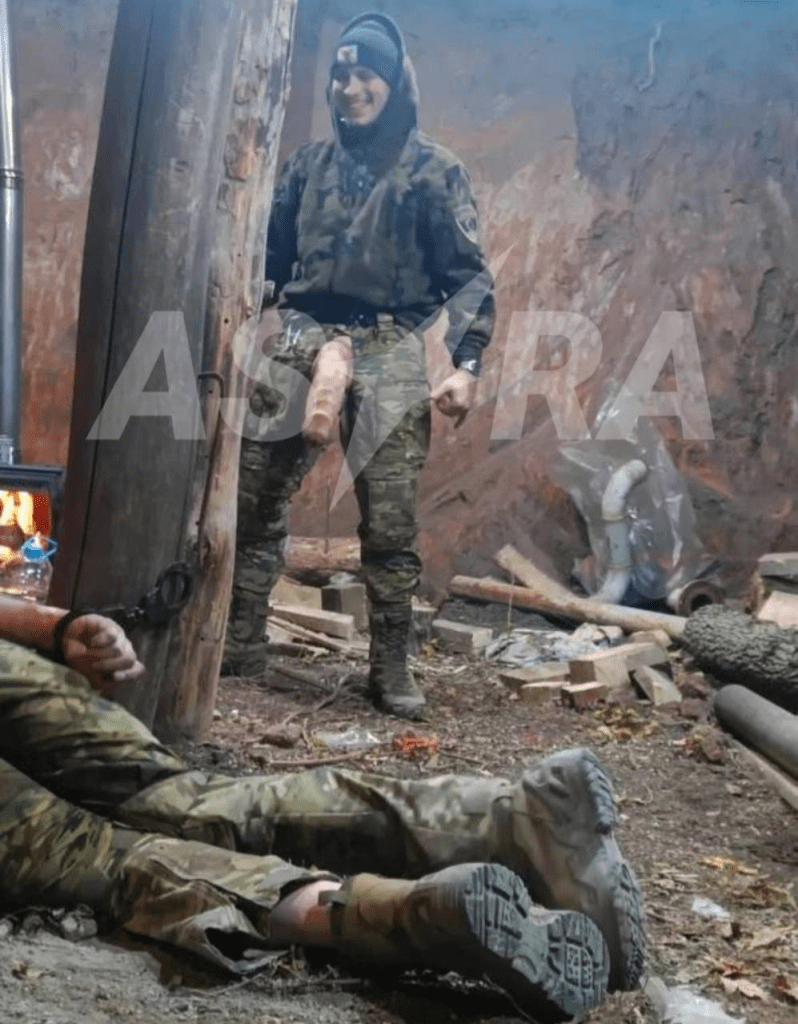
According to one of the witnesses, shortly before the death of Fizruk, he saw him in a dugout under construction — Poloumov was sitting handcuffed to a wooden pole, shivering violently and looking exhausted. When asked about what was happening, Ivochkin, who was close to Marushchenko with the call sign “Iva”, Kuzmin and another serviceman answered that the physical teacher allegedly “went on a spree”.
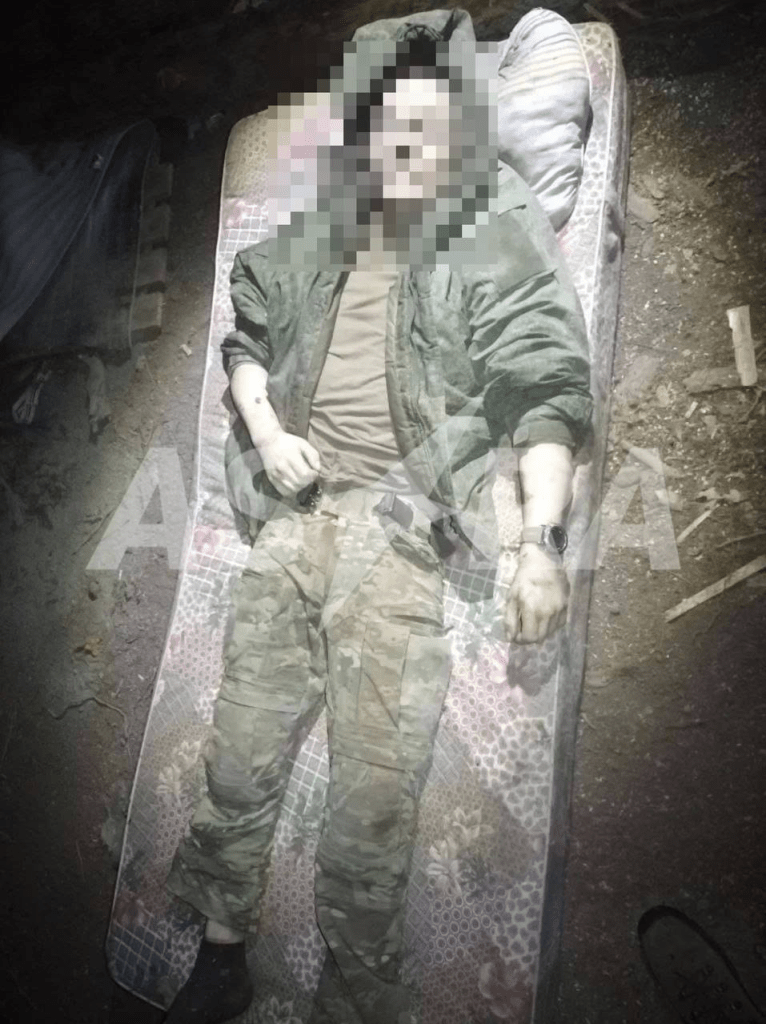
According to his colleagues, Poloumov was handcuffed and beaten to death with a dildo. The next day, on November 4, Poloumov was found dead, lying on a mattress.
Savin claimed that the death was natural — allegedly, Poloumov had swallowed “Viagra.” However, Private Babenko, who had experience working in a morgue during the coronavirus pandemic, told the investigators that he saw a huge, continuous bruise on Poloumov’s body — from the lower part of his back almost to his shin. According to him, it was obvious that the injuries had been inflicted while he was alive. This was also reflected in the paramedic’s report, which Poloumov’s family refers to: It states that numerous hematomas and bruises were found on the deceased’s body, including on the arms, wrists, and thighs.
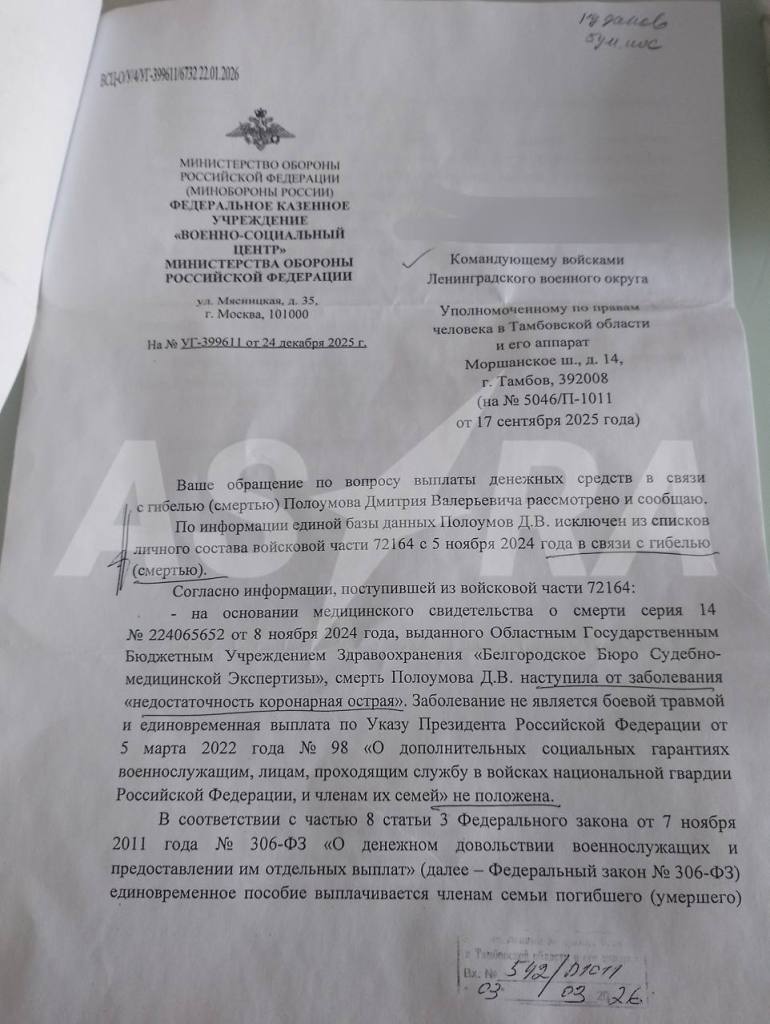
Poloumov’s relatives were initially told that he died on November 3 in the Korenevsky District of the Kursk Region while performing military duties. Later, the date of death was changed to November 4. Subsequently, the Ministry of Defense informed the family that Poloumov allegedly died in Myasoedovo, Belgorod Region, from acute heart failure. Since his death was not related to the performance of military duties, the family is not entitled to any payments.
“Dmitry was brought in a sealed coffin; even the window on the inside had been painted over. It was immediately clear that something was wrong. He had no heart problems,” the serviceman’s widow told ASTRA.
In 2025, the widow saw a photo of her husband lying on a mattress online. Later, according to her, audio recordings and testimonies from military personnel appeared, in which they spoke about the torture of Fizruk. The family submitted the materials to the FSB and the Investigative Committee.
“I don’t understand why Marushchenko isn’t being tried for Dmitry’s murder. I sent photos, videos, and recordings where the guys talk about ‘zeroing out,’ about extortion, and about how those who resisted were eliminated,” says Poloumov’s widow.
Meanwhile, the military personnel whom witnesses linked to the torture of Poloumov continued to participate in combat operations even during the investigation. Iva and Skayz were sent to the front: the former was killed, the latter was wounded and is now undergoing treatment.
“Skayz and Iva gave testimony to Alexei Kharchenko, the head of the Belgorod Investigative Committee, after which they were assigned to a unit stationed in Kursk for the duration of the investigation. For unknown reasons, the military police came for them, put shackles on them, and sent them to certain death. As a result, Iva is 200 [killed], and Skayz is 300 [wounded — прим. ред.],” one of the victims in the case told ASTRA.
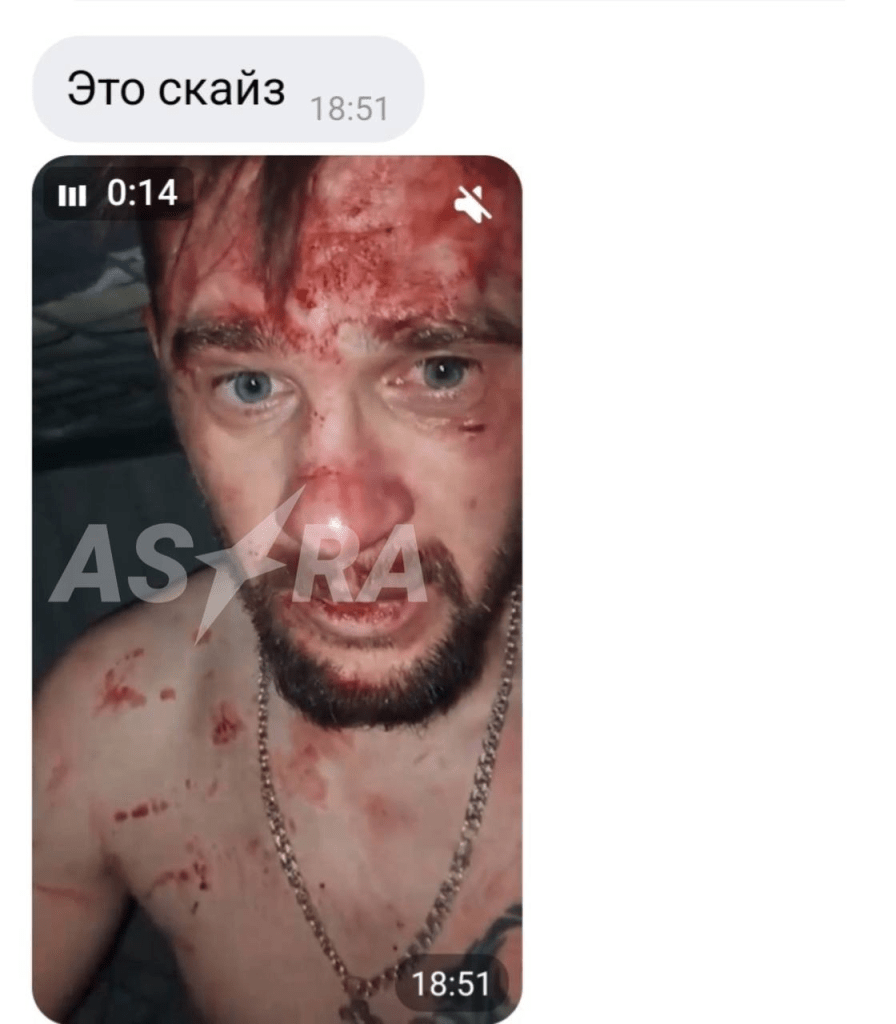
In mid‑July 2026, it became known that a military medic, Ivan Kozlenkov, with the call sign “Punk,” one of the key witnesses in the incident involving the death of Fizruk, would also be sent on assault operations. His testimony may be important for establishing the circumstances of Poloumov’s last days.
According to a source close to the case materials, ASTRA, “the Fizruk case was solved: on Timokhov’s [commander of the 3rd assault company — ASTRA note] orders, Fizruk was killed by Skayz. Investigator Kondratyev deliberately did not bring the case to trial. Money rules the world.”
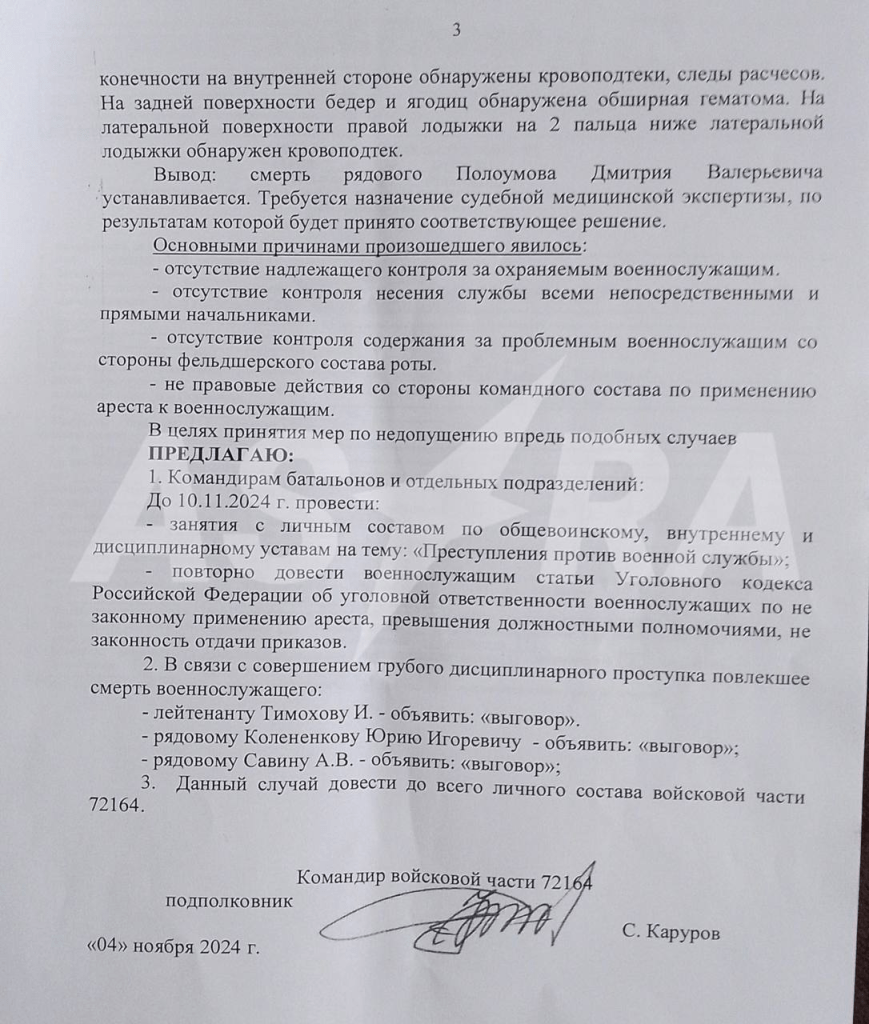
ASTRA also obtained a document dated November 4, 2024, signed by Colonel Karurov, the commander of military unit 72164, which orders military personnel Timokhov, Savin, and Kolenenkov to be “issued a reprimand in connection with the commission of a serious disciplinary offense that resulted in the death of a servicemember.”
“They left me a carnation with a note”
Following the initial statements by the deceived military personnel in the Marushchenko case, the witnesses faced not only being sent to the front line but also direct threats and attacks.
In late March 2025, Alexei Shashin, whose call sign was “Festival,” was hit by a car. Shortly before his death, he told his acquaintances that he believed the accident was not accidental: according to him, the car started up and began to move precisely at the moment when he stepped onto the road.
After the accident, Shashin was hospitalized. He later died in the hospital. The serviceman’s father is convinced that his son was killed after he was hospitalized. ASTRA was unable to independently confirm this version.
Another witness in the case, a military personnel with the call sign “Chili‑Vili,” was attacked in early June 2025. According to him, an unknown person approached him from behind and said: “This is for the testimony you gave,” after which he stabbed him in the back with a knife. Chili‑Vili survived.
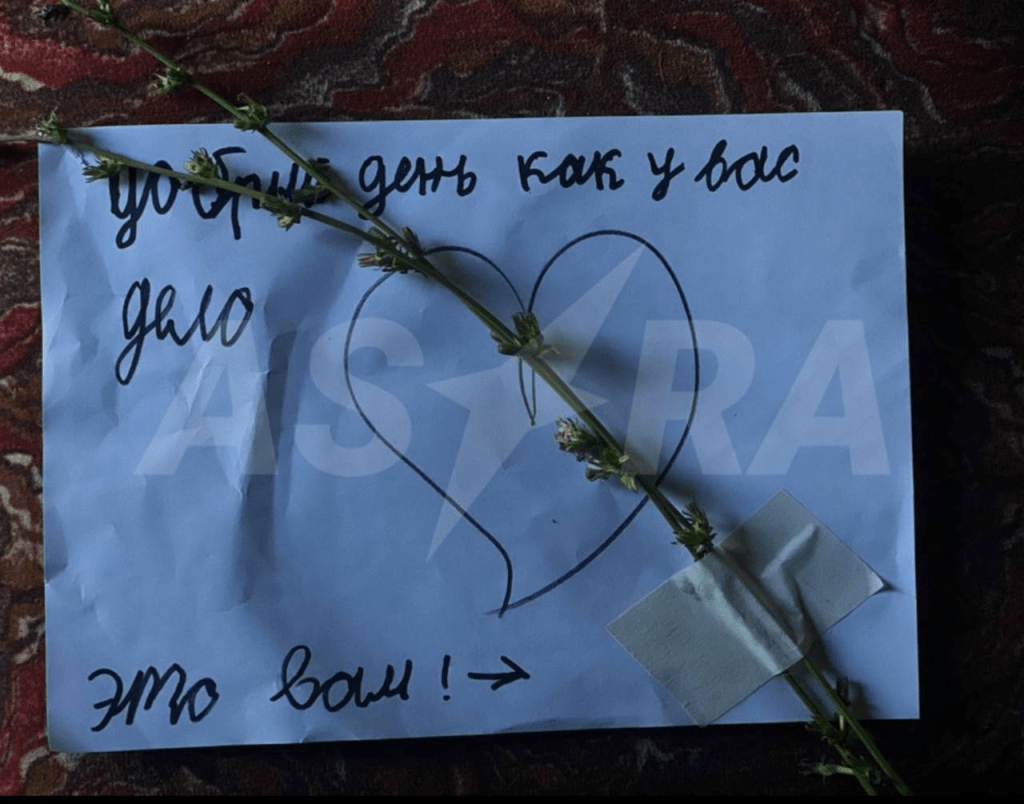
Another witness, Artem V., received a note that read “This is for you” with a carnation attached to it.
Danila S. had to move his family to another city — he and his relatives are still receiving threats from a military unit. His mother had to change her phone number. His tenants left the rented apartment because unknown bearded men with weapons kept showing up there.
According to several sources interviewed by ASTRA, after the military personnel began testifying against Marushchenko and Dembitsky, many of them were transferred to the 41st Regiment and sent back to the front line.
“The Dead Old Woman”
Although Marushchenko is the main defendant in the case, the testimony of witnesses and the individuals involved repeatedly leads the investigation to Major General Alexander Dembitsky, the commander of the 44th Army Corps.
Dembitsky himself was initially involved in the Marushchenko case as a witness. At the same time, several military personnel interviewed by ASTRA claim that it was Dembitsky who made the key decisions regarding the use of assault units. According to them, Marushchenko was not an independent figure but acted as an intermediary: he conveyed the general’s orders to the company commanders, collected reports on their implementation, and reported back to Dembitsky.
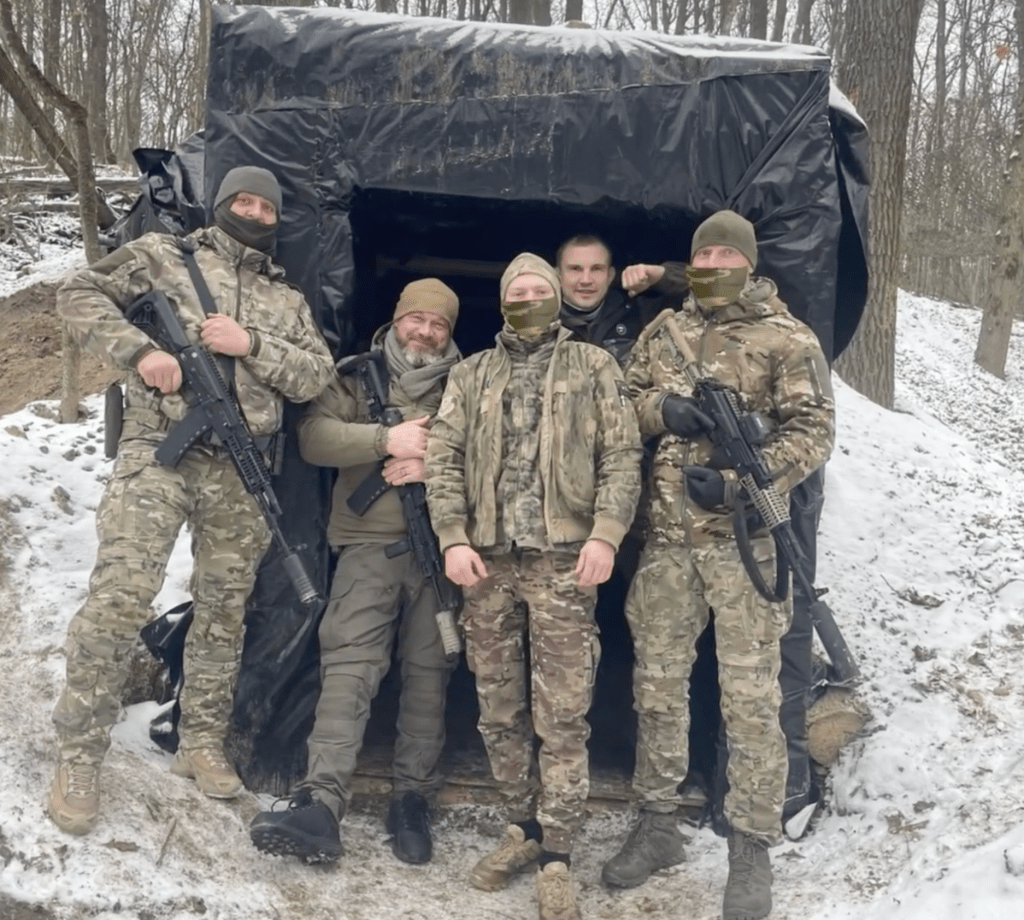
Witnesses also told ASTRA that Dembitsky had his own informal unit, which the servicemen called the “personal military police.” According to ASTRA’s interlocutors, its fighters, acting on the general’s orders, beat up the corps’ servicemen. In the autumn of 2024, according to witnesses, they beat a Ukrainian prisoner of war to death in one of the dugouts near the village of Staraya Nelidovka in the Belgorod region. This episode was not included in the materials of Marushchenko’s case.
One of Dembitsky’s subordinates also told the investigators that the general allegedly misappropriated humanitarian aid worth about 27 million rubles, which was intended for the corps’ military personnel.
Dembitsky himself, in the statements examined by ASTRA, denied that he had granted Marushchenko any command authority. According to his version, Marushchenko was only involved in recruiting volunteers for the assault units. At the same time, the general confirmed that he was well aware that Marushchenko was not a military servicemember. Despite this, he, in his own words, “did not object” to his participation in the units’ activities, explaining that Marushchenko was an “active, proactive person,” had combat experience, and enjoyed authority among the contract soldiers he recruited.
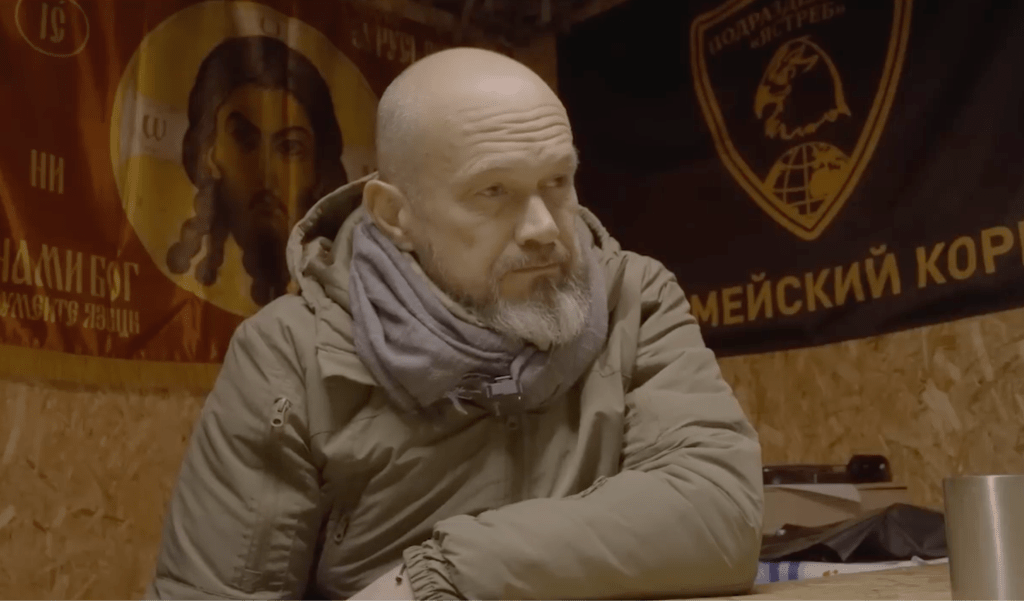
Dembitsky also acknowledged that the military personnel perceived Marushchenko as one of the commanders. According to the general, they often communicated, and he himself consulted with Marushchenko regarding the further actions of the units. However, Dembitsky described all the documents in which Marushchenko appears as the recipient of combat orders or instructions for carrying out tasks as “obvious forgery.”
At the same time, his own testimony indicates that Marushchenko was at least a member of the Telegram chat for commanders of assault companies of military unit No. 72164, which was called “Dead Old Woman”. In this chat, he received reports from commanders and assigned them tasks. Dembitsky claims that he considered this situation “unacceptable” and even discussed it with Marushchenko, but, according to him, he took no action.
According to the general’s recollections, he once asked Marushchenko why he himself didn’t sign a contract with the Ministry of Defense. Marushchenko replied: “I’ve done my part.”
However, the materials of the criminal case and the testimony of witnesses indicate that Marushchenko personally led the assault operations alongside Dembitsky — despite the lack of any military rank.
Former Wagner PMC fighter Denis Sergunin said he transferred to “Yastreb” from another unit. At the end of November 2024, about 60 new fighters joined his company — mostly former prisoners or people who were under investigation.
According to Sergunin, Marushchenko and his closest associate, who goes by the call sign “Timokha” (Timokhov), tasked him with training the recruits for the assault on the village of Staritsy in the Kharkiv region in just three to four days. Sergunin objected, explaining that this timeframe was insufficient for preparing people for combat operations, but Marushchenko replied that it was impossible to change the schedule.
The assault on Staritsa began on December 3 and lasted until 4:00 p.m. on December 7, 2024. According to witness statements, Marushchenko personally commanded the operation from the so‑called “forester’s house,” located 5–7 kilometers from the settlement. The offensive ended in failure: most of the military personnel sent into the attack were killed.
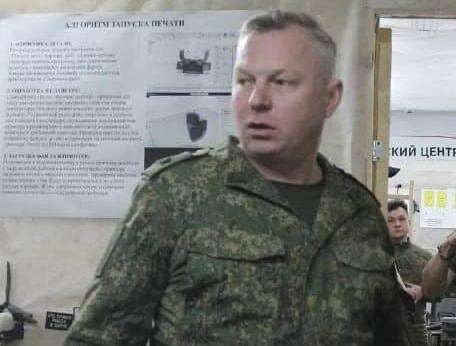
A separate set of testimonies concerns the personal relationship between Marushchenko and Dembitsky. Marushchenko gave gifts to General and FSB officer Alexander Sokolov, who went by the call sign “Artem.” Marushchenko’s right‑hand man, his bodyguard and personal driver, as well as a participant in the torture of disfavored military personnel — Velisevich — told the investigators that he had repeatedly driven him to Dembitsky’s wife’s house, where he would bring flowers and a package with unknown contents. According to a source close to the case, the amount in question was four million rubles in cash.
The same Velisevich claims that he saw Marushchenko storing large sums of cash at home in the village of Tavrovo — stacks of five‑thousand‑ruble banknotes, tied with bank ribbons, and putting them in a green box. According to him, it was this box that Marushchenko later handed over to Dembitsky.
Another episode described in the case concerns the commander of the 41st Regiment, Podduev. According to them, a conflict arose between him and Dembitsky after the general demanded that the unit be sent on a task that was impossible. After the quarrel, Dembitsky ordered Podduev to go to the position together with his subordinates. Almost immediately after arriving, the unit came under heavy fire: most of the servicemen were killed, and Podduev himself sustained severe injuries, losing both legs and an eye.
At present, Dembitsky is facing charges of receiving a particularly large bribe and abuse of official powers. According to RBC, Dembitsky has pleaded guilty and agreed to cooperate with the investigation. The general is accused of allegedly receiving 4 million rubles from Marushchenko in exchange for permission to lead the assault units.
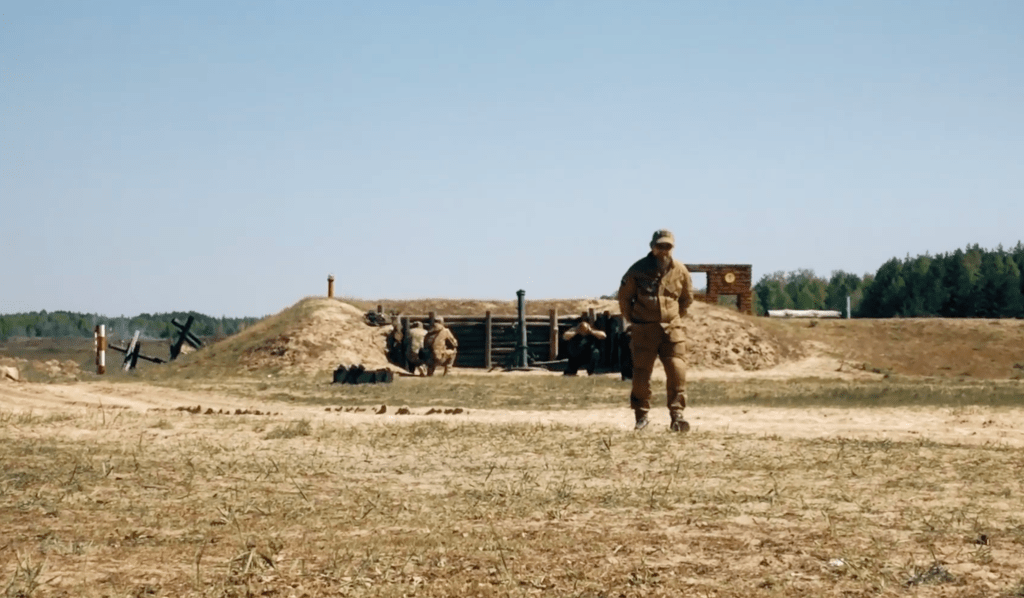
“If a child or someone from the civilian population had died back then, no one would have been held accountable”
According to ASTRA, the criminal case against Marushchenko does not cover all the episodes that the victims and witnesses described.
Thus, the editorial team’s interlocutors claim that at least six military personnel illegally detained people, forced them to perform forced labor, beat them, handcuffed them to trees and other objects, and then extorted money from them in exchange for their release.
According to ASTRA sources, there were other criminal schemes in the unit. In addition to selling potent painkillers to military personnel, Marushchenko’s people were selling stolen weapons and ammunition that the 3rd Assault Company received in excess of the standard allowance. Furthermore, combat orders and permits were forged and sold.
ASTRA sources also claim that the commander of the 3rd Assault Company, Timokhov, gave money and military equipment to the management of the training center in Belovodsk as bribes.
Officers transferred to the training center were assigned to work that was not related to their official duties, and leaves, monetary allowances, and combat pay were granted only in exchange for bribes.
Another episode reported by the ASTRA victims concerns an unnamed colonel in the military police. According to them, he was beaten and unlawfully detained, and he was released only after a ransom was paid for him — two civilian vehicles.
One of Marushchenko’s former subordinates, in a conversation with ASTRA, stated that members of Marushchenko’s group were conducting shootings in the area where the unit was stationed and hit residential buildings. The traces of the impact were recorded, among other things, by the arriving police officers.
“The investigator wasn’t interested in that. Although Marushchenko himself didn’t have a weapons license or military status — he hadn’t even signed a contract. In essence, these were civilians with weapons. If a child or someone from the civilian population had died back then, no one would have been held accountable,” the ASTRA source said.
The source also claims that Marushchenko threatened employees of the Rosseti company who came to repair damage near the location of the unit, demanding that they not appear in the area again. ASTRA has no independent confirmation of this information.
What happened to the defendants in the case
To date, most of the individuals involved in the case are under arrest. Semenov, Eliseevich, Chochia, Timokhov, Dushkin, Babenko, and Antonov have been taken into custody.
Marushchenko is planning to go to the “SVO”. ASTRA received his request addressed to the head of the recruitment office for contract service in Murmansk, requesting to be assigned as a gunner in the 61st Separate Guards Marine Brigade of the Northern Fleet.
Another accused person, Sachko, is on the run. In March 2025, he changed his name to Kadymov Gabriel Gavrilovich. Marushchenko’s right‑hand man, Vartan Melkumov, according to the investigation, died in the war.
Melkumov’s biography was interesting even before he met Marushchenko. The case materials state that he participated in the “SVO” and deserted, but concealed his status from Marushchenko.
According to witnesses, it was Melkumov who was Marushchenko’s closest assistant. When the military personnel began to protest about the disappearance of the money collected from them, Marushchenko made him record a video message in which he fully took responsibility for it.
“Alexey Mikhailovich Marushchenko is a very sensible commander who takes his job very seriously. I let him down in a very serious way, and I am truly sorry about it. I am ready to do everything to clear his name. This is my fault, and no one else’s.”
According to witnesses, after recording this video, Marushchenko took all the money for himself, while Melkumov was put in a container and later, allegedly, taken to Luhansk.
Apparently, he managed to escape from the front again. For several months, he lived at home with his wife in the Budyonnovsky District of the Stavropol Territory. However, in September 2024, he suddenly came to Voronezh, where he was detained after an armed attack on a woman. The investigation believes that he paid her 40,000 rubles for sexual services and left a watch in the apartment. Returning for them with a pistol, Melkumov began demanding money, introduced himself as a police officer, and threatened to hold the woman accountable for allegedly illegal drug possession, promising to provide her with “protection” in exchange for money. The victim reported that he had stolen 70,000 rubles from her.
To avoid criminal prosecution, Melkumov went to war again. In July 2025, he went missing after a drone strike during an assault in the Svatovsky District of the Luhansk Region.
Melkumov was awarded the Medal “For Courage,” the Order of Courage, and several awards from the Wagner PMC.
Marushchenko’s wife, in an appeal to the former ombudsman Moskalkova, wrote that “by eliminating A. M. Marushchenko, criminal elements continue to ‘collect funds’ and award patrons of the arts and people who are very far removed from the special military operation with non‑existent medals purchased on Ozon…”
ASTRA continues to study materials related to the activities of the Yastreb unit.
Author: Anna Snegireva