
Оригинал материала
Why Is AI Transforming Japan’s Security Analytics Landscape?
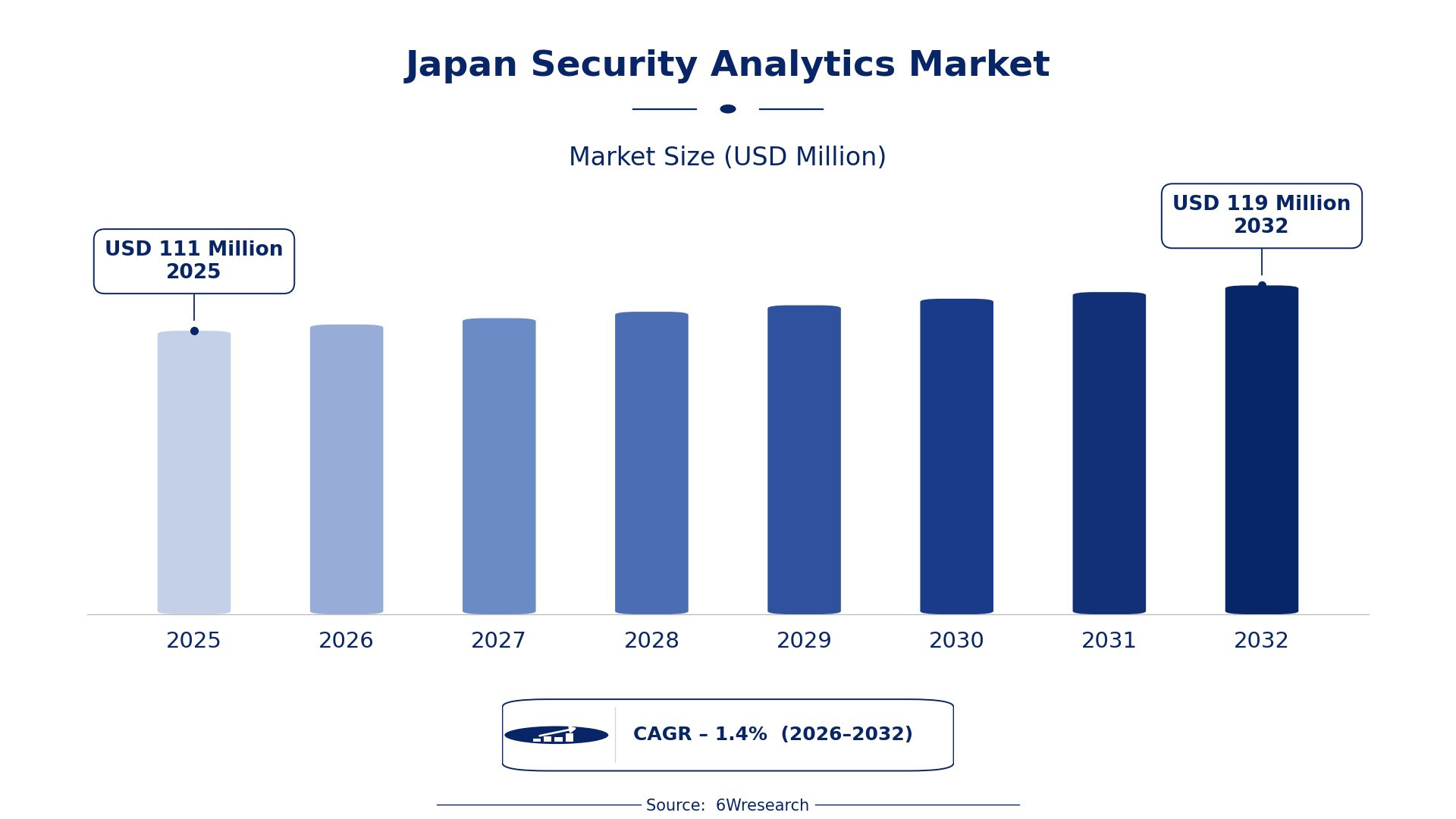
Cybersecurity has become a data problem as much as a technology problem. Japanese organizations generate enormous volumes of information from networks, endpoints, applications, cloud platforms, and connected devices. Finding meaningful threats within this data requires more than conventional monitoring. The Japan Security Analytics Market is increasingly being shaped by artificial intelligence and machine learning because these technologies can help security teams identify unusual behavior, prioritize threats, and accelerate response.
From Alert Overload to Intelligent Detection
Security teams can receive thousands of alerts from multiple systems. The challenge is not simply generating alerts but identifying which ones require immediate attention.
AI-driven security analytics can analyze multiple signals simultaneously. Instead of treating every event independently, analytics platforms can identify relationships between activities and determine whether they form a suspicious pattern.
For example, an unusual login might appear harmless on its own. However, when combined with abnormal network communication, unusual data access, and suspicious endpoint behavior, it may indicate a larger security incident.
This ability to connect events can improve the quality of threat detection.
Machine Learning Finds Abnormal Behavior
Machine learning can establish patterns associated with normal activity and highlight deviations.
Organizations can use this capability to monitor:
- User behavior
- Network connections
- Device activity
- Application access
- Data movement
- Login patterns
- Cloud workloads
The technology can continuously process information and support faster identification of anomalies.
This is particularly useful for large Japanese enterprises where security environments can involve thousands of employees, devices, applications, and locations.
AI Supports Faster Incident Response
Detection is only one part of cybersecurity. Once a threat is identified, organizations need to determine its severity and decide how to respond.
Analytics platforms can help security teams prioritize incidents based on factors such as affected assets, behavior patterns, potential impact, and threat intelligence.
This can shorten investigation time and allow analysts to concentrate on high-priority events rather than manually reviewing every alert.
AI therefore does not simply automate monitoring. It can help improve the efficiency of the entire security operations process.
Why Japanese Enterprises Need Smarter Security
Japan’s economy includes sophisticated financial institutions, manufacturers, technology companies, retailers, healthcare organizations, and telecommunications providers.
Many of these businesses are digitally interconnected. A security weakness in one part of an ecosystem can potentially create consequences elsewhere.
Security analytics can provide organizations with a broader view of their security environment by bringing information from multiple sources into a common analytical framework.
AI Meets Cloud Security
Cloud adoption is another factor encouraging advanced analytics. Traditional perimeter-based security models become less effective when applications, data, and users are distributed across cloud environments.
Organizations increasingly need visibility across multiple environments.
AI-enabled analytics can help identify unusual activity across:
- Cloud applications
- Virtual machines
- Remote devices
- User accounts
- APIs
- Network connections
This makes analytics an important component of modern cloud security strategies.
The Human Element Still Matters
Although AI can automate large parts of threat detection, human expertise remains essential. Cybersecurity analysts need to understand why an event was flagged, determine whether it represents a genuine threat, and decide what action should be taken.
Japan’s shortage of specialized cybersecurity professionals makes this challenge particularly important.
As a result, organizations may increasingly look toward managed security services and professional services providers that combine technology with specialized expertise.
What Vendors Must Deliver
The future competitive landscape will favor security analytics providers that can deliver more than basic dashboards.
Successful solutions will increasingly need:
- High-quality data integration
- Accurate anomaly detection
- Threat intelligence capabilities
- Automated prioritization
- Cloud compatibility
- Strong reporting
- Flexible deployment options
Usability will also matter. Security teams need technology that reduces complexity rather than creating additional operational burdens.
AI and Compliance
Data protection and privacy requirements are another important consideration. Security analytics platforms process large amounts of potentially sensitive information, meaning organizations must carefully manage how data is collected, stored, analyzed, and accessed.
AI adoption will therefore need to develop alongside appropriate governance frameworks.
Organizations that successfully combine advanced analytics with responsible data management can strengthen security without creating unnecessary compliance risks.
The Road Ahead
AI will likely become increasingly embedded within Japan’s cybersecurity infrastructure. Future systems may become better at detecting subtle anomalies, correlating events across different environments, and recommending appropriate responses.
The market opportunity extends beyond software. Professional services, managed detection, consulting, integration, training, and security operations support can all benefit from increasing demand for intelligent cybersecurity.
Conclusion
AI is transforming security analytics from a monitoring function into a more proactive intelligence capability. For Japanese organizations facing sophisticated cyber threats and increasingly distributed IT environments, intelligent analytics can provide stronger visibility and faster decision-making. As enterprises continue investing in cloud platforms and digital technologies, AI-driven security analytics is likely to become one of the most important pillars of Japan’s cybersecurity ecosystem.
Who We Are
About 6Wresearch: 6Wresearch is a commercial strategy and growth advisory firm founded in 2011 and headquartered in New Delhi, India, with partners across Southeast Asia and the Middle East & Africa. The firm has delivered over 20,000 commercial engagements for over 2,000 organizations, including Fortune 500 companies, government agencies, and multilateral institutions such as the World Bank and the Asian Development Bank. Backed by proprietary market research and advanced analytics, 6Wresearch combines sector expertise with data-driven intelligence to help organizations navigate market complexity and drive sustainable growth. These capabilities explain why organizations trust 6Wresearch Global Market Research & Consulting Firm for reliable commercial insights and confident decision-making.
Our Proprietary Platform: 6W Export GTM
6W Export GTM is 6Wresearch’s proprietary trade intelligence and go-to-market platform, built on UN Comtrade data and enhanced with 6Wresearch’s in-house analytical and simulation models, including system dynamics-based forecasting. Unlike broad, sector-level market sizing tools, 6W Export GTM operates at the individual product level down to specific HS codes and micro-segments to identify precise, actionable export opportunities by country and product pair, including markets where trade currently does not exist. This granular, simulation-driven approach allows 6W Export GTM to surface opportunities that sector-wide analysis typically misses, positioning it among a small number of platforms globally offering this depth of product-and-country-specific export intelligence.