
Оригинал материала
Putin and the nation
A summary of the annual Q&A with the President
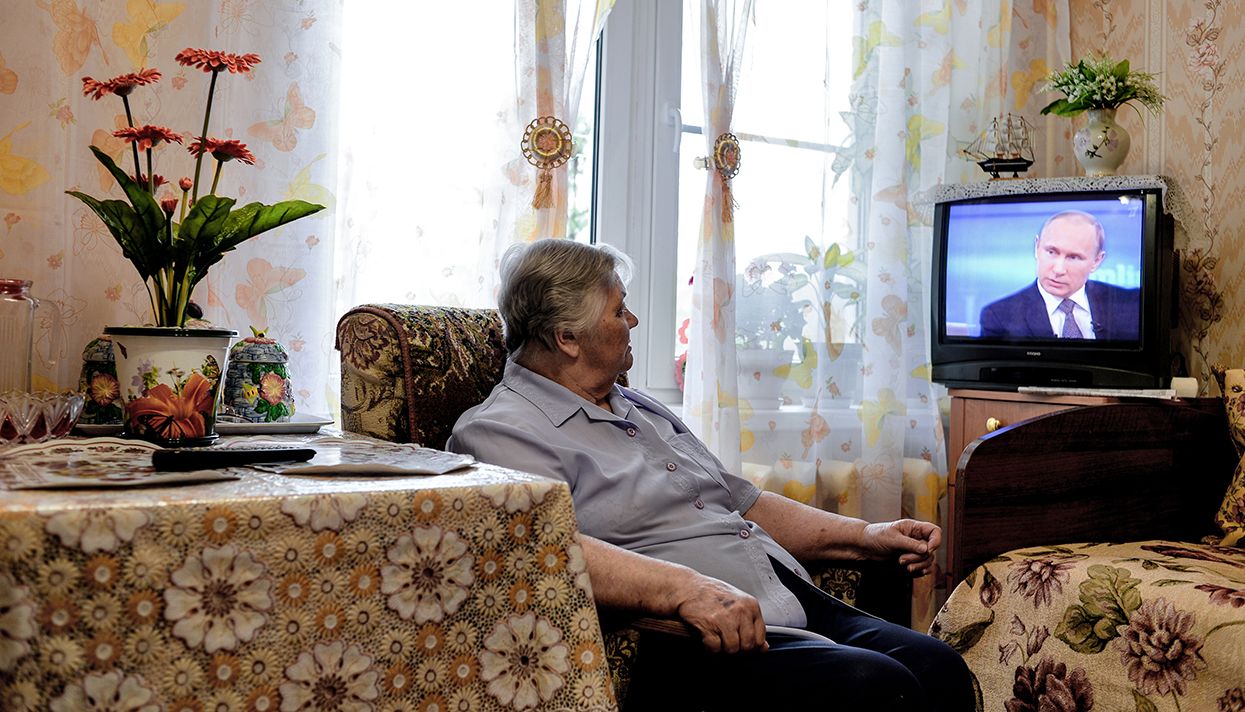
President Vladimir Putin engaged the citizens of Russia in many hours of conversation during his annual hotline Q&A session. Among the dozens of questions about issues which repeat themselves from year to year, such as near-identical requests for assistance from different regions of the country and the President’s ritualistic reports on the GDP, there were some episodes that deserve special attention. We’ll focus on these.
Dispute with Kudrin. The presenter in the studio not only allowed former Finance Minister Alexei Kudrin to ask a question — he was actually permitted to start a discussion with the president. At the beginning of the hotline session, Vladimir Putin said that the economy is not in such bad shape as is customarily believed. The ruble has begun to recover, inflation has stabilized, GDP and industrial production grew in 2014 at least a little, and the scale of construction in Russia has beat the record. Kudrin chose to bring our attention to other numbers – Russia’s lag behind world average GDP growth and a sharp deterioration of economic indicators despite the relatively high oil prices (compared with the beginning of the 2000s). Putin immediately turned the conversation to other countries: maybe in Russia there is low GDP growth, but the USA suffers from a large national debt, while the Eurozone is simply "bursting at the seams."
The infallibility of the Kremlin and the government. Not a single mistake on the part of the country’s leadership was admitted, but the tone in which Putin spoke about sanctions, countersanctions and import substitution proved more important than a lot of what the president actually said. During a major press conference in December, Vladimir Putin repeatedly said that the government, the Central Bank and the Kremlin were doing everything right, and it was clear that the president really wanted to convince journalists and, perhaps, himself. Four months have passed, and Putin repeated the same things, but did not hesitate: countersanctions are helpful, the economy is recovering, import substitution is proceeding, and the ruble has strengthened. No mistakes have occurred. Twice during the conversation Putin lay blame on those who asked the questions: first Kudrin (It was his fault he developed the development program for Russia until 2020, which is currently not even being implemented), and then business ombudsman Boris Titov (he started asking questions about the problems faced by small businesses; Putin said that Titov himself is to blame, since he is the one engaged in small business).
Nemtsov murder investigation. Putin was asked about the investigation twice: first by politician Irina Khakamada, then by a journalist, Aleksey Venediktov. According to the president, the secret services worked quickly and efficiently, but that nobody knows if they will be successful in finding those who ordered the killing, or if such people exist at all. Putin called Nemtsov’s murder a "shameful phenomenon," and even promised to talk with the mayor of Moscow, Sergei Sobyanin, about making sure the flowers and icons brought to the bridge where Nemtsov was shot would no longer be removed by the sanitation workers who clean the bridge at night.
The difference between Stalinism and Nazism. Putin has always spoken very carefully about various historical periods of Russia and the Soviet Union, but this time he suddenly spoke harshly about Stalin's repressions. And yet, according to the president, equating Stalinism with Nazism is impossible, because Stalin never set out to destroy entire ethnic groups. At the same time, Putin admitted that after World War II, the Soviet Union forcefully imposed "a model of development" upon countries in Eastern Europe. "This is not good, and it is backfiring on us today," declared the president (and added that the USA was engaged in the same sorts of actions today).
On the salaries of managers for state-owned enterprises. The debate about whether managers of state companies should disclose their income, as officials are required to do, occurred between the actual state companies and the government. The president did not interfere in the fight (which the government lost), but during the Q&A session he suddenly decided to speak out on the issue. He argued in favor of the state companies, but his take on the matter was a unique one: among the top managers of state companies there are also foreigners, and it would be impossible to force them to disclose their incomes. Yet applying different rules for different managers would be wrong. Therefore, Putin said the state should not force Igor Sechin (Rosneft), Vladimir Yakunin (RZD), Alexei Miller (Gazprom) and the others to disclose their salaries, but they are encouraged to do so. As is traditionally the case, Putin did not say their names, but it was understood that he was talking about them.
Read more: Meduza’s live coverage of the President’s annual question time