
‘Pray to God that your country doesn’t kick you in the shins’
The story of the ‘Dynasty Foundation’
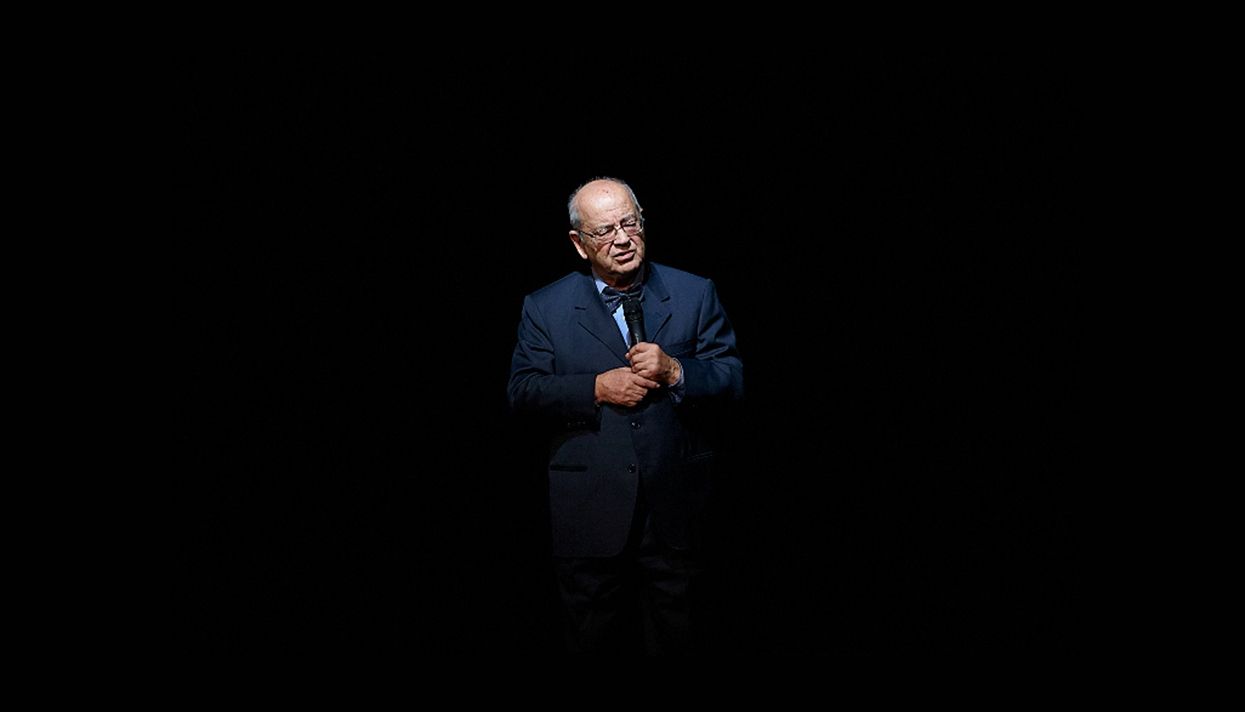
On May 25, Russia’s Justice Ministry ruled to include the private nonprofit Dynasty Foundation in the “foreign agents” registry – a blacklist for NGOs. Dmitry Zimin, the head of the Dynasty Foundation, immediately responded by terminating all of the foundation’s activities. This is a major blow to research and education in Russia: over the years, the Dynasty Foundation has allocated numerous grants and stipends for research projects, conferences, academic exchanges, lectures all of the country, and had translated, published and distributed many scientific books. On May 27, Zimin announced that he is ready to reconsider his decision on the condition that his foundation is taken off the registry and he receives a formal apology. Meduza takes a look at the Dynasty Foundation’s contributions to Russian science.
The law on “foreign agents,” passed in 2012, requires NGOs that receive funding from abroad and partake in “political activities” to enter a special registry. This registration results in debilitating levels of bureaucratic scrutiny and requires the organizations to label their work as done by “foreign agents,” thus harming their reputation in Russia. If an organization which fits the description of a “foreign agent” fails to register as such, they can be placed on the registry after a court ruling. There are currently 67 organizations on the registry, including the Russian office of Transparency International and the Sakharov Center. Dmitry Zimin’s Dynasty Foundation was the latest to enter this list.
“Pray to God that your country doesn’t kick you in the shins,” said Dmitry Zimin in March 2014, in answer to a question about the political situation in Russia. “I don’t know how to explain just how destructive uniform thinking and lack of competition are. How do you find the words to explain that? Is uniformity really establishing itself in Russia? God save us.”
The Dynasty Foundation was established in 2002 by Zimin, who is the former CEO of Vimpelcom Inc., a leading company in Russia’s telecom market. He left the company after “a group of officials from St. Petersburg” came to power. “There was no respectable way of resolving our conflict of interest,” recounted Zimin.
With his family’s consent, Zimin invested almost all of the money he made from the company into a philanthropic organization. According to the magazine Spears, his family members do not have access to any of the funds. Zimin’s son told the magazine that it took several years to readjust from a “family charity model to conscious and deliberate social investment with a clear mission and a clear protocol.” Zimin’s son said the goal was to “make sure the foundation always supported research and only research, to exclude any possibility of changing over to golf, flower-lovers, or tropical butterfly enthusiasts.”
The foundation’s mission is to “seek out and support talented people, create opportunities for them to realize themselves professionally and socially, and support fair competition based on human talent.” Dmitry Zimin said in a 2012 interview that “we support smart people. Why researchers? In the research sphere it is easier to identify a talented person than in other spheres.” In a program on the radio station Echo Moskvy, Zimin said that the “washing-out” of the country’s intellectual elites is Russia’s greatest misfortune and is “a problem which threatens the very existence of the country.” He said that “the issue is not only funding… but the issue is that an atmosphere of creation must be fostered, an atmosphere of freedom… Right now we are witnessing degradation. I personally do everything that I can to counter this misfortune — I gave away almost everything I had in efforts to support researchers.”
The Foundation allocated over 300 million rubles ($5.7 million) in grants each year over the past three years, and had a planned budget of 435 million rubles ($8.3 million) for 2015. It started off in 2002 by supporting young physicists with stipends up to 19,500 rubles ($370) per month for three years. In 2014, 92 physicists won this stipend. More recently, the program has expanded to young mathematicians and young biologists.
Since 2004, the foundation has organized a countrywide competition among the best math, physics, chemistry and biology teachers based on a student vote. In 2014, 500 teachers won grants for their achievements. Students also participate in the foundation’s competitions: since 2009, students can submit proposals for study groups, summer schools, and science fairs, and can get up to 600,000 rubles ($11,500) in funding. The foundation also supports short-term study abroad programs for young researchers, as well as conferences and summer schools in physics, math, chemistry and biology. In 2015, 26 such schools will be funded throughout the country.
In 2006, the foundation published a Russian translation of Bill Bryson’s A Short History of Nearly Everything. The book was the first in a series titled Elements, which features Russian translations of foreign popular science books. Since 2006, the Dynasty Foundation published 83 books in the series and distributed them among libraries all over Russia.
In addition to the natural sciences, the Dynasty Foundation has supported the Russian New Economic School and the European University of St. Petersburg. Since 2005, it has allocated funds to the organization Liberalnaya missiya (“Liberal Mission”), headed by former Economics Minister and current scientific director of the Higher School of Economics Yevgeny Yasin. Liberalnaya missiya aims to “develop and spread liberal values in Russia” by organizing roundtables and publishing books and collections of articles. The publication of one of the books, titled Law and Power (2013) was qualified as “political activity” by the Russian Ministry of Justice earlier this week, and for this reason Liberalnaya missiya was included in the “foreign agents” registry this week. The Dynasty Foundation went down with it: on May 28, the Justice Ministry announced that the organization was included in the registry because it funded publication of Law and Power and supported Liberalnaya missiya’s lecture series on Russian politics. The official statement justifying the organizations’ new “foreign agents” status includes quotes from Liberalnaya missiya’s lectures on the need for transitioning from “rule of individuals” to “rule of institutions” in Russia.
90 percent of the Dynasty Foundation’s funds are allocated by its Board of Directors. Formerly, Deputy Prime Minister Arkady Dvorkovich served on the board. The board is due to meet on June 8 to decide on further action. A source close to the head of the Dynasty Foundation told Meduza that the foundation will honor its 2015 commitments no matter what happens.
Olga Zeveleva
Daniil Turovsky