
Оригинал материала
Opinion: ‘Russian Spring’ in wintertime
Could the former leaders of ‘Novorossiya’ become a ‘third force’ in Russian politics?
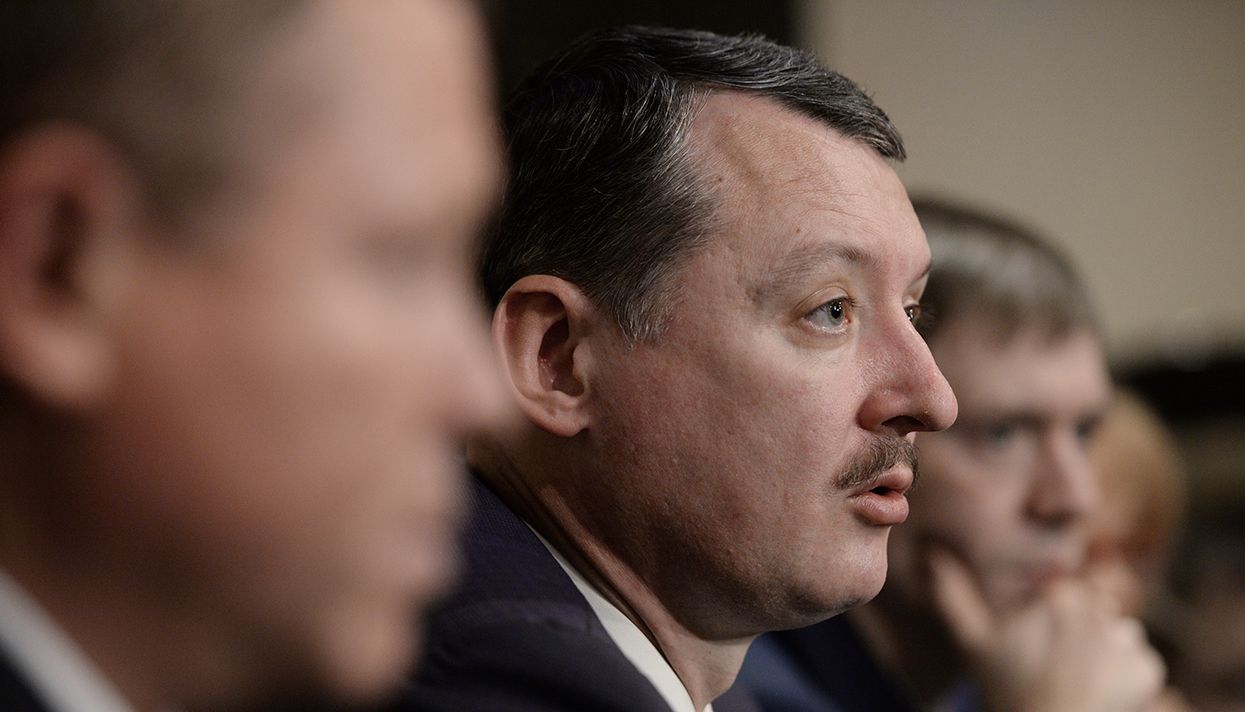
With the currency collapsing in Russia and Moscow's bombs falling on targets in Syria, it's not so easy these days to find people outside Ukraine still thinking about the military conflict in the Donbas, where two breakaway republics with support from Russia still exist, regularly exchanging gunfire and artillery shots with Ukrainian troops. Today's continued violence, however, isn't generally seen as the “real fighting” that occurred a year ago, when scores of people were dying in combat. Many of the men who helped make that bloodshed possible were Russian “volunteers,” come to eastern Ukraine to mobilize their brothers in arms. Now most of those people are back in Russia, and recently they've signaled their readiness to get involved in national politics. In an opinion piece for the newspaper Vedomosti, editor Pavel Aptekar examines the dangers this creates in a country that has known horrific political violence in the past. Meduza translates that text here.
The former leaders of “Novorossiya” and their supporters want to be a third force in Russian politics—a nationalist opposition. Igor Girkin, the former defense minister of the unrecognized Donetsk People's Republic, and a group of other public figures and propagandists of the so-called “Russian Spring” recently announced the creation of the January 25th Committee, which declares itself to be a “third force,” simultaneously fighting against pro-Western liberals and the state's “dead-end guardians.” Not so long ago, Girkin said he was ready to help the authorities in the fight against the “fifth column” (the protesters in the opposition and the liberals in Russia's bureaucracy). Now he says the authorities are sick, too.
This new committee looks threatening, says Alexander Verkhovsky from the SOVA Center for Information and Analysis. There's a real demand for a political party that claims to represent “Novorossiya,” he says. In 2014, a good chunk of the country embraced Russia's “patriotic” propaganda, and today the thousands of volunteers who fought in eastern Ukraine and other supporters of the “Russian Spring” have realized that the authorities abandoned the Novorossiya project (which was, perhaps, a fiction from the outset). The romantics who dreamt of restoring the empire now feel cheated. According to a survey conducted by the Levada Center sociological agency, 29 percent of Russians support the idea of former leaders from rebel eastern Ukraine getting involved in Russian national politics.
Girkin could try to make a go of things on his own, but the Russian intelligence agencies clearly control what he's able to do. More likely is that the nationalist leaders are offering to the state their services as a new “Black Hundreds” (the ultranationalist movement that staunchly, and violently, supported the Tsarist House of Romanov), says political analyst Alexei Makarkin. But Girkin's group is unlikely to win any serious support. If influential state officials don't endorse the project, Girkin and his allies won't be allowed on television. Nationalists' supporters are loyalists, and they don't like it when their leaders quarrel with the state and its top officials.
It's also noteworthy that this “third force” has emerged just seven months before parliamentary elections. Given the timing, it's not impossible that this is all a project by Russia's so-called political technologists, either to discredit the political opposition or to criticize the establishment's “guardians.”
In any case, a project like this poses an undeniable threat to the public. Men back from an undeclared war struggle to return to civilian life, coming home with a skewed concept of limits on justified violence. The emergence of an organization that can unite them again and put them back to work begs the question: what's the job?