
Оригинал материала
Why are Russian officials so eager to warn the public about ‘information attacks’?
Meduza asks a PR specialist to explain
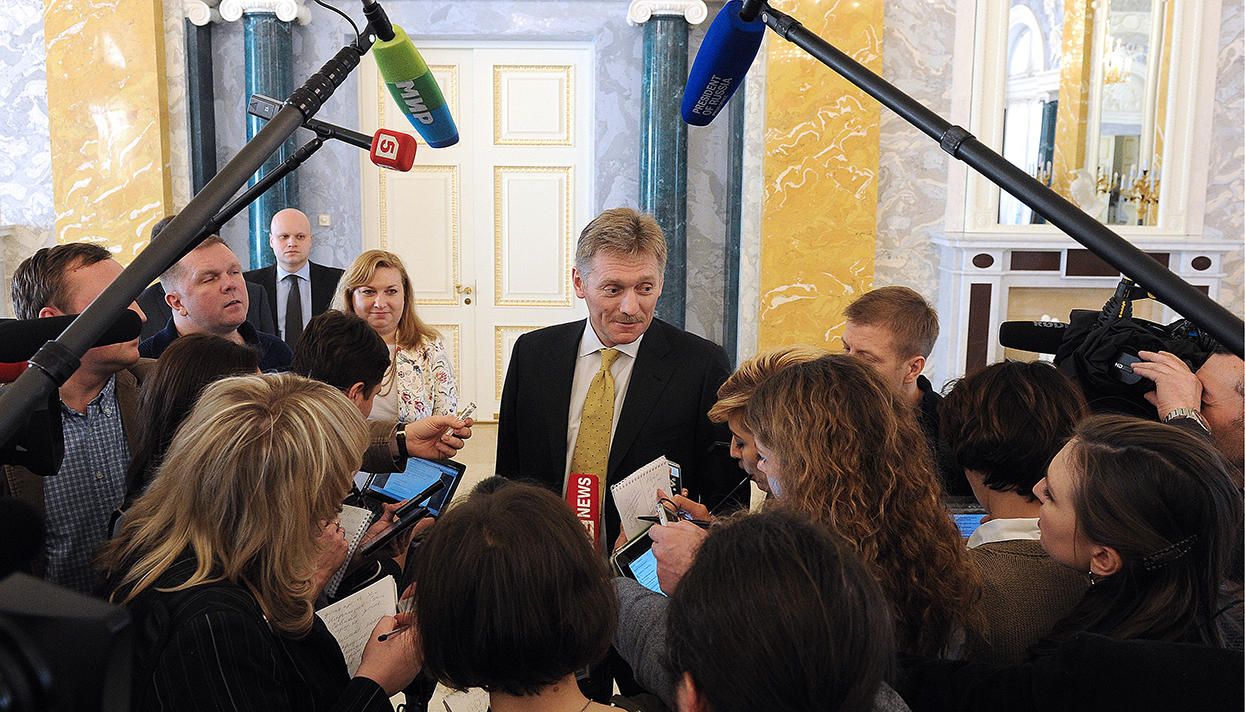
In late March, Dmitry Peskov, Vladimir Putin's official spokesman, warned that an “information attack” by the West against the Kremlin was imminent. Just a few days later, on March 31, the Organized Crime and Corruption Reporting Project published a report detailing suspicious real estate dealings involving individuals thought to be close to Putin. OCCRP claims that businessman Grigory Baevsky transferred property to relatives of Alina Kabaeva (Putin's rumored long-time paramour), and says Baevsky owns the home where Katerina Tikhonova, Putin's rumored younger daughter, is registered to live. On March 31, Russian Sports Minister Vitaly Mutko also warned about an “information attack,” saying German journalists are preparing to release a report next week that claims Russia bribed its way to hosting the 2018 World Cup in soccer. Meduza asked political PR specialist Andrei Sharomov to explain why state officials feel it's necessary to notify the public about “information attacks.”
Andrei Sharomov
Executive director at Pro-Vision
When the president's press secretary warns the public that some event in the public space is being prepared in the next few days, it means that he's acting like a professional and using the tools at his disposal.
With Mutko and his announcement, we'll have to see how that case develops. For now, his statements are just evidence that his PR team is trying to get the situation under control.
The tactic itself of forecasting shocking events is nothing new. It's been a feature of Russia's communication space since the 1990s. As I recall, Gleb Pavlovsky was one of the first political analysts to use this technique, when he was still working for Boris Yeltsin's team. He was thought to have authored newspaper articles under pseudonyms that announced information attacks before they hit and political changes yet to be unveiled. But, of course, none of this looked as outright as it does today.
When we're doing trainings with deputies, businessmen, and politicians, teaching them how to overcome a crisis situation, we talk to them about “preemptive strikes.” Every spin doctor has their own terminology, but when I'm doing a training session, I tell them: if you know you've got some skeleton in the closet, and you know your opponents are going to pull it out during an election, then please launch a ‘preemptive strike’ and offer voters and journalists your own interpretation of the story, before they can offer theirs. If you get your version out first, it lets you manage the negative stories. If you're only reacting to what your opponents and the media are doing, you're always playing catchup with events.”
Another similar case is the recent controversy surrounding tennis star Maria Sharapova [who held a press conference admitting that she took the banned drug meldonium]. Personally, I think that was some brilliant PR work. She went right into crisis mode, and she handled the situation.
Ani Oganesyan
Moscow