
Оригинал материала
Russia's ‘old-school’ pedagogue
The schoolteacher accused and then excused for lessons so strict they border on child abuse
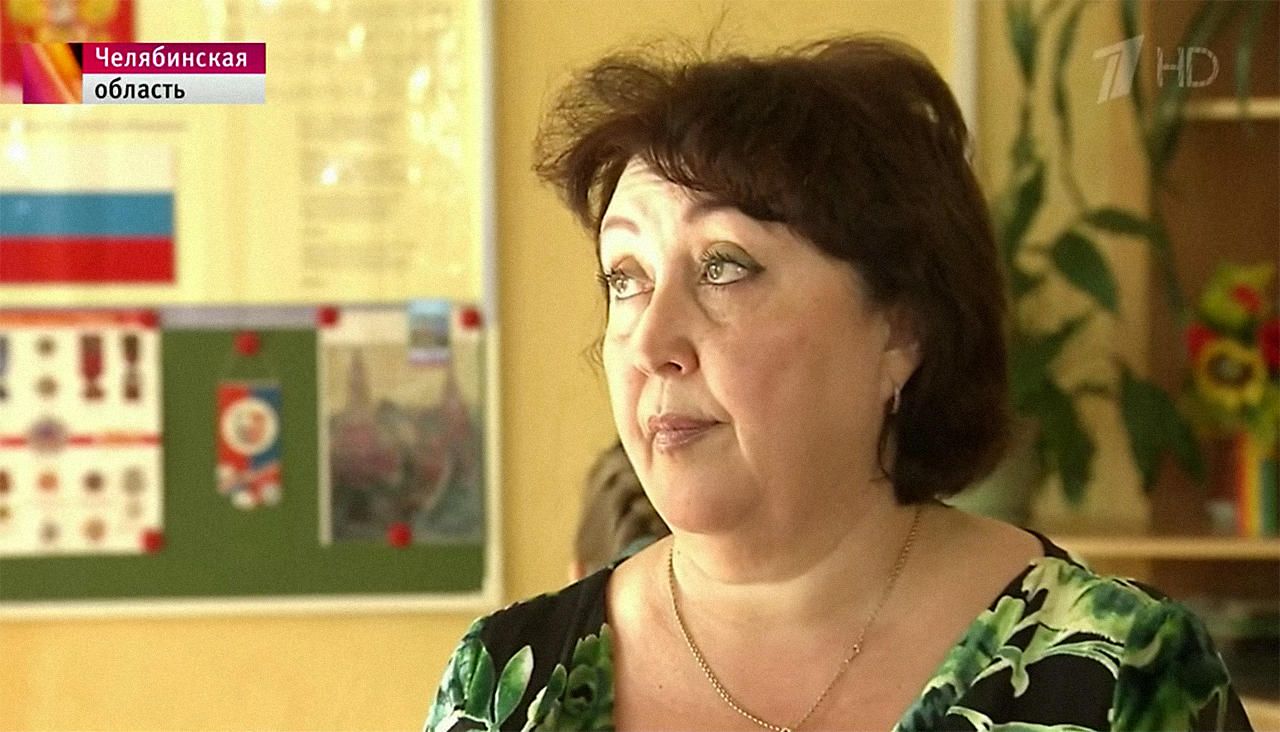
On Thursday, May 12, the Chelyabinsk district attorney reversed its decision to bring criminal charges against Tatiana Porseva, a primary school teacher in the city of Zlatoust. But just two days earlier, officials announced the Porseva would be prosecuted for “failing to discharge the duties of raising a minor.” Prosecutors launched the case in response to an anonymous complaint filed by the parents of one of Porseva's students, who claimed she “ignored ethical standards of behavior and subjected pupils to psychological pressure.” Meduza took a closer look at the situation and spoke to some of Porseva's former students, who admit her methods are harsh, but argue that her classes were more advanced than those offered by other teachers.
The Chelyabinsk district attorney reversed its decision to bring criminal charges against Tatiana Porseva, citing a lack of “objective information about any abuse.” Natalia Mamaeva, a senior assistant prosecutor in Chelyabinsk, told local reporters that neither the parents of other students nor the students themselves had been questioned in connection with the allegations against Porseva. According to Mamaeva, police will undertake a thorough investigation of Porseva's case, and only afterwards revisit its decision to cancel the charges against the teacher.
Just two days before it withdrew the charges, Chelyabinsk's district attorney was far more resolved about the case, accusing the schoolteacher of violating article 156 of the Russian criminal code (“failing to discharge the duties of raising a minor”). If convicted, she faced a steep fine, correctional labor for up to two years, or even prison for as many as three years. “From September 2015 until April 2016, the instructor's teaching activities in her first-grade class included illegal methods of education: rude, disparaging, and degrading treatment, child abuse, and instances of physical coercion,” the district attorney said initially in an official statement. Prosecutors went on to state that Porseva held extended class hours, reduced recesses, and forced children to stay after class for additional lessons. The audit was conducted in response to an anonymous complaint filed by the parents of one of Porseva's students.
On Wednesday, May 11, the school's director, Galina Zhandarova, gathered the faculty to discuss Porseva's case. At the meeting, Porseva revealed that she learned about the criminal case from the news, saying it was a complete surprise to her. After the faculty meeting, the teacher said she intended to keep holding lessons. The school's staff refused to speak to Meduza, citing a full schedule. The secretary of the school's director said, “We're surrounded by journalists here.”
On the morning of May 12, the school suspended Porseva until the conclusion of the investigation, and police ordered her not to leave the area. By the end of the day, however, the authorities changed their minds, dismissing the case altogether.
Porseva has been a schoolteacher for more than 30 years. She denies abusing her students, saying she merely adheres to an “old-school” pedagogy. “I've always strived so that my kids grew to be a cut above the rest,” she told the local news portal u24.ru. She also admits that she demands a bit extra from her students: “This is certainly due partly to the additional load [I place on my students], but, going forwards, my kids—from the very first grade—are prepared for serious work, and it's easy for them to learn in later classes.”
“She often spoke to students using their surnames, she gave us a lot of homework, and during homeroom period break we were supposed to be getting ready for the next class. Little as we were, we were scared to tears of her. One wrong word, one poorly timed giggle, or getting caught running in the hallways, and she'd scream you into the corner. If you were a boy, she might even drag you there by the ear,” one of Porseva's former students, Anastasia Kukhlevskaya, told Meduza. Kukhlevskaya said Porseva would list individual students' misconduct at parent-teacher conferences, and parents would leave the meetings in tears. Kukhlevskaya also notes that Porseva's classes did indeed stand above the others, though she says the kids became generally average students later on, “after being liberated from her dictatorial regime.”
On Russian social media, the debate about Porseva's controversial methods continued for days. “My little niece was one of her students. She's a strict teacher. Strict but strong,” Yulia Kolokolchik wrote on Vkontakte. She told Meduza that Porseva never raised her voice at her niece: “The first time, she'd explain a lesson to the class in a calm voice. But if that didn't work, she's capable of matching the class.” Other comments on Vkontakte paint a different picture, however. A second-grader named Anastasia wrote, “My class is right next door. Every lesson, our teacher asks us to shut the door. [Porseva] screams like she were out in the mountains. And she's always yelling at the same boy. She screams as if the kids were all stupid. Sometimes we do PE with her class. All her kids look broken, tired, and sad. But the kids are smart. Our class only just learned the multiplication table. They're a year behind, but they already learned it.”
One of Porseva's former students, who asked Meduza not to reveal his name, said Porseva constantly raised her voice at the class. “She screamed at little kids, who just yesterday ran to first grade excited and carrying flowers.”
After investigators dismissed the case against Tatiana Porseva, she refused to speak to Meduza. In an interview with a local television network, however, she said she knows which parents filed the anonymous complaint against her.
Russian criminal code 156 is typically enforced not against abusive teachers, but abusive parents. On May 12, 2016, for instance, a man living in Chechnya was sentenced to a year in prison for abusing his 15-year-old daughter and threatening to kill her. In Smolensk, an unemployed, alcoholic mother currently faces criminal charges for beating and and swearing at her 15-year-old son.
There is one recent precedent for convicting a schoolteacher of child abuse. In March 2016, a teacher at a school in Chechnya was sentenced to 250 hours of community service for insulting her students. (A video leaked online showed her yelling at her class and smacking students in the backs of their heads.)
This text was translated from Russian by Kevin Rothrock.
Ani Oganesyan
Moscow