
Оригинал материала
‘We're adjusting our algorithms to the new reality’
Yandex's cofounder discusses monopoly, Google, Ukraine, censorship, and robots
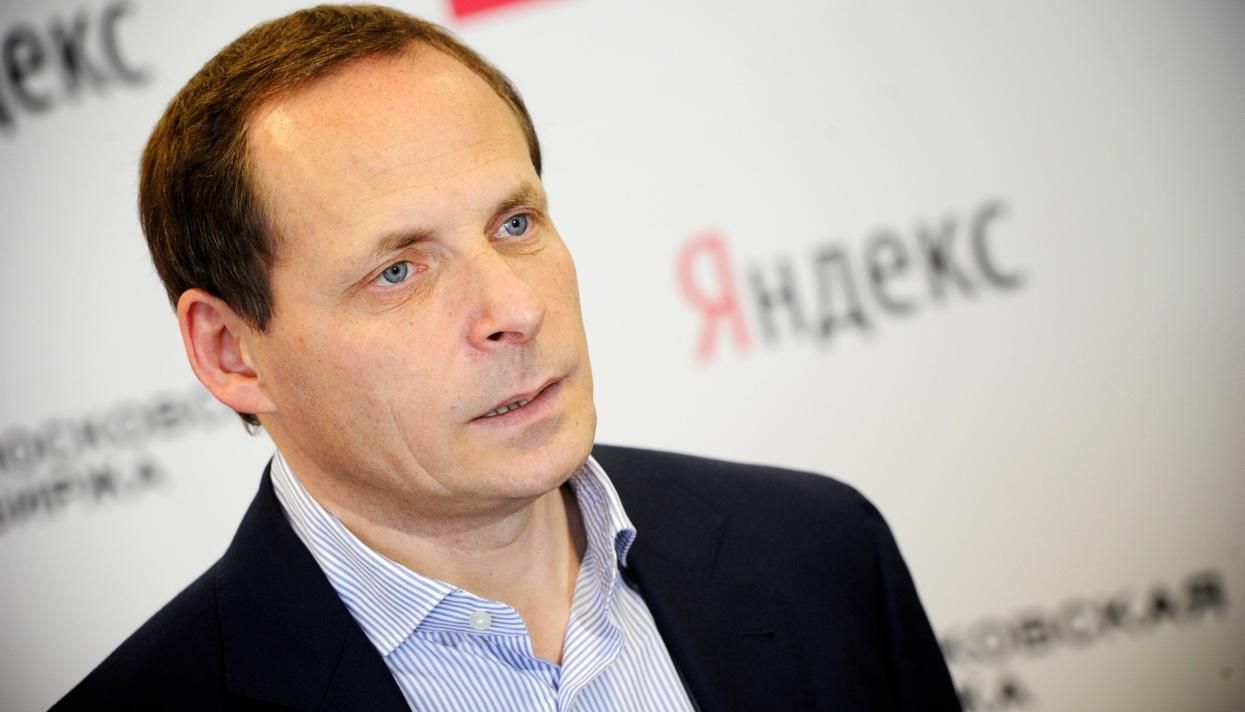
Arkady Volozh, the cofounder of the Russian Internet search giant Yandex, doesn’t like giving interviews to the media, but he made an exception this week, following the recent settlement between Google and Russia’s Antimonopoly Service over a lawsuit brought by Yandex. Speaking to Anastasia Golitsyna, a correspondent for the newspaper Vedomosti, Volozh answered questions about Yandex’s plans after its victory over Google, about the effects of Ukraine’s decision to ban Yandex, about Russia’s new anti-terrorism Internet laws, and about the quality of Yandex’s news aggregation service. Meduza translates the most important statements from Volozh’s interview.
On monopoly
We are steadily approaching the creation of artificial technology. Today it’s neural networks. Tomorrow it will be some other kind of algorithm. And all this naturally tends toward centralization. The more data a neural network can study, the smarter it becomes. More data, better algorithms, more data. And of course, remembering the sci-fi books I read as a kid, I’m personally a bit worried by the idea that there will be no alternative to such a system. Maybe we [at Yandex] are one of the alternatives needed. That’s precisely why I think the existence of a company like Yandex is absolutely essential.
[...]
If we hadn’t achieved a settlement through the Antimonopoly Service, I don’t rule out that Yandex might simply have disappeared at some point. And that, it seems to me, would have made things worse in the world.
On his private conversations with Google cofounder Sergey Brin and Google CEO Sundar Pichai
There have been talks at all levels. Direct dialogue helped, of course. I’ve always had enormous professional respect for them, and I’m very happy that we’ve maintained a purely cordial relationship built on a common understanding of certain basic principles. I’m sure that we’ll have the occasion to talk again, because there will be similar situations in new areas.
On Yandex’s taxi service
Yandex.Taxi already processes more than a billion dollars annually in transactions, and the business is growing fivefold every year.
All this, and Yandex.Taxi started out in 2010 merely as a small experiment by one young manager. He got support from experienced colleagues, and the service gradually took shape — but it didn’t happen overnight. It almost closed down in 2012.
On robots managing people
Our speech technologies are capable of verifying our drivers’ knowledge of a language. While waiting to be offered their next passenger, we can ask a driver to read a poem aloud. We can also ask a driver to walk around his car and photograph it, and another program will recognize if it’s dirty.
On Yandex’s ban in Ukraine
We’re hearing things like, “There’s no need to worry — they’ll build other similar services for us.” But let’s take a clear look at the situation. We see (we’re measuring) the quality of services on noncompetitive markets. In three years, without competition, there won’t be anybody developing anything specifically for Ukraine. The quality of absolutely everything online in Ukraine will degrade very quickly, and ordinary users will start to feel this very soon. Not only will good Internet search, or taxis, or maps lack, but certain subtleties, like showtime listings or train schedules, will be gone as well.
On the quality of Yandex’s news aggregator
Here are the basic numbers: on December 31, 2016, our news aggregation service had roughly 7,000 information sources. On January 1, 2017, it changed to 1,000 sources, which was a result of limiting it to outlets with media publication licenses. What do you think, could the service have maintained the same quality as before? Since then, we’ve added a few more sources, and we’re also working to adjust our algorithms to the new reality. Forming news subjects wasn’t always easy, and now we need new breakthroughs to be able to work with a greatly reduced amount of data.
On Yandex without Ilya Segalovich
Ilya is irreplaceable, and you don’t try to replace him. You have to keep building the company, so that you can leave a living system for whomever comes next, who will also keep building this system. It will be different, but it will also be alive. I think Ilya’s answer would have been the same.