Дата
Автор
Denis Dmitriyev, Kevin Rothrock, Alexander Borzenko
Источник

Сохранённая копия
Оригинал материала
Russian TV is still trying to prove that Ukraine shot down MH17, and it's still weird
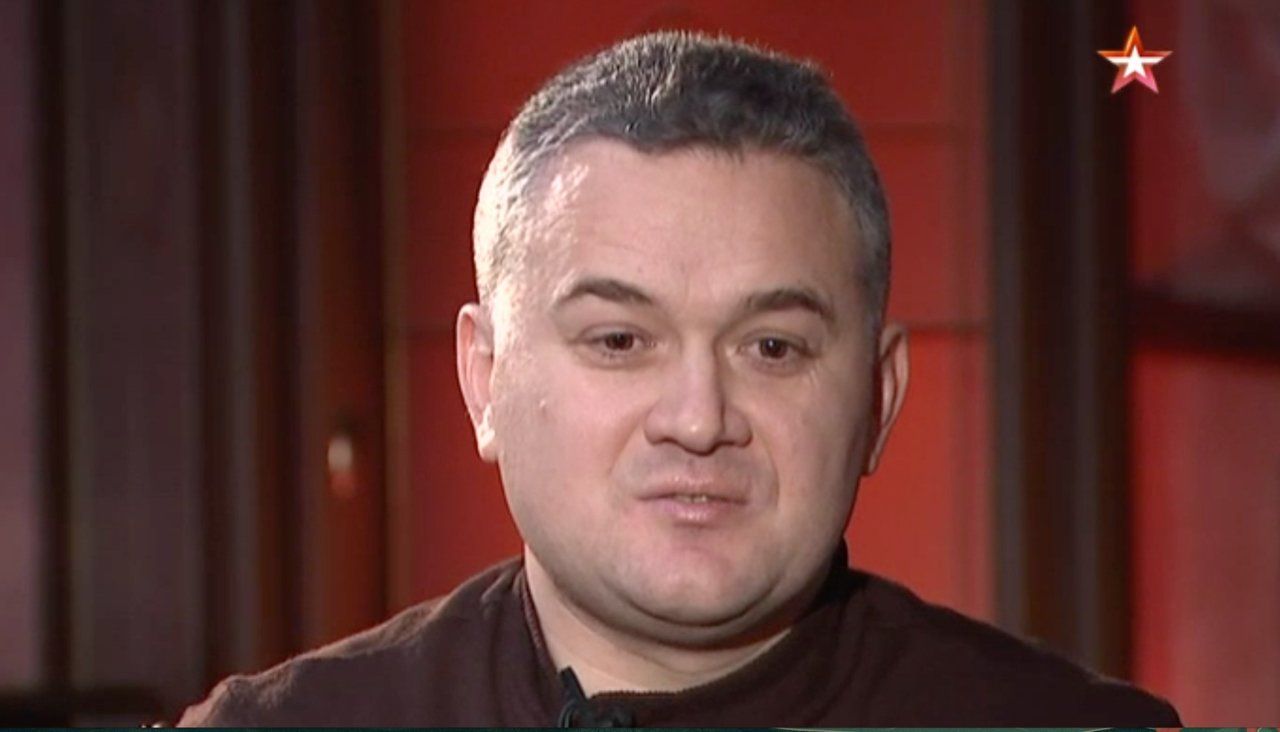
On December 7, the Russian television network Zvezda aired an interview with Yuri Baturin, who claims to be the former commander of a Ukrainian an air defense unit that was stationed outside Kharkiv. Baturin says he has concluded that a Ukrainian “Buk” missile fired from the village of Zaroshchenskoye is what downed Malaysia Airlines Flight 17 on July 17, 2014. Dozens of news outlets in Russia have published stories about Baturin’s claims. Zvezda first reported on the former Ukrainian officer in October, but it later deleted every news story it had based on his allegations.Reviewing the purged content and Baturin’s new interview, Meduza explains why these supposed revelations do nothing to refute the official investigation into the MH17 tragedy.
What did Yuri Baturin say in the interview?
Baturin explained how he learned about the downing of MH17:
On July 17, 2014, he says he was at the command post of the A-1215 military unit outside Kharkiv and he personally watched flight MH17 disappear from the radar screen. A few days later, a convoy of trucks carrying equipment from the Ukrainian military’s 156th Anti-Aircraft Missile Brigade arrived at Baturin’s command post to rest for a bit and adjust its equipment. Talking to the drivers, he says he learned that they had redeployed a “Buk” missile complex to an area in the village of Zaroshchenskoye, outside Donetsk. (Baturin apparently encountered the convoy on its way back from the village.)
Baturin explained how he came to his own conclusions:
His claims that Ukrainian forces downed MH17 are based on the following two factors:
“Almost simultaneously, in virtually identical wording, the whole global mass media trumpeted that it was Russia that shot down the passenger plane, and then this convoy showed up after completing redeployment work. Only a fool can’t connect the dots.”
The former Ukrainian officer says it was precisely at this moment when he became ashamed and decided to leave the military and move to Russia. He says he agrees with the controversial analysis offered by the Russian defense company "Almaz-Antey,” which claims that MH17 was downed by a Ukrainian “Buk” missile fired from around the village of Zaroshchenskoye.
What was in Zvezda’s deleted news stories?
The network published all three of these reports on October 6, 2017:
- Ukrainian Armed Forces Major Who Witnessed MH17 Destruction Seeks Asylum in Russia
- Ukrainian Armed Forces Major Who Moved to Russia Describes How MH17 Was Shot Down
- Ukrainian Armed Forces Major Describes Trajectory of Ukrainian ‘Buk’ That Downed MH17
In all these stories, Zvezda said Baturin sought asylum in Russia because he couldn’t continue hiding what he knew about the MH17 catastrophe. Using “objective radar data,” he concluded that the aircraft “was shot down over territory controlled by Kiev.” The former officer also recalled an episode where a “Buk” convoy stopped at his command post a few days after the crash. The third report featured excerpts from an interview with Baturin, though Zvezda said nothing about the supposed radar data, and instead presented his encounter with the “Buk” missile transport unit as his main evidence that Ukraine is responsible for the MH17 crash. In the longer interview published in December, Baturin told Zvezda that he’d been unable at his command post outside Kharkiv to detect the launch of a ground-to-air missile.
Baturin’s version of events has changed over time. In October, he implied that the convoy drivers had directly confirmed to him that the “Buk” had not only been redeployed to Zaroshchenskoye but that it had actually been fired:
“In my personal conversations with the drivers who’d redeployed the equipment, they confirmed that they’d redeployed it to the spot where it had fired a shot.”
It’s also worth noting that Baturin continued serving in the Ukrainian military until 2016 — a fact Zvezda omitted from the interview it published in December, where Baturin merely said that he first started thinking about leaving in July 2014. Public relations officers for the Ukrainian military told Meduza that Baturin served until 2016, when he resigned “for family reasons.”
Why did Zvezda delete the news stories?
Meduza received the following response from Maxim Dodonov, the television network’s deputy general information director:
“In early October, we recorded a short interview with Yuri Baturin, which we published on our website. Based on our audience’s strong interest in this content, however, we decided to prepare a documentary investigative film in collaboration with the well-known journalist Alexey Samoletov. For that reason, we removed the short version [of the interview] from our website. Our reporter spoke to Yuri Baturin in person, in greater detail.”
It's unknown when the documentary film will air.
Is there any evidence supporting Baturin’s allegations?
His version of events matches the conclusion reached by Russian defense officials and “Almaz-Antey” that MH17 was downed by a missile fired from Zaroshchenskoye. This theory, however, was widely publicized before Baturin ever came forward, making it possible that he’s merely repeating it now.
Is the Zaroshchenskoye theory at all believable?
Nope. Baturin’s remarks dovetail with conclusions reached by “Almaz-Antey” and the Russian Defense Ministry, yes, but these conclusions have been debunked meticulously and repeatedly in other investigations. The international Joint Investigation Team (JIT) determined that the “Buk” missile that downed MH17 was fired from a field near the village of Pervomaysky, not far from the town of Snezhnoye. During JIT’s investigation, experts studied numerous eyewitness accounts, photographs and videos of “Buk” transports, several photos of missile trails, satellite imagery, intercepted telephone conversations among separatists, and data captured by telecommunications towers.
JIT summarized its findings in an animation published in September 2016:
International investigators also determined that Zaroshchenskoye was actually under separatist control at the time of the MH17 disaster, contrary to claims by Russia’s Defense Ministry and “Almaz-Antey.” Researchers at Bellingcat came to the same conclusion in a detailed report published in July 2015, based on cartographic data from three different sources, eyewitness accounts, and other evidence. Russian aviation expert Vadim Lukashevich has also refuted a report by “Almaz-Antey,” publishing research that demonstrates MH17 couldn’t have been shot down from Zaroshchenskoye.
Text by Alexander Borzenko and Denis Dmitriyev, translation by Kevin Rothrock
Juliana Skibitsskaya contributed to this report