Дата
Автор
Peter Marshall, Alexander Borzenko
Источник

Сохранённая копия
Оригинал материала
A Russian Senate commission has recommended a whole series of government responses to ‘Western meddling’
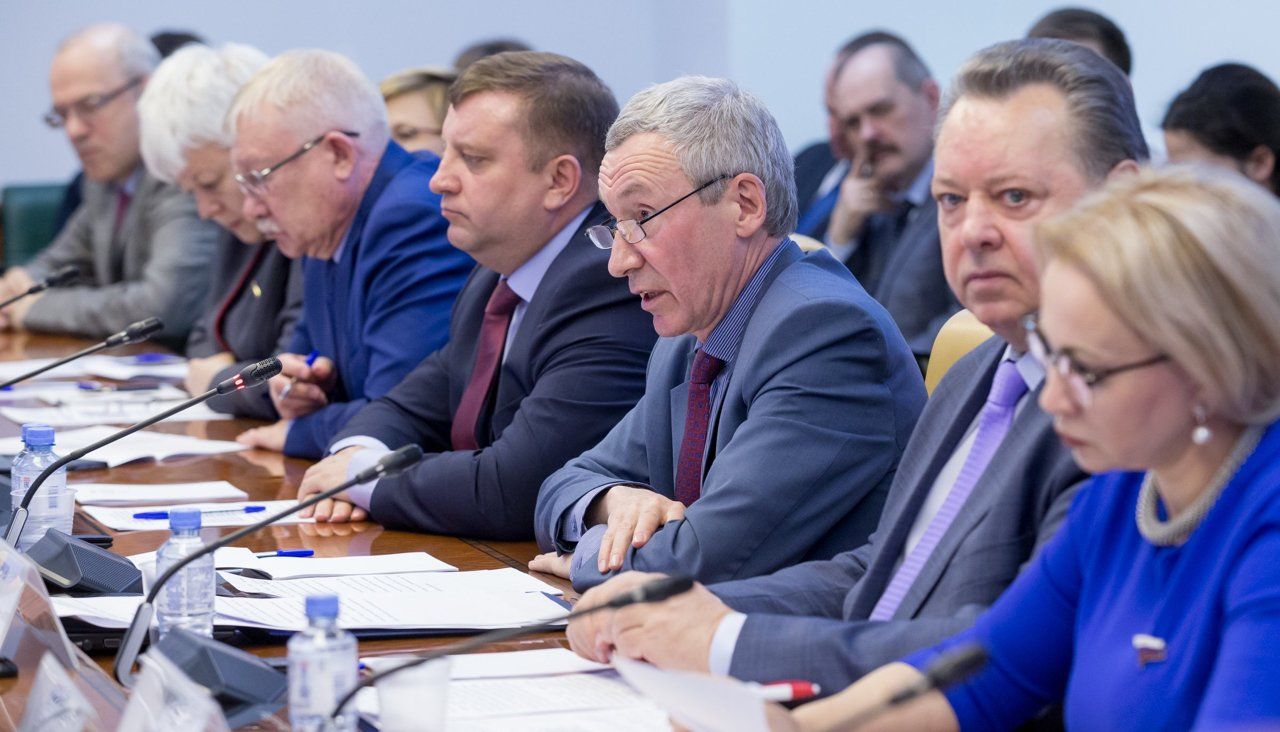
Last week, the Russian Federation Council’s Commission on Protecting State Sovereignty and Preventing Foreign Interference published its final report. The document contains legislative proposals that were mentioned in an earlier report released in March that senators decided to postpone until after Russia’s presidential election. Armed with an underwhelming collection of evidence, the commission says “a group of pro-Western countries led by the U.S.” is constantly trying to undermine Russia and destabilize the state by various clever means and the use of NGOs and subservient media outlets (Meduza is mentioned as one of these nasty publications). At the end of the document, the authors propose a whole series of new prohibitions. Here they are.
What is this commission?
If you take a breath and say the commission’s full name aloud, you’ll have a pretty good idea of what it’s all about: Russia’s Provisional Commission on Protecting State Sovereignty and Preventing Foreign Interference. Convened in June 2017, the group “monitors foreign activity aimed at interfering in the Russian Federation's internal affairs” and formulates legislative proposals designed to protect Russia from encroachment.
What are this mighty commission’s proposals?
- Prohibit candidates running for elected office from naming persons with dual citizenship or foreign residence permits as official proxies.
- Under threat of imprisonment, ban foreigners (and Russian citizens working with foreign diplomatic missions) from any involvement in campaigning (including consulting, promotions, sociological surveys, and other research work).
- Ban any campaign materials “printed or otherwise” that are produced abroad.
- Prohibit international observers from gathering “confidential information,” and instruct election officials to ignore violations reported by observers who only cite anonymous sources.
- Under threat of imprisonment, ban “undesirable activity.” This would apply to people who don’t even work for formally designated “undesirable organizations,” but to anyone whose activities are found to threaten Russian national security.
- Ban all programs in Russia run by foreign states, except programs with Russian state participation or express government approval. This prohibition would likely apply to foreign grants awarded to Russian organizations.
In addition to these prohibitions, the commission’s members are also asking the government to codify a legal definition of the term “foreign interference in Russia’s internal affairs.” Law enforcement agencies, the commission says, should immediately get the extrajudicial authority to block information that shows “clear signs of defamation capable of inciting mass unrest or ethnic, religious, or social hatred.” To ensure that these police powers aren’t abused, the lawmakers suggest criminal penalties for blocking information without good reason.
Will these proposals become law?
It’s still too soon to say! In a report last year, the commission took credit for several legislative initiatives, listing different laws it said were adopted “in accordance with the commission's recommendations and with the participation of its members.” At the time, however, the commission hadn’t yet published its legislative proposals, and it’s unknown to what degree its members actually influenced the passage of those laws.
The evidentiary basis for the commission’s new report does not hold up: The text contains plenty of sweeping conclusions but says almost nothing about how the commission reached them. The document’s allegations are conspiratorial, arguing both implicitly and explicitly that a vast “pro-Western group” is responsible for any virtually public criticism of Vladimir Putin. The report attributes sinister meaning to several trivial coincidences. For example, it says it was “no accident” that U.S. Vice President Joe Biden visited Moscow on March 9, 2011 — “exactly a year before the Russian presidential election.”
The commission also takes issue with news coverage, warning that it was “no accident” that “practically every story about Alexey Navalny” (whose name came up just 20 percent less often than Vladimir Putin's, according to the report) was “remarkably positive.” “Throughout the presidential campaign, anti-Russian propaganda presented Alexey Navalny, a suspect named in administrative and felony criminal cases, as a leading Russian politician (equal to Putin) without any apparent flaws,” the report says, pointing out that all of Putin’s official campaign rivals also got favorable media coverage.
Despite the report’s shortcomings, the Federal Council is treating the commission’s work very seriously. Senate Chairwoman Valentina Matviyenko says the document exposes “incontrovertible facts showing efforts to destabilize Russia,” and Senator Konstantin Kosachev, who chairs the International Affairs Committee, praised the commission’s work, saying the government can now embark on the important task of formulating proposals for the improvement of existing legislation on protecting Russian sovereignty.
In other words, it’s perfectly possible that some of the commission’s proposals will be adopted as future laws.
Text by Alexander Borzenko, translation by Peter Marshall