
Оригинал материала
Isolating the RuNet and banning online anonymity. What did Putin’s Internet adviser achieve in 2.5 years on the job?
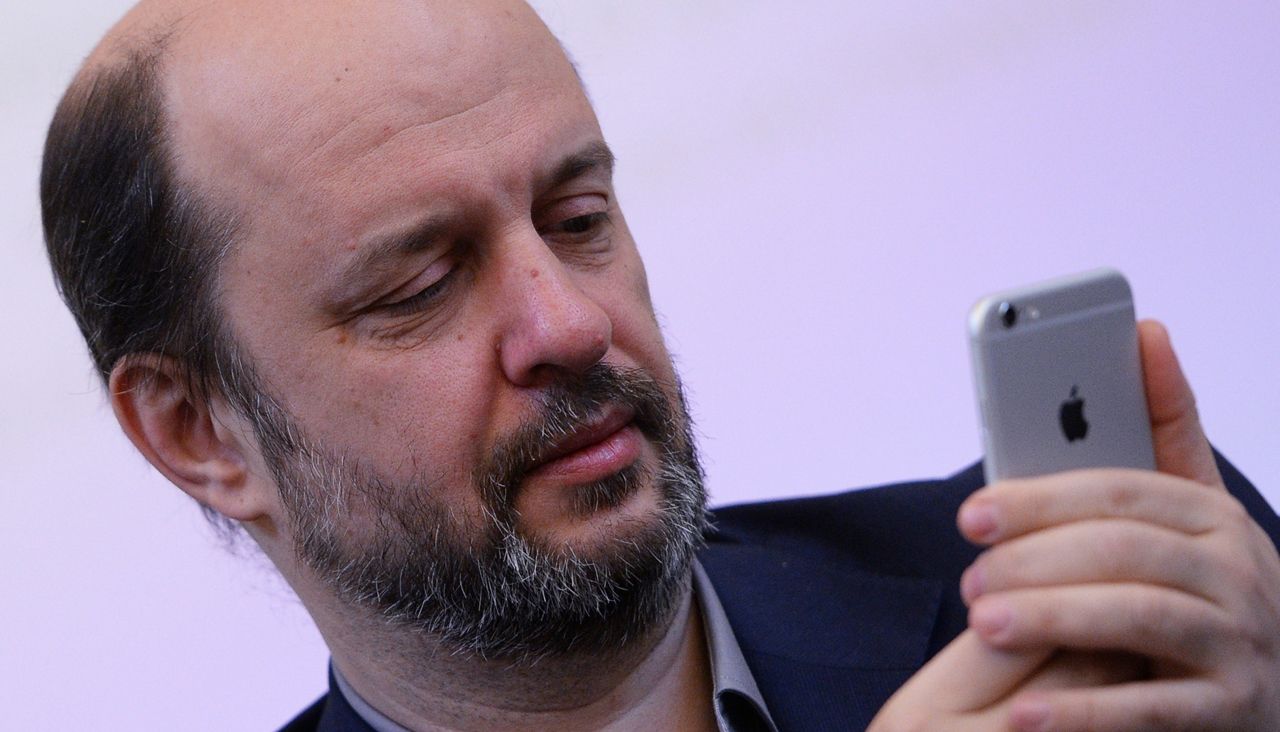
German Klimenko is no longer Vladimir Putin’s point man on the Internet, following the president's decision on June 13 to fire him. As a Kremlin adviser for the past two and a half years, Klimenko stood out for eagerly and openly supporting more censorship online, whether it was banning instant messengers, blocking Bitcoin, or modeling the RuNet’s isolation on the Chinese Internet. Meduza recalls Klimenko’s greatest “accomplishments” during his time as Vladimir Putin’s Internet guy.
He spoke out against Telegram — as early as 2015
Back in 2015, Klimenko was already talking up the chances that Russia could block the instant messenger Telegram. “I’m certain that Telegram will either cooperate or be shut down,” he said in one of his first interviews after being appointed.
In April 2018, when Roskomnadzor decided to block Telegram, Klimenko declared that the app would soon “become useful to nobody.” “Telegram’s most important constituents — [Russian] state officials — are leaving,” he said. “There are whole ministries on Telegram, from ministers to their secretaries, and even journalists are leaving, and Pavel [Durov] is going to have a big problem. And it’s exactly at this moment when Telegram will become useful to nobody.” Klimenko said this, despite evidence that Telegram’s user base in Russia has only grown since the government started trying to block it.
He advocated the isolation of the Russian Internet
“If the borders — the virtual borders — were to close right now, all our websites would be the winners,” Klimenko said in January 2016.
In January 2017, during a lecture at the Defense Ministry’s General Staff, Klimenko said Russia should use China’s experience with Internet censorship. “China is less squeamish about public opinion. They evaluated the threat and restricted the Internet,” he explained. “Now they don’t have these problems.”
He called for an end to online anonymity
“The state is designed to intervene in our lives,” Klimenko argued in December 2015. “Saying this is bad is the same thing as saying that police detectives knocking on your door is an intervention in your life. We must admit that we’re helping criminals by maintaining absolute [online] anonymity and foreign companies’ noncompliance with our law enforcement agencies.”
“I’m absolutely certain that, in the future, no state in the world will allow anonymous instant messengers to operate on their territory,” Klimenko added in January 2016. He later referred repeatedly to anonymity as the Internet’s “most serious problem.” In July 2017, Russia adopted a law banning the anonymous use of registered instant messengers.
He praised the state, Volodin, and Putin
Here are a few choice remarks from Klimenko over the years:
- “If the government decides tomorrow to ban Google, I’ll enforce it.”
- “[State Duma Speaker Vyacheslav] Volodin has had an impressive career. I have great respect for a staffer who’s come so far.”
- “To be honest, if they’d appointed anyone but Vladimir Putin, everything would have been shut down a long time ago.”
- “I’m a philistine. If we’ve got to shout ‘Putin is great!’ to ensure that there’s black caviar in the fridge, then I’m going to shout it.”
He battled against the biggest corporations in the world: Microsoft, Google, and Facebook
In the spring of 2018, the U.S. government banned federal agencies from using Kaspersky Lab anti-virus software, which might have backdoors accessible to Russian intelligence. After the imposition of these sanctions, Klimenko said Moscow might ban all Microsoft software in retaliation. “It will be fun to watch this,” he threatened. Klimenko had fighting words for major foreign Internet companies, as well, saying “any self-respecting state should throw out” foreign instant messengers and social networks that refuse to cooperate with the demands of local law enforcement.
“Both Google and Facebook do not cooperate with our law enforcement agencies. Sooner or later this issue will undoubtedly need to be resolved, and sooner or later they’ll have to choose between complying with our laws or leaving Russian territory,” Klimenko said in 2016. “If Facebook refuses to comply with the requirements of Russian law, then of course the same story with Telegram could repeat itself,” he said as recently as 2018.
He defended Russia’s “troll factory”
Klimenko argues that the staff at the Internet Research Agency (whom U.S. federal officials accuse of trying to meddle in American domestic politics) were in fact just “expressing their opinions.” “Given the nature of social networks, where information spreads without limits, you might say America is suggesting that we close the Internet’s borders,” Klimenko said.
He called on Telegram users to migrate to ICQ
The day that Roskomnadzor asked a Moscow court to sanction the blocking of Telegram, German Klimenko called on the app’s Russian users to migrate to ICQ. “I like ICQ. It’s a full-featured messenger that’s in no way inferior to Telegram for the average user,” he said. (In May 2018, the newspaper Novaya Gazeta published a story arguing that ICQ is the easiest of all instant messengers for Russian intelligence agencies to access.)
He put a portrait of Stalin in his office
In April 2018, the television network Rossiya aired an interview with Klimenko about the blocking of Telegram. Filmed in his office, a portrait of Joseph Stalin is visible on Klimenko’s desk. “I do have Stalin on my desk,” Klimenko explained. “It’s a postcard, and I decided to leave it there because it’s so good for mind games. You sit there and watch how people react to it. I’m perfectly calm when it comes to history. I believe that everything has its place in history.”
Text by Daniil Turovsky, translation by Kevin Rothrock