
Оригинал материала
The Real Russia. Today.
Treason convictions for two top cybersecurity officials, an APB for a former anti-corruption leader, and a sneak preview at a runaway bestseller
Tuesday, February 26, 2019
This day in history: Nadezhda Krupskaya, Vladimir Lenin's wife, was born today, 150 years ago, on February 26, 1869. After Lenin's death in 1924, she served as the USSR's deputy education minister from 1929 until her own death on February 27, 1939 (eighty years ago tomorrow).
- Russian military court sentences two former cybersecurity officials to a combined 36 years in prison for treason, allegedly for selling intel to the FBI
- Russia's government bans the use of satellite Internet without ground stations
- U.S. military blocked Russian ‘troll factory’ seeking to ‘sow discord’ during 2018 midterms
- New investigative report says ‘Putin's chef’ earned billions of dollars in shady state procurement deals over the past eight years
- Russian police issue APB for former director of Alexey Navalny's Anti-Corruption Foundation
- Read a sneak preview of one of the biggest runaway bestsellers in recent Russian literature
- Former Deputy Finance Minister Sergey Aleksashenko says annexing Crimea was as bad for Russia as the Bolshevik Revolution
- Top news reported at BBC Russian Service, The Bell, Kommersant, and RBC
A military court in Moscow has sentenced former Federal Security Service Information Security Center agent Sergey Mikhailov and former Kaspersky Lab cybersecurity expert Ruslan Stoyanov to 22 years and 14 years in prison, respectively. Mikhailov was also stripped of his FSB rank and fined 400,000 rubles ($6,085). Stoyanov was fined 150,000 rubles ($2,280) and stripped of his police rank as a major.
In a case closed to the public, the two men were convicted of committing treason reportedly for selling confidential case files to the FBI from a felony investigation in 2013 against Pavel Vrublevsky, the former head of the payment services company Chronopay.
- Last October, the newspaper Kommersant reported that Mikhailov and his three accomplices allegedly received $10 million for giving the FBI classified data about Pavel Vrublevsky, the former head of the payment services company Chronopay. Mikhailov supposedly handed over the disc to his subordinate, Dmitry Dokuchaev, who then allegedly gave the data to Stoyanov. Prosecutors say Stoyanov subsequently gave the disc to Kimberly Zenz, then an analyst at the U.S. firm Verisign, who brought it to the FBI. (Zenz has denied that such an arrangement ever took place.) A businessman named Georgy Fomchenkov allegedly performed Stoyanov’s role in a later hand-off, as well.
Internet biz
🛰️ Ground control to Major Tom
The Russian government has adopted a resolution requiring all satellite traffic in Russia (including telephone and Internet communications) to transmit through ground stations. The new requirements take effect in six months.
According to the magazine RBC, the resolution is based on findings by the Communications Ministry that operators might create a national security threat by offering “uncontrolled use of foreign satellites communication systems and access to the Internet across Russia.”
Sergey Pekhterev, the head of the Russian satellite communications operator AltegroSky, told RBC that the new government resolution means foreign satellite companies will also need to receive licenses from the Federal Security Service (FSB), Federal Protective Service, and Defense Ministry. This grueling approval process would take at least a year, Pekhterev says. The new requirements also won’t prevent foreign satellites from orbiting above Russia, leaving the supposed national security threat in place, Pekhterev argues.
- Last October, the FSB objected to a high-level deal that brings OneWeb satellite Internet access to remote parts of Russia, arguing that the satellite Internet “constellation” poses an espionage threat. “In 2017, OneWeb strengthened its partnership with Roscosmos by creating a joint venture with satellite operator Gonets, a subsidiary of Roscosmos, to develop the project in Russia,” Reuters reported last fall, citing government sources who claim Gonets will later become a controlling stakeholder in the joint venture. The FSB opposes OneWeb, despite the fact that the U.S. company reached a $1-billion agreement with Roscosmos in 2015 to launch the needed satellites, the first of which are supposed to go up aboard Soyuz rockets on February 28.
🔗 Speaking of RuNet isolation...
“The U.S. military blocked Internet access to an infamous Russian entity seeking to sow discord among Americans during the 2018 midterms, several U.S. officials said, a warning that the Kremlin’s operations against the United States are not cost-free,” Ellen Nakashima reports for The Washington Post.
According to a new report by Current Time, companies with ties to the catering magnate Evgeny Prigozhin have won a whopping 5,393 state procurement contracts worth more than 209.2 billion rubles ($3.2 billion) since 2011. The new investigative study by Mikhail Maglov, Timur Olevsky, and Dmitry Treshchanin states that Prigozhin’s empire uses a network of different firms, fielding different bids for the same contracts to create the illusion of competition.
Current Time warns that it wasn’t able to find all of Prigozhin’s likely government contracts, pointing out that an order by Prime Minister Dmitry Medvedev in 2017 allowed Defense Ministry subsidiaries to start classifying most procurement purchases.
The website The Bell previously reported that Prigozhin’s businesses won 149.8 billion rubles in state procurement deals between 2014 and 2019. Prigozhin has said this figure is inaccurate.
- Known commonly as “Putin’s chef” (because of close business ties with the Kremlin), Evgeny Prigozhin is a St.-Petersburg-based catering mogul whose enterprises have lucrative contracts with Russia’s army, Moscow’s school system, and more. Journalists have also linked him to the so-called “troll factory” (blamed for meddling in American politics and sanctioned by the U.S. government) and the “Wagner” private military company, whose combatants have allegedly operated in Ukraine, Syria, and several African countries (despite Russia’s constitutional ban on mercenary activity).
The APB 👮
Russian police have issued an all-points bulletin naming Roman Rubanov, the former director of Alexey Navalny’s Anti-Corruption Foundation (FBK). Records available in the Interior Ministry’s database do not indicate the charges against Rubanov, whose phone was turned off on Tuesday. FBK director Ivan Zhdanov did not respond immediately to Meduza’s request for more information about Rubanov’s case.
Russian Civic Chamber member and notorious Navalny critic Ilya Remeslo told the website Rupostersthat he believes Rubanov is wanted in connection with his alleged felony refusal to abide by a ruling in a defamation lawsuit against FBK. Since October 2018, Russian Criminal Code Article 315 (“non-execution of a court’s judgement”) has applied not only to state officials but also ordinary citizens who have committed the same misdemeanor offense within the past 12 months.
Remeslo says the case against Rubanov likely relates to FBK’s refusal to redact its bombshell March 2017 investigative report, which accuses Prime Minister Dmitry Medvedev of various corruption schemes. Billionaire Alisher Usmanov won a lawsuit against the Anti-Corruption Foundation, and a judge ordered the organization to delete the sections of its report that named Usmanov. Rubanov was later fined for refusing to abide by the ruling.
A tale of resilience and love 📚
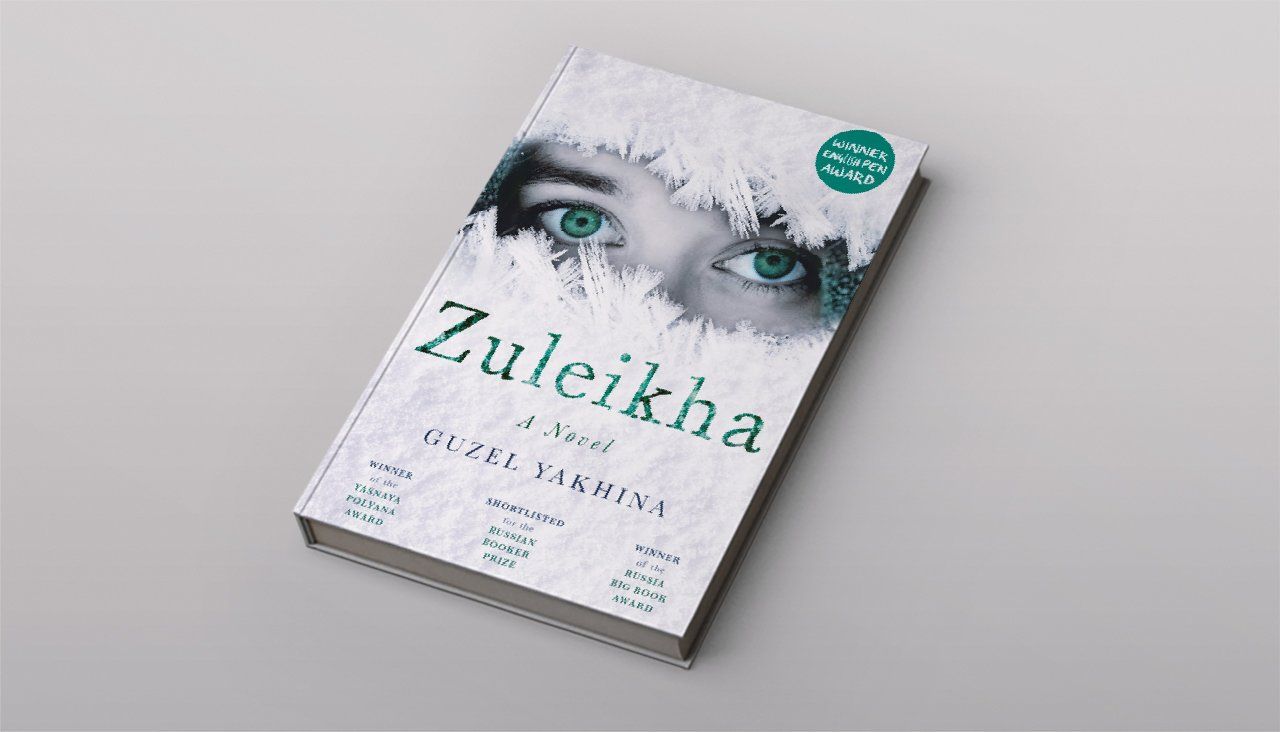
Zuleikha is the story of a young Muslim woman who is wrenched out of her abusive home and into the Gulag system. The novel is a stark portrait of the Stalinist era, but its focus is on the title character’s sense of hope and resilience: Zuleikha Valieva joins a motley crew of peasants, intellectuals, soldiers, and other displaced Soviet citizens to form an unexpectedly close family in exile. It is no wonder that Zuleikha launched its author, Guzel Yakhina, from her life as a film student to international fame. The book, which is based on the experiences of the author’s grandmother, depicts an often-overlooked slice of history with an optimistic sense of humor and the visual flair of a good movie. Although it was Yakhina’s first novel, Zuleikha won both of Russia’s most prestigious nationwide literary prizes. When Yakhina published her second book last year, it topped Russian sales charts alongside international bestsellers by Dan Brown and Jojo Moyes.
Now, Yakhina’s debut is set to appear in an English translation by Lisa C. Hayden. Because Hayden’s translation of Zuleikha will give English speakers access to a major event in contemporary Russian literature, Meduza is offering readers a preview of the book with the kind permission of its publisher, Oneworld Publications.
Read the text here: “A sneak preview of one of the biggest runaway bestsellers in recent Russian literature”
Aleksashenko says annexing Crimea was as bad for Russia as the Bolshevik Revolution 💸
In an op-ed for Republic, former Deputy Finance Minister Sergey Aleksashenko looks back critically at the five years since Russia launched its military takeover of the Crimean peninsula. He compares the 2014 annexation to the Bolshevik Revolution in 1917, arguing that both events marked a sudden change in Russia’s national trajectory that took the country off the path of “normal European civilizations.”
Aleksashenko says the costs heavily outweigh the small gains won by acquiring Crimea (marginal territorial and population increases, plus the “subjective positive emotions” associated with regaining the peninsula and geopolitical glory). He breaks down the drawbacks into quantifiables (a massive drain on the federal budget) and intangibles (the root of Russia’s worsening stagnation).
At least 75 percent of Crimea’s regional budget, Aleksashenko says, is funded by Moscow. In Sevastopol (which is technically a separate entity), that figure is 60 percent. The federal government has spent roughly 700 billion rubles ($10.6 billion), so far, to bring Crimean wages and living standards up to average Russian levels. Add another 200 billion rubles ($3 billion) in pension payments, and an extra 600 billion rubles ($9.1 billion) in “indirect spending” through state companies, mainly in the peninsula’s energy and gas industries.
Aleksashenko also complains that Crimea’s annexation has split the country into supposed “patriots” and “traitors.” The former group, he says, is more numerous but “less self-reflecting” and less interested in Russia’s future. This unbalanced schism has trapped the “party of peace” in a “liberal ghetto” and revoked liberals’ “right to participate in the political process.” As a result, many of the country’s more “energetic and creative” citizens are joining an exodus of “refugees” and weakening Russia’s chances of ending the national stagnation.
Top stories from Russia’s news media
BBC Russian Service
- 🗺️ Last April, Vladimir Putin complained that “very few people today know that Borodino is the primordial, historical name of Smith Island” in Antarctica, lashing out at what he called “the gradual removal from the world map of Russian names given by our explorers and travelers in past centuries and decades.” The president blamed the problem on a lack of maps manufactured in Russia, instructing the Federal State Registration, Land Register, and Mapping Service (Rosreestr) to work with the Russian Geographical Society to correct the problem. He also wanted the Defense Ministry to pitch in by declassifying some of its maps for the project. Sources tell the BBC, however, that the work hasn’t even started yet, because Putin never issued his order in writing. If the president decides to follow through with pen and paper, it could take an additional five years before Russia’s new world atlas is ready, according to Rosreestr, which says it would release the new maps in an online platform accessible from mobile devices.
- 🚚 The “Platon” electronic toll-collection system introduced on Russian highways in late 2015 might soon incorporate a new on-board device that monitors drivers’ speeds and alertness in real time. According to the BBC, operator RT-Invest Transport Systems wants to expand Platon to improve the Federal Transport Supervision Service’s ability to ensure road safety for heavy freight trucks and passenger buses. RTITS (nearly a quarter of which is owned by billionaire Arkady Rotenberg’s son) also stands to profit from an expanded Platon system, if it’s permitted to use the collected data for commercial purposes. The new requirements could force drivers to buy new devices and pay automatically issued fines. Truck drivers have previously staged mass protests against the Platon toll system.
The Bell
- 🕵️♂️ Federal investigators are expanding their probe into the Arashukov family. On Tuesday, the Investigative Committee announced more than 70 joint searches with the FSB and Interior Ministry. The raids targeted the homes and offices of dozens of law enforcement officials in Karachay-Cherkessia, Dagestan, and Stavropol Krai. Agents are investigating the potentially illegal consumption of natural gas through organizations controlled by the Arashukovs. Also on Tuesday, as part of the same 30-billion-ruble ($456.5-million) theft case, officials detained two suspects in the gas industry and issued arrest warrants for another two individuals.
- 🤖 Sberbank CEO Herman Gref says mistakes made by artificial intelligence are responsible for billions of rubles in losses. Sberbank later clarified that Gref was talking about unrealized potential profits. In the past year, the company has replaced roughly 5,500 staff with AI services.
Kommersant
- 🙈 A lawyer in Krasnodar named Alexey Avanesyan is asking the local district attorney to prohibit minors from attending an exhibition of weaponry captured from terrorists in Syria. Organized by the Defense Ministry, the display is traveling by railway through cities across Russia, and is scheduled to arrive in Krasnodar on February 28. Avanesyan believes that suicide bombers’ cars, ISIS torture tools, and similar items in the exhibition could traumatize younger viewers.
- 🗳️ Recently stripped of his role as Vidnoye City Hall speaker, former Communist Party presidential candidate Pavel Grudinin has now lost his seat altogether. The group’s Council of Deputies held a special session this week and booted out Grudinin, citing reports that he owns undeclared offshore accounts. The former KPRF presidential candidate says he believes his ouster is retribution for challenging Vladimir Putin for the Kremlin last year.
- ⚖️ Ingushetia’s Supreme Court has shaved three months off oppositionist Magomed Khazbiev’s hate-speech sentence. Last November, Khazbiev was convicted of four felonies for publicly criticizing local state officials and allegedly possessing illegal firearms and explosives. Thanks to the new ruling, Khazbiev could go free as soon as September, though his lawyers say he will seek full exoneration, insisting that he is being persecuted for his political activism and human-rights advocacy.
RBC
- 💰 Andrey Klishas and state television personality Vladimir Pozner are squabbling in public this week. After interviewing the senator on his program recently, Pozner questioned Klishas's claim that citizens disrespect themselves by insulting their elected officials, and argued that state officials are typically “privileged” individuals. In a letter to Pozner, Klishas said people who achieve professional success attain a “level of independence” that allows them to enter politics and “guarantees” their “impartiality and objectivity” in office. Klishas is one of the co-authors of controversial legislation that would outlaw online insults against state officials.
Zone out: “Steven Seagal, bored out of his mind, lazily DESTROYS a couple of guys.”
Yours, Meduza