
Оригинал материала
Thanks to Putin, Donbas residents now have an expedited path toward Russian citizenship. What could go wrong?
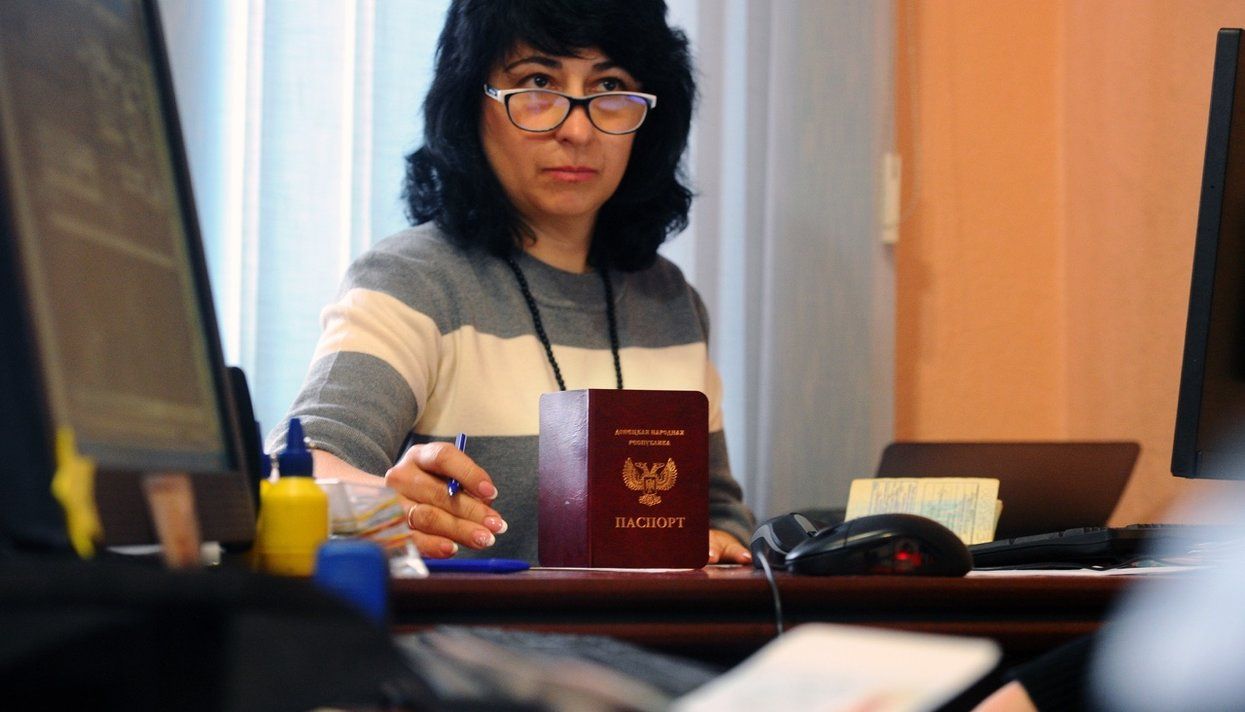
Russian president Vladimir Putin has signed an order allowing for an expedited citizenship process for residents of the self-styled Donetsk and Luhansk People’s Republics (the DPR and LPR), which form Ukraine’s eastern Donbas region. Residents of the two breakaway regions may begin receiving Russian passports in the near future, and Putin’s move has drawn criticism and renewed calls for sanctions in Kyiv and the West. We asked how issuing passports to residents of the DPR and LPR aligns with Russian and Ukrainian law and what problems might arise as Russia begins accepting new citizens from both regions.
DPR and LPR fighters can legally be denied Russian citizenship
Russia’s federal citizenship laws include a number of universal limits for potential citizens. For example, Russian citizenship can be denied to individuals who:
- Are participating or have participated in international, interethnic, interterritorial, or other armed conflicts;
- Are participating or have participated in the completion or preparation of illegal acts that match at least one criterion for extremism;
- Are currently serving in the armed forces, security forces, or law enforcement agencies of a foreign government (unless that government has made an agreement to the contrary with the Russian Federation).
On their application for Russian citizenship (a blank sample of which was published alongside Putin’s order), DPR and LPR residents must confirm that these limits do not apply to them. Even if the Russian government chooses to overlook these exceptions in the short term, each individual decision to grant a Russian passport may be overturned if the responses on the passport holder’s application are shown to be false at some later date.
Ukrainian officials have already taken steps toward revoking Ukrainian citizenship for those who get a Russian passport
Yury Grimchak, Ukraine’s Deputy Minister for Temporarily Occupied Territories, told DPR and LPR residents that if they receive a Russian passport, their Ukrainian citizenship will automatically be revoked. In the spring of 2017, then-Ukrainian president Petro Poroshenko proposed a bill that would have made that process universal, removing Ukrainian citizenship from anyone who was granted citizenship elsewhere. However, the bill was never accepted, and the Verkhovna Rada asked for it to be reworked.
Last year, when the Hungarian government’s decision to grant citizenship to residents of Transcarpathia sparked an international scandal, Ukrainian Foreign Minister Pavel Klimkin admitted that Ukrainian citizens cannot be punished for receiving dual citizenship.
The international community and even Russia itself recognize the DPR and LPR as regions of Ukraine. The regions are primarily populated by Ukrainian citizens who possess the rights associated with that status, including the right to vote. If the Ukrainian government began to revoke the citizenship status of Donbas residents en masse as those individuals received Russian passports, their status would be unclear. On one hand, they would be unable to vote, and they would legally have to receive residency permits to remain in their homes. On the other hand, Kyiv has virtually no control over the DPR and LPR at the moment.
If Donbas residents keep their Ukrainian citizenship, additional problems could arise
Russia’s Internal Affairs Ministry emphasized that residents of the self-declared DPR and LPR who receive Russian citizenship can choose to retain their status as citizens of Ukraine.
However, if those individuals are granted Russian citizenship and do not inform the Russian Internal Affairs Ministry within 60 days about their Ukrainian citizenship status, they will have committed a criminal offense punishable with fines of up to 200,000 rubles (about $3,000) or up to 400 hours of mandatory labor.
The Russian government also applies additional limitations to dual citizens who move to Russia. They cannot work in government service, run for elected government positions, work in law enforcement or security, or receive access to state secrets. Nonetheless, dual citizens who are permanent residents of Russia can be drafted into the Russian army for emergency service.
DPR and LPR fighters will likely be able to receive passports that enable them to leave the country
Both Russian and Ukrainian citizens use separate passports for identification within the borders of their country of citizenship and identification internationally. Before Putin’s recent order, Donbas residents could only receive international passports from Ukraine. However, in order to do so, they had to cross the front lines of the Ukrainian war. Few individuals who fight or have fought for the DPR and LPR would likely decide to do such a thing because they would risk being captured by Ukrainian police. Now, if they are granted Russian citizenship, those fighters could receive Russian international passports and, at least theoretically, be able to leave the country.
How European governments and government leaders elsewhere might react to this de facto “legalization” of international travel for Donbas residents has yet to be seen. So far, the Lithuanian government has called on the international community “not to recognize illegally issued documents from the Russian Federation and to tighten sanctions against Russia.”
Translation by Hilah Kohen