
Оригинал материала
Two prominent activists are planning to run for the same Moscow City Duma seat, prompting tensions among opposition supporters
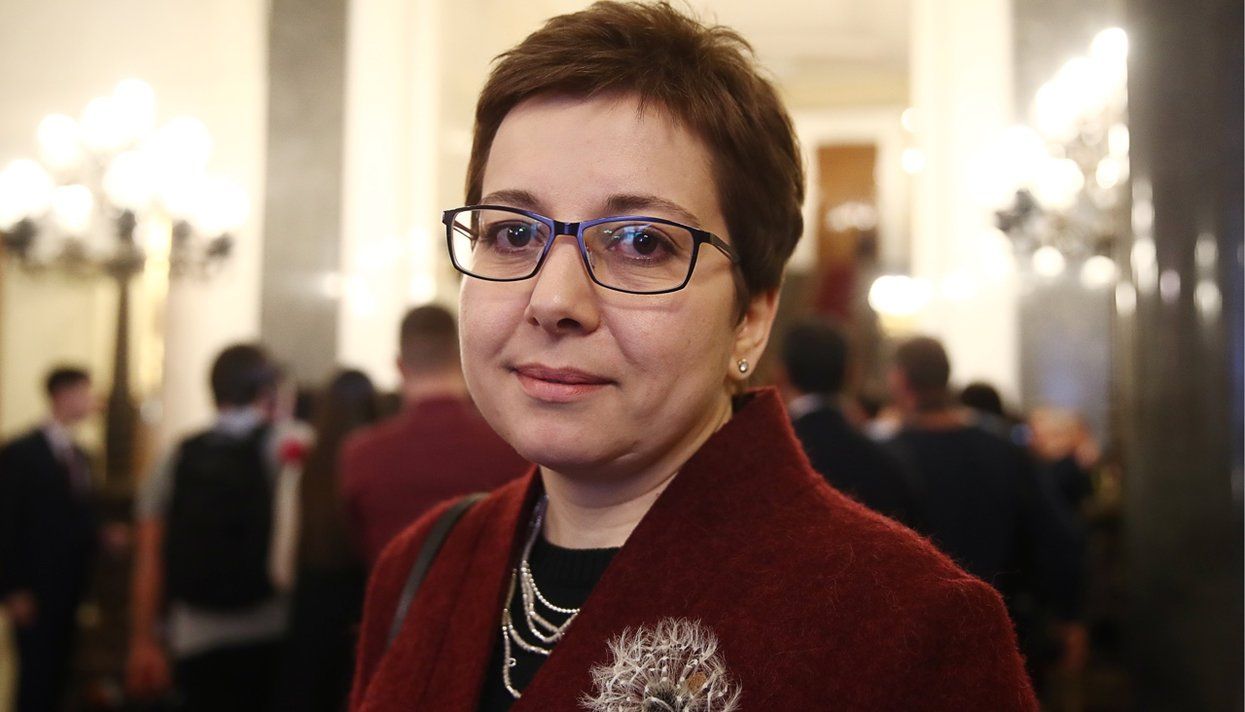
In this September’s elections for the Moscow City Duma, the race for the 43rd District’s seat promises to be the most closely watched. The central urban district has a history of offering opposition candidates a strong starting position, and two candidates who are unaligned with the Putin regime to varying degrees are planning to campaign in it. Nyuta Federmesser, a widely recognized advocate for palliative care and the founder of the hospice aid foundation Vera is one of those candidates, and the other is Lyubov Sobol, an attorney for the Anti-Corruption Foundation (FBK). FBK founder and longtime opposition politician Alexey Navalny has asked Federmesser to withdraw her candidacy so as not to help the local Moscow government by keeping Sobol out. Navalny warned Federmesser against crossing “the line between compromise and conformism” when it comes to her relationship with the authorities. Sobol has argued that Federmesser decided to run in the 43rd District after she did; Federmesser stands by the opposite claim.
Lyubov Sobol, Sergey Mitrokhin, and Nyuta Federmesser all plan to run for a City Duma seat in Moscow’s 43rd District
Nyuta Federmesser, the director of the Moscow-based Center for Palliative Care and the founder of the hospice aid foundation Vera, confirmed in early May of 2019 that she intended to run for a Moscow City Duma seat in September. When a reporter for Kommersant asked her whether she would compete for a spot in the capital’s municipal legislature, the activist answered, “Probably, yes.”
Earlier, in April, we reported that Federmesser was on a list of candidates the Moscow mayor’s office intended to support unofficially in the upcoming elections. The local government’s executive branch has expressed hopes for maximal turnaround in its legislative counterpart. Our sources also named the specific precinct in which Federmesser would run: the 43rd District includes the upscale Presnensky neighborhood, the historic Arbat neighborhood, and the Khamovniki neighborhood. Lyubov Sobol, an attorney for the Anti-Corruption Foundation (FBK), also plans to run in the same district. Sobol has spent the last few months working actively to expose low-quality school lunches in the Moscow area. Another opposition activist, former Yabloko Party Moscow chief Sergey Mitrokhin, plans to run in the 43rd District as well.
The day after Federmesser announced her candidacy, opposition politician and FBK founder Alexey Navalny published an open letter to the nonprofit advocate. “We are dealing with a situation in which the interests of the mayor’s office and United Russia are in conflict with the interests of society and your own individual interests,” Navalny wrote. “To remain in power, they [city officials] have to fool voters and hide behind people like you — and you individually — during elections.” Navalny argued that for people like Federmesser, “the whole problem lies in locating the line between compromise and conformism.” He called on her not to let her work “be so humiliated and debased.”
Federmesser argued that Sobol chose to run in the 43rd District after she did
Federmesser has not yet responded publicly to Navalny’s letter, but on May 10, she left a few comments under a Facebook post by the publicist Viktor Shenderovich, who compared Sobol and Federmesser to concentration camp prisoners set against one another by prison administrators. In response to the assertion that Federmesser “was dispatched to that territory after it was known that Sobol would run there,” the health care activist wrote, “Sobol announced her candidacy in the district two days after she found out from me where I would be running.”
In the same comment, she noted that she had not officially named her chosen precinct. In a different discussion the day before, however, Federmesser had said it would be the 43rd. She explained her choice by pointing to her personal and professional connections to the area: “That’s where the hospice is where I work, where I have worked for many years, and where I am currently the director. That’s where I live and where my children go to school; that’s where the Vera Foundation is. That’s where I know every nook and cranny because I worked for years and years visiting patients in the Central Administrative District for the hospice.”
Sobol said Federmesser told her nothing about her own candidacy but did try to find out where Sobol would run
Journalist Sergey Parkhomenko also turned to Facebook to retell a conversation he had with Lyubov Sobol. In it, he wrote, Sobol asserted that she and Federmesser did have a conversation about the Moscow State Duma elections. However, Sobol claimed that Federmesser expressed persistent curiosity about where the Navalny ally planned to run, all without saying anything about her own plans.
Navalny affirmed that version of events while arguing that Federmesser took the time to search for Sobol’s telephone number, ultimately receiving it “from a well-known activist for the nonprofit movement.” Navalny called Federmesser’s argument that she told Sobol about her candidacy “a misunderstanding.” “I hope that Nyuta Federmesser, whom I respect, had a simple mix-up, and I will be terribly disappointed if she decides to pursue such an open deception,” the politician concluded.
At the time of this publication, Federmesser’s representatives were not yet prepared to comment on her behalf.
The 43rd District is known for its oppositionist leanings. Sources say Federmesser would be able to use her campaign to criticize the government.
In the Moscow City Duma’s previous elections in 2014, the 43rd District proved itself to be relatively opposition-friendly. Actor Leonid Yarmolnik ran there for the Civic Platform party, which was led by Mikhail Prokhorov at the time. United Russia’s candidate, a doctor named Vera Shastina, ran a formal campaign but only received 28.4 percent of the vote, barely surpassing Yarmolnik’s 27.4 percent.
In the 2016 State Duma elections in the 208th District, which includes Moscow’s Central Administrative District and the Lefortovo neighborhood, three liberal opposition candidates went head to head: Lyubov Sobol, Maria Baronova (who ran for Open Russia but was self-nominated), and Andrey Zubov (Parnas). Ultimately, Sobol withdrew her candidacy, and Navalny asked Baronova to do the same and throw her support behind Zubov. United Russia candidate Nikolai Gonchar ultimately won the race with 57,000 votes to Baronova’s 13,200 and Zubov’s 18,800.
In the 2017 municipal elections, central Moscow seemed to be in a particularly opposition-oriented mood. In Khamovniki, United Russia’s candidates did not receive a single seat and nine seats went to Yabloko candidates while independents won five and the Communist Party got one. In the Presensky neighborhood council, nine slots went to independent candidates, five to United Russia, and one to Yabloko. In the Arbat neighborhood, United Russia won five seats out of 10 while four went to Yabloko and an independent candidate snapped up the final seat. Political strategist Maxim Katz, who coordinated opposition campaigns in Moscow neighborhoods at the time, even asserted that soldiers from Moscow Oblast were registered at a Defense Ministry building’s address in central Moscow, artificially tipping the scale toward United Russia. He argued that without their votes, opposition candidates would have earned eight deputies’ spots.
Multiple sources have told Meduza that Federmesser would enjoy some degree of freedom to criticize the government in the upcoming election thanks to the 43rd District’s anti-administration leanings.
Andrey Pertsevcontributed reporting
Translation by Hilah Kohen