
Оригинал материала
Why Nagorno-Karabakh?
The history (both ancient and modern) that fuels the deadly conflict between Armenia and Azerbaijan
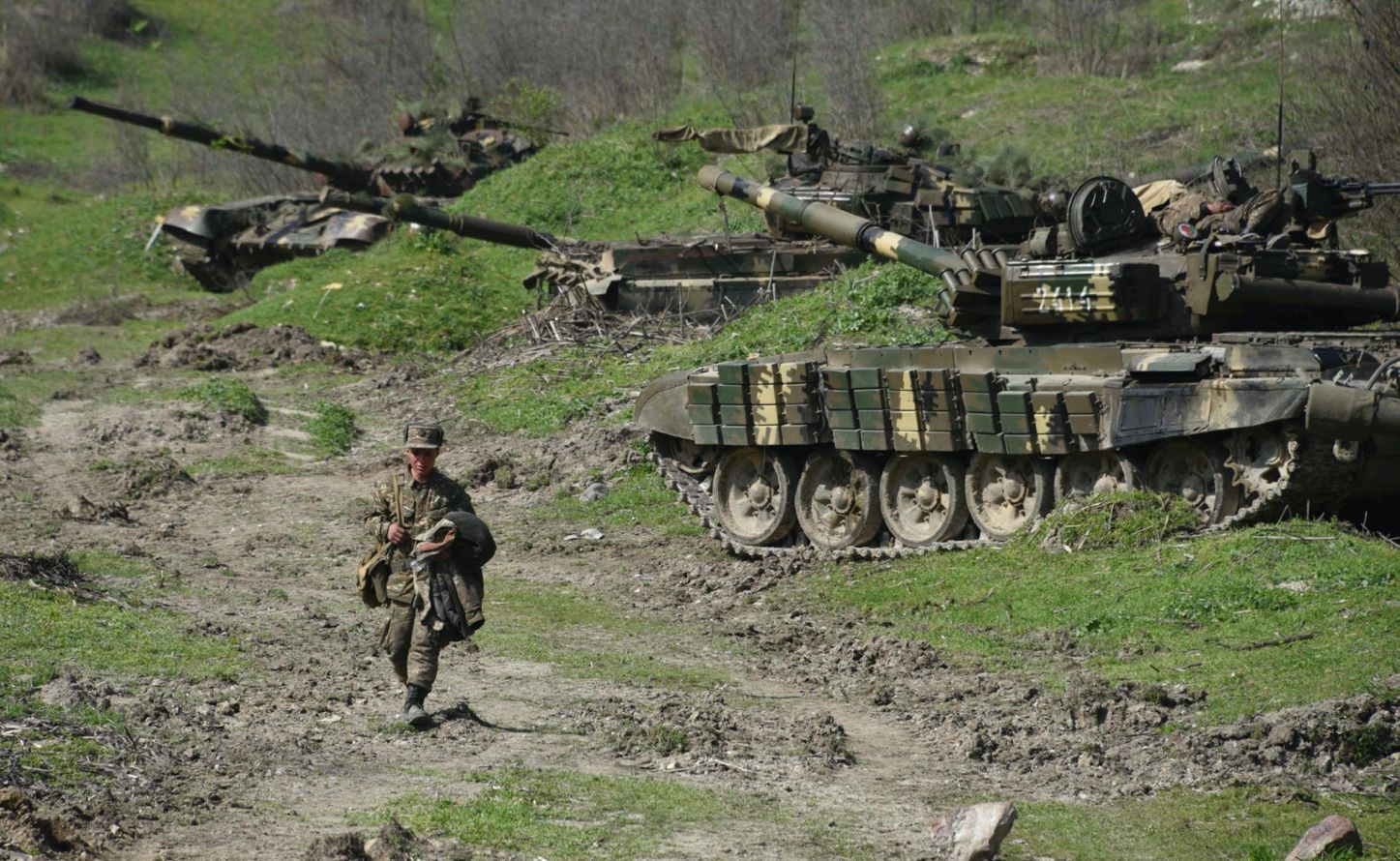
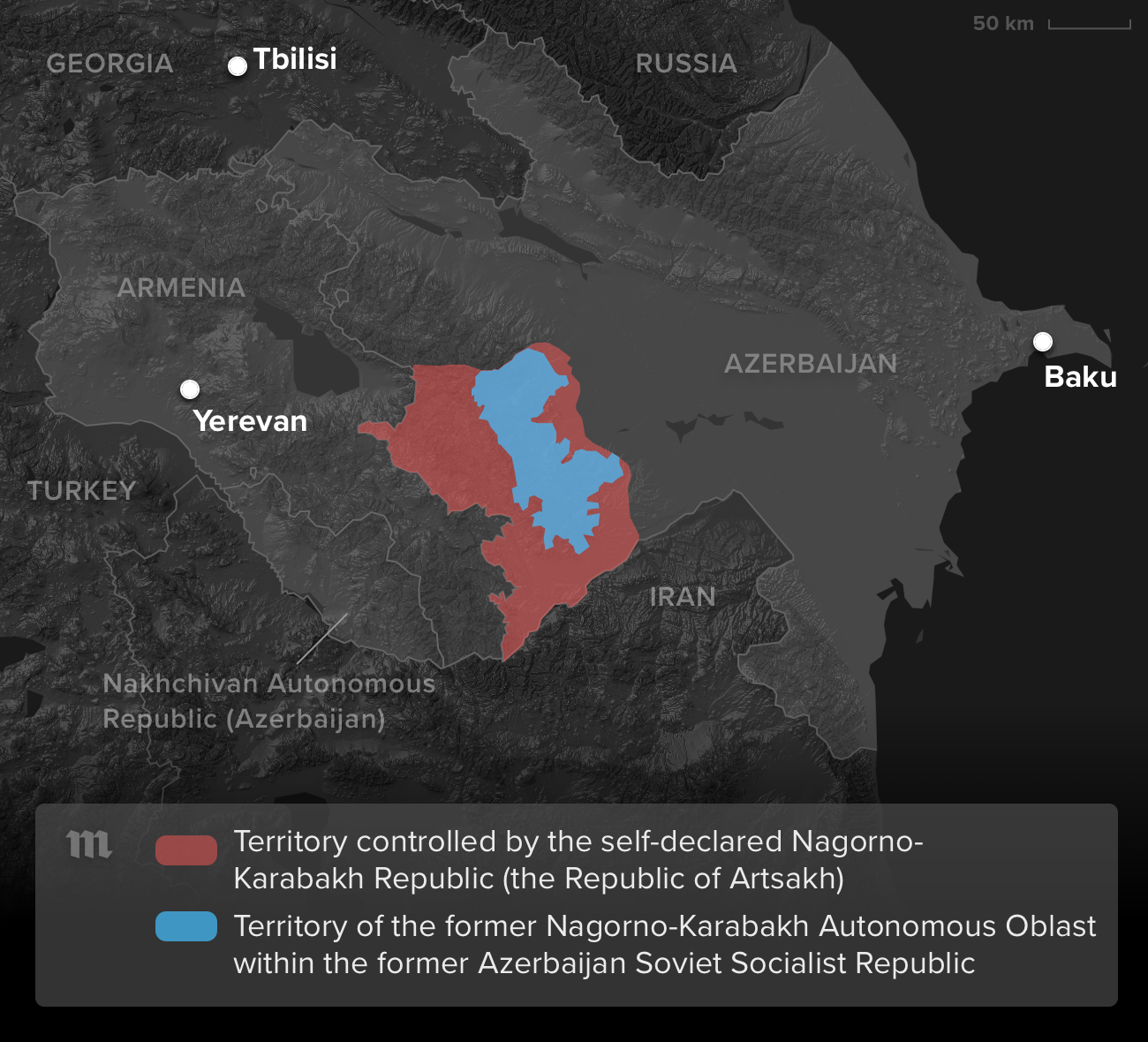
For the second time this year, another round of fighting has broken out in Nagorno-Karabakh, home to the longest-running war on former Soviet soil. Since the late 1980s, the conflict has killed roughly 20,000 people and made refugees of hundreds of thousands more. The self-declared Nagorno-Karabakh Republic (officially named the Republic of Artsakh) enjoys close ties to Armenia (though Yerevan has not formally recognized the breakaway republic’s independence), while Azerbaijan insists that this area is its own territory. The stalemate regularly flares up as it has in the past week, but the latest escalation became more serious when Armenia mobilized its military (and Azerbaijan partially mobilized). What started this conflict and what are the risks of renewed fighting? Which is correct: Karabakh or Artsakh? Meduza reviews the background basics and answers other burning questions about a war that refuses to go away.
What started all this?
Armenia’s presence in the area traditionally understood today to encompass Nagorno-Karabakh dates back roughly three millennia. By the late 11th century, the territory was claimed by various Armenian kingdoms (though some Azerbaijani historians dispute these accounts).
After Turkic tribes conquered most of Transcaucasia in the 13th century, local Armenian rulers spent the next few hundred years as the subjects of different Turkic and Persian states. This cycle repeated until the 19th century when the Russian Empire consumed most of the region. Throughout all this time, Armenian and Muslim communities inhabiting the areas now demarcated as Armenia and Azerbaijan lived as neighbors, often sharing the same cities and villages.
Modern ethnonationalism also arrived in Transcaucasia by the late 19th century, as Armenian, Azerbaijani, and Georgian movements fueled sometimes open clashes and pogroms, including in the area of Karabakh. During World War I, relations between the Armenian and Azerbaijani communities soured especially after tens of thousands of Armenians fled to territories controlled by Russia to escape a genocide perpetrated by the Ottoman Empire that killed roughly half a million people. The surviving Armenians were largely inclined not to distinguish between Transcaucasian Muslims (future Azerbaijanis) and their recent oppressors, the Turks (a disposition reinforced by the fact that Azerbaijani ethnic leaders considered themselves Turks).
In the spring of 1918, a year after Tsarist Russia’s collapse and several weeks after Soviet Russia’s withdrawal from the First World War, Turkey launched an offensive in Transcaucasia, this time against Armenian nationalists, not the Russian imperial army.
The military campaign coincided with rising ethnic tensions throughout the region. In late March 1918, Baku’s Azerbaijani majority clashed with ethnic Armenians (who then made up about 20 percent of the city’s population, though they enjoyed the support of the local Bolshevik government and its militias). The unrest culminated in the murder of 12,000 Azeris according to Azerbaijani historians and five-to-six times fewer casualties among Armenians. To this day, Azerbaijani historiography officially refers to this violence as a genocide.
In late May 1918, Georgia, Azerbaijan, and Armenia each declared their independence. The territory now understood to be Nagorno-Karabakh, home primarily to ethnic Armenians when it was part of the Russian Empire, had been part of the Elisabethpol Governorate, which together with the Baku Governorate, combined to form Azerbaijan. Unable to withstand the Turkish Army’s attacks and threatened with total occupation, the fledgling Armenian state agreed to numerous territorial concessions. Nagorno-Karabakh would become part of Turkey’s regional ally, Azerbaijan (though the “Caucasian Islamic Army” created by the Turks was still fighting the Bolsheviks for control over these lands). In this chaos, troops from the Triple Entente tried to stop the Turkish Army’s advance by seizing the city of Baku. In September 1918, units of the “Islamic Army” occupied Baku and executed (according to the most conservative estimates) at least 10,000 local Armenians. Turkish-Azerbaijani forces also seized Nagorno-Karabakh.
A few weeks later, however, the Ottoman Empire exited the First World War and started withdrawing its troops, including its forces in Transcaucasia, which allowed ethnic Armenians to regain control over Nagorno-Karabakh.
At first, the British filled the vacuum left by the retreating Turks. In 1919, London tried unsuccessfully to convince Nagorno-Karabakh’s Armenian community to recognize Azerbaijan’s territorial claims. (Great Britain hoped to develop the area as an oil outpost on the Caspian Sea.) Meanwhile, Azerbaijani troops launched a new offensive in the region that included a campaign of ethnic cleansing. Facing total defeat, Karabakh’s Armenians agreed to recognize Azerbaijan’s authority, albeit with several preconditions and reservations.
In the spring of 1920, Armenian units launched an ill-fated counteroffensive that ended tragically for the local community when Azerbaijani forces repelled the attack and responded by virtually destroying the Armenian sector of Shusha, Nagorno-Karabakh’s capital city. Between several hundred and several thousand Armenians died in a subsequent ethnic riot.
The war ended when the Bolsheviks seized power in both Armenia and Azerbaijan. Karabakh Armenians hoped their region would be unified with Armenia, but the Reds decided — after prolonged internal party discussions — to leave it as part of the Azerbaijan Soviet Socialist Republic. (Some evidence suggests that Joseph Stalin, then the People’s Commissar for Nationalities, supported this decision.)
It’s believed that up to 94 percent of the people living in the newly formed Nagorno-Karabakh Autonomous Oblast were ethnic Armenians. To complicate matters further, Soviet officials redrew the map to remove its common border with Armenia, making the region an enclave inside Azerbaijani territory.
Was there fighting in Nagorno-Karabakh during the Soviet era? How did it come to war again?
Until just before the USSR collapsed, there was no open armed conflict in Nagorno-Karabakh, but the ethnic tensions responsible for past violence never disappeared. Armenian community leaders repeatedly petitioned Moscow to transfer Nagorno-Karabakh to the Armenian SSR, and there were rallies in Yerevan advocating this initiative. The campaign intensified as soon as Perestroika began, by which point there were 350,000 Armenians residing in Azerbaijani territory (not counting Nagorno-Karabakh) and roughly 200,000 Azerbaijanis in Armenia. Three-quarters of the people living in Nagorno-Karabakh were ethnic Armenians.
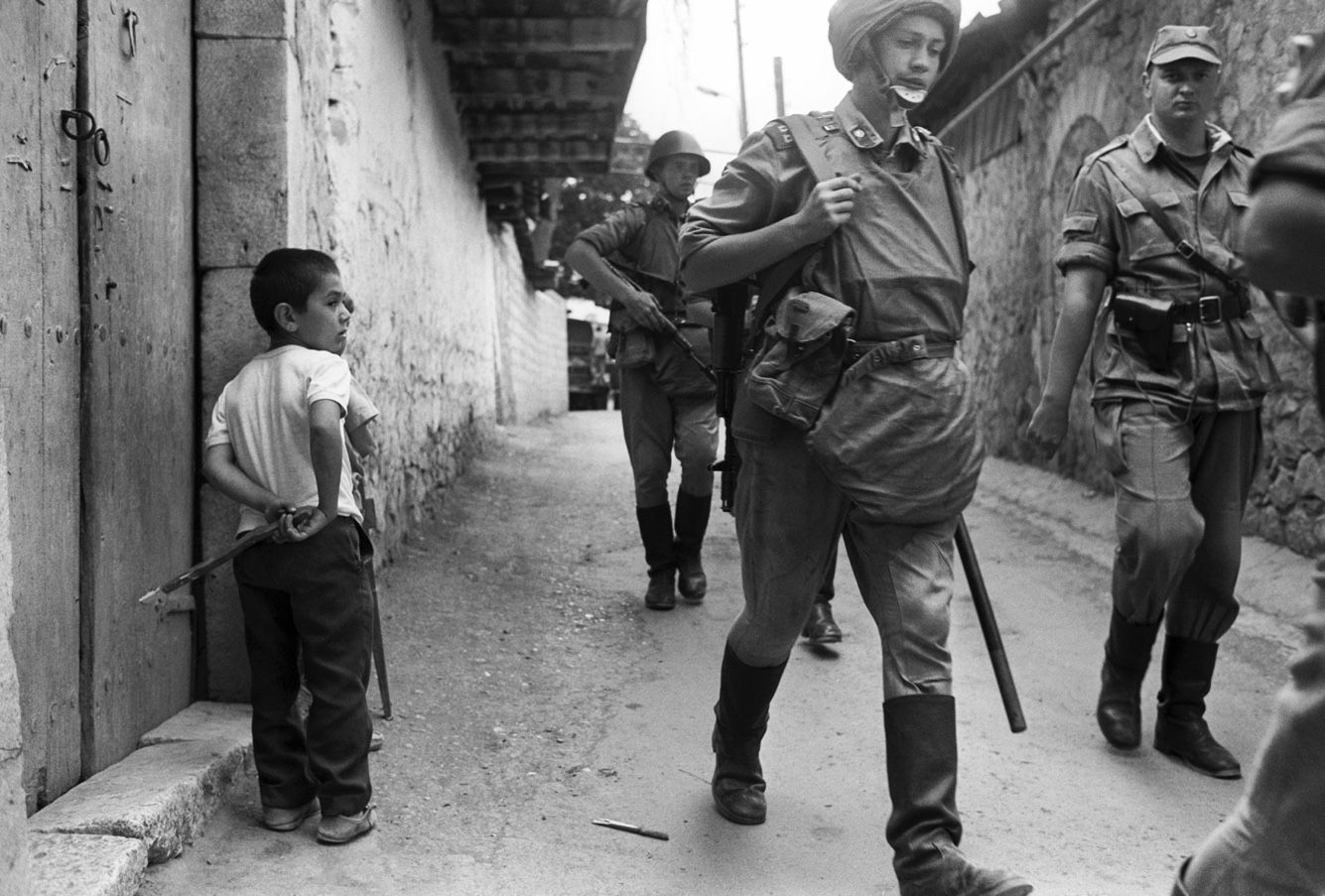
Following several small ethnic clashes in early 1988, local deputies in Nagorno-Karabakh requested the transfer of their region to Armenian territory, echoing the demands of massive demonstrations in Yerevan. By the summer, violent confrontations had become routine. A series of reciprocal pogroms across Armenia and Azerbaijan led to a mass exodus of Armenians from Azerbaijan and Azeris from Armenia, as people in both ethnic groups increasingly viewed each other as “foreigners.” Afraid to close the republics’ boundaries and set a dangerous precedent, officials in Moscow failed to adopt a coherent policy. The Kremlin declared a state of emergency and effectively removed Karabakh from Baku’s control, but only temporarily.
In January 1990, in response to a pogrom carried out by Azerbaijani nationalists in Baku that killed several dozen Armenians, the Soviet Army entered the city, leading to clashes that resulted in a hundred more deaths. These incidents only aggravated tensions in Nagorno-Karabakh, where genuine battles started taking place at the boundary with Azerbaijan in 1990.
After the Soviet Union’s collapse, the conflict became a full-fledged war. In the summer of 1994, after six months of the heaviest fighting, a ceasefire was finally reached. With Armenia’s support, the self-proclaimed Nagorno-Karabakh Republic had managed not only to maintain control over its territory as a former autonomous oblast but also to break through to the Armenian border, ceasing to be an enclave. Karabakh Armenians also succeeded in occupying several towns inside Azerbaijan near the boundary. In total, the war claimed the lives of more than 15,000 soldiers and several thousand civilians.
The cessation of major combat, however, did not lead to real peace. On average, in fighting along the boundary every year, ever since, roughly 30 people have died. In 2016, the two sides used heavy artillery for the first time.
Which is correct: Karabakh or Artsakh?
Historically, there was a province of the ancient Kingdom of Armenia called Artsakh, the territory of which corresponds generally to what is now considered Nagorno-Karabakh. The self-declared republic uses Artsakh as its second name.
The word “Karabakh” first appeared in the Middle Ages after the arrival of Turkic tribes in Transcaucasia. The most widespread theory maintains that it combines the Turkic word for “black” (kara) and the Persian word for “garden” (bakh), though some researchers question this claim, arguing that the first syllable also has Persian origins.
According to the Nagorno-Karabakh Republic’s Constitution, the names Artsakh and Nagorno-Karabakh are equivalent, but only the Armenians use “Artsakh,” which makes “Nagorno-Karabakh” the more neutral toponym.
To the east of Nagorno-Karabakh, there is a flatland known to some as the Karabakh Plain, which is now controlled mainly by Azerbaijan.
What caused the latest escalation in violence?
Outbreaks of new fighting in Nagorno-Karabakh are typically the result of domestic politics in Armenia and Azerbaijan. This is more true in Baku, however, given that Yerevan has no strategic goals that would require the resumption of hostilities in the disputed territory. Armenia effectively won the war in the early 1990s and today’s status quo suits Yerevan just fine. Military advancements in both countries also add tension to the conflict zone. With each new round in an ongoing arms race (where Baku clearly wields greater resources), the Azerbaijani authorities have touted their apparent military superiority.
Baku likely hoped that Armenia’s new leaders who took power after a revolution in 2018 would agree to negotiate new terms in Nagorno-Karabakh. These expectations were based in part on the fact that Nikol Pashinyan, Armenia’s new prime minister, publicly supported a plan in the early 2000s to restore Azerbaijani control over areas captured by Nagorno-Karabakh Republican forces in the early 1990s (without surrendering Nagorno-Karabakh itself) in exchange for agreeing to talks about the self-declared republic’s status. But this settlement, drafted by international mediators, is controversial in Armenia. When Levon Ter-Petrosyan endorsed the plan in 1997, it cost him his presidency. Politicians who made their careers in Karabakh replaced him, and the so-called Karabakh party — which has dominated Armenian politics for the past 20 years — still categorically opposes any concessions to Azerbaijan.
When Pashinyan took office in 2018, it seemed Armenia’s political consensus might shift on the Nagorno-Karabakh issue, but the new prime minister quickly demonstrated that he had no intention of changing course in the region. Shortly into his tenure, Pashinyan visited Stepanakert (the Nagorno-Karabakh Republic’s capital) and proclaimed, “Karabakh is Armenia,” arguing that Yerevan “has no lands that can be given to Azerbaijan.”
Meanwhile, the collapse in world oil prices has precipitated an economic crisis in Azerbaijan (where the IMF predicts a 2.2-percent GDP contraction in 2020). Four years ago, just before fighting last escalated significantly in Nagorno-Karabakh, Azerbaijan’s economy similarly fell on hard times. In the 2016 crisis, the Azerbaijani authorities tried to mobilize patriotic sentiment with a short, victorious military campaign in Nagorno-Karabakh, seemingly in order to compensate for the hardships caused by falling oil prices. In the four-day war, Azerbaijan “liberated” small tracts of land lost in the early 1990s.
Which side does Russia support in this conflict?
Russia has generally pursued a two-track policy. Moscow is bound by obligations to Armenia under the Collective Security Treaty and (together with the United States and France) simultaneously remains a primary mediator in negotiations to resolve the Nagorno-Karabakh conflict. These talks have been deadlocked for decades, however, and the mediators’ main goal now is to keep the conflict frozen to prevent further outbreaks of violence. The status quo clearly benefits Armenia, and Russia supports Yerevan with arms sales, but Moscow also sells weapons to Azerbaijan and endeavors to maintain normal relations with Baku.
This situation imposes certain limits on the fighting in Nagorno-Karabakh. Because the breakaway republic is now contiguous with Armenia, Yerevan can freely build up its military forces near the border for sustained assistance to its neighbor. Either Azerbaijan or its ally Turkey would have to attack Armenia directly in order to break this chain, which is unrealistic, given Moscow’s mutual defense pact with Yerevan.
Border clashes between Armenia and Azerbaijan are not rare. The last and most serious fighting was in July 2020, though both sides quickly agreed to a truce. The Collective Security Treaty only guarantees members’ protection in the event of external aggression. As a result, Armenia can operate almost openly in Nagorno-Karabakh and in the Azerbaijani areas still controlled by the breakaway republic, but for the past quarter-century it has been unable to annex the territory outright, let alone recognize Nagorno-Karabakh’s independence (though this issue surfaces occasionally in the Armenian Parliament).
Both sides rely on alliances with more powerful states, impeding their freedom to pursue decisive military and diplomatic goals. This balance of power serves as a guarantee against escalations that would turn the conflict into a full-scale war.
Is it true that Turkey might intervene this time?
Turkey has been intervening in the conflict on Azerbaijan’s side since the early 1990s, but direct military involvement isn’t an option because it would challenge Yerevan’s defense pact with Moscow and defy diplomatic pledges made by Russia, the United States, and the European Union to prevent the resumption of large-scale fighting in the region. Ankara has nevertheless waged a “hybrid war” against Armenia and used the same tactics to target Russia’s allies in the Middle East and Africa. These hostile actions have not, however, made it impossible to maintain decent relations with Russia. For Turkey (which officials in Yerevan say redeployed its “proxies” from Idlib in Syria to Nagorno-Karabakh), the Armenian-Azerbaijani conflict is just another front in the same hybrid war it’s fighting in Syria and Libya.
Ankara may have several far-reaching goals:
- Replace Russia as Azerbaijan’s main strategic partner by being ready to provide real support in a major conflict. Besides Afghanistan, Turkey is the only country that’s openly taken sides in the fight for Nagorno-Karabakh. Other states, including Russia, either refuse to discuss the issue or demand “an end to the violence and a return to the negotiating table,” effectively endorsing the status quo.
- Ensure the safety of the BTE natural gas pipeline and the BTC crude oil pipeline, which stretch from Azerbaijan to Turkey, passing near the border with Armenia (precisely where battles took place in July 2020). Ankara relies on the BTE pipeline as an alternative to Russian natural gas imports and represents a means of reducing its energy dependence on Moscow.
- Make Nagorno-Karabakh a bargaining chip in Turkey’s geopolitical competition with Russia in northern Syria and Libya, where the partnership between Ankara and Moscow has become a dangerous rivalry over the past two years.
Who has the fighting edge? Which side has more troops and advanced weaponry? Who’s stronger?
The Azerbaijani army is significantly bigger than the Nagorno-Karabakh Republic’s armed forces. According to estimates published earlier this year by The Military Balance, Azerbaijan has 66,000 troops while the breakaway Nagorno-Karabakh military has no more than 20,000 soldiers. The latter fighting force, however, is also interconnected with the Armenian army, and some of the military equipment located in Nagorno-Karabakh really belongs to Armenia but is available at a moment’s notice to “volunteers from the mainland,” who have sprung to action many times before.
In a major war, Yerevan could even the odds by reinforcing Nagorno-Karabakh’s standing army of 20,000 troops with its own 42,000 soldiers. If both Armenia and Azerbaijan fully mobilized (and each state has already initiated partial mobilizations in the conflict’s current escalation), reservists would give Baku an edge of about 90,000 soldiers, pitting 300,000 Azerbaijani troops against 210,000 Armenian and Nagorno-Karabakh combatants.
On paper at least, Azerbaijan also has the advantage when it comes to weapons:
- Baku can field almost 500 tanks (including more than 100 relatively modern T-72s and T-90s), while Armenia and Nagorno-Karabakh have roughly 100 and 200–300, respectively. The ratio is roughly the same with artillery.
- Armenia doesn’t have its own fighter aircraft and relies on the protection of a Russian Air Force group based in Gyumri. Armenian aviation’s strike capacity is also weak, comprising 15 Sukhoi Su-25 jets and 20 Mil Mi-24 and Mil Mi-8 attack helicopters (Nagorno-Karabakh has another dozen more). Azerbaijan is ostensibly far stronger in the air, wielding 15 Mikoyan MiG-29 fighter jets, roughly 20 Sukhoi Su-25 and Sukhoi Su-24 attack aircraft, and as many as 50 helicopters. In reality, however, Baku has big problems keeping its obsolete combat planes in the sky.
- Azerbaijan has successfully replaced its conventional aviation with unmanned aircraft. After the “four-day war” in 2016, the Azerbaijani military completed major upgrades, spending $1.6 billion on Israeli drones and anti-aircraft and missile defense systems, adding to the same arsenal that fueled Baku’s “victorious campaign” four years ago. Azerbaijan acquired more attack drones in 2020, this time from Turkey. Unmanned attack aircraft have performed well against Russian air-defense systems in Syria and Libya — the same defense systems now deployed in Nagorno-Karabakh. Based on new video footage released by the Azerbaijani military, Turkish drones have managed to hit air-defense systems in Nagorno-Karabakh and other enemy targets. Meanwhile, Armenia is amassing its own drone arsenal, manufacturing a significant part of the equipment inside Nagorno-Karabakh and “importing” the hardware from there.
Over time, Azerbaijan’s technological advantage will expand. In the past two decades, Baku has spent far more on rearmament than its adversary, but Yerevan’s arms expenditures have actually grown faster in recent years than Azerbaijani defense spending. Also, as a fellow member of the Collective Security Treaty Organization, Armenia enjoys big discounts on Russian weapons (including relatively modern hardware like the export-version of the Iskander mobile short-range ballistic missile system).
In any case, the Azerbaijani military’s technological superiority is unlikely to grant it a decisive victory in a war against Armenia in Nagorno-Karabakh. At most, Baku could reasonably expect the same minimal gains it achieved four years ago. There are also doubts about Azerbaijan’s ability to use its military might to achieve major operational and strategic goals. So far, Baku has limited itself to tactical actions (capturing a village here or a hilltop there), and it’s been almost 30 years since its last relatively successful large-scale offensive.
Text by Dmitry Kuznets and Dmitry Kartsev
Translation by Kevin Rothrock