
Оригинал материала
The battle for Shusha
Fighting in Nagorno-Karabakh has reached a turning point. Here are the most recent developments in the conflict zone.
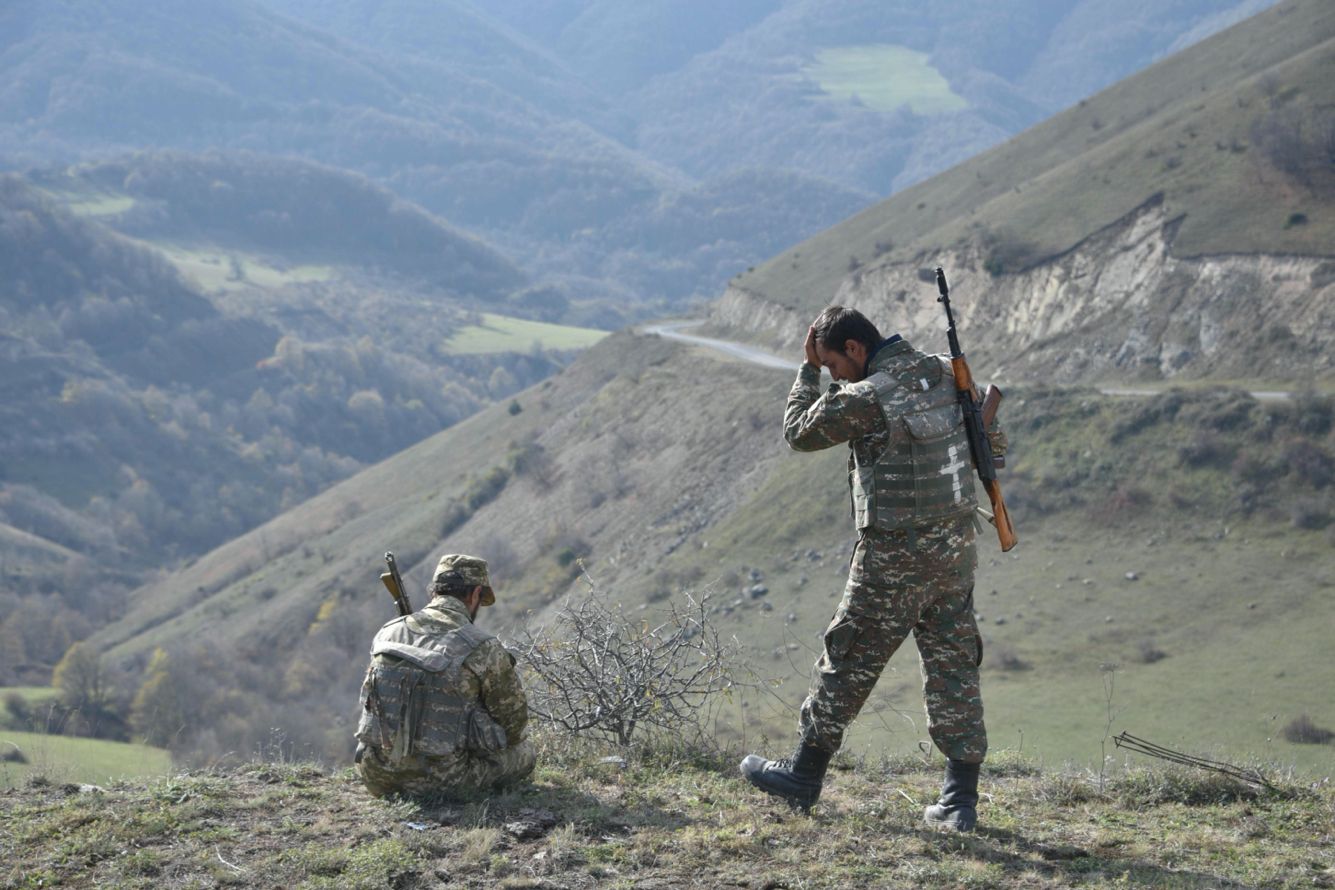
The deadly fighting between Azerbaijan and Armenia that reignited in Nagorno-Karabakh in late September is entering a decisive phase. On November 6, Azerbaijani troops reached the outskirts of the city of Shusha, a cornerstone of the entire Armenian defense. Now, if the Armenian side is unable to carry out a successful counteroffensive — clearing the road connecting the unrecognized Nagorno-Karabakh Republic to Armenia and removing the threat of Shusha being seized — the war will surely take a strategic turn in Azerbaijan’s favor. In this case, the very existence of independent Nagorno-Karabakh (officially named the Republic of Artsakh) could come under threat. Working with the limited information coming from battlefield, Meduza breaks down the conflict’s most recent developments.
What’s happening right now?
Currently, the fighting is heavy for both sides. The Armenian forces defending Shusha and its surrounding area are helped by its location: the city is situated in the mountains and stands on a giant cliff overlooking the region. The Azerbaijani army is suffering heavy losses during ambushes, which the Armenian side arranges daily in the ravines leading towards the city.
However, the two parties are obviously unequal: for a month, the Armenian side has suffered much too heavy losses in terms of both manpower and equipment (both sides have lost thousands of combatants and several dozen civilians have been killed so far). The Armenians are clearly in no condition to defend the entire length of the approximately 40-kilometer road that connects Armenia to the municipal centers of the unrecognized Nagorno-Karabakh Republic — it’s capital Stepanakert (or Khankendi in Azerbaijani) is only about a dozen kilometers from Shusha. Azerbaijani special forces reached the road on October 4, and since then Nagorno-Karabakh’s armed forces have been unable to drive them out.
How did Azerbaijan’s army manage to break through to the center of Nagorno-Karabakh?
- The Nagorno-Karabakh army began experiencing a series of defeats in early October, when the Azerbaijani army broke through on the plain along the border between Nagorno-Karabakh and Iran. The terrain there favored Azerbaijan’s mechanized units, which had a clear advantage over the Armenian side.
- Azerbaijani forces pushed back against Armenian counter attacks and quickly cleared Nagorno-Karabakh’s entire border with Iran, going directly towards Armenia. After that, they turned their offensive to the mountainous regions in the North. At first, Azerbaijan’s army tried to break through the ravines in the West, targeting Lachin — a town located on the road that connects Armenia to Shusha and Stepanakert. However, after a few days of fighting, the Azerbaijani forces, who were constantly exposed to artillery fire from Armenia proper, got bogged down in the mountains a few kilometers from Lachin. One video from a reconnaissance drone, which the Armenian Defense Ministry published on November 6, shows a defeated Azerbaijani convoy several kilometers away from the town. When exactly the video was filmed remains unknown.
- After the relative setback at Lachin, the Azerbaijanis launched an offensive on a no less inaccessible terrain — in the ravines and surrounding wooded mountains, which could lead them from the Iranian border directly to the center of Nagorno-Karabakh — to Shusha and on to Stepanakert. At first, the Armenian military’s spokespeople reported that small Azerbaijani reconnaissance groups were operating in the mountains and were being “destroyed.” But on October 29, Stepanakert and Yerevan realized the full extent of the danger of the situation: Nagorno-Karabakh’s president Arayik Harutyunyan released a video, in which he admitted that the enemy was on the outskirts of Shusha; he recalled the Armenian saying “Who controls Shusha, controls Karabakh” and called on all Armenians to stand up and protect the “holy city.”
- For a week, battles continued in the mountain range and the ravines south of the Shusha; the Armenian army used the same tactics as in Lachin — artillery raids and ambushes targeting Azerbaijani units trying to advance on the city. And yet, by November 4, the Azerbaijanis had managed to gain firm control over the mountains south of Shusha and the road from Shusha towards Lachin. On the night of November 5, Azerbaijani special forces reached the road and went directly towards the cliff that Shusha stands on.
- From that moment on, the arriving Armenian reinforcements tried to dislodge the special forces (as well as approaching Azerbaijani reinforcements), but they seemingly didn’t succeed. Journalists working on the Armenian side captured close combat along the road on November 5; judging by the geolocation of the videos, the Azerbaijanis managed to extend control over the road leading to the outskirts of Shusha.
What will happen next?
The Armenians are now tasked with trying to dislodge the Azerbaijani special forces from the Shuha—Lachin road and from the surrounding forests. They don’t have another choice. If Armenia and the Nagorno-Karabakh army do not launch a successful counteroffensive in the coming days, they will lose a critical supply line and a threat to the unrecognized republic’s capital will emerge (as previously mentioned, Stepanakert is located just a dozen kilometers from Shuha). It will be impossible to hold on to remaining territory and the hope for a compromise political solution to the conflict will be lost completely.
In addition, Armenia (and it’s sympathizers among politicians from Russia, France, and the United States) doesn’t have any “material” left to offer when it comes to brokering a compromise.
On October 29, Russian President Vladimir Putin presented the following as a possible “plan that will suit both parties”:
- Armenia gives up the Azerbaijani territories that didn’t belong to the Soviet Nagorno-Karabakh region when it occupied them during the war in the 1990s “to ensure the security of Karabakh.”
- The actual status of Nagorno-Karabakh will be determined later.
- The parties declare a ceasefire and, as Russian Foreign Minister Sergey Lavrov stated, peacekeepers must be brought to the line of contact (Russia is ready to cooperate with other countries in this regard, including Azerbaijan’s main ally — Turkey).
In the same vein of “reaching a compromise that will suit all parties,” Iran presented a plan to Moscow, Yerevan, and Baku last week — the details of which have yet to be disclosed.
However, Azerbaijan has already occupied almost all of the territory that Putin planned to “give up” in exchange for both a postponed decision on Nagorno-Karabakh’s status and a ceasefire. The only remaining territories are the Lachin District and the Kalbajar District in the North — along which runs the only remaining road connecting Stepanakert to Armenia that hasn’t been cut off by the Azerbaijani army. That said, this road is of little use as a supply line (the journey takes many hours and appears to be under fire from Azerbaijani forces in several locations). But, in the event of a military disaster, Nagorno-Karabakh’s military and civilian authorities could use it for evacuations.
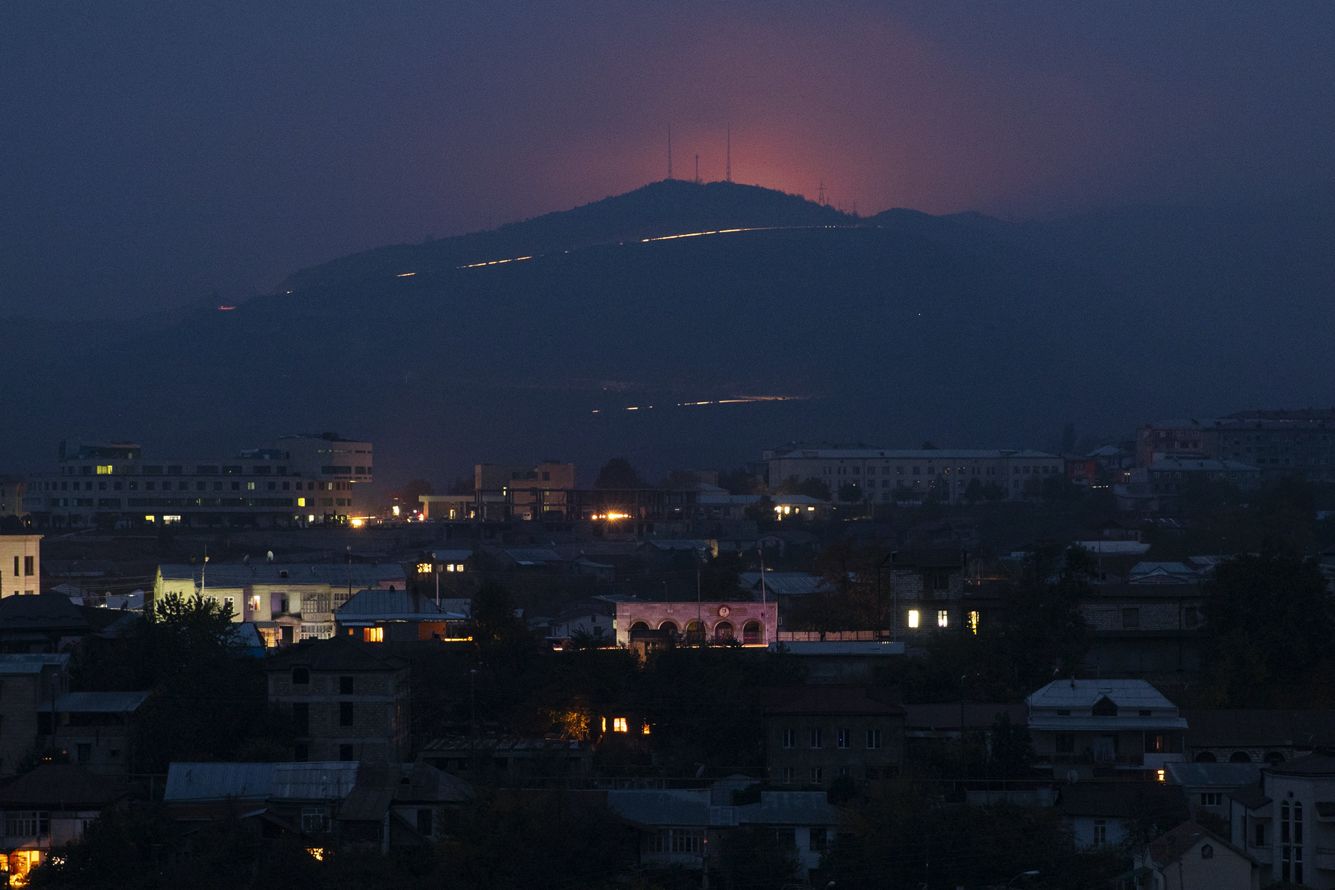
Can Armenia still avoid defeat?
There’s little hope that Nagorno-Karabakh’s forces will avoid defeat in this situation. Apparently, the Nagorno-Karabakh army has tapped all of its reserves, as has Armenia, which formally isn’t involved in the conflict, but is almost officially supplying Stepanakert with entire units of reservists and volunteers, as well as equipment. So far, the Armenian forces have yet to launch a successful counter offensive and all of them have resulted in heavy losses. This is due in part to the Azerbaijani sides’ rapid advance on Shusha.
So long as they still hold Shusha, however, the Armenians can use the terrain to their advantage: it’s difficult to advance in the mountains, especially for an army like Azerbaijan’s, which relies on the advantage of possessing heavy equipment. However, despite the fact that the Azerbaijani forces were apparently unable to transport equipment through the ravines south of Shusha until November 5, their special forces reached the Shusha-Lachin road all the same.
In recent days, Azerbaijan has refrained from using its main trump card — Turkish and Israeli-made armed drones, which previously cost the Nagorno-Karabakh army huge losses, especially in terms of tanks, artillery, and other heavy equipment. The reason behind the absence of drones over the battlefield remains unclear. The Armenian military hinted that they have some kind of “military secret,” which would allow them to prevent the use of drones (nothing has been said about the nature of this “secret” officially; it’s possible that it refers to some Russian technology — on the eve of the present conflict, Armenia conducted joint military exercises with the Russian army on countering drones). However, it’s more likely that this isn’t a matter of “military secrets” but rather of bad weather — in particular, low lying clouds and fog. The weather is forecast to improve for several days by Sunday, November 8.
Nevertheless, the Armenians do indeed appear to have “secrets” linked to the Russian military. They’ve been using drones in recent days — not armed ones, but reconnaissance drones that operate at a low altitude (where clouds don’t interfere with them) and provide target designations for Armenian artillery. Video footage from one of these drones revealed that the Armenian side is using a Russian drone model, the Orlan-10. The delivery of these drones to Armenia wasn’t reported before the conflict broke out, but they are definitely in use at Russia’s military base in Gyumri, Armenia. That said, this technology is unlikely to radically change the balance of power at the front.
Text by Dmitry Kuznets
Translation by Eilish Hart