
Оригинал материала
Balancing interests
After the Kerch school shooting in 2018, Russia promised to tighten its gun laws — but ended up easing restrictions
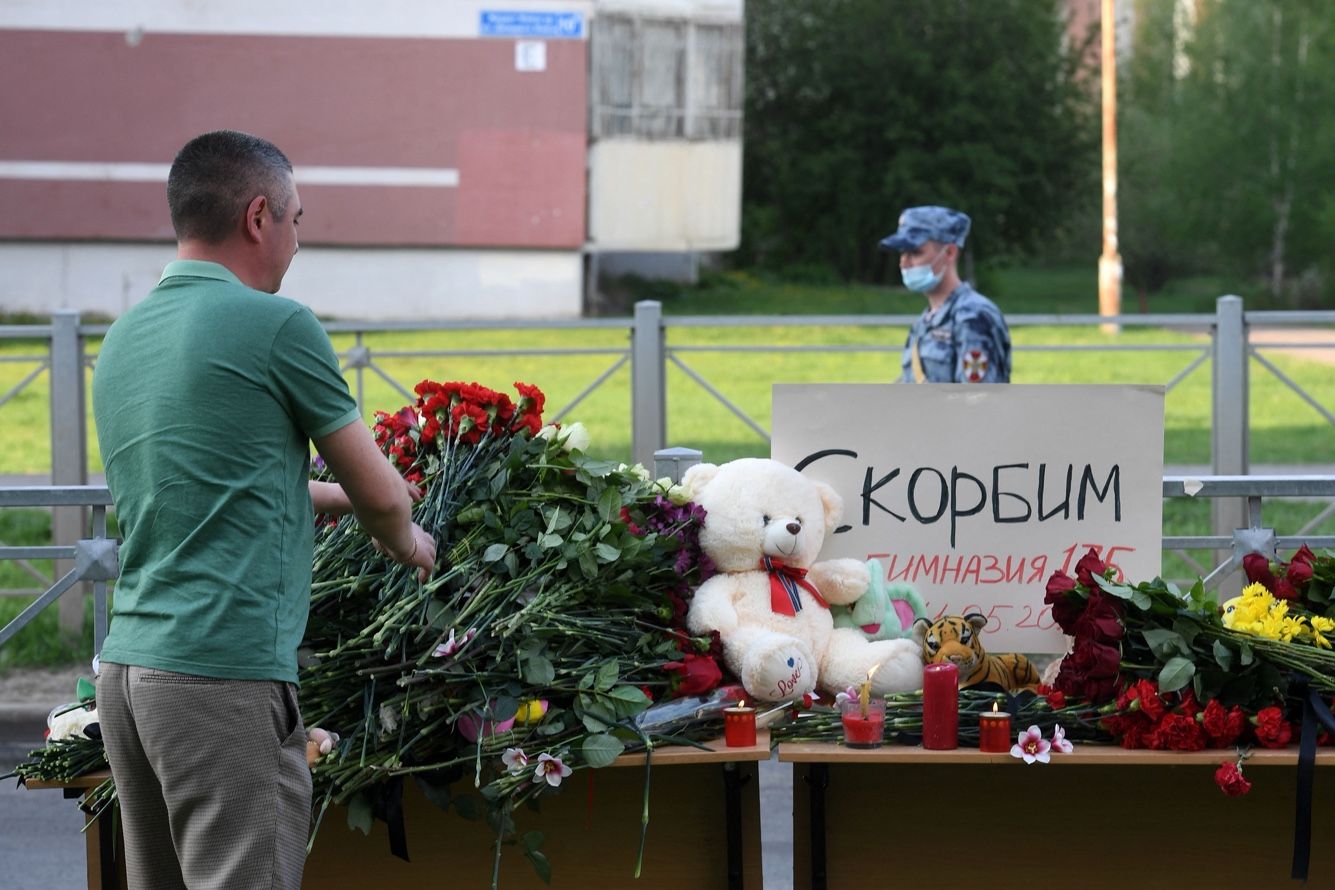
Immediately after a fatal shooting at a Kazan school on May 11, the Russian authorities started talking about tightening gun ownership laws, along with other legal measures and regulations. Vladimir Putin instructed the Russian National Guard chief to conduct an audit of the types of weapons available to ordinary citizens. The Federation Council called for “strengthening controls over the content of computer games” once again. And State Duma lawmakers suggested creating “a criminal intent tracking system” for the Internet and social media, or even introducing the death penalty as punishment for killing children. Russia’s Human Rights Commissioner, Tatyana Moskalova, proposed raising the age requirement for purchasing firearms to 21 years old for those who haven’t served in the army. Since none of these initiatives have been put down on paper, Meduza decided to look into what happened to similar proposals that were put forward after the 2018 mass shooting in Kerch — where a student massacred his classmates using the exact same weapon as the Kazan shooter.
After the fatal school shooting in Kerch in 2018, Russian politicians called for strengthening regulations and introducing bans — just as they did after a gunman opened fire in a school in Kazan on May 11, 2021. A year after the Kerch massacre, Meduza found that not a single one of the proposed legal measures were ultimately implemented. Here’s what’s changed between then and now.
Gun storage laws didn’t get stricter
In the immediate aftermath of the tragedy in Kerch, the Russian National Guard (Rosgvardiya) suggested changing Russia’s gun storage laws. Upon moving to a new home, gun owners would have been expected to report the move to the National Guard within three days. Following public discussion and widespread backlash from hunters, the Rosgvadriya abandoned the idea in December 2018. But this didn’t prevent National Guard Chief Viktor Zolotov from claiming that Putin’s instructions following the school shooting were “promptly worked out” according to the “balance of interests of all stakeholders involved in the circulation of weapons.”
Age requirements for gun buyers were never increased
Two draft laws on raising the age requirements for gun ownership for the purposes of self-defense and hunting from 18 to 21 received negative reviews from the federal government. Russian officials concluded that raising the age requirement would “limit the labor rights of citizens” — such as hunters, athletes, and even military personnel. In the end, lawmakers rejected one of the bills in March 2020 and the other one in January 2021. Meanwhile, in September 2020, a draft law on lowering the age requirement for obtaining hunting weapons for hunting purposes (and not for self-defense, for example) to 16 years old successfully passed its first reading.
Penalties for firearms violations weren’t strengthened either
In May 2020, Russian lawmakers rejected a bill on strengthening administrative penalties for carrying a gun while under the influence. The authors of the bill wanted to remove fines as penalties and make this punishable by the loss of the right to buy or carry a firearm for up to two years, with the possibility of having your weapons confiscated. But in December 2020, a group of Russian State Duma lawmakers, mainly from the ruling United Russia Party, introduced another bill prohibiting the sale of weapons to citizens with two prior convictions and drivers who have been penalized for drunk driving or refusing to undergo a medical examination (until the expiration of their administrative penalty).
Gun owners may have to undergo medical examinations less often than before
Currently, gun owners in Russia have to obtain a new permit to store and carry a weapon every five years — this requires them to undergo medical examinations and testing for drugs and psychotropic substances. But in November 2020, the Russian State Duma adopted a bill in the first reading that would make gun licenses valid for 15 years. This is in spite of the fact that after the school shooting in Kerch, the Russian National Guard planned to have gun owners undergo medical examinations (and submit confirmation of good health) once a year. According to the independent Russian newspaper Novaya Gazeta, this initiative didn’t gain the support of the presidential administration, which considered the provisions of the bill too harsh and sent it back for revision.
Text by Denis Dmitriev
Translation by Eilish Hart