
Оригинал материала
‘No one catches terrorists like that’
Novaya Gazeta reveals alleged police scheme aimed at fabricating felony cases against migrants in Moscow
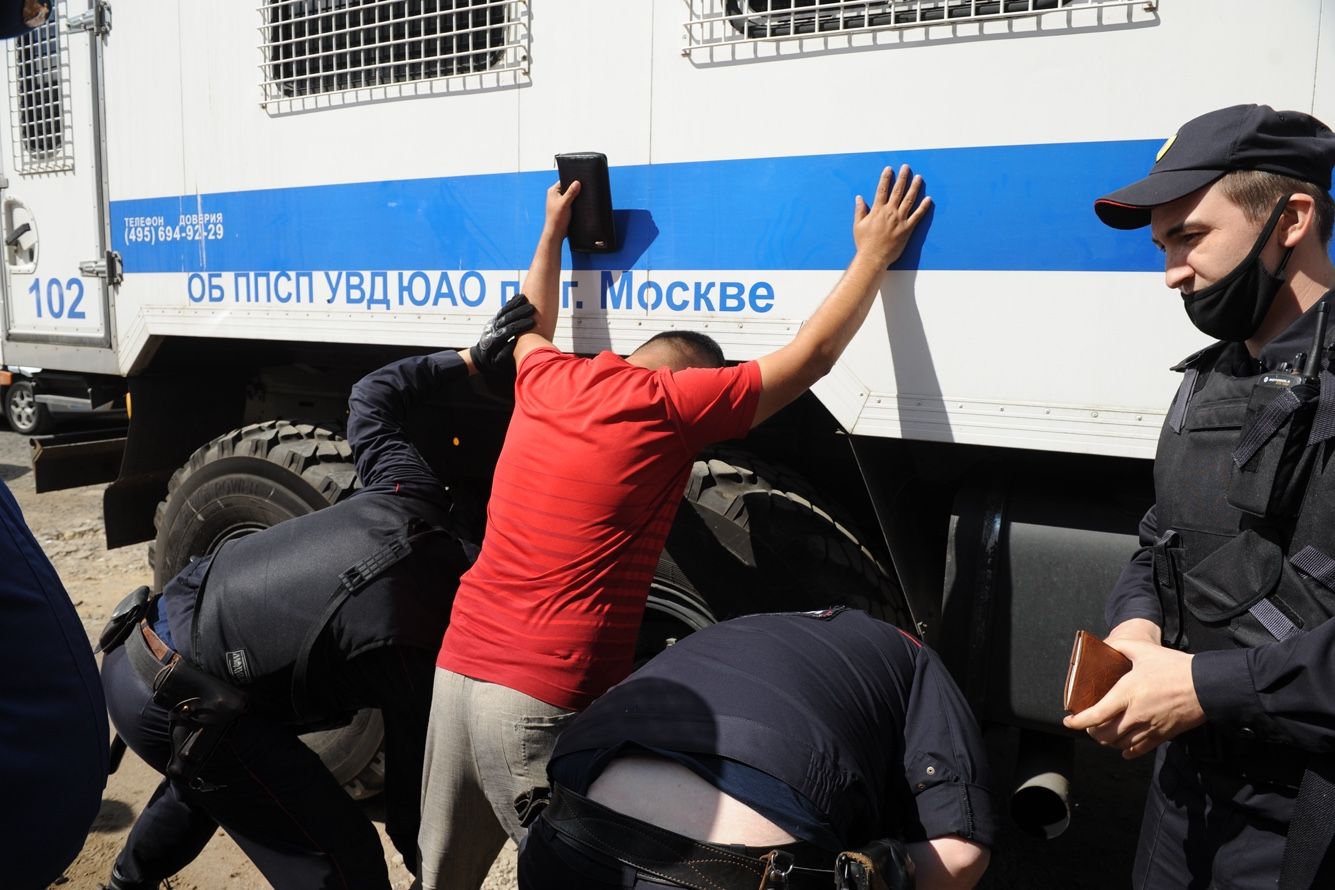
The independent Russian newspaper Novaya Gazeta claims to have uncovered a scheme in which Moscow police are fabricating dozens of misdemeanor charges, in order to implicate the accused in more serious criminal cases. As a rule, the alleged scheme appears to target migrants, who are picked up by police for petty offenses, jailed, and later indicted on felony charges — usually, for alleged terrorism. Novaya Gazeta’s journalists identified 11 cases that follow the same pattern, along with five defendants who are already serving time in prison as a result. Though this investigation was only based on data from court rulings in Moscow, Novaya Gazeta plans to continue its reporting, in order to determine if similar schemes are taking place in other parts of the country.
Novaya Gazeta’s reporters managed to uncover the alleged scheme by analyzing databases of court rulings in Moscow for correlation between administrative and criminal cases. The journalists began by searching for people who, within the span of no more than 17 days, were twice placed under administrative arrest for disobeying police or for petty hooliganism, and subsequently remanded in pre-trial custody soon afterward, as suspects in a criminal case.
The newspaper notes that this investigation was inspired by the case of Islombek Kamalov, which Novaya Gazeta covered back in 2019. Following Kamalov’s arrest, law enforcement confiscated his cell phone. Then, while he was still in administrative custody, strangers struck up correspondence with him on VKontakte. In turn, one of Kamalov’s cellmates in the detention center testified that he allegedly confessed to joining the Islamic State. A terrorism case was subsequently opened against him.
In its latest investigation, Novaya Gazeta uncovered 11 cases that followed the same pattern — in which migrants were jailed on misdemeanor charges and then indicted for felony offenses. At least five such defendants have already received sentences of up to eight years in prison.
“Why is this specifically referred to as a ‘scheme’? Anyone who knows criminal law and practice in ‘high-quality’ criminal cases understands that no one catches ordinary terrorists, mobsters, thieves, and murderers like that. A person who is suspected of a crime is taken into criminal custody on the basis of some evidence, and not into administrative [custody] for spitting on the sidewalk. The evidence is found in the course of investigative actions: interrogations, searches, seizures, and detective work. And not as a result of ‘pressing’ a person. Here, everything is the other way around: first an arrest, then the evidence.”
As Novaya Gazeta notes, many of the initial arrests in these cases took place near police stations. The newspaper underscores that this isn’t a common occurrence, since “the back alleys where police stations are located usually aren’t crowded.” Therefore, Novaya’s journalists surmise that the detainees were brought directly to the station — “to draw up a false administrative protocol” — and that the police filled in the paperwork with a nearby address as the location of the arrest.
In an editorial note, Novaya Gazeta underlines that while this investigation was solely based on cases in Moscow, the newsroom is inclined to believe that similar schemes may be going on in other parts of the country. “Perhaps the last names of the accused in these and similar cases coincide with the last names of the ‘terrorists’ and ‘extremists’ mentioned in the FSB’s and Center E’s reports about their effective activities,” the newspaper writes, promising to continue investigating the matter.