
Оригинал материала
«The Taliban remain the same, but society has changed.» A new generation of Afghan women resisting a return to the Middle Ages
Much can be said about the reasons why these problems continued to plague Afghanistan, but during my time in the country, the women I met were most concerned about then-ongoing discussion about a peace deal with the Taliban, which they were afraid at the time could jeopardize women’s rights. And herein lied perhaps the key issue. After approximately the first decade of fast-paced improvements for women, the Taliban re-emerged as a violent insurgent force. This resultant insecurity and attempts at peace efforts complicated progress. As Mariam Safi, executive director of Organization for Policy Research and Development Studies (DROPS) explained it, “ [T]he democratization and reconstruction process—within which women’s empowerment was a cross-cutting theme—has consistently been undermined by two fundamental factors: the Taliban insurgency, and the approaches taken to fight it.” Exclusion of women from participating in the peace process in a meaningful way is one key problem that Safi identifies.
Yet despite these setbacks, looking at the grand scope of the past two decades, Afghanistan is a better place than under Taliban control, and nowhere are the gains more visible than in women’s rights. Afghans themselves point this out routinely. In a recent case study that explored economic activities of female Afghan entrepreneurs found that certain segments of Afghan society are more open to female entrepreneurs. “Families are gradually becoming more supportive; they create opportunities for the female members of the family, and people have been beginning to trust women’s effective participation in economic activities compared to 2010-2015,” concluded the author, Batol Hashimi, founder and CEO of the Organization for Rehabilitation and Optimal Development.
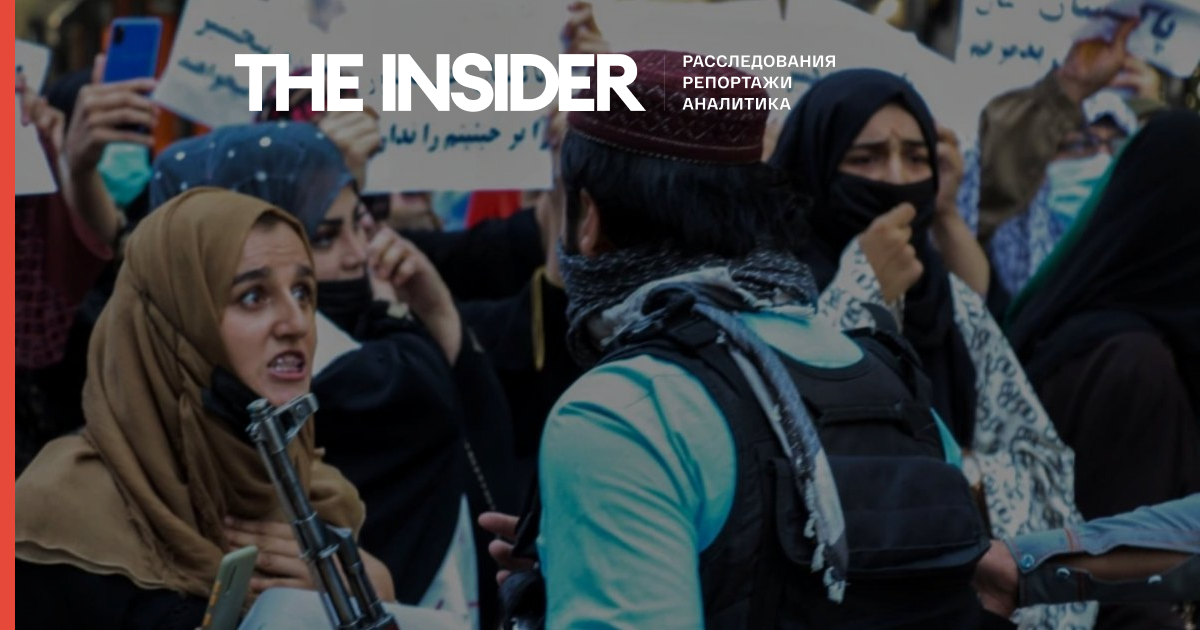
The changes in Afghan society are perhaps especially reflected in the fact that many Afghans are not willing to accept the Taliban’s restrictions. Since the Taliban took over, women’s protests against the Taliban erupted throughout Afghanistan. “Why is the world watching us die in silence?” read one sign of female activists during one of these protests. At another protest, one woman fearlessly stood right in front of an armed Taliban man as he pointed a gun to her chest. In a separate video that went viral, an Afghan girl asked the Taliban who they are to take away women’s rights. “I am from a new generation,” she continued, “I want to go to school.”
What is more, local pressure appeared to have impact some impact. In the city of Herat, schools from grades 7-12 have reopened after the Taliban banned girls that age from school. A local resident said not only were his two daughters overjoyed to return to school school, but so was he. “I suffered ten times more than my daughters when they couldn’t go to school,” he said. “I wish all girls can study and be educated to serve this nation alongside the men,” said another resident. Demand for education remains in an upward trajectory, while many women now see themselves as part of “new” generation that has the right to shape its own destiny.
Western commentators and government officials routinely point to what they describe as American failure in Afghanistan, but it is hard deny that the US-led operation Enduring Freedom and subsequent US involvement at least partially met its goal of advancing the dignity of Afghan women. What is more, this success stands against the backdrop of previous failures of top-down efforts to advance women’s rights in Afghanistan, first by King Amanullah Khan and years later by the Soviet Union. And while it may be easy to invoke the clichéd description of Afghanistan as “the graveyard of empires” that resists all outsiders, Afghans today decry American abandonment, not its presence. “I first learned about women’s right from the Koran,” said one female protestor in Kabul, “but when the United States was here we learned more about our rights in society, about protest and the power of raising our voices.”
The fact of the matter is, the United States had come into Afghanistan with a promise of a better world, and this promise resonated on a grassroots level. After all, Afghans resisted the Taliban in the 1990s; for many it was a brutal and foreign occupying force that appeared seemingly out of nowhere (in reality it was Pakistan’s Inter Service Intelligence (ISI) support that empowered this movement). Moreover, back then, the Taliban never succeeded at taking the Panjshir Valley, where the Northern Alliance held strong.