
Оригинал материала
Technically legal
How Kazakhstan won peacekeepers from a Russian-led military alliance
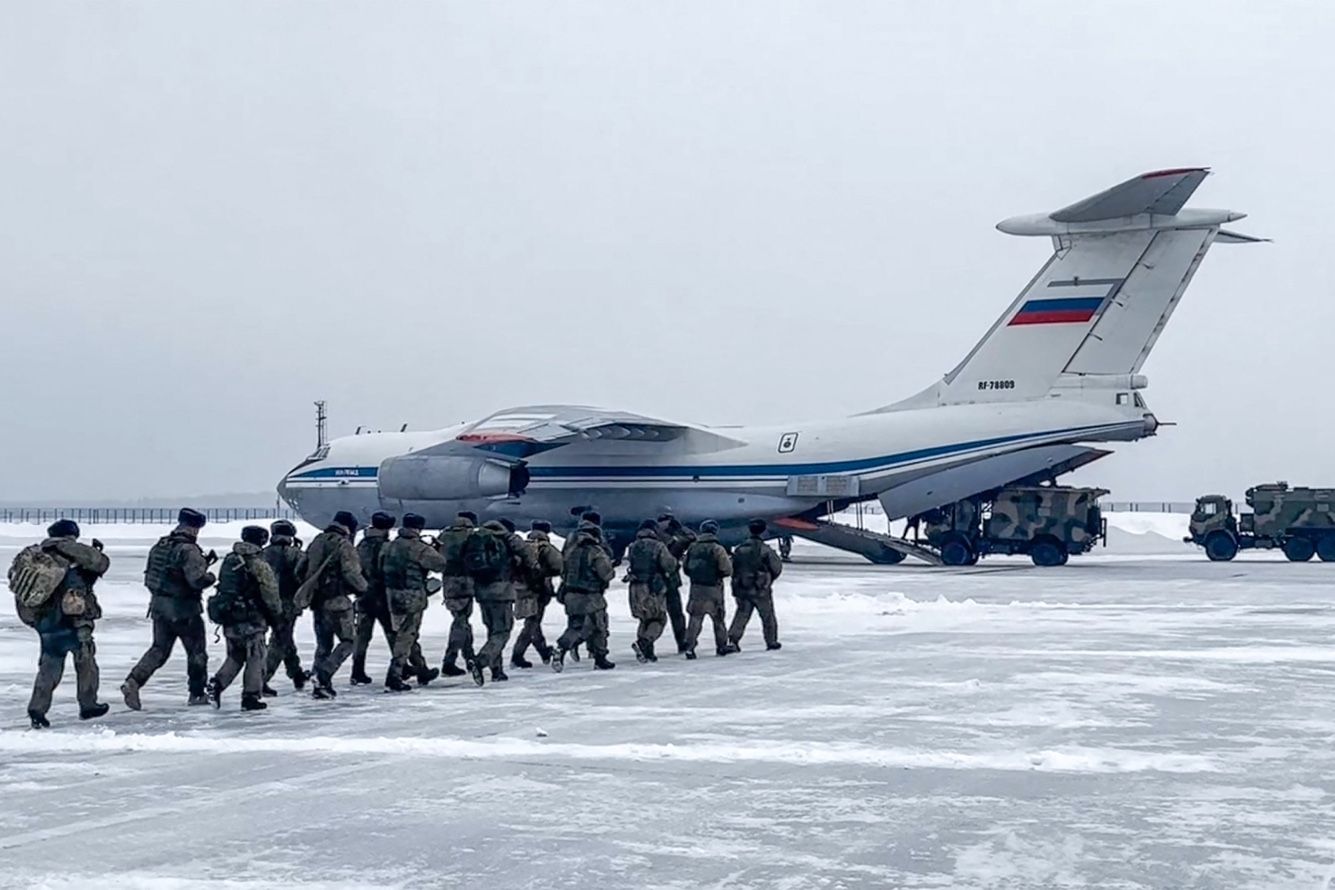
On January 6, Russian paratroopers from the Collective Rapid Reaction Force (KSOR) of the Collective Security Treaty Organization (CSTO) began arriving in Kazakhstan. This marked the start of the first military operation by the combined forces of the six former Soviet states that make up the military alliance, which has existed now for nearly 20 years. The legality of today’s operation in Kazakhstan is questionable, insofar as the use of collective force in the absence of external aggression against a CSTO member state is not codified in the organization’s charter (though neither is it strictly prohibited). In the past, CSTO members have been reluctant to treat domestic turmoil as a collective security threat. In fact, CSTO states have refused multiple times to deploy combined rapid reaction forces due to the lack of external aggression in a member country experiencing a crisis.
What’s the CSTO?
The Collective Security Treaty Organization has had a troubled past, and even its members have openly doubted the alliance’s actual strength.
The alliance was formed in 2002 based on the Collective Security Treaty, which had been adopted a decade earlier shortly after the collapse of the USSR. Three of the states that belonged to this previous pact (Georgia, Azerbaijan, and Uzbekistan) withdrew in 1999. Three years later, Moscow met with the remaining members (Armenia, Belarus, Kazakhstan, Kyrgyzstan, and Tajikistan) and created a full-fledged collective security organization that was supposed to resemble NATO or the Warsaw Pact. In 2006, Uzbekistan joined the CSTO (only to withdraw again in 2021).
In 2009, the CSTO introduced its Collective Rapid Reaction Force (KSOR), finally adding real mechanisms for enforcing collective security. For years, Belarusian President Alexander Lukashenko blocked initiatives to create CSTO operational forces, but he nevertheless signed the agreement, a few months after the alliance’s other members.
What has the CSTO been doing, all this time?
Until now, throughout its existence, the organization’s activities have been limited to military exercises and joint actions against drug trafficking. Before Kazakhstan’s unrest in January 2022, the CSTO had never deployed troops, though member states over the past 20 years have fought wars, suppressed domestic unrest, and participated in international peacekeeping operations. In fact, revolutions even toppled the governments in CSTO member states, multiple times. The alliance’s inaction in these crises has drawn criticism from its own members.
CSTO member states have sought the organization’s assistance on the following occasions:
- During a revolution in April 2010, Kyrgyzstani President Kurmanbek Bakiyev unofficially asked Alexander Lukashenko to request that the CSTO deploy troops to fight insurrectionists in Kyrgyzstan. In the end, there was never an official request to CSTO for help and Bakiyev ultimately resigned, but Lukashenko later expressed outrage that the alliance did nothing. “What’s the use of the organization if blood is being spilled in one of our countries and there’s a coup underway? Silence. Nothing. Why? It’s not hard to guess,” Lukashenko said at the time, warning that the alliance’s future was “unpromising.”
- Several months later, the CSTO finally received an official request from Kyrgyzstan’s new revolutionary authorities to send troops to the country’s Jalal-Abad and Osh regions to help quell violent clashes between the local ethnic Kyrgyz and Uzbek communities. Russian President Dmitry Medvedev refused the request, arguing that the reasons for Kyrgyzstan’s unrest were domestic, making it impossible to deploy CSTO troops. “The criteria for using CSTO forces are violations by a state or non-state entity of a CSTO member state’s borders. In other words, an attempt to seize power from the outside. It’s under these circumstances that we determine an attack has occurred against the entire CSTO,” Medvedev explained.
- Even when the defeat of the Karabakh army in the war with Azerbaijan in 2020 became obvious, Armenia never requested the assistance of the CSTO. The Kremlin had already dismissed the possibility of activating the alliance for this conflict, arguing that the collective security agreement does not apply to Karabakh and that Armenia itself was not under attack. Armenian Prime Minister Nikol Pashinyan nevertheless requested consultations with the CSTO in 2021, when the Azerbaijani army launched an offensive into a disputed section of the border territory between the two countries. In response, Moscow urged Pashinyan to seek a clearer demarcation of the border.
- Finally, on January 5, 2022, Kazakhstani President Kassym-Jomart Tokayev formally asked the CSTO for assistance amid nationwide demonstrations and riots caused by skyrocketed fuel prices. Tokayev based the request on claims that “terrorist gangs” who “trained abroad” had attacked the country. The leaders of the other CSTO member states promptly held a virtual conference where they abandoned traditional interpretations of “external aggression” and agreed to send troops. Within a few hours, the first-ever CSTO “peacekeeping” operation was underway.
Is this military operation legal?
The Collective Rapid Reaction Force’s mandate permits actions against not just external aggression but also counterterrorism, as well as “other tasks determined by the Collective Security Council.” In effect, the KSOR can be used for any purpose. When the rapid reaction force was created, there was speculation that it could become the basis of future CSTO peacekeeping missions, including operations outside the CSTO itself. At the same time, the organization has never once received a UN mandate to conduct such operations (though it has applied on multiple occasions).
To deploy CSTO troops, the heads of all member states must reach a unanimous agreement in the organization’s Collective Security Council. Checks and balances in some member states, however, mean that executive approval for peacekeepers doesn’t always mean a country can contribute troops of its own. With the soldiers sent to Kazakhstan, for example, Kyrgyzstan was unable to contribute because that country’s laws require the consent of parliament for such deployments, and several deputies have refused to endorse Kyrgyzstan’s participation in the mission.
If the CSTO’s decisions need to be unanimous and Kyrgyzstan isn’t sending troops, does that constitute a violation of the alliance’s procedures?
No. The CSTO’s Collective Security Council endorsed the peacekeeping operation unanimously, winning Kyrgyz President Sadyr Japarov’s support. Under the collective security treaty, member states are then expected to deploy troops in accordance with their own national laws. In Kyrgyzstan, that decision requires parliamentary approval.
Update: On Friday, January 8, the Kyrgyz Parliament voted to send 150 peacekeepers and 19 armored vehicles to Kazakhstan to join the CSTO mission.
And what’s Russia’s procedure for such troop deployments?
According to Article 102 of the Russian Constitution, decisions to deploy the nation’s armed forces abroad are made by the president with the consent of the Federation Council. In 2009, however, the federal government adopted legislation on the “operational” use of Russian troops abroad, including operations “to repel or prevent an armed attack against another state that has requested Russia’s assistance.” The president might have needed the Federation Council’s express agreement for each of these deployments, but lawmakers soon adopted another resolution that grants the president the right to make these decisions in all future cases.
In other words, the Russian president no longer needs to consult with the parliament’s upper house before deploying peacekeepers abroad.
Will CSTO troops be used to suppress Kazakhstan’s riots?
It’s still unclear what exactly the CSTO’s peacekeepers will do in Kazakhstan. The Collective Rapid Reaction Force comprises roughly 18,000 soldiers in total, but a full deployment is not currently planned. For example, Belarus sent just a single company (about 100 soldiers) from the 103rd Guards Airborne Brigade, which is part of the rapid reaction forces. Except for Russia and Kazakhstan itself, all other CSTO members have deployed no more than a few hundred soldiers. (Armenia sent just a few dozen troops.)
Such a small military force is clearly insufficient to participate fully in the efforts to suppress unrest across a country as enormous as Kazakhstan, meaning that the CSTO’s peacekeepers will likely have other goals. At the outset, the mission’s primary task is guarding key national infrastructure. (A small number of soldiers should be enough for this.)
The mission’s main forces will be Russian paratroopers from the 98th Guards Airborne Division based in Ivanovo and the 31st Guards Airborne Assault Brigade in Ulyanovsk. But the Kremlin still hasn’t fully deployed these units, which are part of Russia’s KSOR contingent.
Text by Dmitry Kuznets
Translation by Kevin Rothrock