
Оригинал материала
Russia’s tricky opinion polling
Sociologist Alexey Bessudnov shares five charts that help explain how to read the Kremlin’s survey data on support for the war in Ukraine
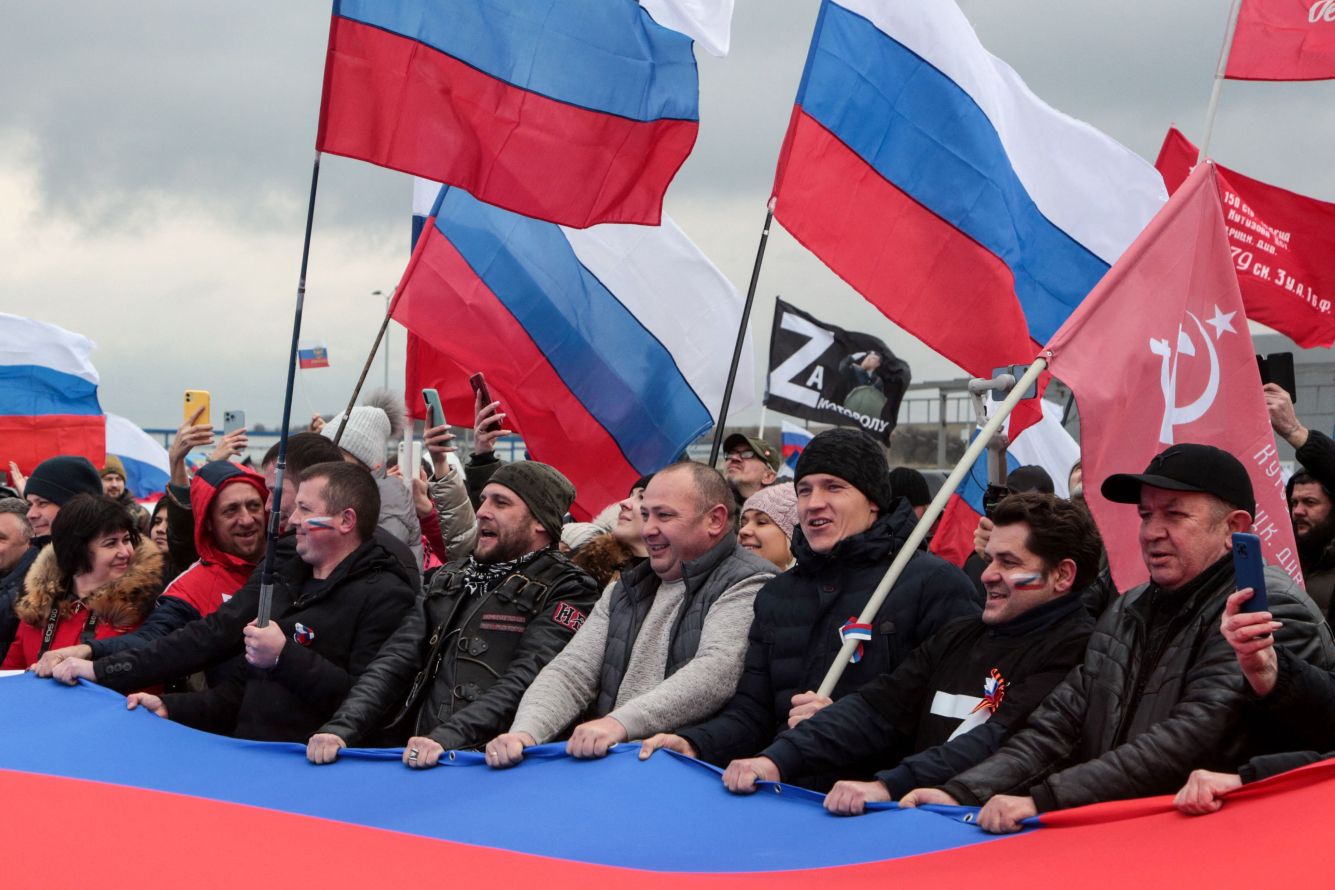
According to opinion polls from VTsIOM (the Russian Public Opinion Research Center) and FOM (the Public Opinion Fund), more than 60 percent of Russians support the “special military operation” in Ukraine. But those results should be taken with a grain of salt: the same polls show that millions of people are opposing the war. Also, among the young residents of big cities who rarely watch television and get most of their information from the Internet, the war’s opponents are actually the majority. Exclusively for Meduza, University of Exeter sociologist Dr. Alexey Bessudnov offers the following analysis of the VTsIOM poll.
Meduza thanks Dr. Maya Vinokour at the NYU Jordan Center for this translation.
Chart 1. The results of two “governmental” opinion polls are nearly identical but don’t prove that Russians support the war.
After the start of the military operations in Ukraine, two sociological polling companies — VTsIOM and FOM — conducted polls asking respondents about their attitude toward the ongoing events. The results show that approximately 65 percent of Russians tend to support the “special military operation” in Ukraine. But can these numbers be believed? After all, VTsIOM and FOM are controlled by the Russian government (the first belongs to the government outright, while the biggest client of the second one is the Presidential Administration).
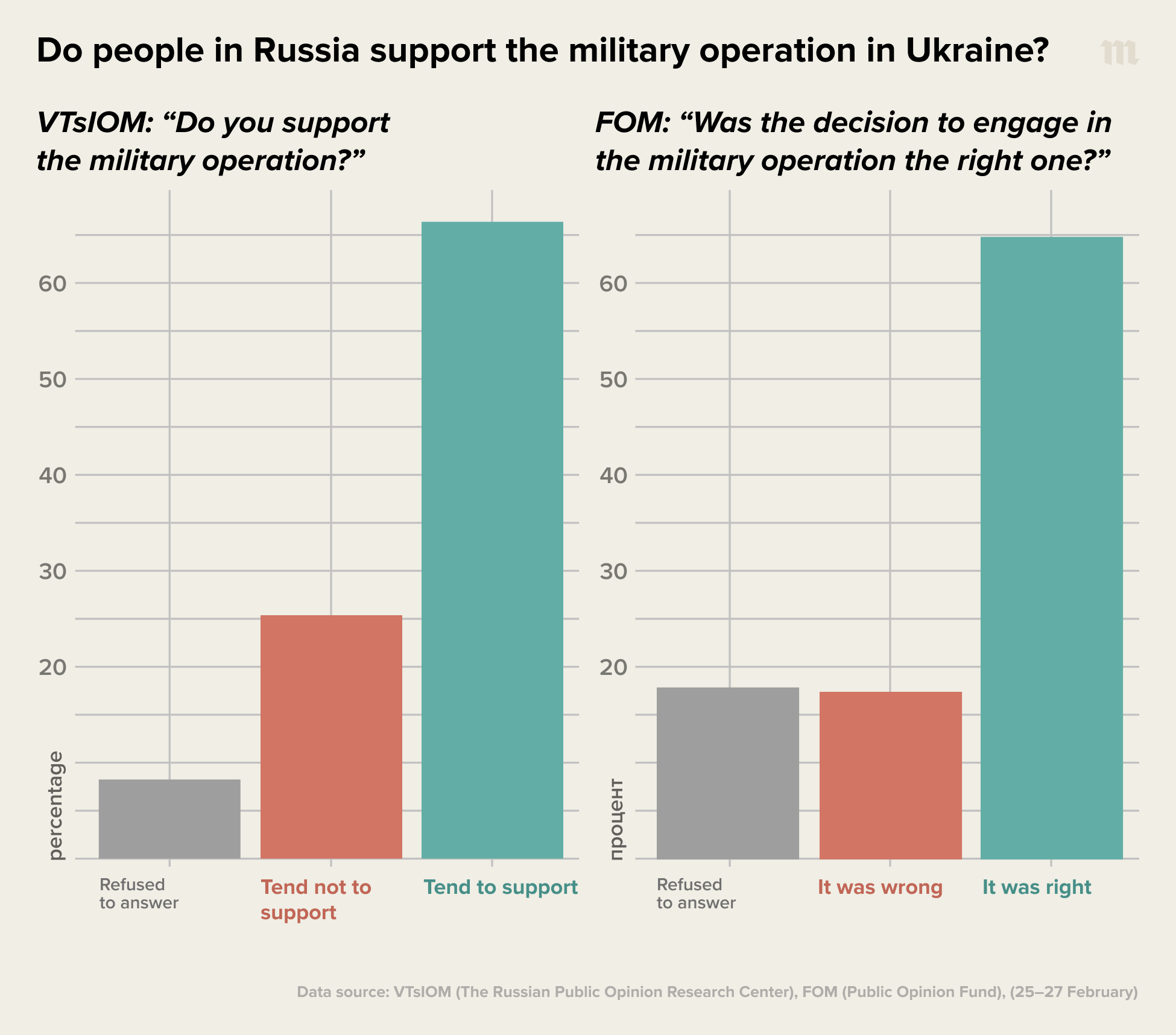
There’s no reason to suspect that “governmental” sociologists are falsifying results outright: a telephone poll conducted between February 28 and March 1 by a group of independent sociologists obtained more or less the same data.
But there are other factors capable of significantly skewing the results of any poll, which we should definitely consider as we interpret them. The most important such factors are:
- How questions are worded. VTsIOM and FOM asked respondents how they felt about the “special military operation.” If they had used different words (“entry of Russian troops into Ukraine,” “military operations,” “war”), the results might have been different.
- The polls were conducted last week, from Friday, February 25, to Sunday, February 27. Attitudes could have changed since then.
- Finally, we know that not everyone answers questions honestly; people often say what they think the pollster wants to hear. Therefore, it’s highly likely that these polls show an artificially high level of support for the military invasion of Ukraine.
POLLING METHODOLOGY
The VTsIOM polls were conducted from February 25 to 27, based on a stratified sample of telephone numbers (including landlines and cell phones). The total size of the sample was 3,200. The FOM poll was conducted from February 25 to 27 at respondents’ homes based on a stratified sample from across Russia (1,550 people). Any results calculated based on these samples include a sampling error, usually between two and five percent. For the sake of simplicity, the charts omit these errors. The polls also include many other sources of error. Raw VTsIOM data may be seen here and raw FOM data here (in SPSS format).
Chart 2. Young people are less likely to support the military operation.
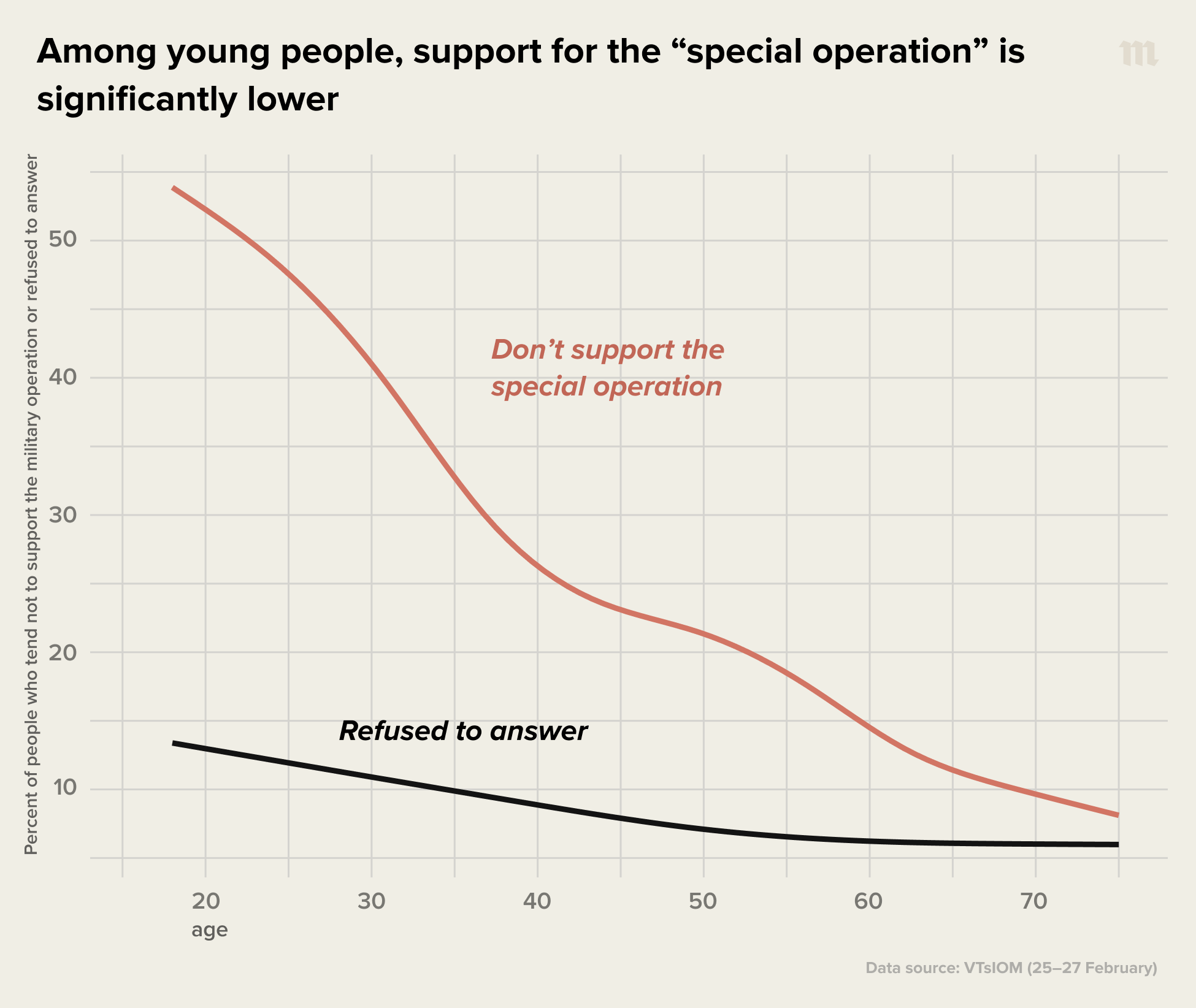
The most important socio-demographic characteristic that determines people’s attitudes toward the military operation in Ukraine is age. Among people older than 70, nine out of 10 support the “special military operation.” Among those younger than 30, approximately half say they are against, while many in the other half say they “don’t know” how to answer the question.
Vladimir Putin himself turns 70 this year. Most members of his Security Council, which approved recognizing the self-declared republics in the Donbas, are close to him in age. But many of those currently fighting in Ukraine are under 30.
Chart 3. Support for the “military operation” among women is lower than among men.
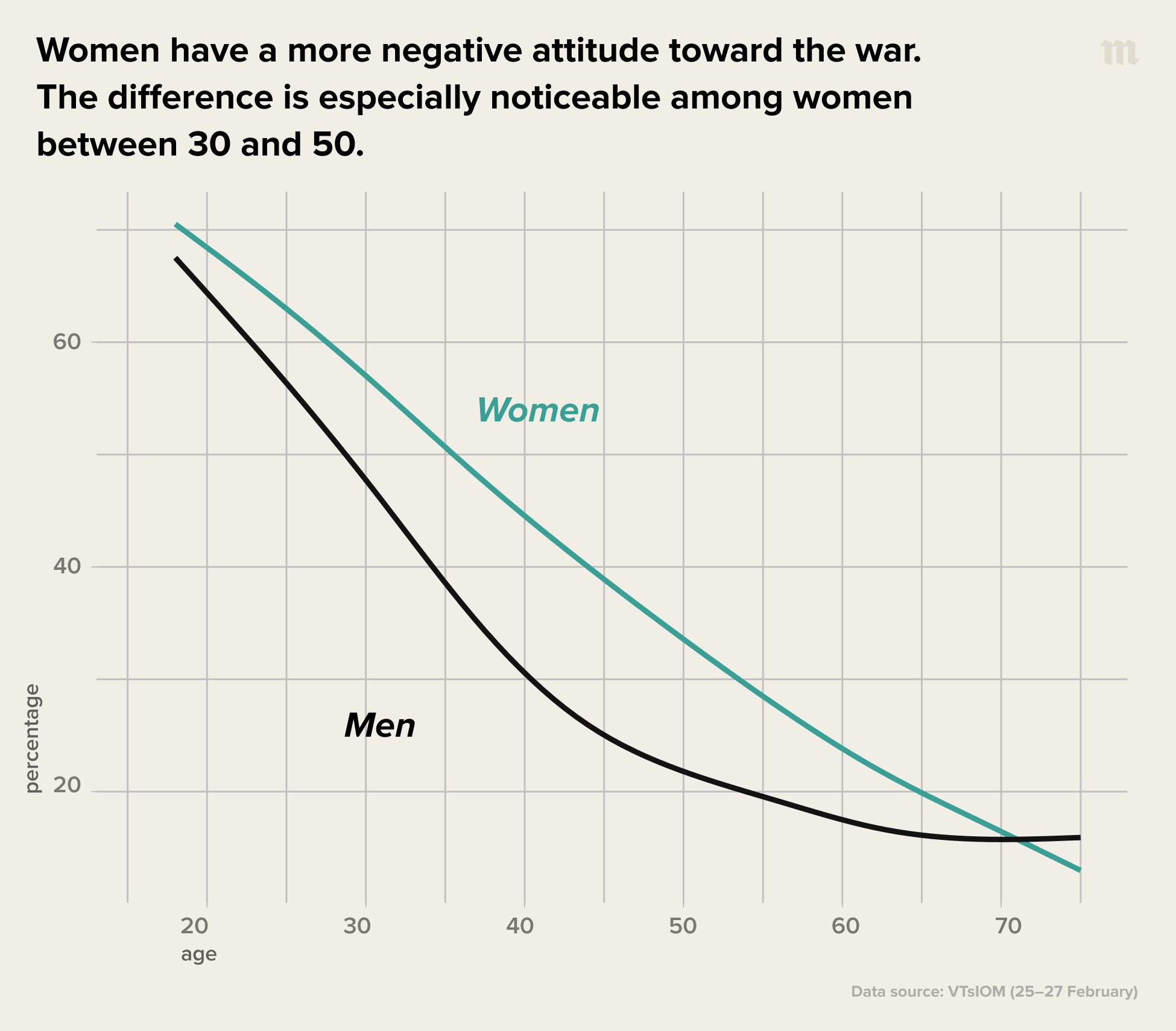
Respondents’ sex is another characteristic that can affect answers. Women say more often than men that they do not support the “military operation,” or say they don’t know. This difference is especially noticeable among women aged 30 to 50.
Chart 4. Russian television viewers approve of the “military operation.”
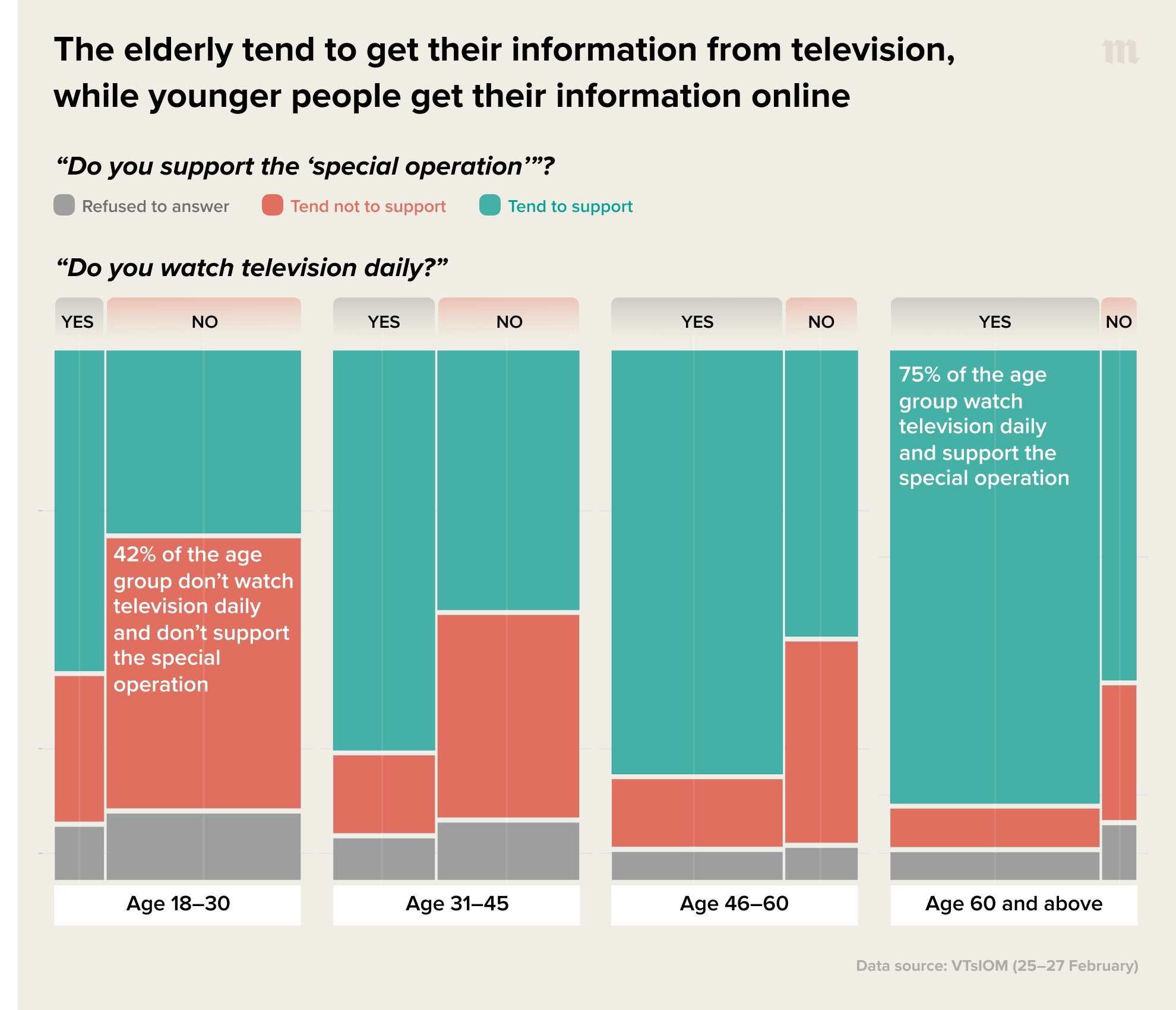
It’s no surprise that support for the “military operation” is significantly higher among those who watch television daily. But the effect here is apparently double-sided: it’s not just that television is engaged in propaganda and agitation, it’s that those who watch it are already in agreement with the content of shows on social or political topics.
Here, too, age makes a big difference. Among those older than 45, the majority watch television every day. Among younger people, almost no one does this.
Chart 5. Anti-war attitudes are more pronounced in Moscow and St. Petersburg.
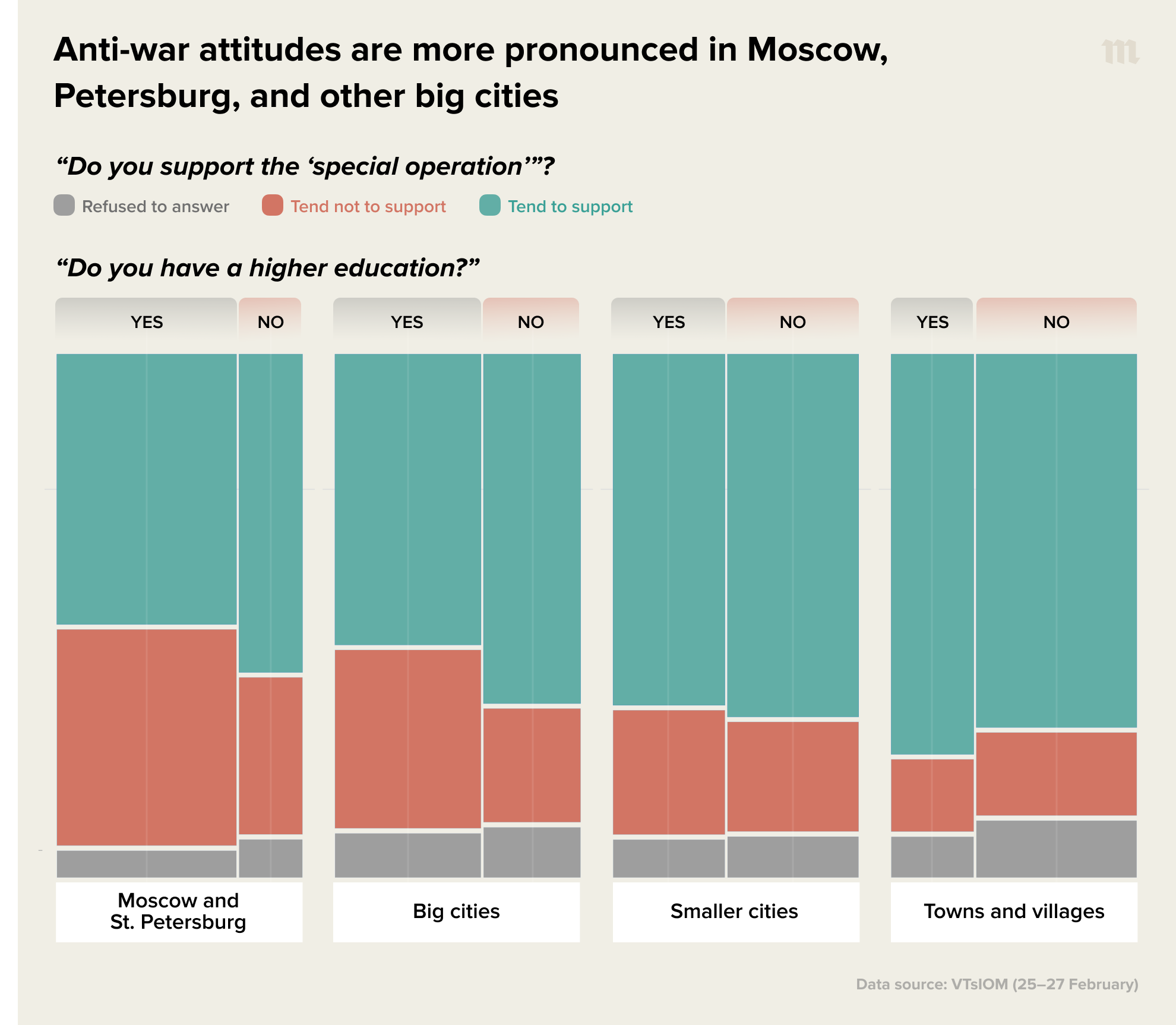
Finally, there is a difference in support for the military operation between Moscow, St. Petersburg, and other big cities, on the one hand, and smaller cities and towns, on the other. More people living in big cities are against the war, and this goes especially for young people. Meanwhile, the differences between people with a higher education are less significant and are noticeable only in big cities.
Text by Alexey Bessudnov
Meduza thanks Dr. Maya Vinokour at the NYU Jordan Center for this translation