
Оригинал материала
Will Russia’s war in Ukraine lead to a global food crisis?
Meduza weighs the odds.
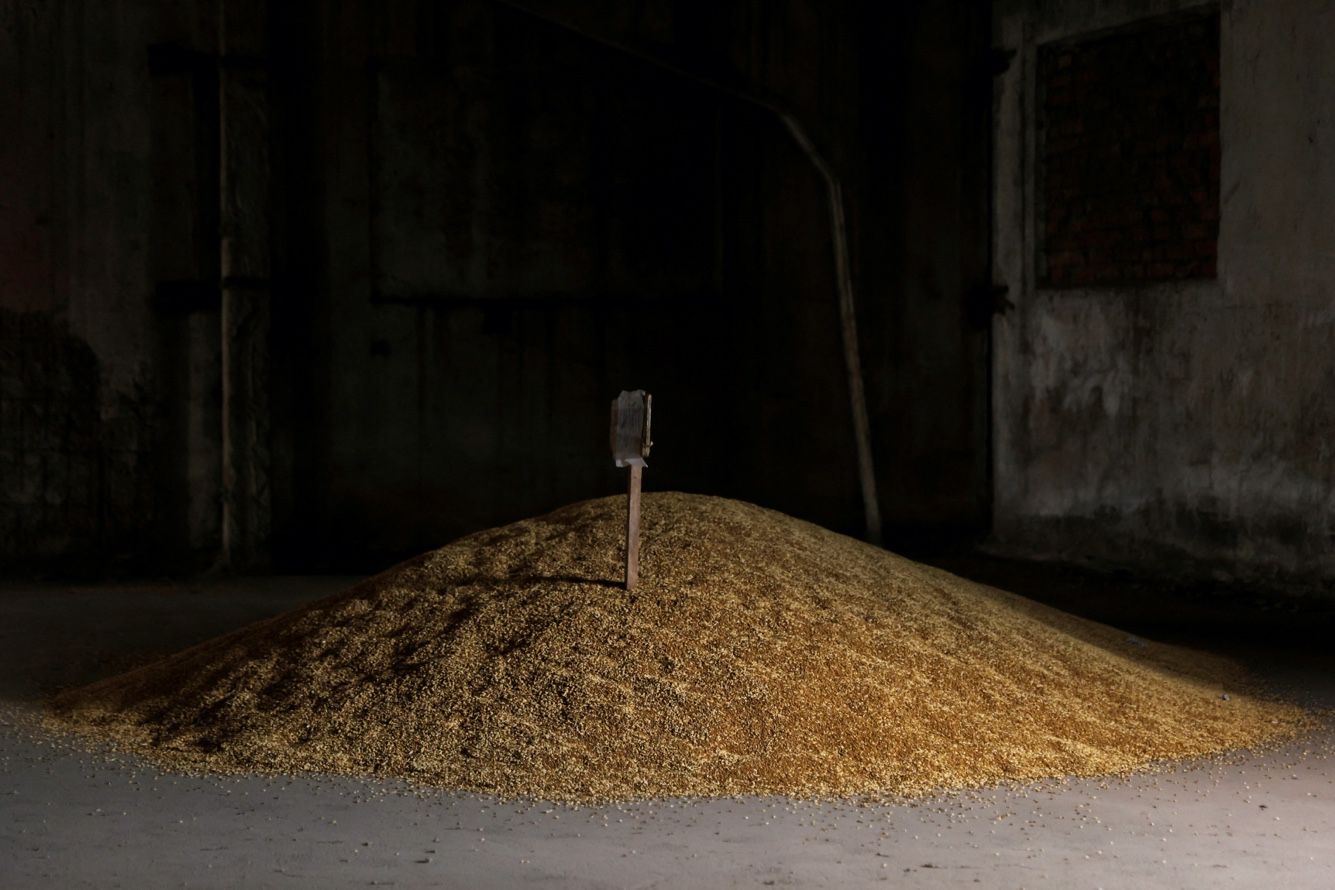
In recent months, politicians and experts from the UN have made clear that Russia's war in Ukraine threatens to spark a global food security crisis. According to Kyiv, at least 20 million metric tons of grain are currently trapped on Ukrainian territory. The lack of shipments from Ukraine has the potential to cause famines in faraway places and to send food prices surging all over the world. Turkey, on behalf of the UN, has suggested a new plan for getting the grain to global markets, but Ukraine rejected its first proposal; the plan would have called for the demining Ukrainian ports, opening a sea route for a possible Russian assault on Odesa. Turkey has since come up with a Plan B: taking the grain ships on a route that avoids the floating mines without removing them, a proposal that weakens Moscow’s previous claims that it’s not responsible for the grain crisis and that the only thing preventing shipments is the Ukrainian mines. Though Russia has promised not to obstruct any attempts to remove the grain, as long as there’s still a war going on in the Black Sea, it’s unlikely that the crisis will be solved anytime soon.
How much grain was Ukraine exporting before?
Ukraine is a major player on the international agricultural market, accounting for about 10 percent of the global grain supply in recent years. In 2021, Ukraine exported 43.4 million metric tons of agricultural crops, most of which consisted of corn, wheat, and barley. About 90 percent of the exports were transported by sea. According to Ukrainian Grain Association President Nikolay Gorbachov, if it hadn't been for the war, Ukrainian grain exports may have reached 70 million metric tons this year — while the entire volume of global grain exports, according to the UN, was expected to reach 462.2 million metric tons.
Before the war, many Asian and African countries depended heavily on grain exports from Russia and Ukraine; at least 30 percent of their grain imports came from the two countries, and sometimes as much as 50 percent. The most dependent were Eritrea, Armenia, Mongolia, Azerbaijan, Georgia, Somalia, Belarus, and Turkey; these countries are now having to restructure their supply chains and search for grain on the global market, where the war has caused prices to surge from the already-high levels they reached during the pandemic.
The war may ultimately cause total global grain exports to fall by 5-10 percent, but not every crop will be affected equally. Ukraine provides about 10 percent of the world’s wheat exports, making it the sixth largest wheat exporter. Its share of global barley and corn exports is even higher, making it the third in the world. And Ukraine effectively monopolizes global sunflower seed exports, providing more than half of the traded volume, while Ukraine and Russia together account for more than 70 percent of the market.
Compared to the first months of this year, Ukraine’s grain exports have fallen by about two-thirds. Wheat exports specifically have almost stopped completely.
Who's to blame for Ukraine's export crisis?
Russia, who launched a war of aggression against Ukraine. If that hadn’t happened, the grain from last year’s harvest that was intended for export would have left Ukraine already. What's important now is to figure out exactly how the current crisis developed and how it can be overcome.
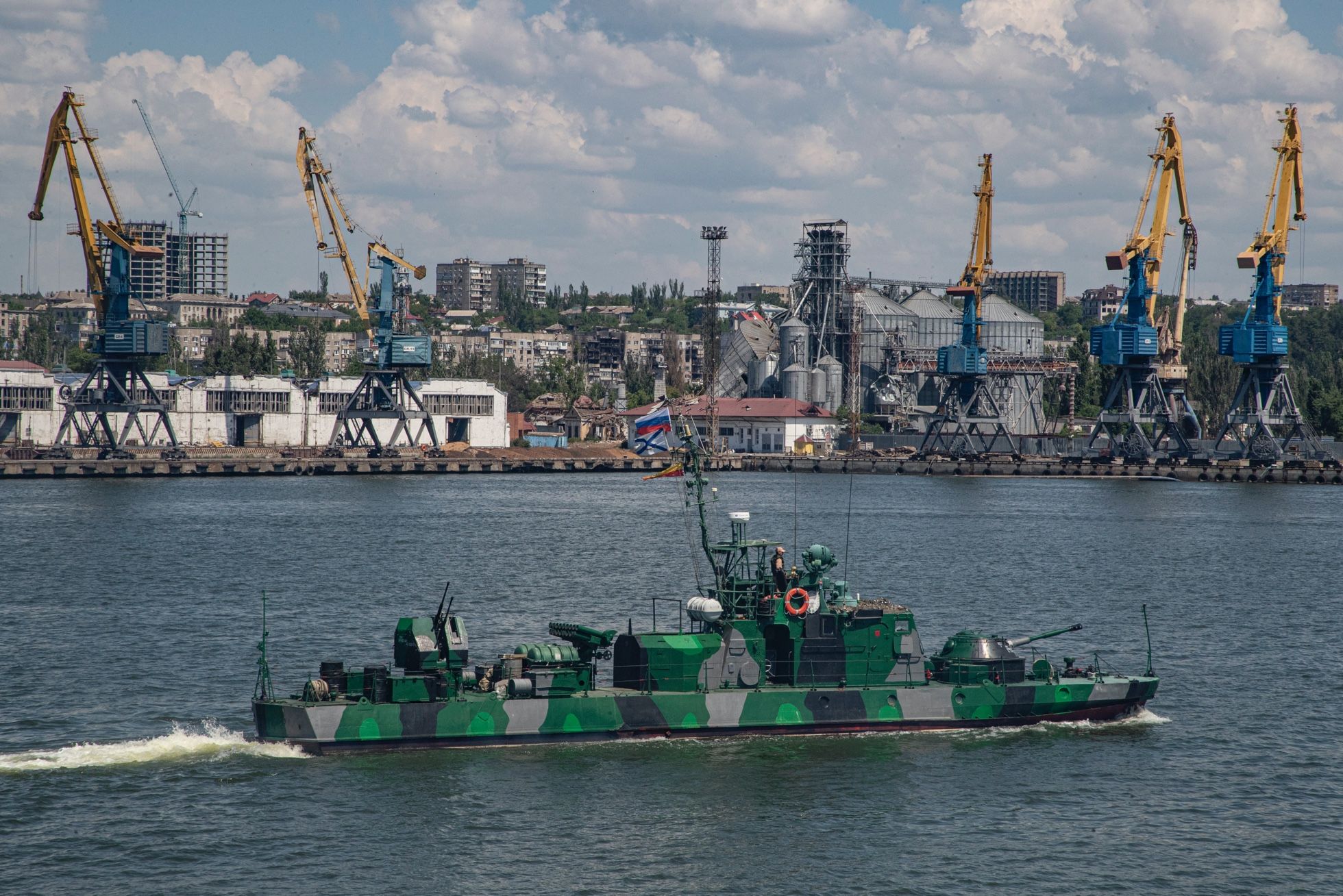
- Immediately after the start of the war and the imposition of martial law, Ukraine officially closed all of its ports on the Black and Azov Seas: Access to and exit from roadsteads is prohibited for commercial ships. Officially, the ban also applies to ports in Mariupol and Berdyansk, both of which were captured by Russia in the spring. According to Kyiv, opening the ports will only be possible after hostilities cease and Russian troops are withdrawn from Ukraine.
- In the early days of the war, the Ukrainian Navy laid mines offshore near Odesa and other Black Sea ports, as well as in areas on the Black Sea’s southwest coast, with the aim of deterring the Russian Navy from making a landing operation on the Black Sea coast. It’s unclear whether Russia’s military command had actually planned this kind of operation, but whatever the case, the Russian Navy hasn’t attempted to breach Ukraine from the Black Sea since the mines were planted. The exact number of mines planted is unknown.
- In February, Russia’s Navy captured Snake Island, which lies southwest of Odesa, and installed radars there, giving Russia the ability to monitor Ukrainian activity on most of the Black Sea coast. In early March, Russian land forces attacked one of Ukraine’s largest ports: Mykolaiv. The fighting reached the area of the city adjacent to the port, but Russia was ultimately fought back by Ukrainian reserve forces.
- At the same time, several commercial ships near Odesa were hit by missile strikes. It’s unclear who launched them.
- On April 13, the Moskva, the flag of Russia’s Black Sea Fleet, was hit by Ukrainian missiles (though the Russian military claims its simply caught on fire); according to official data, it sank on April 14.
- All of the hostilities near Odesa and Mykolaiv ultimately led the International Maritime Organization to declare a level 3 maritime security level in Ukraine’s and adjacent waters; the ports are considered closed for entry and exit.
- Insurers have also introduced prohibitively expensive tariffs for vessels seeking to enter Ukrainian waters (and the wider area of hostilities). Commercial sea transport is unfeasible without insurance.
What attempts are being made to solve the conflict? What’s Turkey’s plan?
In May, Turkey offered to implement a plan developed by the UN to get Ukrainian grain out of Ukraine. The details are still unknown; according to UN officials, disclosing them could disrupt “delicate negotiations.” All we know is that:
- Ukraine is opposed to the idea of demining its ports, as that could encourage Russia’s military command to launch a landing operation near Odesa. Kyiv’s position is simple: trade can resume once Russia’s Black Sea blockade and military hostilities come to an end.
- In a newer version of the UN plan, released in mid-June, Turkey promised Kyiv that it can lead grain ships around the mines without detonating them.
- Russia hasn’t officially announced its terms, instead saying that it’s prepared to provide safe corridors for grain ships to leave the ports. Moscow patently denies blocking Ukraine’s ports. Determining whether the blockade exists at all has proved impossible so far, as it would require a shipowner to risk subjecting their ship to a Russian attack, as well as violating Kyiv and multiple international organizations’ bans on entering Ukrainian ports.
- Turkish officials, however, have said that Russia doesn’t fully support the plan to transport grain through the Black Sea, as Russian leaders are afraid the grain ships could be used to supply Western weapons to Ukraine.
- Turkey has promised (along with Russia) to inspect all ships going to retrieve grain from Ukraine. However, this likely won’t be enough for Moscow; on June 17, Vladimir Putin openly expressed his fear that grain ships would bring Western weapons to Odessa.
Even if Turkey manages to solve the problem of mutual distrust between Russia and Ukraine, the problem of insurance will remain: insurers won’t believe that export operations in Ukraine’s territorial waters can be safe while the war is still going on.
Are there other ways to get the grain out of Ukraine?
Definitely not all of it. If the grain were transported by railroad to the EU, it would have to be reloaded into different train cars due to the difference in standard track width in Ukraine and Western countries. Another problem is the lack of grain elevators in Poland, which would hinder the transshipment and further transportation of the millions of tons of grain. The U.S. has offered to build temporary elevators, but this is unlikely to solve the fundamental problem; according to Bloomberg, in the best possible scenario, Ukraine would manage to export two million tons out of the over 20 million tons of grain currently stuck there.
What danger does the current crisis pose for the rest of the world?
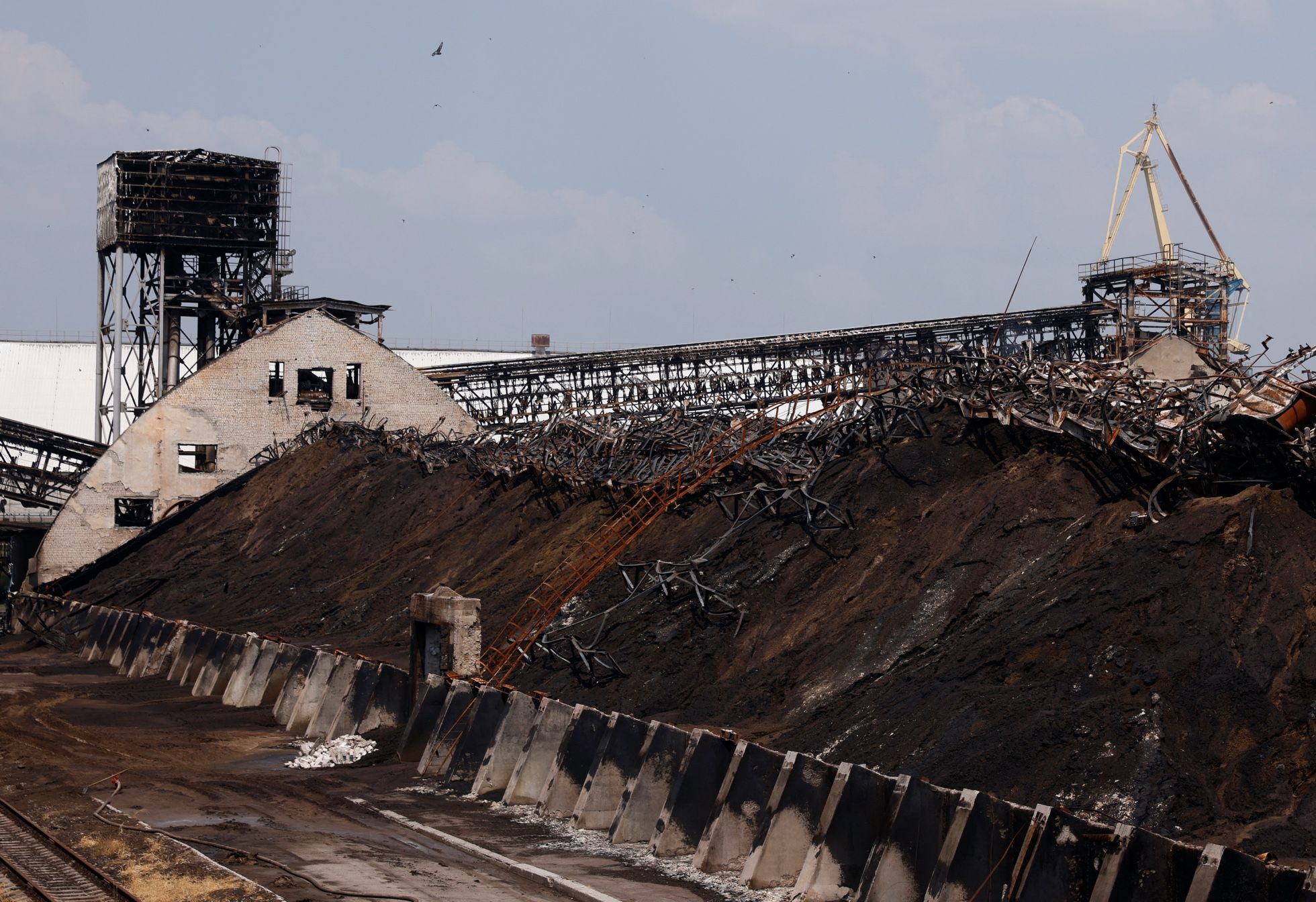
The biggest problem is the grain from last year’s harvest is currently sitting in elevators that will eventually need to be empty for the next harvest. In addition, a portion of the country’s elevators and flour mills have been destroyed or lost due to the war. As a result, there will be nowhere to put tens of millions of tons of grain that’s set to be harvested in the coming weeks, and the world could lose as much as 10 percent of its grain.
Can Russia make up for Ukraine’s lost share of the market?
Theoretically, yes: according to forecasts from industry experts, Russia’s grain exports are set to grow this year. The country is expecting a record-setting harvest, and quotas restricting grain exports will expire on June 30. However, Western countries are concerned that Russia, on the contrary, will intentionally export less than usual; Security Council Deputy Chairman Dmitry Medvedev has hinted as much. Russia is openly demanding that at least a portion of the sanctions against it be lifted — only then will it agree to “save the world” from famine. The West has refused, calling the demand “blackmail” and the situation with the grain blockage a “war crime.” The Ukrainian authorities have also accused Russia of stealing grain from its occupied territories and attempting to export it through Crimea (claims that Russia denies).
So a global hunger crisis is imminent?
That’s not quite accurate. There's always been hunger around the world; in recent years, it’s been fueled by the pandemic, which reversed a multiyear downward trend in world hunger. Different international organizations have different estimates of how many people don't have enough to eat, but according to data from the UN, there were about 760 million people facing food insecurity in 2020.
Information on global hunger in the last year is not yet available, but the UN’s World Food Programme (WFP) recently published estimates for some of the countries where the situation is most dire. If the war turns becomes a prolonged conflict, as it is currently expected to, the WFP projects the number of food insecure people to increase by 17 percent — but 276 million to 323 million people in 81 countries.
But if Russia wants, it will have every opportunity to cause a disaster that will make even the current projections seem small. Russia is a world leader not only in grain exports but also in fertilizer and natural gas, and if it wants, it will be able to block all three key export lines, leading to an unprecedented food crisis.
If that happens, we'll have to hope that even the most severe food crisis is a crisis of distribution rather than one of production. After all, the number of calories produced by the global food system is exponentially higher than the number of calories humanity needs, but a significant proportion of that output is used for other industries (such as biofuel), and almost half of is is used to feed livestock. In the event of a protracted crisis, it’s those industries that would have to take a hit to make room for the needs of starving people.