
Pope’s Day
This is the Pope’s world. Anything you can do, Pope can do better
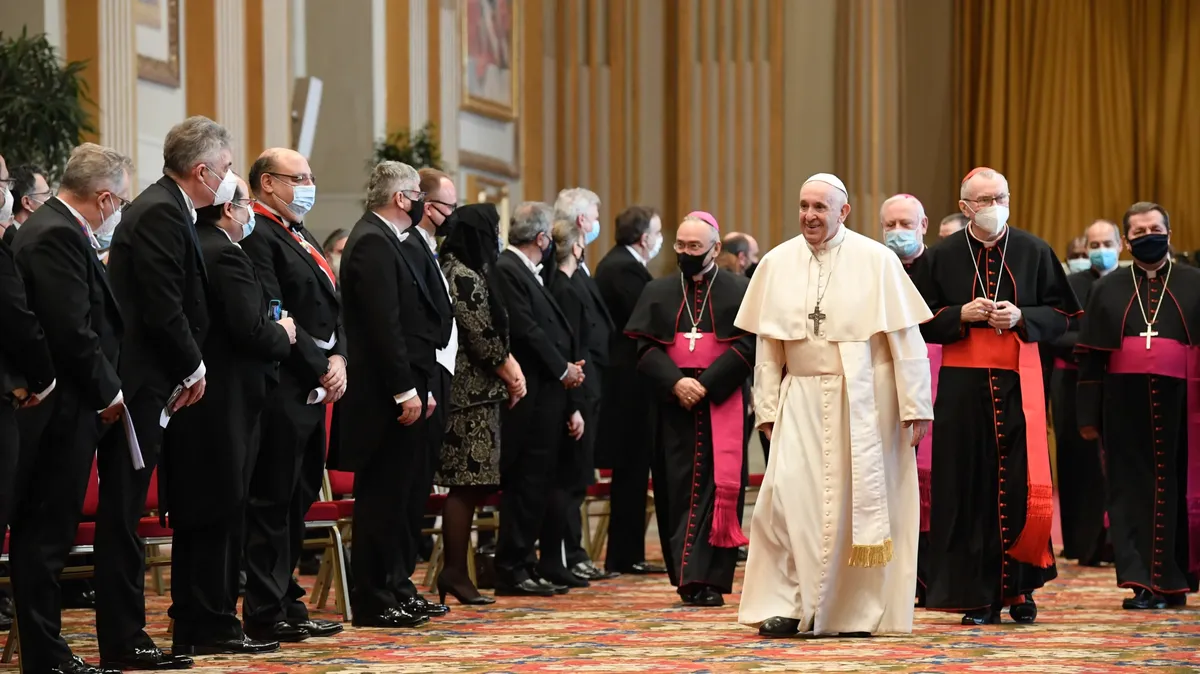
Traditional peacekeeping mechanisms no longer work. An institution with big experience in peacemaking can stop the war in Ukraine. Here comes Vatican.
On 29 June, the catholic world is celebrating Pope’s Day—the Feast of Saints Peter and Paul. The pope’s status has long since left confessional and religious confines—in current times, when the world order has become extremely fragile, the pontiff becomes a global politician, one of its kind. What does that entail?
Establishing the United Nations as the institute responsible for preventing a world war was the principal outcome of the Yalta Conference. But the efficiency of the organisation in achieving its main mission is very much in question. The problem is that the Charter of the UN does not include a mechanism for overcoming a crisis, in case of one of the warring sides being a member of the Security Council. The members are supposed to be, instead, the prevention of war guarantors. The imperfection of the UN itself is the reason for the inefficiency of the existent mechanisms for maintaining international security.
The world is facing the urgent task of creating a new institution that would help establish a diplomatic dialogue between the Security Council members—most importantly, during a military conflict between them. This institute should be located on the territory of a neutral independent state that has been playing an important role in global peacekeeping and dialogue for a long time. The conflict in Ukraine has, unfortunately, greatly reduced the number of neutral states in the modern world. Switzerland, Austria, Finland, and Sweden have said goodbye to their long-standing neutrality, by condemning one side of the conflict and supporting the other.
The only influential European country that currently fits the specified criteria is the Vatican City State.
When the Vatican condemns war, it does not choose a side. The Vatican does not impose embargoes or supply weapons. The Vatican was the main global opponent of the US invading Iraq and Libya. Pope Francis, while following the established lines in the modern context and condemning the military invasion of Ukraine, has not sided with either side of the conflict. He emphasised that there are deep and multifaceted reasons for this war; they need to be identified and solved through dialogue. The pontiff calls upon Russia, Ukraine, the EU, and the US to sit down for a round table in the Vatican and jointly discuss the methods for ending the conflict in Europe—in a way that allows for the interests of the warring sides to be considered. Francis is ready to be a mediator in the organisation of negotiations and a moderator during the negotiation process, promising to carry all the technical hardships and moral risks on his shoulders.
The helpless UN is called upon to recognise the Vatican’s new special status—that of a universal moderator in the dialogue between countries that are currently at war with each other. Just, sustainable peace in Europe can become a reality, and christianity can continue its rescue mission under new geopolitical conditions, diligently serving the world, refusing to impose its worldview on anyone.
Leonid Sevastianov, President of the World Council of Old Believers, Pope Francis’ “ambassador of peace”