
Оригинал материала
Russia’s war bogs down
As Ukraine retakes Snake Island and Lysychansk falls, the battle of attrition grinds on
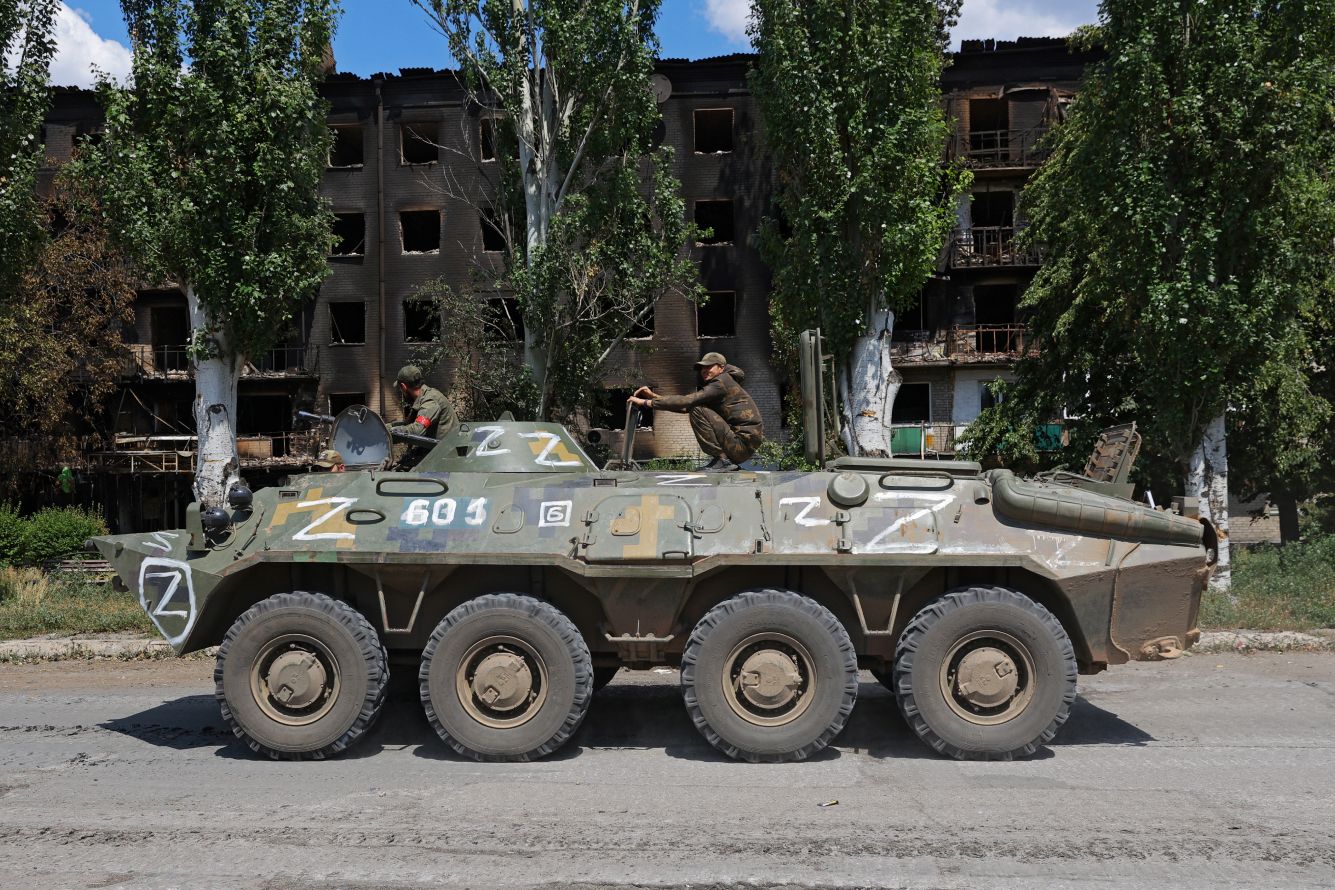
Russia capturing the city Lysychansk and Ukraine recovering Snake Island were both hailed as victories by the respective sides this past week. The Kremlin celebrated the capture of the last Ukrainian holdout in the Luhansk region by doling out state awards to the forces involved. However, the Russian authorities appear to be exaggerating the military significance of this victory, as it came after Ukrainian troops carried out a relatively orderly withdrawal from the area. Earlier, Ukrainian forces pushed Russian troops to evacuate Snake Island. But Ukrainian soldiers have yet to physically return to the recovered outpost in the Black Sea. And now that Russia’s full-scale invasion of Ukraine has settled into a war of attrition, its outcome depends less on the capture and loss of small territories like these, and more on the accumulation and expenditure of military resources.
The capture of Lysychansk
Russian troops took full control of the city of Lysychansk, the last Ukrainian holdout in the Luhansk region, on July 3. Now, the frontline west of Lysychansk runs along the administrative border between the Luhansk and Donetsk regions.
After heavy fighting, Ukrainian troops were forced to carry out an organized withdrawal from the Severodonetsk–Lysychansk area in late June–early July:
- After Russian troops ousted Ukraine’s forces from the village of Vrubivka at the end of June, the defense of the entire area began to fall apart. With Ukrainian troops under threat of encirclement in both Severodonetsk and Hirske simultaneously, the Ukrainian command made the long overdue decision to withdraw from the Luhansk region.
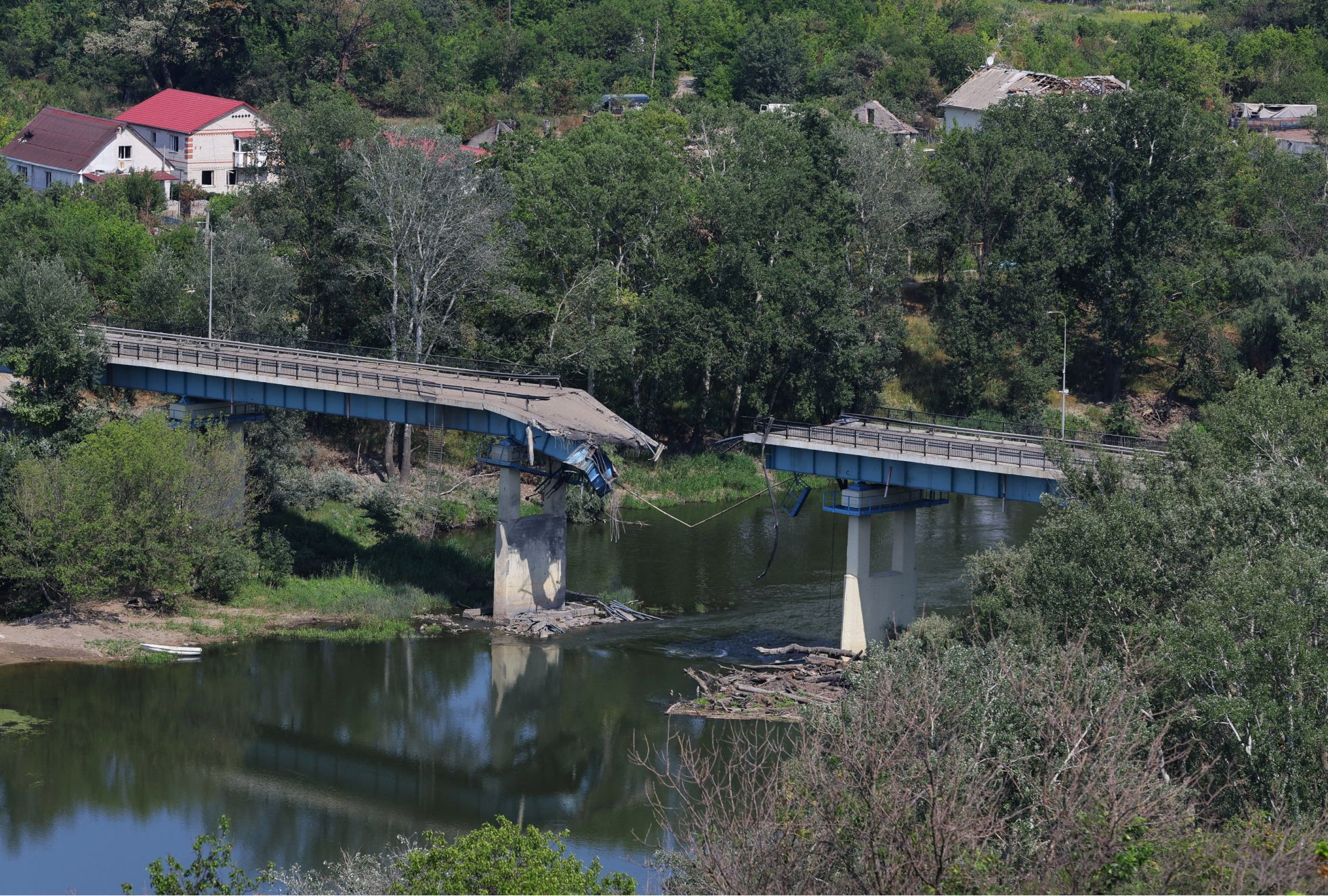
- Ukrainian forces first withdrew from Hirske and Zolote, and then from Severodonetsk. It was a difficult operation: Severodonetsk is separated from the rest of the combat zone by the Siverskyi Donets River — and all of the bridges connecting the city to Lysychansk have been destroyed. As a result, the Ukrainian units retreated by boat or by wading across the river.
- By June 24, it became clear that the Ukrainians wouldn’t be able to hold on to Lysychansk, despite its advantageous geographical position (the city is located on the high right bank of the Siverskyi Donets River). Russian troops approached the city from the south and southwest and seized the Ukrainian side’s main stronghold — the Lysychansk Oil Refinery. This again created the risk of the entire area being encircled, forcing Ukrainian troops to withdraw.
- Ukrainian units withdrawn from Lysychansk moved to defensive positions in the hills to the east of Siversk and Bakhmut (the cities themselves are located in the lowlands, and therefore aren’t suitable for long-term defense).
Reclaiming Snake Island
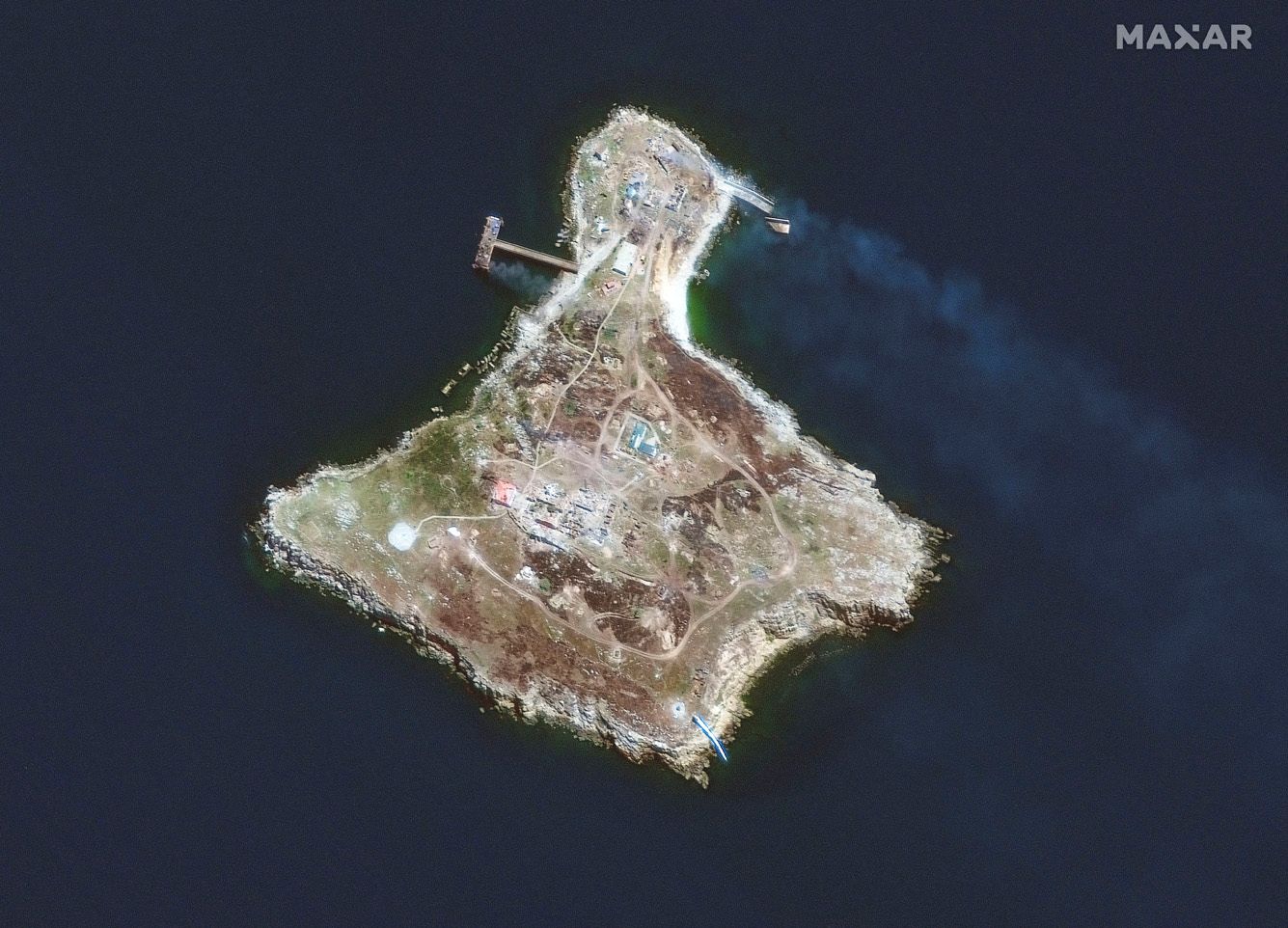
Having suffered a defeat in the Luhansk region, the Ukrainian army secured a victory in the Black Sea: after several months of fighting in the air, at sea, and on land, Russian troops retreated from Zmiinyi Island (Snake Island) at the end of June.
- The Ukrainian army’s attempts to land helicopters on Zmiinyi Island in early May were thwarted by Russian aircraft. The Russian command then sent additional air defense forces to the island to try and protect the garrison from missile strikes from the coast.
- This, however, did not help matters: Zmiinyi Island is located 40 kilometers (25 miles) from the nearest coast in the Odesa region, which made Russian forces vulnerable to Ukrainian strikes. Air defense systems are powerless in the face of mass strikes from long-range cannon artillery. And while Russian aircraft could theoretically carry out strikes on these guns, Russian planes can’t operate that deep into Ukrainian territory due to the country’s air defense.
- Several days of artillery strikes on the island forced the Russian command to evacuate the garrison.
Are these important gains for each side?
Russia capturing Lysychansk and Ukraine winning back Zmiinyi Island are quite significant victories in the context of the war of attrition that has been waged in recent months. However, these gains have little influence on the war’s outcome. Winning a war of attrition requires the warring army’s resources to grow faster (or run out slower) than the enemy’s resources. In this sense, it's too soon to say that either side has decisively won or lost anything.
Lysychansk
The Ukrainian army likely suffered more losses near Lysychansk than the Russian side (but we don’t know for sure). It’s likely that in recent weeks, the Ukrainian army could no longer effectively inflict losses on the enemy and, in turn, suffered heavy losses due to Russian artillery strikes. Therefore, holding its positions in Severodonetsk, Lysychansk, and Hirske for such a long time may have been a mistake.
That said, the Russian army did not defeat Ukraine’s main forces in this area and was once again unable to complete its encirclement operation, despite the fact that after the capture of the Lysychansk Oil Refinery, closing the pocket only required covering eight more kilometers (five miles). In order to speed up the offensive, the Russian command organized a crossing of the Siverskyi Donets River northwest of Lysychansk. But this didn’t help much: it took the Russian army four days to cover the eight kilometers (and half this distance was covered after the Ukrainians had pulled out).
The pace of the Russian advance forced Ukrainian troops to withdraw from the area; many units had to leave on foot under constant artillery fire. However, there are no signs that real encirclement took place in the area around Lysychansk (such as hundreds of prisoners of war or dozens of abandoned and damaged military vehicles).
There also isn’t an opening in the front, which usually forms after an encirclement. This means that the Russian army won’t be able to quickly develop its offensive into operational depth. Wherever Russian forces attack next — near Siversk or Bakhmut, Slovyansk, or on the outskirts of Donetsk — they will have to storm Ukrainian defensive positions again and expend finite resources.
Snake Island
The Ukrainian army has yet to reap any great benefits from recovering Zmiinyi Island. A Ukrainian flag was delivered to the island by helicopter, but the Ukrainian command has yet to risk deploying troops and military equipment there due to the lingering threat of Russian airstrikes.
That’s not to say that Zmiinyi Island has no strategic value. Theoretically, the island could play an important role if it could be fully used as a base for air defense and anti-ship missile systems. If, for example, Ukraine were to deploy Harpoon anti-ship missiles on Zmiinyi Island, it would allow for direct attacks on the Russian fleet’s bases in Yevpatoriia and even Sevastopol. However, as Russia’s experience occupying the island shows, deploying and defending equipment on the island risks wasting resources.
In addition, Russian troops abandoning Zmiinyi Island hardly affects Russia’s ongoing blockade of Ukraine’s ports and territorial waters. Russia still has the capacity to attack civilian ships destined for Ukraine using aircraft, coastal defense missiles, and submarines. Given these risks, shipowners are not sending vessels to Ukraine.
What will happen next?
As in any war of attrition, everything depends on which side is better able to build up its resources while destroying the enemy’s resources. Both Moscow and Kyiv’s limitations are well known:
- The Kremlin has yet to announce general mobilization, which limits the army’s ability to increase its manpower. At the same time, a shortage of infantry is precisely what makes it impossible for Russian forces to successfully conduct operations to encircle Ukrainian positions. As a result, these operations are fraught with heavy losses for Russia. If the Ukrainian authorities continue to successfully mobilize new troops and Russia does not initiate full mobilization, the Ukrainian army’s numerical advantage may sooner or later turn the tide in favor of Kyiv.
- A lack of heavy weapons, particularly artillery, is preventing Ukraine from realizing its numerical advantage at the front. Western deliveries of howitzers and multiple-launch rocket systems are (so far) not enough to rearm the entire Ukrainian army. However, if the Ukrainian Armed Forces command were able to concentrate available resources in one area (for example, near Kherson), it could launch a successful offensive in the coming weeks.
That said, rather than pursuing active offensives fraught with losses, both sides are increasingly using long-range weapons to wear down the enemy and destroy its resources. For several weeks now, the Russian army has been targeting Ukrainian ammunition depots and control headquarters with operational-tactical missiles and cruise missiles. Since receiving HIMARS missile launchers from the West, Ukraine has started doing the same. In the last ten days, Ukraine’s high-precision missiles have destroyed at least four of the Russian army’s large ammunition depots located tens of kilometers from the front. Ukrainian artillery has also targeted cannon artillery depots, including one in Donetsk. However, this wasn’t enough to stop Russian artillery in the attack on Lysychansk.
Explainer by Meduza
Abridged translation by Eilish Hart