
Оригинал материала
Forced labor, property seizures, and travel restrictions
What Putin's martial law decrees really mean — and how they violate existing legislation
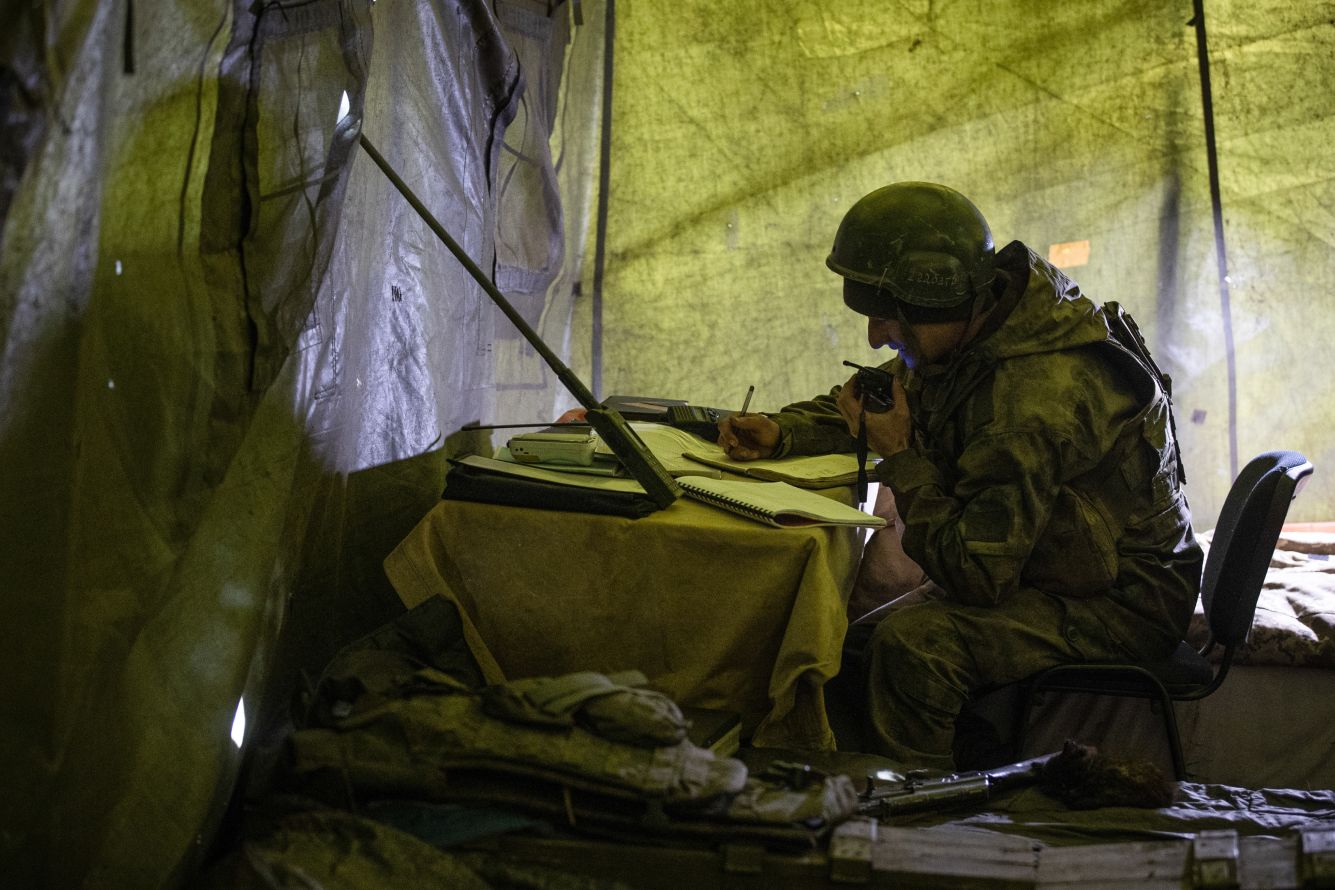
On October 19, Vladimir Putin signed a decree imposing martial law in Ukraine’s annexed territories. In his speech announcing the move, Putin said that martial law has been in effect since even before the territories’ “incorporation into Russia,” and that it was now necessary to “formalize it under Russian law.” Additionally, Putin signed a separate decree putting eight of Russia’s regions in “medium alert mode,” its Central and Southern Federal Districts in “heightened alert mode,” and the rest of Russia’s federal subjects in “basic alert mode.” Meduza explains what these terms mean — and why some of them violate federal law.
What measures are in place? Where?
1. In the annexed territories
In Ukraine’s Donetsk, Luhansk, Kherson, and Zaporizhzhia regions, which Russia annexed in late September, Putin has declared martial law. Under Russian federal law, this gives the authorities the power to:
- Ban citizens from leaving a region and restrict freedom of movement in any form — for example, by imposing a curfew. The government can also prohibit people from entering a region.
- “Temporarily resettle [local residents] to safe areas,” in which case the government is required to provide the displaced people new housing
- Ban any public event
- Evacuate “objects of economic, social and cultural significance,” a phrase that can include defense enterprises as well as hospitals and orphanages
- Confiscate property (such as cars) and force people to work “for defense needs”
- Alter the work schedule at any business — in other words, making people work more
Additionally:
- Russian federal law gives the Russian government the power to detain citizens of a foreign country that’s at war with Russia without providing a specific reason. But because Russia has not officially declared war against Ukraine, this policy should theoretically not be in effect.
- However, Russian police will now be able to inspect people, search their homes and cars, and detain anybody for up to 30 days.
- The Russian government’s executive branch will now have the power to impose military censorship and create agencies to monitor people’s letters, Internet communication, and phone conversations.
- Foreign organizations can be banned from operating in Russia if the authorities receive “credible information” that they are working to “undermine Russia’s defense and security.” This also applies to political parties, public organizations, and religious groups, whether they’re Russian or foreign.
- The authorities can ban alcohol sales.
The president’s decree also calls for “territorial defense” to be "conducted" in the annexed territories.
2. In Russia’s border regions and Crimea
A “medium alert mode” is in place in Crimea, Krasnodar Krai, and Russia’s Belgorod, Bryansk, Voronezh, Kursk, and Rostov regions.
The first restriction in Putin’s decree provides for the “reinforcement of the protection of the public order” as well as increased protection for a variety of structures and facilities ranging from energy infrastructure to public transportation. The decree doesn’t say what this “reinforcement” entails.
This part of the decree applies to administrative buildings, airports, train stations, communication centers, power stations, and other infrastructure.
The “medium alert mode” also allows for “a special mode of operation for objects related to transportation, communications, and energy. The special mode also applies to objects that can pose an increased risk to the lives and health of people and to the environment.”
This covers a wide range of infrastructure objects, including airports, train stations, communication centers, and power facilities.
Other measures the decree allows in Russia’s border regions include:
- The “temporary resettlement” of citizens to safe areas, with accommodations provided
- Restrictions on freedom of movement and new rules for entering and exiting a region
- Limitations on vehicle movement and the unrestricted vehicle searchs
- Monitoring the work of establishments that facilitate transportation and communications as well as the work of printing houses, data centers, and automated systems, all of which can also be used for defense purposes.
According to political scientist Tatyana Stanovaya, the phrase “monitoring the work of data centers and automated systems” could be interpreted extremely widely and might be used to grant the authorities total control over the Internet, for example, or the right to demand access “to all electronics.”
Russian authorities also plan to organize “territorial defense” in the regions under “medium alert mode.”
Finally, the decree also gives regional governors the power to take measures “to meet the requirements” of the Russian Armed Forces and other troops fighting against Ukraine, as well as to conduct “activities to protect the population and territories from extreme natural or technogenic situations.” This ability extends to the heads of Russia’s other regions as well — and thus to the entire country.
3. In the 18 regions in Russia’s Southern and Central federal districts
For regions under a “heightened alert mode,” the list of possible restrictions includes:
- “Reinforcement of the protection of the public order” as well as increased protection for a variety of structures and facilities ranging from energy infrastructure to public transportation;
- “A special mode of operation for objects related to transportation, communications, and energy” that “also applies to objects that can pose an increased risk to the lives and health of people and to the environment”;
- Limitations on vehicle movement and the unrestricted vehicle searches
- Monitoring the work of establishments that facilitate transportation and communications as well as the work of printing houses, data centers, and automated systems, all of which can also be used for defense purposes.
The “heightened alert mode” does not give authorities the power to restrict movement or “temporarily resettle” people to safe areas. It does, however, give regional governors the power to “conduct territorial defense activities.” Since the start of Russia’s mobilization campaign, there have been multiple reports of Moscow military commissariats enrolling conscripts in a city territorial defense force. However, according to lawyer Pavel Chikov, such a defense force can technically only be established in a region under martial law.
4. In the rest of Russia’s territories
Throughout the rest of the country, Putin has imposed a “basic alert mode.” Like the other measures, this also gives governors the power to conduct “activities to protect the population and territories from extreme natural or technogenic situations,” as well as to take measures “to meet the requirements of the Russian Armed Forces.”
In all of Russia’s regions, governors have the power to impose the following restrictions:
- “Reinforcement of the protection of the public order” as well as increased protection for a variety of structures and facilities ranging from energy infrastructure to public transportation;
- “A special mode of operation for objects related to transportation, communications, and energy” that “also applies to objects that can pose an increased risk to the lives and health of people and to the environment.”
In the territories that are not under martial law or a “medium alert mode,” however, regional authorities cannot take measures to create “territorial defense” forces.
What does ‘territorial defense’ mean here?
This term has attracted particular attention since Ukraine's territorial defense forces have become such an important part of the country's resistance against Russian aggression. In Ukraine, these troops consisted primarily of volunteers with military experience.
Putin’s decree calls for territorial defense to be “conducted” because Russian federal law defines “territorial defense” as a system of actions under martial law that help protect important state, military, and energy facilities; fight against enemy saboteurs; and assist the Russian Armed Forces.
The decree doesn’t indicate whether there will be a separate mobilization campaign for a territorial defense force or whether it will consist of volunteers, but the aforementioned reports coming out of Moscow suggest the new force will consist of people drafted as part of the country’s “partial mobilization.”
A direct contradiction of Russian law
Article 8 of Russia’s 2002 law on martial law grants the authorities the right to impose certain restrictions not only in the territory where martial law is declared but also in the rest of the country. The list of restrictions is fairly short.
At the same time, the law expressly forbids the authorities from imposing the more severe measures allowed by martial law on territories that are not under martial law.
Putin’s decree directly violates this ban: the restrictions the decree allows in areas that are not under martial law are copied directly from the list of restrictions that make up martial law. In other words, many of the measures laid out by Putin’s decree run contrary to Russia's 2002 law.
Border closures
Experts have highlighted the open-ended nature of the third point of Putin’s martial law decree, which reads as follows: “When necessary, other measures set out by [Russia's federal law 'On Martial Law'] can be applied in the Russian Federation during the period of martial law.”
On one hand, this sentence could be interpreted as a reference to Putin’s decree on the “alert modes” in the regions where martial law is not officially declared. On the other hand, some lawyers have noted that it could allow the authorities to impose any element of martial law anywhere in the country. This could include closing the border to Russians (though the Kremlin has denied having plans to do this).