
Оригинал материала
Changing armies in midstream
Why would Putin and Russia’s defense minister want to restructure the military during a war? Meduza explains.
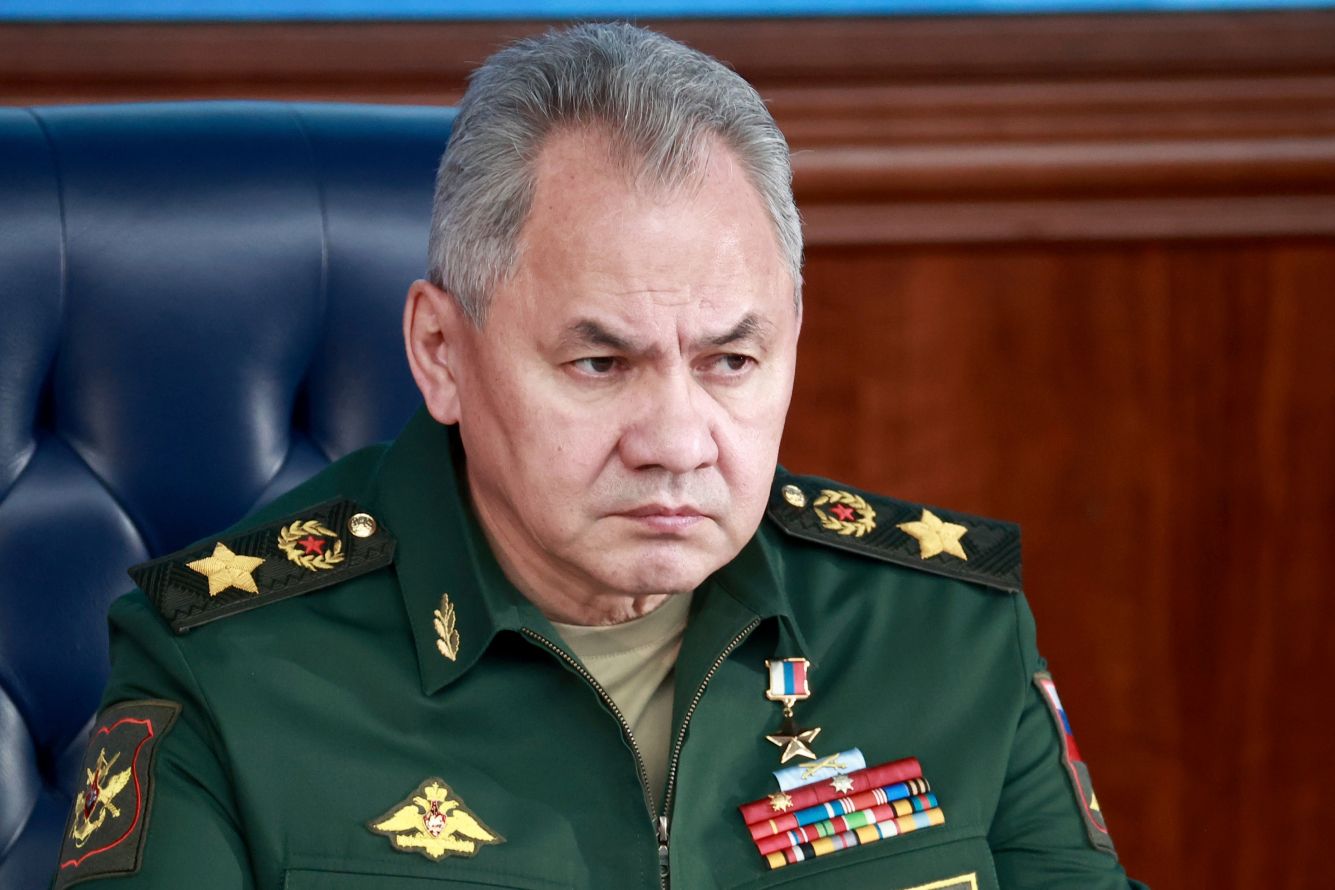
At a Defense Ministry Board meeting on December 21, Russian Defense Minister Sergey Shoigu announced several structural reforms to the Russian army. Among other things, the reforms will change who is subject to conscription under Russia’s universal (with many exceptions) mandatory military service, raising the eligibility age range from 18–27 to 21–30. The reforms will also increase the maximum size of Russia’s army by 490,000 people, and they’ll make it possible for those who are conscripted to sign up immediately as contract soldiers (a different classification of military service, which pays soldiers relatively well, but dramatically increases the chances they’ll be sent into combat). Meduza unpacks Shoigu’s announcement to explain why now, what the Russian army hopes to get out of the changes, and what it all means for draft-age men in Russia.
On Wednesday, December 21, Defense Minister Sergey Shoigu announced reforms to the Russian army at a Defense Ministry Board meeting. This announcement is, in itself, a virtual admission of the military command’s many mistakes in Ukraine, which have become apparent to the entire world during Russia’s full-scale invasion.
Several of Shoigu’s points are devoted to an upcoming increase in the army’s size (clearly, Russia’s armed forces were too small for the war in Ukraine).
- The maximum number of service members in the army (contract soldiers, conscripts, and those who have been mobilized) will be increased from 1.15 to 1.5 million. Moreover, in August 2022 Putin already increased the army’s size by 140,000 people. This means that, compared to the beginning of the invasion, the army will grow by a total of 490,000 people.
- The number of contract soldiers should rise by 290,000 — to a total of 695,000. The plan is that, by the end of 2022, the Russian army will have 521,000 contract soldiers, and that they will, according to Shoigu, partially replace draftees (though he did not specify how this replacement will work).
- A decision was made to create five new motorized rifle and air assault divisions and an army corps, as well as to deploy more than 10 brigades per division (assuming the number of service members in them increases two- to three-fold). Several new aviation regiments and brigades, and five new artillery divisions, are also planned. Evidently, already-mobilized Russian citizens and post-reform contract soldiers will form these new divisions: existing formations, even with an increase in the number of staff, cannot absorb hundreds of thousands of new soldiers.
Apart from that, the age for conscription will “gradually” change. People will be conscripted starting at age 21, not 18, like now, but the upper age limit for conscription will be 30, instead of 27 as it is today. (It is still unclear how exactly this will be accomplished.)
But 300,000 new contract soldiers is still fewer people than the 490,000 Shoigu plans to add to the army. Is a ‘new wave’ of mobilization coming?
That doesn’t exactly follow from Shoigu’s announcement. He spoke about increasing the maximum size of the army, not about the real number of service members. The army’s maximum size is an organization-and-accounting value. It’s necessary so that the government knows what quantity of funds to reserve for financing army posts: military salaries, benefits, allowances (for provisions, uniforms, and so on), and equipment. In other words, it’s not a given that in the near future 1.5 million men will really serve in the Russian army.
At the same time, increasing the military’s general size will in fact happen partly due to service members who were enlisted during this fall’s mobilization campaign, and partly due to new contract soldiers. But it is not clear if these sources can provide 490,000 new troops.
- We don’t know exactly how many people were mobilized. The authorities said 300,000, but the campaign’s true scope might be different; the figure from Putin’s decree about mobilization is classified.
- Some mobilized people were sent to replenish existing units that suffered losses due to killed and wounded service members and those who terminated their short-term contracts. It’s not clear how many casualties there have been, but the new recruits who were sent to compensate for them have not increased the baseline size of the army.
- At the same time, some of those losses were compensated not by mobilized soldiers, but by service members who signed contracts after the start of the war (they probably number several tens of thousands). Judging by Shoigu’s planned increases to the number of contract soldiers, we can assume that the enlistment of new contract soldiers will only accelerate. In other words, it’s impossible to state the exact balance.
Please, read this message from Meduza’s team:
Dear readers! For eight years, Meduza has delivered reliable information about Russia and the rest of the world. Our reporting is vital for millions of people in Russia, Ukraine, and beyond. Access to trusted news sources is even more important in times of war. Help Meduza publish the news that Russia’s censors want to silence. Please, support our work.
One way or another, this doesn’t mean there won’t be a “new wave” of mobilization. The Ukrainian Armed Forces and other security agencies in Ukraine reached, according to official data, more than a million people by summer, meaning that Ukrainian troops outnumber Russians at the front. And Ukraine has continued its mobilization. In addition, the Russian army continues to suffer heavy losses, and may once again face an acute shortage of manpower in a few months.
Where does military command expect to find hundreds of thousands of new contract soldiers?
Apparently, they expect to find them among conscripts. The authorities plan to allow people to sign contracts as soon as they’re conscripted, instead of doing their mandatory service.
Remember that Shoigu plans to increase the number of contract soldiers by almost 300,000, and that every conscription drive, in fall and spring, collects 120,000–130,000 new service members (a total of 240,000–260,000 a year).
Why turn conscripts into contract soldiers?
To send them to the frontlines.
Currently, Russia observers an unspoken ban on conscripts participating in combat. It’s not formally legislated and is sometimes violated (one of the most famous examples are the conscripts aboard the sunken cruiser Moscow), but not, apparently, systematically violated. If conscripts start signing up en masse as contract soldiers, it will give Russia’s military command free rein to send them to Ukraine.
Why do the authorities want to change the conscription age range?
It’s probably for the same reason: to get more recruits into the combat zone.
First, it’s easier (in a social sense) to deploy people who are older than 21 than to send people who were just recently schoolkids — it arouses less discontent in society.
Second, due to fluctuations in the birth rate in recent decades, there are almost 330,000 fewer current conscripts aged 18 to 27, than potential conscripts aged 21 to 30. It’s true that in coming years this effect will weaken; people of conscription age will be almost exclusively the small generation born between the mid-1990s and the early 2000s.
What else is changing in the Russian army?
Russia’s authorities decided to reconstitute two military districts, with centers in Moscow and St. Petersburg, which previously existed until 2010. This is likely also an attempt to fix past mistakes. Troops from the Western Military District, headquartered in St. Petersburg, suffered the most serious defeats in 2022. They fought in the spring in Kharkiv, Chernihiv, and Sumy, and in the summer and fall near Balakliya and Izyum — both battles ended in heavy defeats, retreats, and gigantic equipment losses.
It’s difficult to say, however, if the reform will improve the efficiency of these “elite” troops stationed around Russia’s two capital regions.
Explainer by Meduza
Translation by Emily Laskin