
Оригинал материала
The true war of attrition begins
Meduza sums up what happened on the battlefield in 2022 — and what it portends for the year ahead
Explainer by Meduza. Translation by Sam Breazeale.
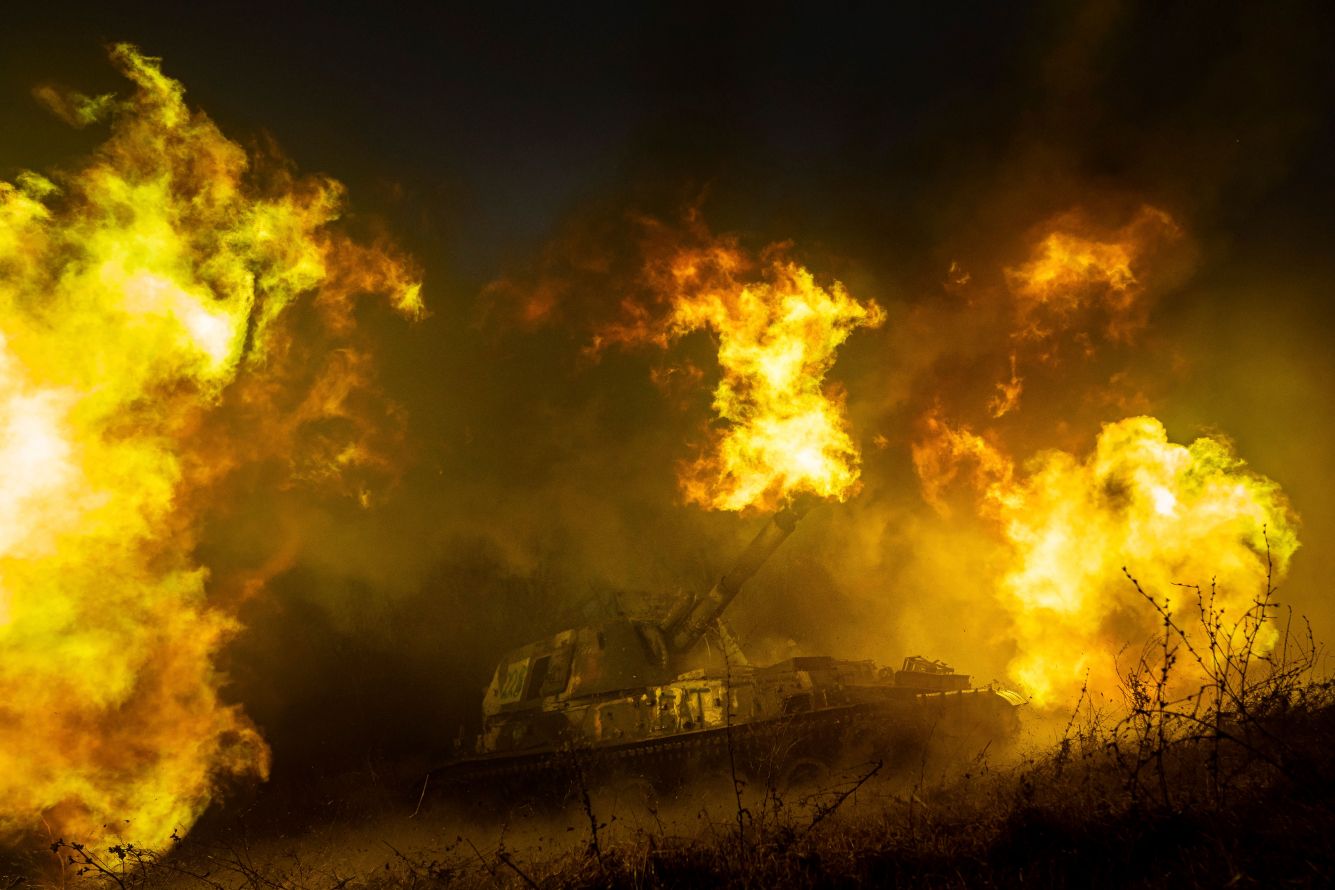
Late in 2022, the war in Ukraine reached a new turning point. Russia conducted its “first wave” of mobilization and partially eliminated the personnel deficit that contributed to its numerous military defeats in the fall. Now, the Russian army might face a shortage of a different resource: artillery ammunition. Meanwhile, Ukraine is experiencing a shell shortage of its own. Overcoming the deficiency won’t be easy: the West, which is assisting Ukraine with supplies, has largely exhausted its available stockpiles. It is against this backdrop that Russia and Ukraine are fighting a protracted artillery battle around the cities of Soledar and Bakhmut, which is rapidly eating away at the remaining ammunition on both sides. Increasingly, it seems the true “war of attrition” — as many began referring to the war in Ukraine almost as soon as its hot stage began — will take place in 2023. The outcome of this stage will hinge primarily on which side is better able to adapt to its worsening ammunition shortage.
In this article, our editors attempt to assess the military situation in Ukraine based on the available data. Meduza opposes the war and demands the immediate withdrawal of Russian troops from Ukraine.
What was the condition of the Russian and Ukrainian armies at the start of the February 2022 invasion?
The Russian army
In February, Russian military commanders planned to mount a quick victory by launching a decisive operation and advancing its troops at a record pace. In the first days of the full-scale invasion, the Russian army captured a significant amount of Ukrainian territory, taking advantage of the fact that the Ukrainian military hadn’t yet had time to deploy and wasn’t ready to mount a full defense anywhere outside the Donbas.
Just a few weeks later, however, as Ukrainian units arrived at the fronts that had by then formed, the Russian army suffered a major defeat: it completely withdrew from Ukraine’s north (with the exception of the Kharkiv area, which was significant for its subsequent offensive in the Donbas) and retreated south — to 50 kilometers (about 30 miles) outside of Kherson to prevent the city and surrounding bridges from falling within range of Ukrainian artillery.
It became clear that Russia’s troops weren’t prepared to attack the positions of a fully deployed and well-motivated opponent.
In the next stage of the war, Moscow hoped to conduct a wide-scale offensive in eastern Ukraine. The Russian Armed Forces planned to exhaust the Ukrainian army’s reserves, sapping its supply of armored vehicles and personnel. At the same time, the Russian military's own problems had become clear by the spring:
- Its units badly lacked personnel: this affected both its troops’ ability to conduct combat operations and its supply chain, which also suffered from manpower shortages. Vladimir Putin was unwilling at this time to declare a draft to mobilize the necessary reinforcements (though there were rumors about a mobilization drive as early as May).
- The practice of using battalion tactical groups (BTGs) consisting of soldiers at constant readiness (every brigade or division was instructed to designate these soldiers in advance) turned out to be unsuitable for a full-scale war; these groups were created for fast-paced operations against relatively weak opponents. BTGs have also been used to support hybrid operations, but in those cases, local partners have usually done the “dirty work” (such as in Syria or in earlier stages of the war in the Donbas). Neither of these scenarios apply to the current situation in Ukraine.
- The Russian Aerospace Forces tried and failed to gain dominance in Ukrainian airspace. Russian aviation didn’t have a proven system for overcoming anti-air defenses like NATO does. Because Ukraine’s air defense systems are still operating, the Russian Aerospace Forces were unable to use the method that had worked for them in Syria: dropping conventional unguided bombs from medium altitudes after using computer systems to aim them. At the same time, Russia had few high-precision guided weapons.
- As a result, aviation played a decisive role neither over the front line nor behind it. The latter is especially significant: the Russian military is still incapable of stopping the flow of Ukrainian reinforcements to the most difficult parts of the front.
- The Russian army’s logistics system also proved ill-suited for intensive fighting. The Russian military depends on railroads and can therefore only attack from the vicinity of railway stations. It can receive supplies in the Donbas and in the eastern part of the Kharkiv region, but the railroad in the annexed part of the Zaporizhzhia region is only connected by rail to Crimea, which itself can only receive supplies through the Kerch Bridge. The railroad from Donetsk to Melitopol, meanwhile, has been impossible for Russia to restore; it’s too close to the front line.
- Russia’s logistical problems have determined where it can and can’t launch large-scale offensives. Its only options are parts of Donetsk, western parts of the Luhansk region, and eastern parts of the Kharkiv region.
It was these factors that determined the course of Russia’s summer campaign. Because of its troop shortage, the Russian military was forced to abandon its plan to surround all of Ukraine’s positions in the Donbas. Instead, it had to choose a less ambitious course of action: conducting an offensive on Lysychansk and Sievierodonetsk from Izyum in the Kharkiv region. The goal was to reach Ukraine’s main base in the region, in Kramatorsk and Slovyansk.
At the same time, without full aviation support, Russian troops were relying entirely on their superior artillery and ammunition supplies, which seemed inexhaustible. During the battle for Sievierodonetsk and Lysychansk, according to Ukrainian generals, the Russian army (across the entire front) fired 40,000–60,000 shells a day, while Ukraine launched no more than 6,000 shells daily.
Sievierodonetsk and Lysychansk were ultimately captured in early July, at the same time that Russian forces (primarily PMC Wagner) reached the outskirts of Bakhmut. There, however, the offensive wore thin, and Russia’s units were transferred from Sievierodonetsk and Izyum to Kherson, where Ukraine was expected to launch a counteroffensive.
The Ukrainian army
In early December, the British Royal United Services Institute (RUSI) released a report whose authors included high-ranking Ukrainian military officers. It summarized the Ukrainian side’s view of the war’s initial stage.
- For the first few weeks after Russia launched its invasion, Ukraine was unable to deploy troops in the areas of Russia’s major assaults. It was finally able to complete its deployment in late March, which allowed Ukrainian forces to stop Russia’s offensives around Kyiv and Mykolaiv. Ukrainian artillery, which wasn’t yet suffering from an ammunition shortage at that point, played an important role.
- Mobilized Ukrainians began joining territorial defense brigades as well as new battalions and brigades in the Ukrainian Armed Forces. Over time, the units of mobilized soldiers became more combat capable.
- Ukraine’s military command managed to save some of its air defense systems (though Russia’s first offensive destroyed most of its air defenses) and aviation (Russia’s Aerospace Forces were unable to stop Ukraine from sending its aircraft to alternate airfields).
- After the Russian army’s retreat from northern Ukraine, the West agreed to ramp up both the quantity and quality of its weapon supplies significantly. In late spring, Ukraine started receiving heavy weaponry, including howitzers. This was especially significant, as ammunition for the Soviet-made weapons the military was using before had started to run out — both because it consumed ammo at a high rate and because it had lost multiple large storage facilities to Russia.
- In July, when the Ukrainian army was retreating from Sievierodonetsk, it received its first shipment of HIMARS multiple rocket launcher systems. This immediately changed the situation on the front, exacerbating Russia’s already-serious logistics problems. By late summer, large Russian weapons storage facilities were blowing up practically every day. It’s likely that Russia lost a significant portion of its shells to Ukrainian HIMARS strikes. By the end of July, Russian artillery activity had decreased markedly.
After that, the Ukrainian Armed Forces took advantage of the numerical advantage it had gained as a result of the country’s mobilization (and of the Kremlin’s refusal — at the point — to conduct its own mobilization). This took the form of two major attacks:
- The first was launched in late August, in the Kharkiv region, and didn’t lead to quick success. From the beginning, Ukrainian troops faced combat-ready Russian reserve troops that had been transferred from the Donbas, and they suffered significant losses without gaining much territory in most areas. Nevertheless, by the end of the fall, Russia had abandoned Kherson. Supporting a large group of forces capable of resisting sustained Ukrainian attacks while its crossing points over the Dnipro River were bombed everyday turned out to be an impossible task.
- Ukraine’s second attack was launched in early September in the southeastern part of the Kharkiv region. It caused the immediate collapse of Russia’s defenses and the destruction of Russia’s bridgehead on the Seversky Donets River, from which Russia had been attacking Slovyansk and Kramatorsk. Russian troops abandoned hundreds of armored vehicles in the course of their retreat. A week after the start of the offensive near Kupyansk, Ukrainian forces blocked the supply routes for all of Russia’s forces in the northern Donbas. As a result, the Russian army abandoned its defense line along the left bank of the Seversky Donets, as well as a large railway station and the city of Lyman.
The success of this offensive is directly linked to the Russian army’s logistics problems. After the fierce battle for Sievierodonetsk and Lysychansk, Russia was suffering from a severe manpower shortage. The Russian command was ultimately only able to devote combat-capable troops to one area that was under threat: its bridgehead on the right bank of the Dnipro (where it sent troops from Izyum, among others). In the area around the Balakliya and Kharkiv regions, the Ukrainian military encountered only small and ineffective Russian units.
Please, read this message from Meduza’s team:
Dear readers! For eight years, Meduza has delivered reliable information about Russia and the rest of the world. Our reporting is vital for millions of people in Russia, Ukraine, and beyond. Access to trusted news sources is even more important in times of war. Help Meduza publish the news that Russia’s censors want to silence. Please, support our work.
To plug its holes in the front, the Kremlin declared mobilization in Russia immediately after it lost Lyman. The units of draftees that arrived near Lyman and Kupyansk were ultimately able to stop the Ukrainian military from advancing farther into the Luhansk region.
The battle for Bakhmut rages on. Why are both sides so determined to control the city?
Russia’s offensive on Bakhmut began all the way back in July — immediately after it captured Lysychansk. The fighting scaled down fairly quickly; most of Russia’s forces who fought in the battle for Sievierodonetsk and Lysychansk left the Donbas in August (many soldiers were transferred to Kherson, while others went on leave). Many Ukrainian troops, too, were transferred out of the area for various reasons.
PMC Wagner (whose numbers then were relatively small) spent several months working to capture favorable positions on the flank of a small Ukrainian group defending Bakhmut. In late July, the Wagner Group captured the Vuhlehirska Power Station, which is just 20 kilometers (12 miles) south of the city. In August, forces from the self-proclaimed “Donetsk People’s Republic” joined the mercenaries to take control of the Knauf plant in Soledar, eight kilometers (five miles) from northeastern Bakhmut. After gradually gaining ground throughout the two months that followed, they found themselves close to Bakhmut in the southeast and northeast.
But while Russia’s proxy forces made slow progress towards the city, however, the situation on the front changed fundamentally. The Russian grouping that was supposed to advance from Izyum to meet Wagner’s forces had disappeared from the map; an immediate assault on Bakhmut no longer made sense. Russia could no longer surround Ukraine’s forces in Kramatorsk and Slovyansk or even capture significant territory in the Donbas: the Ukrainian Armed Forces had already set up a new defense line beyond Bakhmut that Russia’s troops would have to break through, suffering more losses and expending ammunition.
At the same time, however, the Wagner Group itself had grown significantly larger over the fall by recruiting prisoners and acquiring its own heavy artillery (along with the experienced artillery gunners of the self-proclaimed “Donetsk People’s Republic”), aviation, and air defense systems. Airborne units were also sent from Kherson as reinforcements.
Ultimately, as the mercenary group’s assault intensified, Ukraine’s command was forced to choose between surrendering Bakhmut or sending massive reinforcements to the area. It chose the second option. In December, units of more than 10 Ukrainian brigades took part in combat from Soledar and Bakhmut to the outskirts of Horlivka.
This isn’t the first time both sides have involved major forces in a battle of little to no strategic importance — the same thing happened in Sievierodonetsk. In June, the Ukrainian military sent substantial reserves to defend the city but was unable to hold its positions — and suffered huge losses. Nonetheless, Ukraine’s resistance exhausted the Russian army and forced it to expend a huge amount of artillery shells.
It’s likely that both sides consider the summer battle to have been a success:
- The Russian army formally occupied a significant portion of the Donbas and tied down Ukraine’s forces;
- The Ukrainian army forced the Russian army to spend a large amount of its resources.
Many Western military experts, including Michael Kofman and Rob Lee, agree: in their view, even though Russia won the battle for Sievierodonetsk and Lysychansk, it was probably even more damaging to the Russian army than the defeats in Balakliya, Izyum, Kupyansk, and Lyman. Russia’s irrational expenditure of resources this summer was the key to the success of Ukraine’s subsequent offensive, according to Kofman and Lee.
Now, however, both sides are experiencing growing ammunition shortages that will be difficult to overcome. While the West supplied Ukraine with more than 100,000 shells after its defeat at Sievierodonetsk this summer, it’s unlikely to give support on such a large scale again. But the Russian side is in a similar boat: while its shell stocks seemed practically endless in the summer, it’s now experiencing a deficit even around Bakhmut.
The war is exhausting ammunition stockpiles in Russia, Ukraine, and the West. How do they plan to replenish them?
In late December, a video appeared online in which two men claiming to be PMC Wagner fighters berated Russian Army General Staff Chief Valery Gerasimov for his failure to supply the troops carrying out the assault on Bakhmut with enough ammunition. Wagner Group founder Evgeny Prigozhin later confirmed that the clip was made by his mercenaries — with his approval. According to Prigozhin, the ammunition shortage is preventing Russian forces from completing the operation successfully.
Western military and intelligence officials have also spoken about this issue: according to some estimates, Russia will start facing critical ammunition problems in January. Ukrainian officers, too, have noted that Russia’s artillery around Bakhmut seems to be firing less than it did in the summer.
In other words, Russia is now feeling the consequences of its intensive shelling against Ukrainian forces this summer. On the one hand, the Russian military is unable to use the reserves that remain from the Soviet period (they’re expired). On the other hand, it can’t manufacture ammunition fast enough to keep shelling at the rate it did during the battle for Sievierodonetsk (even if the Ukrainian estimates that Russia used 40,000–60,000 shells a day are exaggerated). Experts estimate that between 2014 and 2021, Russia produced about 3.5 million 152-mm shells. That’s likely the same amount it consumed in the first six months of the war. The situation with multiple launch rocket system munitions is comparable. As a result, even increasing production by dozens of percentage points wouldn’t be enough to solve the problem.
At the same time, the Western media has begun reporting that the Pentagon wants the Ukrainian military to adjust its approach in the war. Rather than expending large amounts of ammunition, Washington reportedly wants Ukrainians to learn to fight “more like Americans” — that is, to maneuver more effectively.
The West’s desire to change the way Ukrainians fight is almost certainly a response to NATO’s own shell shortage. Unlike countries whose armies were built on the legacy of the Soviet one, NATO countries stopped viewing artillery as the “God of war” decades ago — and, as a result, they have neither the stockpiles necessary for firing thousands of weapons for months on end nor the manufacturing capacity necessary to produce millions of shells per year. The West’s plans for increasing production are clearly insufficient to provide Kyiv with ammunition on the scale it needs.
But making Ukrainian troops “fight like Americans” won’t work either, Michael Kofman has warned. That’s because the U.S. relies not just on maneuvers and interactions between different branches of its armed forces, but also — and more heavily — on its overwhelming firepower. And that firepower lies not in artillery but in aviation — something the Ukrainians don’t currently have on the necessary scale.
The U.S. is taking practical steps to make Ukraine’s Air Force more effective in its current state. Its last military aid package to Ukraine, for example, included kits for converting unguided aerial munitions into guided ones. These should increase the accuracy of Ukraine’s bombs, though they won’t solve the country’s main problem, which is a shortage of planes. Even before the full-scale war, the Ukrainian Air Force was an order of magnitude inferior to Russia’s in size, and it’s suffered significant losses since February. But NATO has made it clear that, at least for now, providing Ukraine with Western-made planes is off the table: Washington believes the risk of unnecessary escalation is too high.
Meanwhile, facing a shortage of artillery ammunition and still unable to defeat Ukraine’s reserves in the rear, Russia is trying to bring its aviation back to the battlefield. To that end, the Russian Aerospace Forces began systematically targeting Ukraine’s critical infrastructure with airstrikes in October. Its main goal is likely to deplete Ukraine’s air defense systems and force Ukraine to move them away from the front to defend its power plants.
If Russia’s effort to debilitate Ukraine’s air defenses is successful, Russian aviation will be able to carry out strikes from medium altitudes, as it did in Syria and in Mariupol (after Ukraine’s air defense system was destroyed). But the odds of this are low — not just because the West is trying to strengthen Ukraine’s air defenses, but because Russia may not have enough missiles for a long-term air campaign. Even now, Russia has begun using newly produced missiles rather than old ones from stockpiles.
Which side has a higher chance of success in 2023?
The odds of this conflict developing into a true war of attrition have never been so high. Still, one side appears better poised to come out on top.
- Both Ukraine and Russia are increasing the sizes of their armies, which entails creating new organizational structures for training hundreds of thousands of mobilized soldiers before deploying them. In this area, Ukraine has a large advantage: over the last 10 months, it’s developed a system for creating new battalions and brigades, and it receives training assistance from the West. Meanwhile, the Russian Defense Ministry announced the creation of 20 new divisions in December. The news raises a number of questions — in particular, where does Russia plan to get the weapons and officers necessary to sustain the new formations?
- Both sides will have to learn to fight in conditions of an artillery ammunition shortage. The Ukrainian army has an initial advantage here as well: it has more high-precision weapons, which can do the job of conventional artillery while spending significantly less ammunition.
- At the same time, Ukraine has a notable vulnerability: it increasingly depends on supplies from the West. The situation will remain stable as long as the West continues to support Kyiv’s goal of defeating Russia on the battlefield. But if any one of Ukraine’s allies decides to soften its position towards Moscow, it will become much harder for Kyiv to obtain the level of support it needs to hold its own in the war. What we know at this point is that Washington — one of Kyiv’s key partners — plans to provide Kyiv with roughly the same amount of support in 2023 that it provided in 2022.
- Both sides will try to utilize a resource that neither was able to use effectively in the war’s initial stage: aviation. In this area, Russia, which still has hundreds of modern planes, theoretically has a higher chance of success. But Russian aviation still hasn’t proven that it can overcome Ukraine’s air defense systems.
As a result of Russia’s mobilization campaign, it will be harder for Ukraine to liberate new territories going forward. At the same time, since March, the Russian army has relied almost exclusively on high artillery shell usage and has been unable to achieve any major successes on the front, and now its ammunition stockpiles are running out. In 2023, despite the war of attrition that appears to be coming, the balance of power will likely shift in Ukraine’s favor.
Explainer by Meduza
Translation by Sam Breazeale