
Оригинал материала
Russian war critics abroad, Ukraine’s counteroffensive, and Moscow’s next-gen weapons
Excerpts from Putin’s speech at the 2023 Eastern Economic Forum
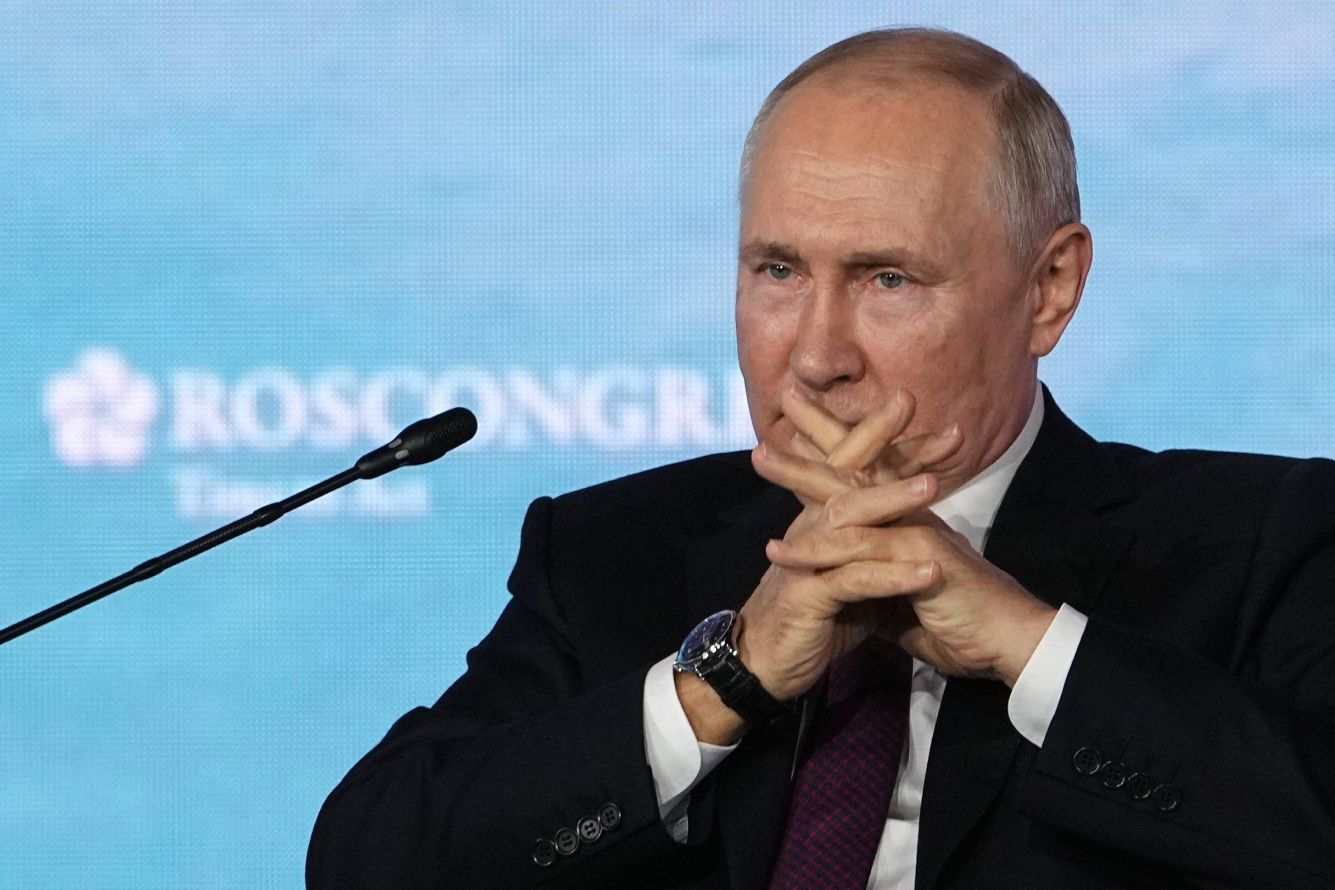
On Tuesday, Vladimir Putin gave a speech at the plenary session of the Eastern Economic Forum in Vladivostok. In addition to economic issues, he spoke about various public figures who have fled Russia since the start of the war, the 2024 presidential election, the status of Ukraine’s counteroffensive, and more. In English, Meduza publishes the most notable excerpts from the president’s address.
On Ukraine’s counteroffensive
Let’s not talk right now about whether it was a failure or not. It hasn’t gotten results. They’ve suffered losses, big ones. Since the start of this counteroffensive, they’ve lost 71,500 people. In their own words, they want to achieve results no matter the cost. Sometimes it gives the impression that these aren’t their people. Our commanders have told me that from the battlefield; we’re constantly [in contact].
Now they [the U.S.] are going to supply F-16s. Will this change anything? No. It will only prolong the conflict.
On Anatoly Chubais’s departure from Russia
The fact that Anatoly Borisovich is hiding there for some reason… I was shown some photo from the Internet where he’s no longer Anatoly Borisovich Chubais; instead, some Moisha Israelievich is living there. Why is he doing that? I don’t understand why he ran away.
On the cultural figures who have left Russia
According to various estimates, these are the same journalists who calculate that around 160–170 [cultural figures] went abroad; they don’t agree with the policies of the Russian state. But it’s possible to disagree with the policies while remaining here, and to talk about it here; nobody’s banning them [from doing that]. But some people decided they prefer to leave. This isn’t just about the views of people from the art world, it also has to do with material things. After all, in the last few years, they’ve bought houses and apartments abroad and opened accounts there. People want to keep these things; they’re afraid to lose them.
If a talented person who could be doing something here decides to leave, then sure, we’ve probably lost something. But on the other hand, I can honestly say that maybe it’s better for them to go and work abroad for the interests they want to serve, rather than staying here, influencing millions of our citizens, and promoting non-traditional values.
On Yandex co-founder Arkady Volozh and his anti-war statement
Well, he’s living in Israel. And I can imagine that in order to live there and have a good relationship with the authorities, he’s forced to make certain statements. He stayed quiet for a long time, then he decided to put out a statement. Well, God bless him, let him have a good life there. It doesn’t really affect us, to be honest.
If you look at it as a whole, if a person grew up in this environment, received an education, and became successful at something, then his sense of morality should be in relation to the country that gave him all of those things. I’m not talking about Volozh right now. He’s a talented person who built a good company and selected a good team.
On Alexey Kudrin, who left his post as the head of Russia’s Audit Chamber to join Yandex
First of all, we don’t keep people as slaves. If someone wants to go work in the private sector, we can’t force them to stay. He was a good fit, of course, and he was a good finance minister, too. But the Audit Chamber is working effectively. There’s an acting director, and the quality of the agency’s work hasn’t been affected. I think that when the situation matures, when parliament chooses a suitable candidate, this personnel issue will be resolved.
On the prospect of a new round of mobilization
We conducted a partial mobilization. 300,000 people were called up. As of now, in the last 6–7 months, 270,000 people have voluntarily signed contracts for service in the armed forces and volunteer units. This process is still ongoing. Every day, 1,000–1,500 people go to sign a contract. This is what distinguishes the Russian people, Russian society. I don’t know whether this would be possible in another country or not. People willingly go to serve in the military, knowing that they’ll eventually end up on the front.
On the 2024 elections
By law, our parliament should make a decision [on the presidential election] at the end of the year. When the decision is made, when the election data is announced, then we’ll talk.
On ‘foreign agents’
This law has been in effect in the U.S. since 1937; ours is almost a calque, only it’s much more liberal. […] What is a foreign agent in Russia? It’s a person who’s engaged in public activity while being funded by a foreign state. And this law doesn’t prohibit that person from continuing this activity, it just requires them to reveal their funding sources.
On the Soviet invasion of Czechoslovakia and Hungary
We have long recognized that part of the Soviet Union’s policy was wrong and only led to strained relations. A country’s foreign policy should not go in clear contradiction to the interests of other nations. However, these are the very same errors that leading Western countries — primarily the United States — make.
On weapons based on ‘new physical principles’
Even if we look at the realm of security, weapons based on new physical principles will ensure the security of any country in the near future. We understand this very well and are working on it.