
Оригинал материала
Catching flak
What became of the Russian conscripts who denounced the poor conditions they faced in Ukraine?
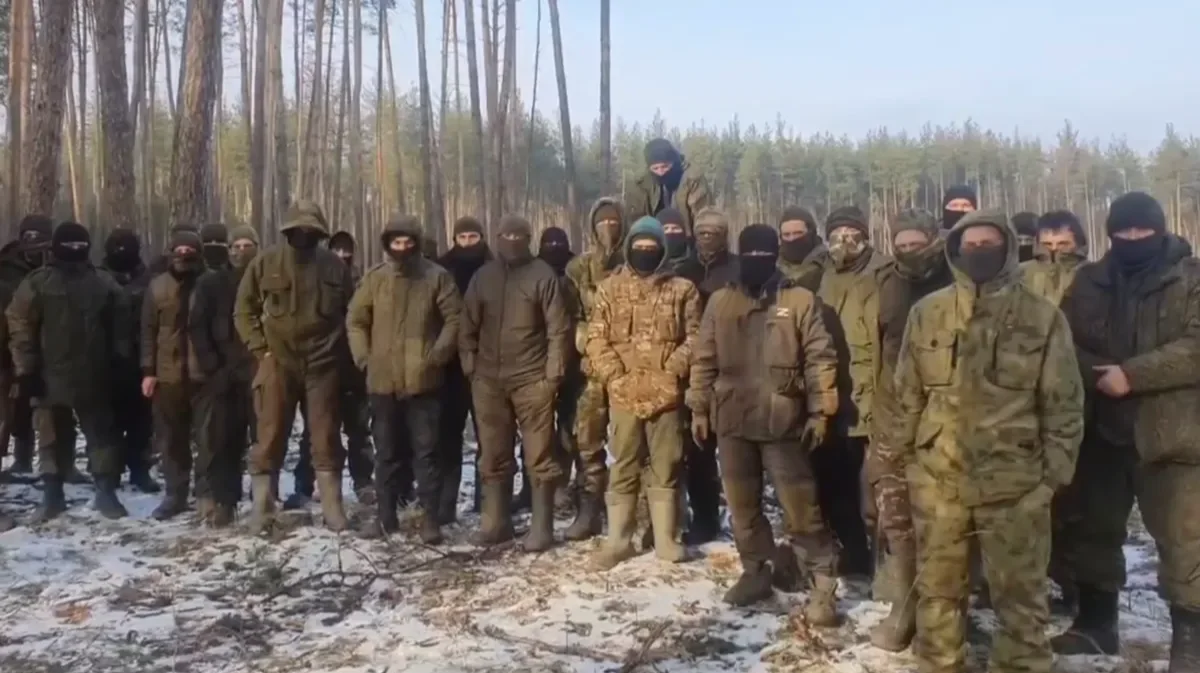
A screenshot from the video. Source: local media
On September 21, 2022, Russian President Vladimir Putin announced the first mobilisation of the country’s military reserve since World War II, allowing the Defence Ministry to draft over 300,000 men into its ranks to bolster the flagging Russian offensive in Ukraine.
For many mobilised soldiers, basic training at poorly prepared and under-equipped military bases turned out to be a fiasco, problems which only worsened once units were deployed to Ukraine. In the face of official indifference and inaction when confronted with serious issues such as lack of food, violent beatings, and poor and sometimes non-existent training, draftees resorted to posting videos they made online decrying the degrading treatment and dangerous neglect they faced. A full year since the mobilisation order was issued, what became of some of the better known cases of conscripts making desperate public appeals for help?
- November 2022. The wives of mobilised men from the Vologda region recorded a video message to the region’s governor denouncing the lack of military training their husbands had received. Elena Kuznetsova, one of the women in the video, said that after receiving a “very low level” of military training, the unit had been deployed to Ukraine’s Luhansk region just 16 days after they were drafted, having gone to the training grounds just four times before being deployed to the frontline.
The men had immediately “come under heavy artillery fire from the Ukrainian Armed Forces,” using drones and phosphorus bombs, she said. “They were killed both by the enemy and by our own army.” Kuznetsova added that the soldiers who went on to survive their ordeal did so “without support, without further training, and without orders”.
Similar videos made by soldiers’ wives appeared online throughout the year. At the end of July, the Council of Mothers and Wives — a movement formed by women whose relatives had been mobilised — announced that it was ceasing its operations after being named a “foreign agent” by the Russian government, a designation that places serious restrictions on organisations’ ability to operate.
The wives of mobilised residents of Vologda recorded a video message to their governor. “Our guys came under strong and deadly artillery attack from Ukrainians. They were subjected to gunfire, drone attacks, and phosphorous bombs dropped from enemy planes. They were caught in a fire and killed not just by the enemy but also by our Russian army,” said local resident Elena Kuznetsova.
- November 2022. A battalion from Serpukhov in the Moscow region posted a video airing similar complaints. After leaving their hometown on 7 November without knowing where they were headed, the conscripts found themselves without any training whatsoever on the frontline at Makiivka in the Luhansk region. Here they came under fire from other Russian soldiers, one of the men said, after which the battalion commanders fled, leaving the mobilised soldiers “to their fate”.
Later, the battalion was transferred to a unit in Baranykivka, where they were forced to sleep in a building with no heating or glass in the windows.
After posting the video, the men found themselves coming under fire again, the wife of one of the soldiers told the Russian independent news outlet “Important Stories”.
“They treated us very badly. Our commander abandoned us. We don’t know what our main objective is. We were soaked and broken. Some of us were completely destroyed,” the men said in the video.
- January 2023. A group of mobilised soldiers from Yaroslavl made a video which their wives later posted. They reported that, following orders from their commanders, they had retreated from their positions, only to find out that their commanders were now accusing them of deserting their posts.
“The company commander ordered us to retreat from our positions because we were coming under tank and mortar fire,” the soldiers said in the video. “Our commanders did not protect us or offer us any support. We only had machine guns; all the other weapons were defective. And now they want to accuse us of desertion — the company commander now claims that he didn’t give the order.”
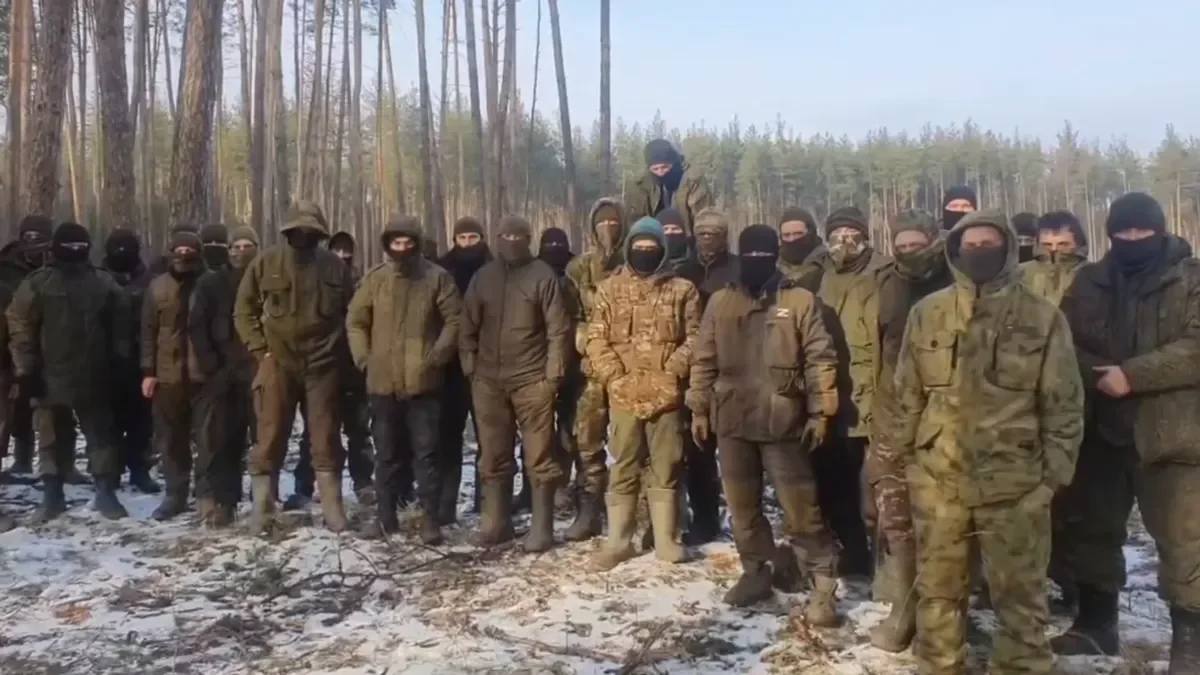
The soldiers’ wives submitted a formal appeal on their husbands’ behalf to the Chairman of Russia’s Investigative Committee, Alexander Bastrykin, and to Russian President Vladimir Putin. Military prosecutors attempted to verify the battalion’s account of events but lost contact with the unit after a few days. A relative of one of the men said that riot police descended on the soldiers after they posted their video, demanding they return to the positions they had abandoned.
- February 2023. A regiment from Samara that came under fire on New Year’s Eve in the Donetsk region town of Makiivka posted a video reporting poor support and “disgraceful” behaviour by their commanding officers and asking Putin to send them home.
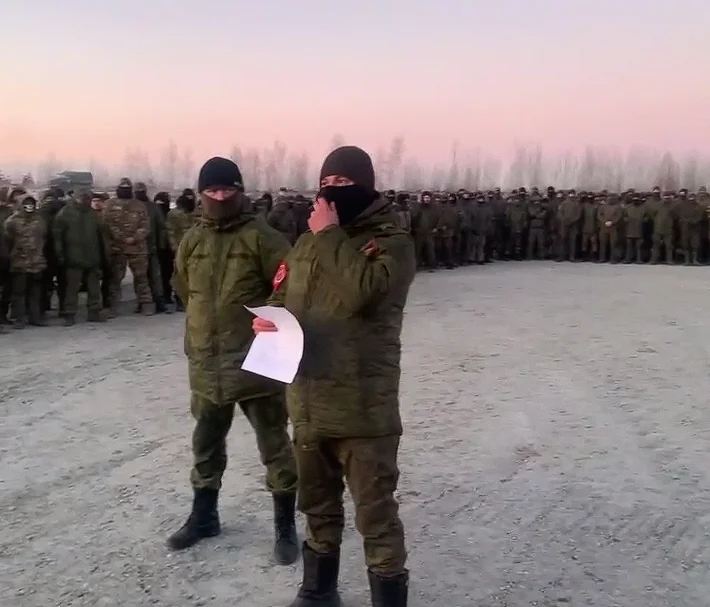
In the video, the soldiers said their unit’s movements — and, in particular, its participation in battles — had not been recorded correctly in the official system, which meant they weren’t receiving the salary or benefits to which they were entitled. The soldiers also said that for the duration of their deployment, they had been covering the cost of “the clothes they wear and the food they eat” themselves.
Just 11 days later, the regiment posted a new video in which they apologised for complaining. They asked Defence Minister Sergey Shoigu to forgive them and cautioned other soldiers not to do what they had done.
One soldier advised any comrades watching to address complaints directly to their commanding officers rather than attempting to go over their heads.
State Duma deputy Mikhail Matveev publicly approved of the soldiers’ second video. “Everything is sorted with the [regiment from] Samara,” he said. “They were wrong, and they were willing to make amends.” He then wondered why other units who had complained publicly about their conditions hadn’t also made apology videos.
The wives of the Samaran soldiers later said that the regiment had been disbanded and that after a brief stint at home, the soldiers who appeared in the video were sent straight back to the front.
- February 2023. Conscripts from the Siberian republic of Tuva recorded a video message reporting beatings by the Russian military in the self-proclaimed “Donetsk People’s Republic” (DPR). They explained that despite being promised deployment elsewhere during basic training, they had been brought to the Donetsk region of eastern Ukraine, where some of them were deployed to the frontline. Members of the pro-Russian Donetsk militia arrived and “shot at us with machine guns,” they said. “Then the military police showed up and beat us.”
Vladislav Khovalyg, the governor of Tuva, watched the video and called the behaviour that the soldiers reported “outrageous”. He said he had personally called the chairman of the Moscow-appointed Donetsk government and dispatched a representative to the region. But by the end of the month, an inspector from the prosecutor’s office reported that he had found “no evidence” that the Tuva regiment had been harmed.
- February 2023. Regiment 1439 from Irkutsk recorded two video messages, both addressed to President Vladimir Putin, asking him to “deal with the lawless and illegal orders” issued by their commanding officers. They said they had been illegally transferred to the Donetsk region of eastern Ukraine, where they said they had been sent “to the slaughter”.
They also reported that Donetsk militia commanders shot at them with machine guns when they refused to join its assault units.
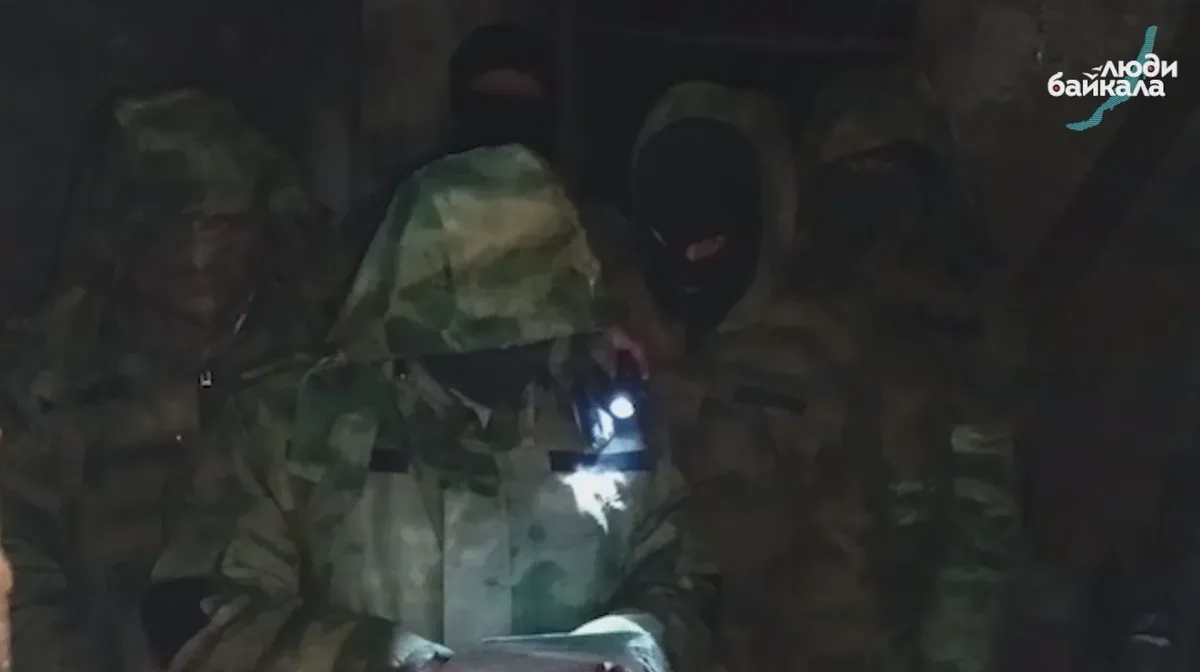
Irkutsk governor Igor Kozbev replied to the video the same day it was posted, writing that he had “asked for clarification” from the military prosecutor’s office and promising that the men would be “transferred to a new duty station.” But instead the regiment was ordered to storm a fortified area on March 1, where most of them died. One soldier’s wife, Alyona Ivantatova, is still trying to learn her husband’s fate.
- March 2023. Soldiers in Russia’s “Storm” assault unit addressed Putin directly in a video, saying that after they launched an unsuccessful attack in the Donetsk region, blocking troops were deployed by Russian military commanders to prevent them from retreating. “Now we aren’t allowed to go anywhere,” the soldiers said in the video. “They say they’ll annihilate us.”
The soldiers also reported that they had never seen their commanders or received any official orders.
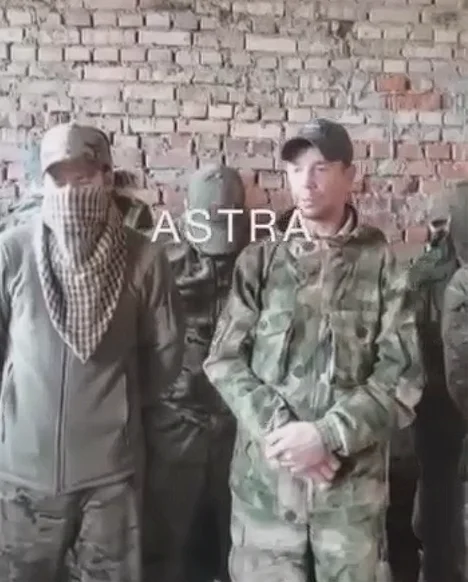
Shortly after the video was posted, a report published by Telegram news channel Astra reported that the detachment was being interrogated by the military prosecutor’s office. Two of the soldiers who had appeared in the video reportedly ran away and were placed on Russia’s wanted list for desertion.
At the end of June, soldiers from the Storm detachment again shared their list of grievances with the world, writing that they had stopped carrying out their commanders’ orders in protest at having not been paid for the past three months of combat. A week later, armed men arrived to take the soldiers away — though they didn’t say where. According to Astra, some members of the detachment were returned to the front line, while others were forced into a basement prison for conscientious objectors in the “Luhansk People’s Republic”.
- July 2023. A group of soldiers from Udmurtia recorded a video appeal to Putin. Their grievances were by this point familiar: lack of leave, unpaid wages, insufficient supplies, having to buy their own uniforms. Udmurtia Governor Alexander Brechalov responded to the video and conceded that a third of conscripts from Udmurtia had never been given leave, but he didn’t address the other complaints.
However, by the next day the video had been deleted and was replaced by a new one in which the same soldiers spoke in muted tones, explaining that “moral fatigue” had led them to record the first video and that they had no longer had any complaints about their superiors.