
Sowing discord: How Russia engages in African revolts to cement its influence
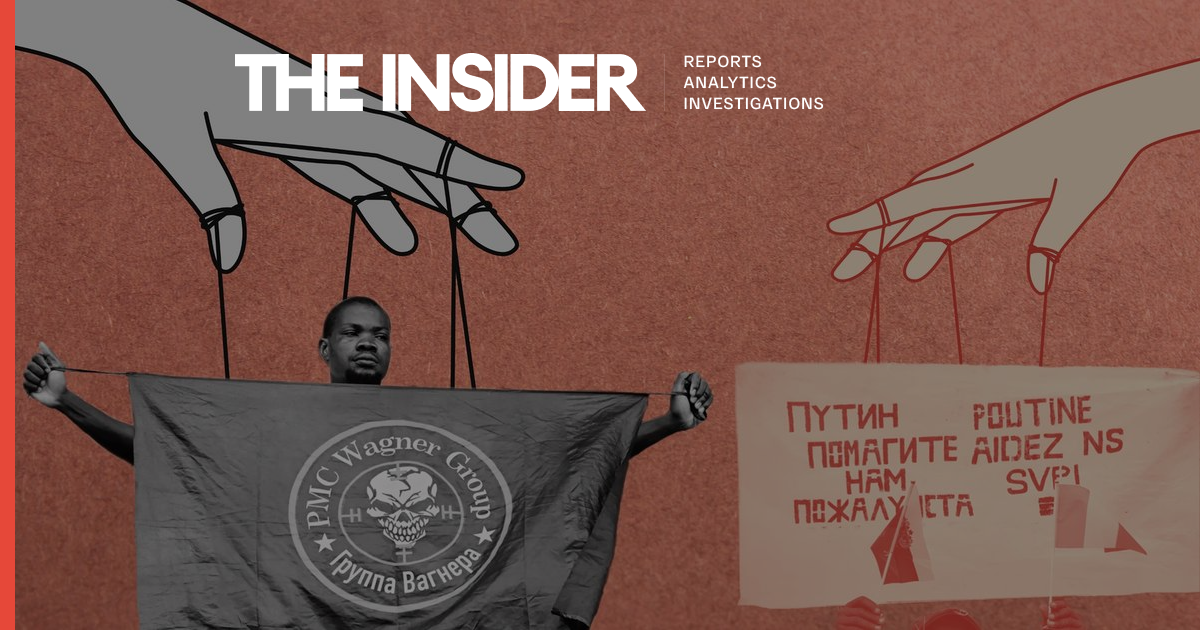
Every international player in Africa possesses its own unofficial sphere of influence, according to historian and political scientist Irina Filatova, a distinguished professor at the University of KwaZulu-Natal in South Africa. Filatova contends that no major power exerts dominant control over the continent, and yet historically speaking, Russia has stood as the primary arms supplier to Africa while also managing a range of energy and military contracts.
In contrast, China wields far greater economic influence in Africa, as noted by Africanist Maxim Matusevich. China's involvement includes the construction of railways and roads, the development of new residential areas, and the provision of substantial loans. Yet Beijing, unlike Moscow, largely refrains from political interference, avoids presenting itself as an ideological alternative, and abstains from extending military support to any political factions on the continent.
Africa's commercial relations with Western nations also tie its prospects for economic development to the democratic world, and according to Filatova, there exists some vocal support for universal values such as a “commitment to democratic principles or pledges to uphold them.”
UN votes and pressure on Europe: Russia's agenda in Africa
In recent months, significant shifts have occurred in the relationship between Russia and Africa. Moscow has taken a clear stance with West African nations, insisting on the continued presence of Russian military assets following the dissolution of the Wagner PMC.
According to Filatova, the transfer of Wagner PMC's former activities to the Russian Ministry of Defense became evident in September during the diplomatic missions of Russian deputy defense minister Yunus-Bek Evkurov to West Africa. Additionally, deputy head of the GRU Andrey Averyanov has been actively revamping former “Wagnerite” units for continuing intelligence operations in Africa. Official negotiations, predominantly held in Mali,were conducted between the Russian delegation and the leaders of Mali, Burkina Faso, and Niger, all three of which have recently experienced military coups.
Filatova points out that these nations' leaders have entered into a mutual assistance agreement, symbolizing a unified bloc and establishing an official military alliance with Russia. Concurrently, negotiations also unfolded in Libya with General Khalifa Haftar, leader of Eastern Libya and formerly an ally of the “Wagnerites.” In September 2023, one month after Prigozhin’s death, Haftar even visited Moscow.
The development signifies the formation of an axis of allies of the Russian Federation in North Africa, one encompassing Sudan, the Central African Republic, Libya, and Algeria. “I can't say it's a directly controlled zone,” Filatova explains, “but it's undoubtedly a zone of clear allies of Russia.” Furthermore, Russia is now acting through direct military agreements, engaging in active operations and establishing connections through official channels rather than through the “private” Wagner Group.
The leadership of these operations remains uncertain. For example, Gen. Sergey Surovikin, who largely disappeared following Wagner’s march on Moscow this past June, recently traveled with a delegation to Algeria. There have been suggestions that he may be tasked with leading what is left of the Wagner PMC in Africa, or at the very least, using it to conduct operations to combat Islamists in the region, similar to his actions against insurgents in Syria, Filatova suggests.
The group’s “humanitarian” and propagandist elements will unquestionably persist, with propaganda proving notably effective. Again according to Filatova:
“The recent efforts by the Americans to engage with West African nations can only offer them a democratic agenda. However, this holds little appeal for these nations. Instead, an anti-colonial agenda resonates far more strongly. It serves to unify the population, as anti-colonial sentiments still linger despite the end of formal colonialism. France's enduring presence in the region reinforces these sentiments. Meanwhile, despite the passage of time, the economic situation in these countries has not improved, further highlighting their struggles with the West, particularly with France.”
Russia has multiple objectives in the region. These include expanding its influence within the United Nations by securing the votes of African states, along with spreading its anti-Western ideology globally in order to reshape the international power dynamic. As Filatova explains it:
“Putin's pursuit of global reorientation towards multipolarity aligns with Russia's successful promotion of its ideals on the African continent. The emphasis on authenticity and national values resonates strongly. For these nations, democracy is not a priority; they prefer autonomy in decision-making. They reject international interference and sanctions, favoring sovereignty.”
Moreover, by controlling migration flows from Africa, it is possible to exert significant pressure on Europe, as Africanist Maxim Matusevich acknowledges. The influx of migrants often sparks serious political discord within E.U. countries and bolsters the popularity of far-right parties. The Kremlin's interest lies in destabilizing Europe, and such a destabilizing scenario is perfectly in line with its objectives. Matusevich notes that Russia developed a strategy for creating refugee flows during the bombings in Syria. Now the Kremlin may employ a similar approach in the Sahel. In this context, Russia faces minimal risk while reaping political dividends from the deliberate creation of chaos in the countries it claims to be assisting.