
Оригинал материала
No Prigozhin, no problem
Wagner Group shifts focus back to Mali in its largest public Africa recruitment drive ever
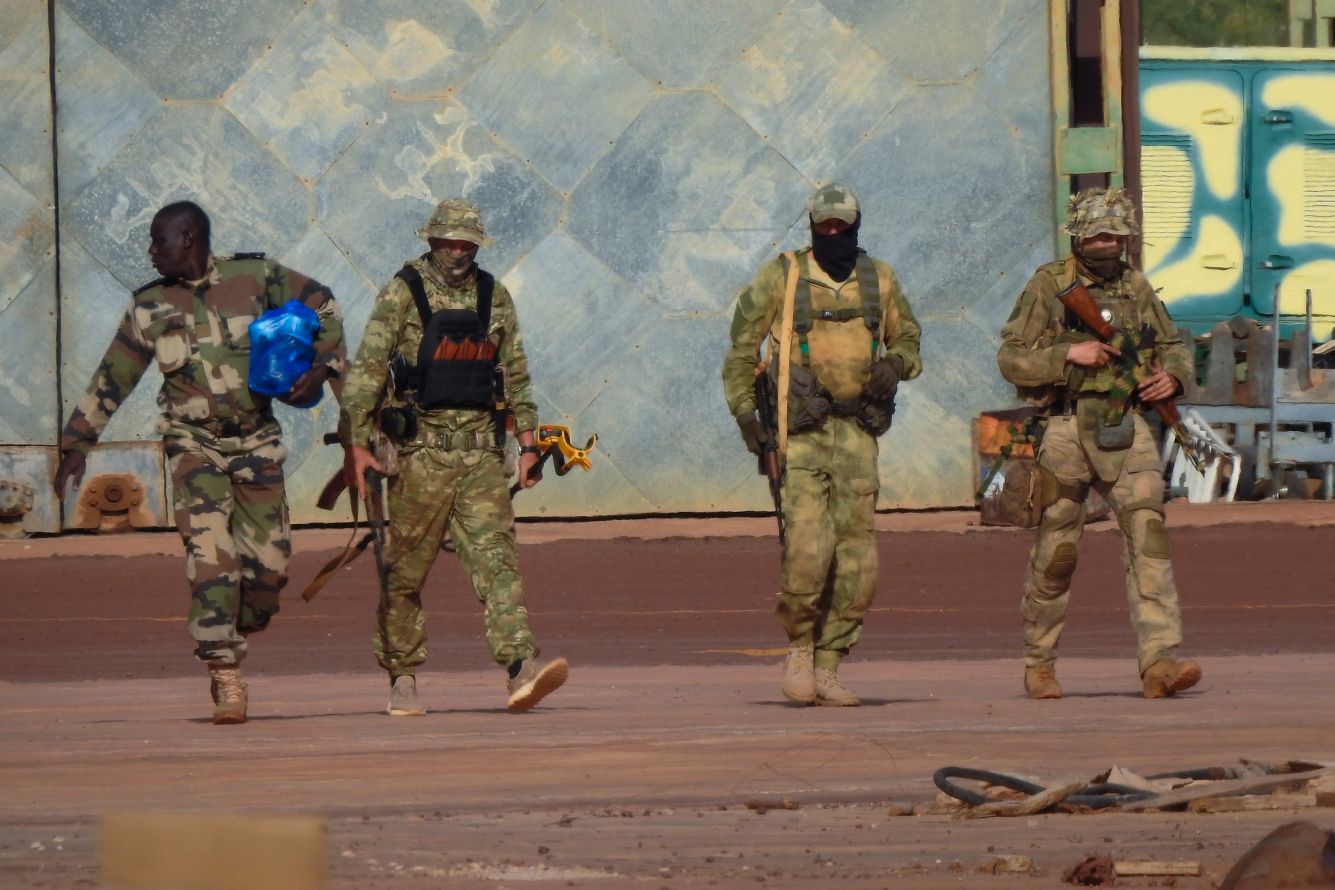
In February, Russia’s Wagner Group paramilitary outfit resumed recruitment of mercenaries for its operations in Africa. In the last month, the group’s official Telegram channel for recruitment has published nearly 20 posts seeking new members to sign contracts. Journalists from the media outlet Verstka worked with investigators from the OSINT group Nordsint to uncover the details of Wagner’s new post-Prigozhin hiring campaign, including some of the individuals conducting it. Meduza shares an English-language summary of their reporting.
Back to its roots
After a year-long hiatus, Wagner Group has resumed recruiting mercenaries for its activities in Africa. These efforts were put on hold in March 2023 as the cartel reportedly faced a shortage of resources due to its participation in the invasion of Ukraine.
Now, judging by posts in Telegram channels associated with the group, its recruiters have again begun seeking fighters to join its operations in Mali. In mid-February, Wagner-linked accounts reported that Malian interim leader Assimi Goïta had extended the agreement on the group’s deployment in the country.
According to Verstka, Wagner Group is seeking to fill new assault units and train new drone operators. In addition to Russians, the recruitment campaign is targeting citizens of Belarus.
“The smartest guys are sent to the drone unit. Those who aren’t so smart are put in the assault unit,” one recruiter wrote in a chat group with potential new members.
Who are they targeting?
Wagner Group’s recruiters are looking to hire men between the ages of 22 and 50 for contract terms starting at six months, with salaries beginning at 240,000 rubles ($2,596 rubles) per month. The outfit previously recruited fighters to go to Ukraine under the same terms. Prospective mercenaries are required to pass a drug test and undergo an extensive health clearance in addition to submitting criminal history documents, passports, and draft cards.
A journalist from Verstka, posing as an aspiring Wagner Group fighter, contacted a recruiter with the call sign “Serg.” “As for your documents, if any of the forms are taking a long time, just write me, and we’ll sort everything out. Ideally, it will only take two weeks. We plan to send our next group in mid-April,” the recruiter told him.
Your help can be the bridge to hope for many in Russia. Join Meduza in its mission to challenge censorship with the truth. Donate today.
Another recruiter with the call sign “Freizer” said that there’s currently a high number of people seeking to join the group’s Africa operations. “They no longer want to go to Ukraine, where they’ll end up as cargo 200. And there’s no danger of that in Africa. Plus the weather is nicer,” he said.
According to chats read by Verstka, many potential recruits seeking to go to Africa have had trouble obtaining foreign passports or have been banned by court order from leaving Russia due to unpaid debts and other legal issues. They often assure recruiters that they’re “dealing with the problems,” but the process frequently ends up taking weeks or months.
Who are the recruiters?
Wagner Group’s current recruitment drive is its most extensive yet — at least since it began operating in public. Unlike previous efforts that typically used only one to two phone numbers, this campaign is being run by 10 recruiters from 10 different numbers. While past outreach was limited to one-time announcements on the social media platform VKontakte, the current push has seen more than 18 different online posts. Recruiters have also begun publishing calls to join the group on their personal social media accounts.
Verstka and Nordsint used open source data to identify four of the recruiters currently working to bring in new fighters:
- Sergey Mishako (call sign “Schindler”), a 34-year-old from Russia’s Krasnodar region who previously worked in local government and for a private security firm. In 2022, after the full-scale invasion of Ukraine, he was mentioned in media reports as a “military-patriotic” training instructor.
- Ruslan Chlalyan (call sign “Batist”), a 47-year-old longtime Wagner Group member who helped suppress anti-government protests in Sudan in 2019 and who took part in Russia’s capture of Bakhmut in 2022–2023;
- Viktor Zaitsev (call sign “Fraser”), a 44-year-old Moscow native with an apparent interest in martial arts and, according to crime records, a history of both drug use and unpaid debts.
- Sergey Klimov (call sign “Serg”), a 42-year-old from Kyrgyzstan who became a Russian citizen in 2001 and managed multiple cleaning companies between 2012 and 2018, when one of his employees sued him for not paying her. Klimov has a history of unpaid debts and past convictions for traffic violations.
From Ukraine to Africa
A Russian Defense Ministry employee told Verstka that since mid-February, Wagner Group has transferred several thousand Russian fighters from Ukraine to Africa, including both Wagner Group members and official Defense Ministry servicemen.
According to the source, these redeployed mercenaries and soldiers are training local soldiers as well as new recruits from multiple private military companies. The source said one of the training bases is located near the Libyan city of Benghazi, and the trainees are sent from there to other African countries.
Conversatinos in chat groups for Wagner members’ relatives indicate that some of the fighters redeployed to Africa have already been killed there. Transcripts show the family members of the deceased trying to figure out the circumstances of their loved ones’ deaths and consoling one another.
Wagner Group has been active in Africa since at least 2017, conducting operations in Mali, the Central African Republic, Sudan, and Burkina Faso, among other countries. In addition to providing weapons and mercenary support to local governments and working as political consultants, Wagner members have extracted large amounts of gold and diamonds from African mines. In 2023, The Financial Times estimated Wagner Group founder Yevgeny Prigozhin’s revenue from exploiting natural resources in Africa and the Middle East at $250 million.
Wagner mercenaries first began operating in Mali in 2021, when the country’s ruling junta invited the paramilitary group to come train local soldiers and provide security for high-ranking officials amid the ongoing conflict between the government and Islamist separatists. In late 2022, investigators from the All Eyes on Wagner project released a report detailing mass murders, rape, looting, and attacks on civilians committed by the group’s members.