
Оригинал материала
New investigation shows that Yevgeny Prigozhin’s Wagner Group lost almost 20,000 men in the battle for Bakhmut (and paid their families more than a billion dollars in compensation)
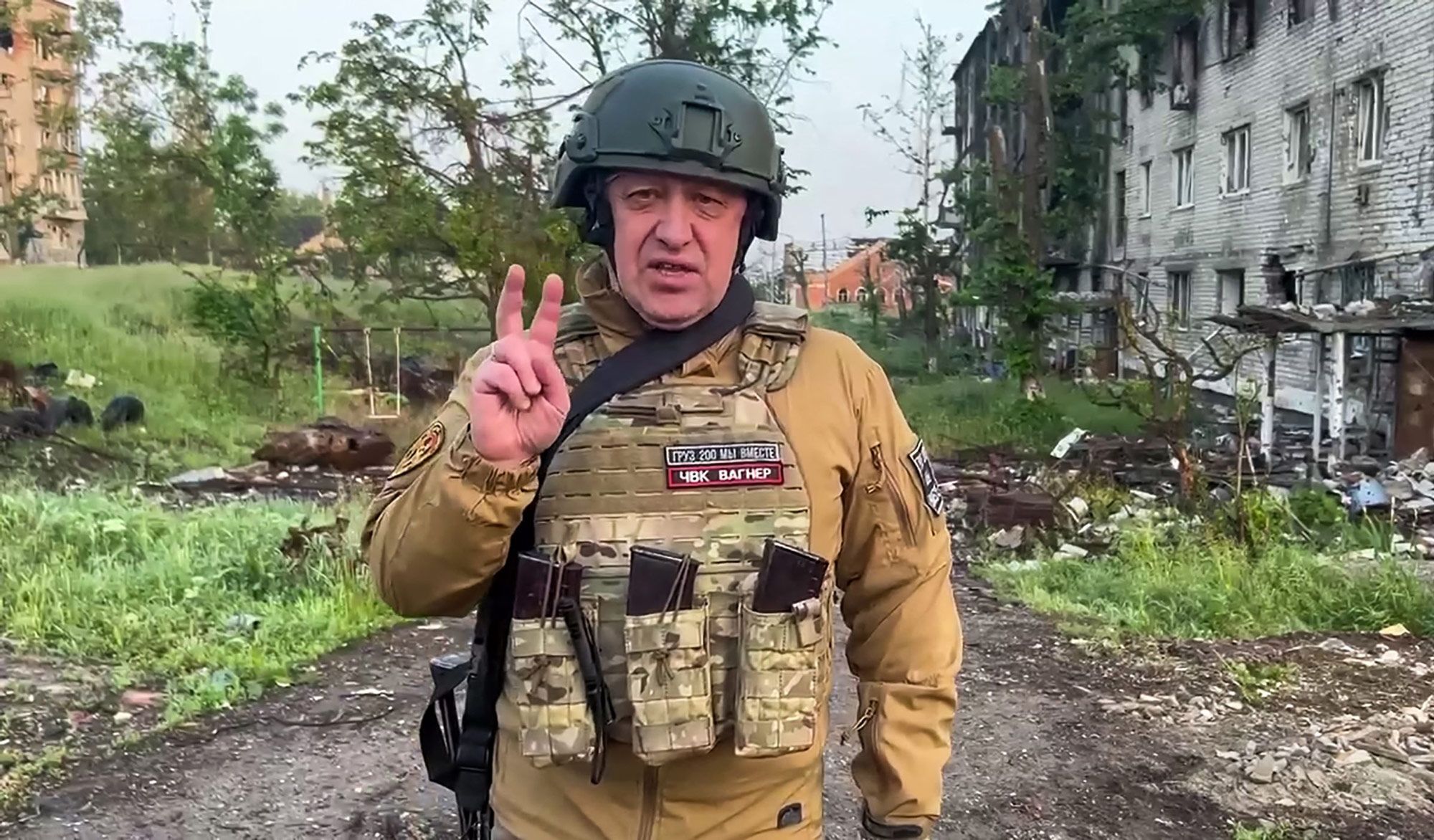
The mercenary group Wagner, led by the late Yevgeny Prigozhin, recruited at least 48,366 convicts from Russian prisons to fight in the invasion of Ukraine, according to a joint investigation by journalists at Mediazona and BBC Russia, who obtained and analyzed internal records from the private military company documenting payments to the families of fighters killed in battle. Wagner’s recruiters asked inmates to serve at the front for six months in exchange for a pardon and the expungement of their criminal records, along with good pay and insurance payouts to their relatives in case they died or were injured. Meduza summarizes the new report’s findings about Wagner Group’s high death toll and the mixed honesty of the late Yevgeny Prigozhin.
Those who signed contracts with Wagner received special dog tags with identification numbers formatted to “KXXX-XXX,” where the first number indicated the recruit’s prison and the second number was linked to the individual recruit. The first of these contracts was signed on July 1, 2022, at a prison outside St. Petersburg. Wagner Group issued “K1-001” to a convict with the call sign “GDR” (East Germany). He later died, and his real name is unknown. The last known case of these Wagner recruitments was on February 7, 2023, at a prison outside Kemerovo. Mediazona and BBC Russia identified 341 of the 501 prisons indicated on these dog tags. These facilities include 227 high-security prisons, 75 general-regime prisons, and 28 special-regime prisons. Wagner also recruited in minimum-security camps and medical correctional institutions.
Wagner’s internal records show dog tags for 48,366 men, which is roughly in line with Yevgeny Prigozhin’s public claim that his private military company recruited around 50,000 prisoners.
Most Wagner fighters died in Russia’s capture of Bakhmut, which the mercenary group referred to privately as “Operation Meatgrinder.” Prigozhin said the battle began on October 8, 2022, and ended on May 20, 2023, but the death records obtained by Mediazona and BBC Russia show that it actually took longer to seize the city, with mercenaries dying in the area as early as July 15, 2022, and as late as June 6, 2023.
Based on this information, the battle for Bakhmut lasted 327 days and claimed the lives of at least 19,547 Wagner fighters, of whom 17,175 were convicts, and the remaining 2,372 were volunteer mercenaries. (If the battle’s timeline is restricted to what Prigozhin claimed, Wagner’s death toll in Bakhmut falls slightly to 18,329 men.) In total, one in three of the prisoners who enlisted with Wagner Group (35.5 percent, according to internal reporting) never returned from the “Bakhmut meatgrinder.”
Journalists calculate that Wagner Group spent nearly 108 billion rubles ($1.3 billion) on payments to the relatives of its men killed in the fight for Bakhmut. Each family received five million rubles ($61,000) in compensation, plus another 300,000 rubles ($3,700) for funeral arrangements. The relatives of recruited convicts collectively received 92.5 billion rubles ($1.14 billion), while the families of regular mercenaries got 15.4 billion rubles ($189 million).
The investigation from Mediazona and BBC Russia indicates that Prigozhin told the truth when he said Wagner Group lost about 20,000 men in the battle for Bakhmut, but he lied about the death rates between recruited convicts and volunteer mercenaries. (In a May 2023 interview with the z-blogger Konstantin Dolgov, Prigozhin falsely claimed that the death rates among both groups were roughly 20 percent.)
Prigozhin argued that the purpose of the “Bakhmut meatgrinder” was to exhaust the enemy by killing as many Ukrainian soldiers as possible. He said 50,000 Ukrainian Armed Forces died defending the city, and another 50,000–70,000 were wounded. However, the Ukrainian project UALosses, which tracks the Ukrainian military’s losses through publicly available obituaries, has confirmed the deaths of only 8,900 Ukrainian soldiers in the battle for Bakhmut.
Meduza recently published a book by journalists Ilya Barabanov and Ilya Korotkov about Wagner Group and Yevgeny Prigozhin. You can order the book here or download Meduza’s mobile app, where the text will appear soon and entirely free of charge. (Please note: the book is in Russian.)