
Оригинал материала
A concentration camp on the territory of an abandoned mine
An investigation about the 5th brigade, whose military tortured American Russell Bentley to death. ASTRA publishes the first video from the torture mine
In April 2014, shortly after the proclamation of the sovereignty of the “DPR”, 20 fighters of the organization “Oplot” under the leadership of the future “head” of the republic Alexander Zakharchenko seized the building of the Donetsk City Council. From this moment, the history of the 5th Brigade begins, which eventually turned into the “Oplot” battalion. ASTRA tells how right at this moment the commanders of this unit are torturing their subordinates to go into “meat assaults”, simultaneously earning money from the war between Russia and Ukraine.
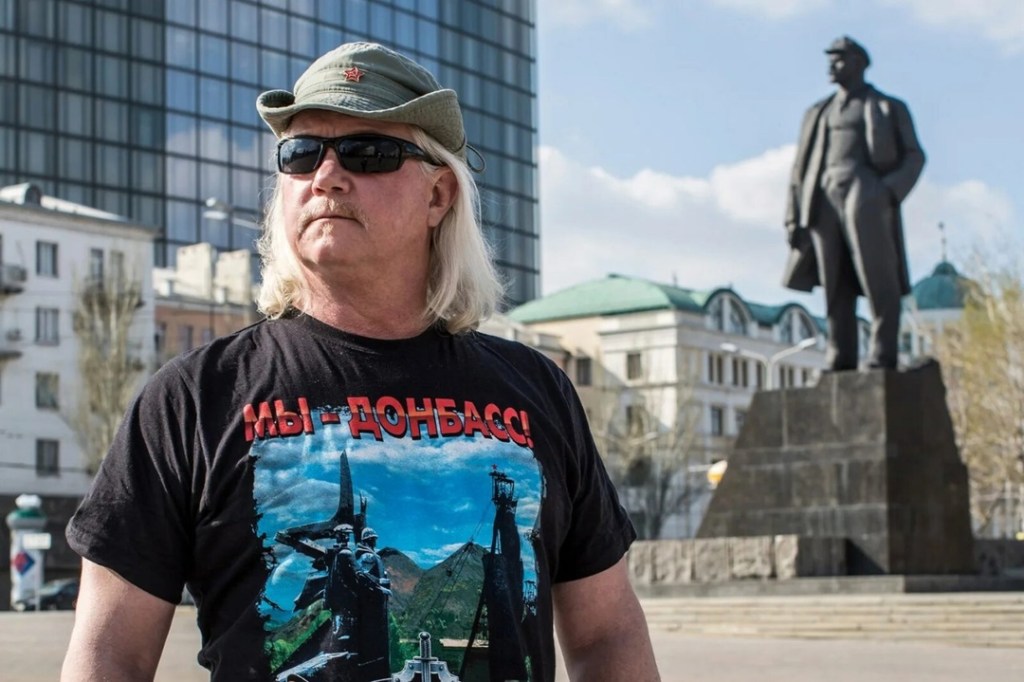
The last time Lyudmila saw her husband, Russell Bentley, a native of Texas, was on April 8 at 16:15 at the administration building of the Petrovsky district of Donetsk. This is one of the most dangerous spots in the city – Petrovsky district has been routinely under fire since 2014. It is located in the west of Donetsk, in close proximity to the territories controlled by Ukraine. Lyudmila has an apartment there, so according to the Russian passport, the American “military correspondent” Bentley was registered in the Petrovsky district.
That day, Lyudmila and Russell heard explosions while standing in line at the Petrovsky administration. There was a flight through the army premises in the area of the carpool a few minutes away from the couple.
In the past, “Donetsk Cowboy” Bentley fought as part of the “Vostok” battalion and even participated in the battles for Donetsk airport. But even then he was primarily a “military correspondent”. He spoke in English about the problems of the occupied part of Donbass. Naturally, from a pro-Kremlin position. Bentley covered the shelling of Donetsk on his blogs and sold videos with the consequences of the arrivals to Margarita Simonyan’s Sputnik news agency. According to Lyudmila’s memoirs, she tried to dissuade her husband from going to the site of another shelling – she was afraid that Russell would fall under repeated assault.
Bentley did not manage to take any photos at the scene of the attack. At the carpool, he was met by the military from the 5th brigade (m/u 41698). They broke the phone of the “military correspondent” in two. In front of passers-by, they shot into the air, threatening to kill, put Bentley in a car and drove away in an unknown direction.
ASTRA sources, including the military of the 5th brigade, their relatives, lawyers and human rights activists, claim: in the Petrovsky district of Donetsk, the Zakharchenko brigade has several locations at once where Russian military are being tortured.
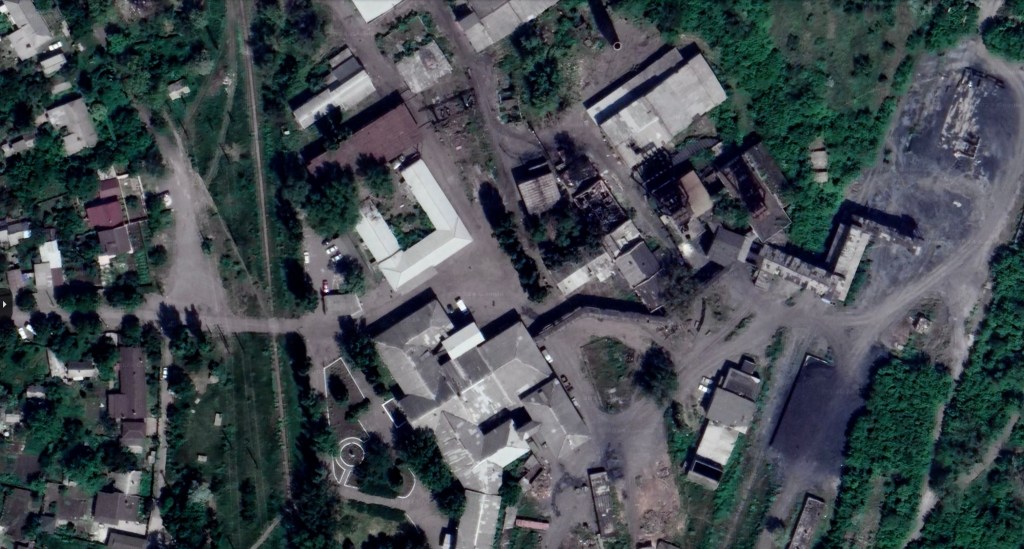
Petrovskaya Mine appears more often than others in the evidence of torture collected by the editorial board. ASTRA’s interlocutors call this place a “concentration camp”. In the former administrative premises and basements of this enterprise, the military from the 5th brigade set up a real torture conveyor.
Before his death, Russell Bentley was tortured in the Petrovsky mine, ASTRA sources say. One of them is a military man, who himself was tortured there, and says at all: it was there where Bentley was killed.
Circuits, urine and electric current
Petrovskaya mine is practically adjacent to the small private sector. The summer of pre-war 2010 has remained forever on Yandex panoramas in Petrovsky district. In the photos, children ride bicycles near the mine, and the sun is reflected in the lens with rainbow highlights. Even then, coal mining in the Petrovsky mine was gradually curtailed. According to local residents, the company finally stopped working in 2014 due to shelling. Now, the only thing that reminds of the mining history of this place is the landfill.
“The military is brought there with bags on their heads. They don’t feed you. If you want to go to the toilet, they give you a bag and go [into it]. When I was locked up, we were hung by chains by our arms and legs from the ceiling,” Daniil [name changed], a former soldier from the 5th Brigade, tells about his experience of torture.
On the territory of the Petrovsky mine, the military is tortured in basements and placed in earthen pits, which have sometimes been called Zindans since the Chechen wars. This word – as well as the very practice of pit prisons – was adopted by the Russian military from the Chechens. They put war prisoners in pits, and Russian regular troops – both prisoners and their own violators of discipline.
Daniel himself was the deputy commander of the platoon. He and his subordinates were placed in the basement for refusing to go into the assault:
“That’s where all my boys were practically killed. One was cut off, the other was shot in the face. <…> I’ll just tell you how we all talk. Killing here in Donetsk is in the order of things, do you understand? And wherever people write, swearing and the like, you know what the answers are? My ex, when she came to the Donetsk military prosecutor’s office and started talking about this lawlessness there. She was called to the head of the prosecutor’s office and told: ‘If you want to live, shut your mouth.’”
According to the military, commanders can publicly humiliate their soldiers in the mine. He had seen them urinate on subordinates before beating them up.
After being tortured, Daniel escaped from the unit. He refused to discuss in detail the activities of the 5th Brigade command by phone and insisted on a personal meeting, after which he disappeared from communication. According to unconfirmed reports, the commandant’s office found the man.
Together with the military of the 5th brigade, the personnel of another Donetsk compound, the 110th Guards Motorized Rifle Brigade (m/u 42600), are being tortured in the mine. This is how the torture in the Petrovsky mine of the military of the 110th brigade of Alexander is described in a complaint to the Investigative Committee about the inaction of the Donetsk military prosecutor’s office:
“At the end of December, he was seriously injured. Separation of the elbow joint. He was in the hospital. On the third day after the operation, soldiers from the unit arrived at the hospital with weapons, took away the salary card, and threatened that if Alexander did not return to the unit, he would be shot. <…> The command tortured Alexander in order to force him to take part in military operations. A soldier with the call sign Chip hung him by handcuffs and stabbed his arm with a knife. This was done after Alexander tried to call his wife to inform her about himself. His further fate is unknown.”
Another type of torture that is used in the Petrovsky mine is electric shock torture – several sources have confirmed to the editorial staff of ASTRA. According to Lyudmila Bentley’s friend Alyona [name changed], this is how the “Donetsk cowboy” was killed.
She says that the 64-year-old American’s heart couldn’t stand the electric shocks.
The price of “liberation”
“Babe, I see no point in going into the field, hiding from drones and artillery. We can’t get a foothold there, people are just being sent to die. I got out, I was lucky, so,” Irina shows the correspondence with her husband from the autumn of 2023.
In the summer of that year, Irina’s husband signed a contract on Sakhalin, and soon he was attached to military unit 75443 in Khabarovsk. In September, he ended up in Donetsk, under the command of the 5th Brigade. “My husband and the other guys all said that they were sold there,” the woman says.
Here’s what Irina’s husband wrote to her last year:
“Before the assault, everyone’s phones were taken away. The boys didn’t come back. A hundred of phones. And this is not the first time. <…> And a lot of fucking situations where they throw at tanks with machine guns. The higher-ups know that people disappear here and die in batches. Everyone knows everything and is silent <…> A lot of people are fleeing this meat grinder. The wounded have not been released for a long time. Everyone will blame the war <…> Money was missing from the guys’ cards. <…> If I don’t get in touch in 10 days, it means I won’t get out already. Don’t forget to withdraw the money.”
According to Irina, her husband participated in the battles near Krasnogorovka – the center of this city is less than 15 kilometers west of the Petrovskaya torture mine.
“My husband said that he did not understand why they were sent there, since no one ever gets there. When he came out of the assault, he was sent back three hours later.” Irina’s husband has been missing for seven months.
The storming of Krasnogorovka was indeed another challenge for the Russian army – this city consists mainly of high-rise buildings and an industrial zone, which complicates its capture. In addition, the AFU managed to gain a solid foothold there. The siege of Krasnogorovka began in February 2024, when, after the capture of Avdiivka and Maryinka, the city remained the last fortified area of the Armed Forces of Ukraine in this sector of the front.
“All his colleagues disappeared with him. How can it be that an entire group is missing, is there a Bermuda triangle?” – says the wife of the military of the 5th brigade in a collective video message posted on social networks in April this year. They are in the Krasnogorovka area – just in April, Russian troops were able to enter the city. In the video, military relatives are calling for an inspection of military unit 41698 due to the loss of fighters:
“As soon as the guys go on [a combat mission], after a few days the guys start going missing.”
In the video, the relatives of the missing military call the name of their commander – this is Alexei Troshin with the call sign “Prisoner”, who heads the 3rd tank battalion.
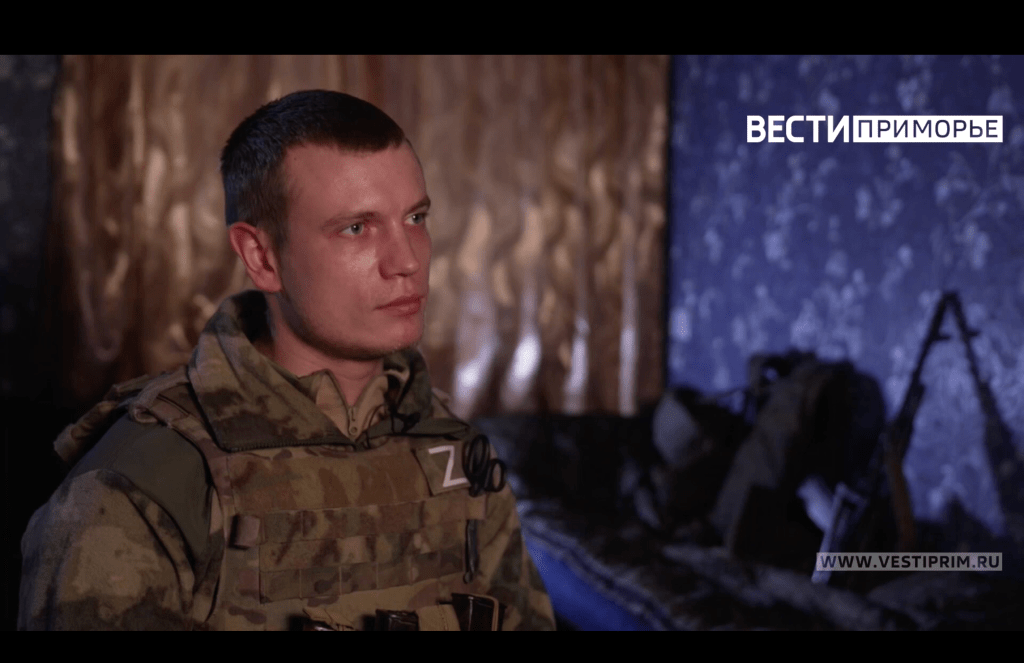
After the capture of Maryinka at the end of 2023, Putin awarded Troshin the title of Hero of Russia. He was awarded a special award – the “Golden Star”. According to the official version, Troshin “repeatedly led assault groups” and stormed one of the last fortified areas of Marinka himself. Troshin allegedly personally destroyed 5 tanks and 23 armored vehicles of the Armed Forces of Ukraine, and he “burned three times in a tank, while saving the crew and equipment.” Putin personally called the military man with congratulations.
In March, Alexander Sladkov, a propagandist and “military correspondent”, shot a report about Troshin. In the comments under the video published in VK about Troshin’s exploits, there is a census of the relatives of his former subordinates. Women call Troshin a “butcher” and complain that under his command, volunteers who spent no more than a couple of days at training grounds disappear in the assaults.
By early August 2024, Russian troops were finally able to take control of Krasnogorovka. After six months of siege, the “liberated” satellite city of Donetsk was captured almost completely destroyed.
“They killed him and also came to his funeral.”
The death certificate of guitar teacher Vladimir Frolov says that he died during the storming of Krasnogorovka on April 15. 3 days before that, the assistant to the deputy commander of the third battalion of the 5th brigade, Vasily Lugovoy, received Frolov’s referral for a second medical examination.
Frolov first faced the war back in 2014. During the fighting in Makeyevka, he was shot at point-blank range. As a result, 19-year-old Frolov received a bunch of health problems and became disabled.
In 2022, Frolov was recruited into the “DPR” army during a spontaneous mobilization that began in the separatist republics on the eve of a full-scale invasion of Ukraine. Despite the disability deferral from the army, he was refused a medical examination.
During his service, Frolov’s health sank significantly, he was found to have a tumor in his kidneys, but the commanders, according to his wife Anna Bulgakova, “didn’t care about it.”
In October 2022 Frolov was wounded, he went through several hospitals. While he was being treated, Frolov received calls from commanders demanding that he return to the front. As a result, the man himself came to the military unit in Shakhtersk on crutches. “They locked him up there with crutches and said he would go with the next batch. My husband’s stomach problem worsened, he started coughing up blood,” Anna told ASTRA.
As a result, the man ran away from there.
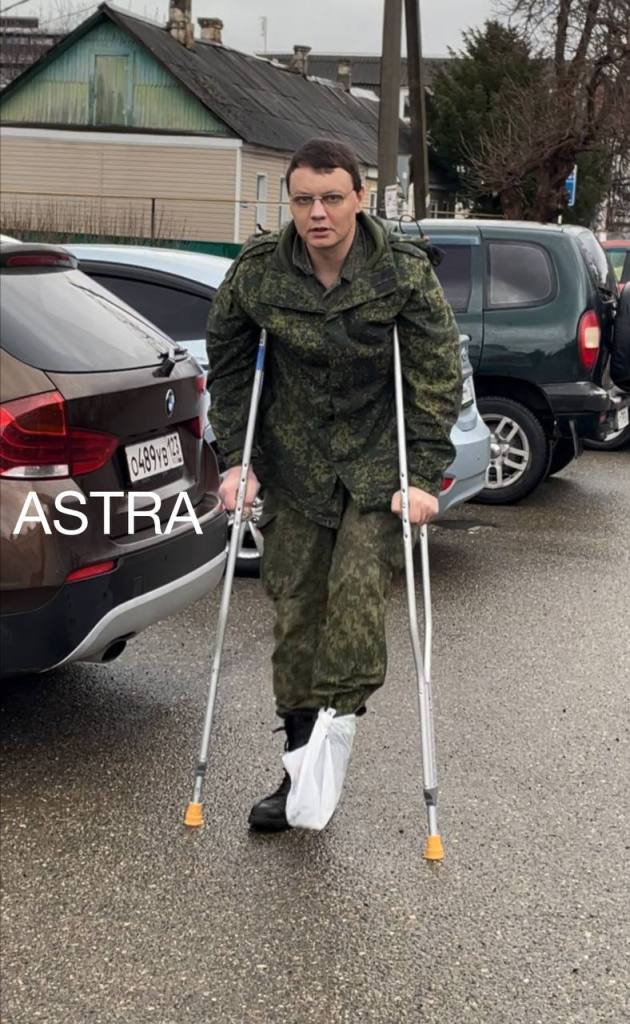
For six months, the military police searched for Frolov from his mother and wife. “He is on crutches, blind [Frolov has astigmatism, because of this he was not taken into the Armed Forces at the time – ed.], he is all sick – and they tell him: “Go to war,” Anna Frolov’s wife complains in a conversation with ASTRA. In March 2024, Frolov was detained and locked in a basement on the territory of the Petrovsky mine. There, the man was bullied, tortured, forced to sign a contract and threatened to be sent to storm.
Frolov’s story is not unique to the 5th Brigade. “From the wounded with category “D”[unfit for service] commanders take away crutches and send them to the assaults,” Andrei, a soldier of the 5th brigade, tells ASTRA. “You can only leave the 5th Brigade feet first,” he adds.
Vladimir Frolov was buried on April 24 in a closed coffin. The family was forbidden to examine the body, as it was “in terrible condition.” Three representatives of the unit came to the funeral. Among them was Vasily Lugovoy, whose assistant accepted Frolov’s referral to a medical examination.
“They just tortured him. They killed him and also came to his funeral,” says Anna, “Our own are worse than others. They won’t get anything for it.”
“The main reason is money”
“I present the interlocutor: Ilya Vladimirovich Ivanov, these are real names. He is small, round-faced, smiling. This is an iron man capable of imposing discipline in any freedom-loving detachment,” – this is how the deputy commander of the 5th brigade of the “Boatswain” was presented to the readers of his tg channel by “military correspondent” Sladkov.
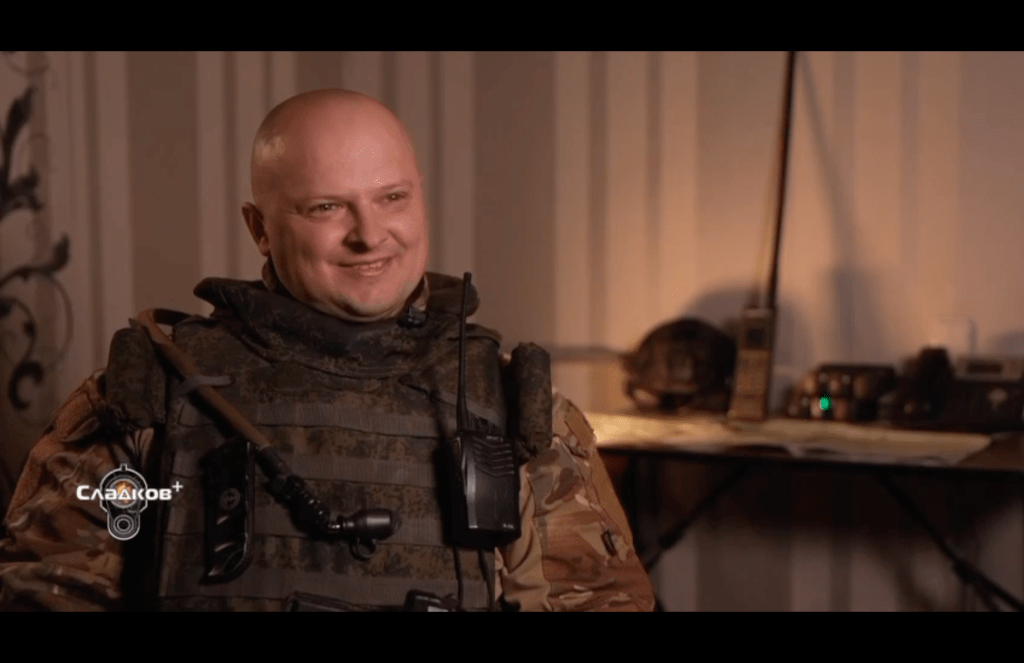
It is the “hero of the DPR” Ivanov that several ASTRA interlocutors immediately call one of the organizers of the “concentration camp” of the 5th brigade.
“The personnel also give money personally to the “Boatswain” every month. The soldiers collect this money and take it to Ivanov. The battalion commanders separately extort money for themselves and separately for the brigade commander. Then they buy apartments for themselves,” Daniil, a soldier of the 5th brigade, told ASTRA.
This information is confirmed by another military man, Andrei [name changed]. According to him, each battery gives 100 thousand rubles to the command every month. There are other extortions: “They can say: we are taking 15 thousand each this month, but no one explains why,” says Andrey.
Several ASTRA sources claim that commanders also force military personnel to rewrite salary cards on them. Some of them suggest that the main beneficiary of the levies is Brigade Commander Colonel Pavel Klimenko.
“It’s not just sadism. The main reason is money. Shot a man in the legs – got 3 million for the wound. They write out a power of attorney for their people. A man died – they received 6 million for the deceased. And while he’s working for them, but actually sitting in the basement, they get 200 thousand for him every month. Great business, so to speak. In fact, everyone who sits in the basement, the first thing they do with them is take away their salary card or force them to rewrite the power of attorney for payments to front people. Every single one of them is in the basement. No one gets money there,” says Donetsk human rights activist Maxim Vedoprav.
Information about the theft of salaries is confirmed by the mother of a military man from the 5th brigade, Anastasia [name changed]. Her son was kept in the basement of the Petrovsky mine for almost two months. The man, along with his colleagues, managed to break through the wall and escape from there. He’s in hiding now. “[The military] are kept in a pit for two to three months, their power of attorney and salary cards are knocked out of them, and then they are sent to storm, from where they do not return,” Anastasia says.
Traditionally, the military in the 5th brigade buys their own uniforms and special protection. Drones stand apart.
“If you’ve lost a Mavic [drone], you should go buy a new one or you’ll join the Infantry. In the 2nd assault unit, a young guy flew, lost a Mavic. The Uzbek battalion commander beat him up. This guy went to Donetsk at night, borrowed money, bought a new one. He sent the drone in the morning and lost it again. And he was sent to the infantry after that. As far as I know, he is the 200th,” says Andrey.
Relatives of the military from the 5th brigade complained about the inability to achieve payments in a conversation with ASTRA. The same is said by the relatives of their colleagues in thematic telegram chats.
***
Lyudmila Bentley arrived at the scene of her husband’s disappearance about an hour and a half after the shelling. Inside Russell’s car, she found his broken phone, baseball cap and branded sunglasses. His gun – which Bentley always carried with him – and the ignition keys were missing. The next day, the car will disappear from the scene of the abduction of the “military correspondent” – later it will be found at the line of contact.
Andrei Iordanov, commander of the tank company of the 5th Brigade, and his subordinates, Vladimir Bazhin and Vladislav Agaltsev, were detained on suspicion of Bentley’s murder. Now the investigation is continuing on them. In order to get the alleged murderers arrested, Lyudmila Bentley had to record an appeal to Putin and, with the help of her husband’s media resource, put the whole “DNR” on alert.
Even against the background of the discussion of Bentley’s murder, relatives of the military from the 5th brigade still cannot bring criminal cases. With their complaints, they turn to the 121st military Investigation Department, which is simply inactive. This was told by the relatives of the military themselves in an interview with ASTRA. Elena Popova, coordinator of the “Movement of Conscious Refuseniks”, also reported this in her complaint to the Department.
Based on reports from close military personnel, Popova believes “that 121 Military Investigation Department entered into a criminal conspiracy with the command of individual military units in order to send citizens suspected of unauthorized abandonment of the unit to the war zone and on this basis to terminate criminal cases. At the same time, 121 MID covers those violent actions by which the command of military units seeks consent from military personnel to go to the front line.”
Donetsk human rights activist Maxim Vedoprav also told ASTRA about this: “I went to the prosecutor’s office, the MID, and the FSB. As a result, they declared that there were no violations.”
However, despite all the resonance around the murder of an American “military correspondent” in the “DPR”, at the time of publication of this material, the body of Russell Bentley had not yet been found.
Deputy Commander of the 3rd Battalion Vasily Lugovoy and other representatives of the 5th Brigade command, who could be reached by ASTRA, declined to comment.
This is the 17th basement or torture camp for military personnel, which ASTRA found on the territory of the occupied parts of Donetsk and Luhansk regions of Ukraine. If you or your relative encounter such a problem, write to the ASTRA editorial office: by mail — astrasmi@pm.me , via the telegram bot — @redastrabot or in the feedback on the site.
Authors: Andrey Kaganskikh, Anna Snegireva, Anastasia Chumakova, Elizaveta Chukharova and Daniil Bolshakov