
EU approves provisional deal to end all Russian gas imports by 2027
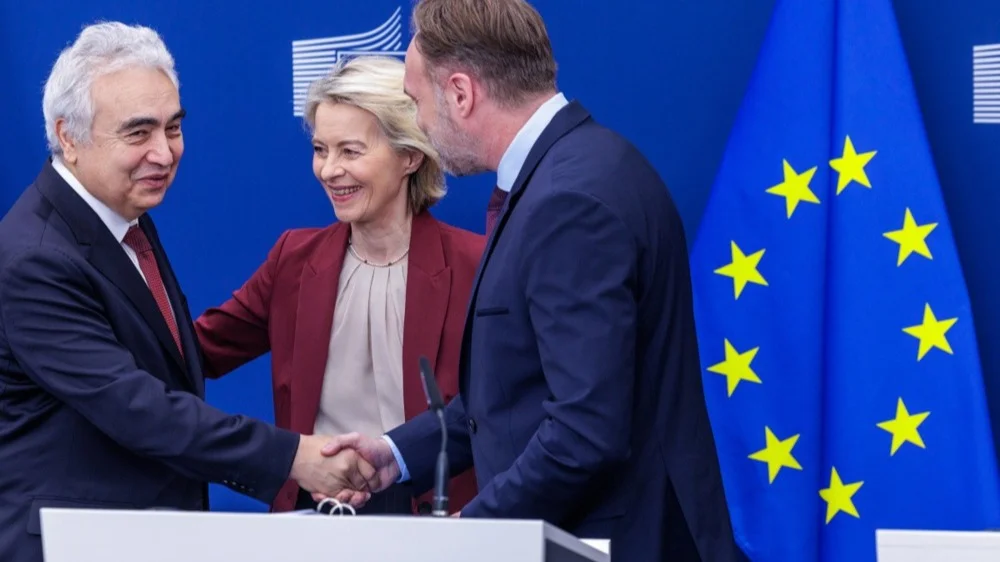
The European Union reached a provisional deal on Wednesday to ban all imports of Russian gas by autumn 2027 in an effort to end the bloc’s dependency on Russian energy amid the ongoing war in Ukraine, the Council of the EU has announced.
According to the council, the deal introduces a “stepwise prohibition” on both liquefied natural gas (LNG) and pipeline gas imports from Russia, with a full ban coming into force from the end of 2026 and autumn 2027 respectively.
The new deal marks a change from the roadmap approved in October, which proposed a full ban on Russian gas imports coming into effect in January 2028.
While the timeline must still get final approval from the European Parliament and member states, numerous EU officials lauded the move on Wednesday. “It’s decided. Europe is closing the tap on Russian fossil fuels once and for all. Energy independence starts now,” European Commission President Ursula von der Leyen wrote on X.
“This is a historic decision,” EU Energy Commissioner Dan Jørgensen wrote on X, adding that the ban would mean the EU would be depriving Russia of “around €10 billion in annual energy revenues”.
The deal establishes a transition period for existing contracts — with long-term gas contracts banned from 30 September 2027, provided storage levels are sufficient, and no later than 1 November 2027, and long-term LNG contracts running until 1 January 2027. Short-term gas and LNG contracts will be phased out by June 2026 and April 2026 respectively.
While gas and oil imports from Russia to the EU have been massively reduced since its full-scale invasion of Ukraine, Russian gas still accounted for some 13% of EU gas imports in 2025, the EU Council noted in its press release, which leaves the EU “exposed to significant risks in terms of its trade and energy security”.
Energy imports have been a point of contention within the EU since the war began, with reliance on Russian imports often compromising unanimity on issues around Ukraine.
Both Hungary and Slovakia hold long-term contracts with Russian energy giant Gazprom, extending to 2036 and 2034 respectively, with Hungarian Prime Minister Viktor Orbán travelling to Russia last week to shore up Hungary’s energy supply.
Though the deal does not cover Russian oil imports to the EU, the EU Council stressed that such imports had dropped to “below 3% in 2025 thanks to the current sanctions regime”.