
Оригинал материала
Ukraine targets Moscow region in one of largest drone attacks of the war, killing three
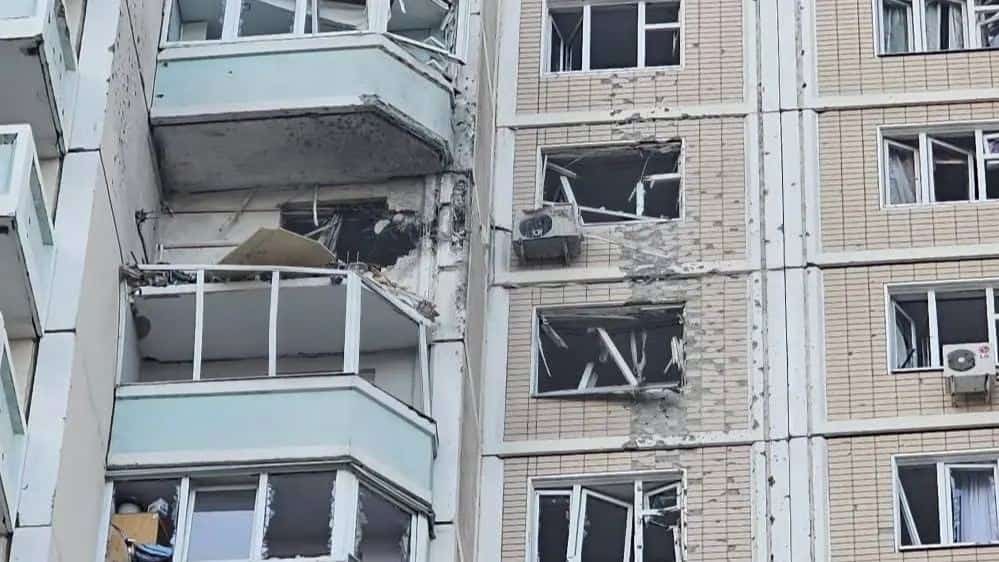
Three people were killed and at least six others injured in a drone strike on the Moscow region on Saturday night, according to Governor Andrey Vorobyov, in what Ukrainian officials said was the largest attack on the Russian capital of the war so far.
The Indian Embassy in Moscow said that one Indian national was among those killed in the strikes, while another three were injured.
Ukrainian drones struck multiple residential buildings in cities surrounding Moscow, Vorobyov said. The attacks targeted industrial facilities in the region, including an electronics manufacturing plant in Zelenograd and a fuel-loading facility in Solnechnogorsk. Moscow mayor Sergey Sobyanin added that twelve construction workers were injured in an attack which hit the Moscow Oil Refinery.
In total, the Russian Defence Ministry said that 556 Ukrainian drones were intercepted across western Russia and occupied Crimea between Saturday and Sunday. According to Sobyanin, over 120 drones were intercepted in the Moscow region alone.
Residents of the Moscow region reported that early warning systems, including sirens and SMS alerts, were not activated during the strikes. Some residents also reported being unable to reach emergency services.
Russian state media largely downplayed the scale of the attack, independent news outlet Agentstvo reported on Sunday. Several Russian television channels on Sunday morning dedicated only a minute of news coverage to the attacks, despite having time to prepare full reports.
State news agency TASS claimed that the weekend strikes were less extensive than a drone strike that hit Russia in March 2025. However, Agentstvo found that fewer drones were intercepted during last year’s attack — both in the Moscow region and nationwide — compared to the latest barrage.
In a post on Telegram on Sunday evening, Ukrainian President Volodymyr Zelensky told his followers that the success of the Ukrainian attacks on Moscow was significant “because the Moscow region is the region most heavily saturated with Russian air defense systems”.
“Our long-range capabilities are significantly changing the situation — and, more broadly, the world’s perception of Russia’s war,” Zelensky continued.