
Оригинал материала
New analysis reveals scale of Ukrainian attacks on Russian industrial capacity
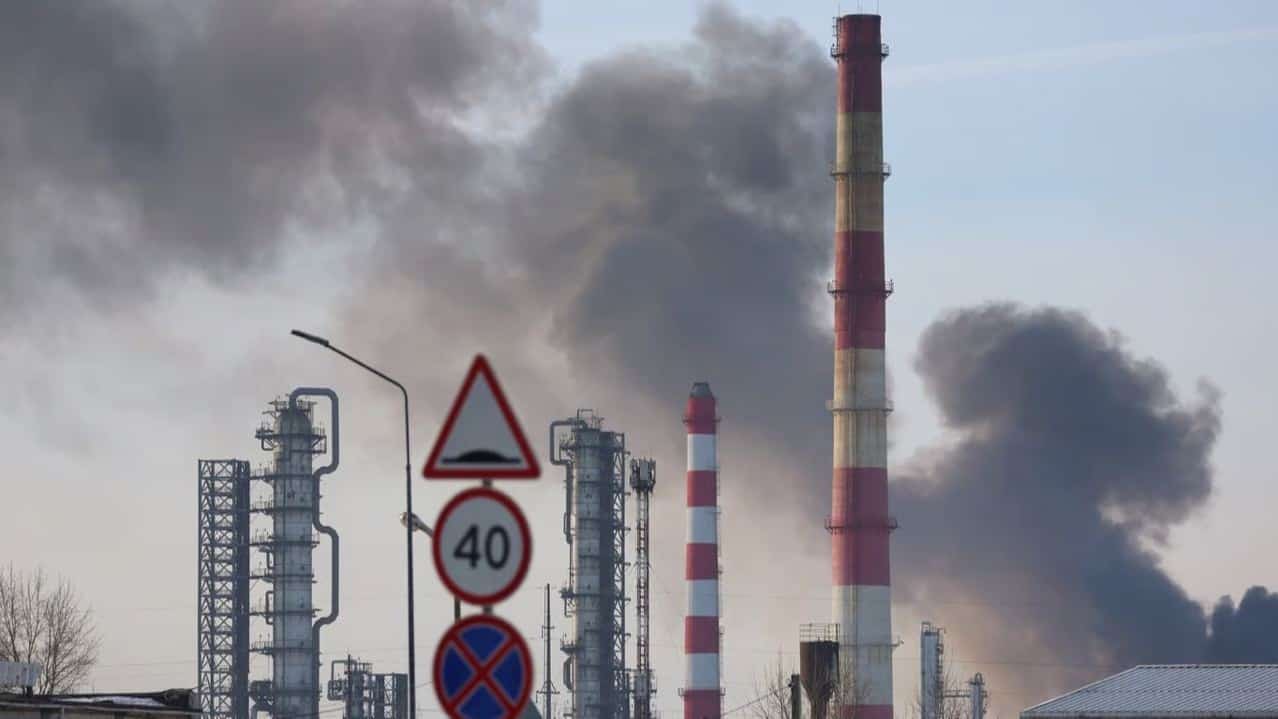
Ukraine has carried out around 3,400 strikes on Russia’s industrial capacity since the start of the war, targeting the country’s electricity grid, oil and gas infrastructure, and agricultural sector, according to a new analysis by Novaya Gazeta Europe.
Using data collected from over 700 Telegram channels covering military strikes in Russia, Novaya Europe identified attacks on industrial targets, including oil refineries, power substations, and chemical plants.
Russia’s electricity grid was the most common non-military target, with over 650 strikes recorded against power lines, and another 350 hitting transformer substations and power plants. A further 700 strikes were documented on the oil and gas industry, including recent attacks which damaged Russia’s oil export capacity on the Baltic coast.
The largest individual company targeted by Ukraine since 2022 was state-owned energy corporation Rosneft, with over 71 strikes recorded on 10 of the company’s 13 refineries. Facilities owned by privately-owned Lukoil and state pipeline operator Transneft were also commonly hit, seeing 28 and 26 strikes respectively.
Miratorg, an agro-industrial holding company which owns several agricultural facilities in the frontline Bryansk region, was the fourth-largest individual target, although one analyst told Novaya Europe that strikes on agricultural sites are likely aimed at disabling camouflaged military equipment rather than at Russia’s food supply.
Ukraine has increasingly sought to damage the Russian economy with strikes at targets located deep within Russia, although the precise impact of Ukrainian attacks on Russia’s economic stagnation is difficult to calculate.
The Russian economy contracted by 0.5% in the first quarter of 2026, and earlier in May Deputy Prime Minister Alexander Novak said that no growth was forecast for the remainder of this year — the first acknowledgement from a Kremlin official that the country may be facing a recession.
Announcing a cut in the country’s key interest rate earlier this month, the Bank of Russia said that several industries were being affected by “the temporary decommissioning of production capacity”, which they said was delaying economic recovery.
Military expert Pavel Luzin told Novaya Europe that each Ukrainian strike was part of a “tactic of a thousand cuts”, leading to rising costs, decreases in asset value, labour shortages, and lower productivity.
In a televised address on 18 May, Ukrainian President Volodymyr Zelensky said that Vladimir Putin was “leading Russia towards bankruptcy”, and emphasised the importance of Ukraine’s long-range strikes on Russian infrastructure in exhausting the Russian “war chest”.