
Translated material
Kauri
In 1758, Linnaeus called this mollusk Cypraea Moneta, then he was called Cypraea Numisma, then, after the release of several new genera from the genus Cypraea, - Monetaria Mercatorium and much more, and modern taxonomy knows the type of Monetaria Moneta with several subspecies (photographs of some are shown in the Fig. 3). These commercial and money names are due to the fact that the sinks of M. Moneta and close species Monetaria annus (Fig. 4) were used in many parts of the world as money. All of them are known under the name of Kauri; This word comes from Hindi's language ( कौड़ी , kaurī).
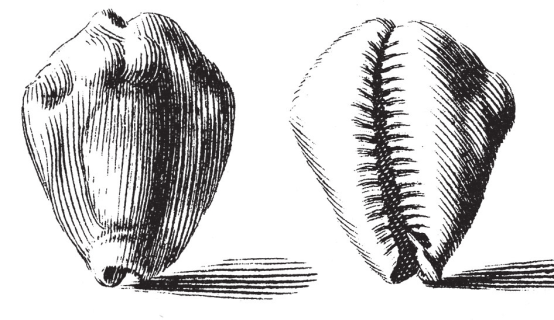
1. Drawing of Kauri shells from Index Testarum Conchyliorum Niccolo Gwalteri (1742)
Many representatives of the Cypraeidae family, which belongs to the genus Monetaria, is larger and brighter than M. Moneta (see the wonderful gallery [1]), but the kauri are taken with massiveness. M. Moneta live on the coasts of the Indian and southern part of the Pacific Oceans, between the stones and in tide puddles; They feed on algae and dead corals (Fig. 2).

A
B.
C.
D.
3. A: M. Moneta ICTERINA (Lamarck, 1810), East Africa [2].
B: M. Moneta Barthelemyi (Bernardi, 1861), Indian Ocean [2].
C: M. Moneta Rhomboides (Schielder and Sceller, 1933), Western Australia and New Caledonia [2].
D: M. Moneta Harrisi (Iredale, 1939), the southwestern coast of the Pacific Ocean [2]
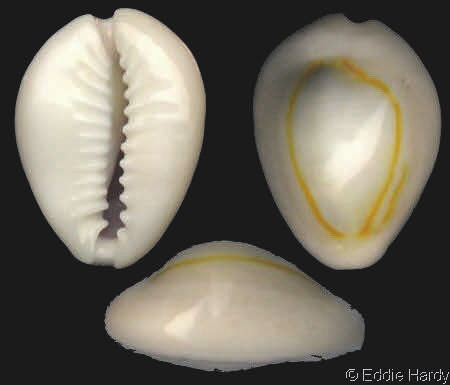
4. A: M. annulus annus (linnaeus, 1758), 1-5 cm [2].
B: M. Annulus annus noumeensis (Marie, 1869), 1-5 cm [2]
For the first time, Kauri began to use as money in China 3,500 years ago, during the Shan Dynasty (c. 1766–1154 BC). Then there were copies of shells made of bone, mother of pearl, limestone, sandstone and jade, and then from bronze - these were the first Chinese coins (Fig. 6). Chinese hieroglyph 貝(Pay) , meaning “money”, comes from the image of the Kauri shell (Fig. 5).


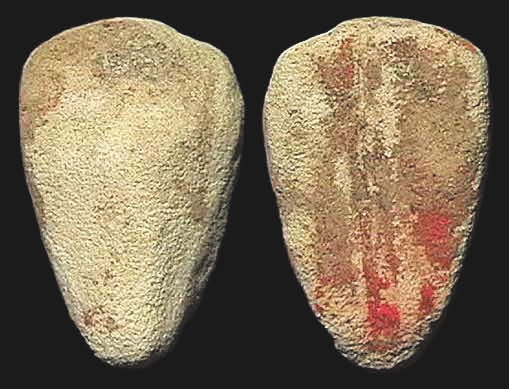
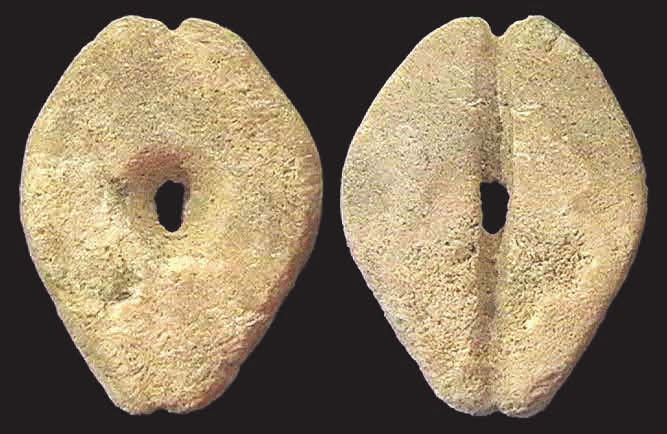
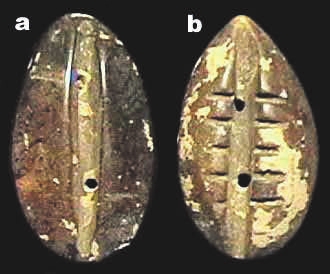
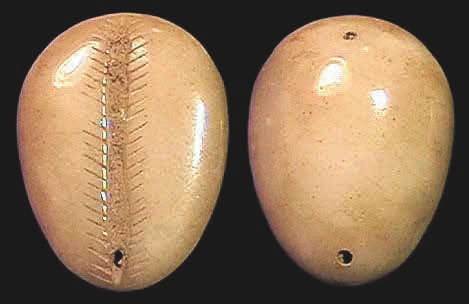
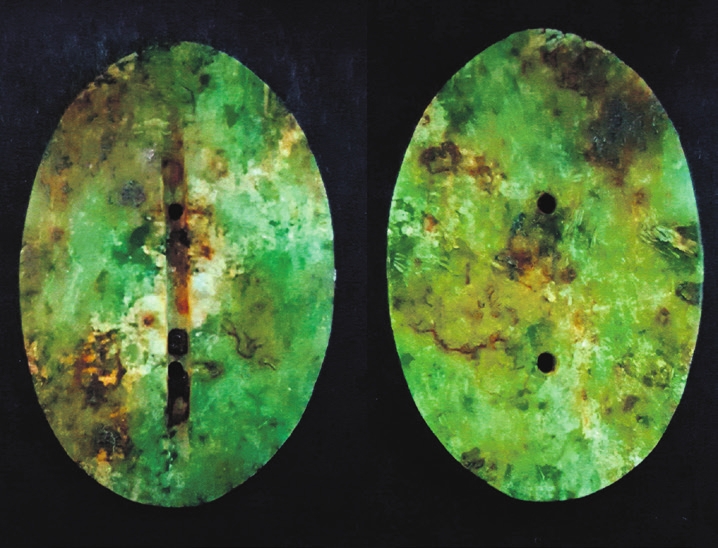
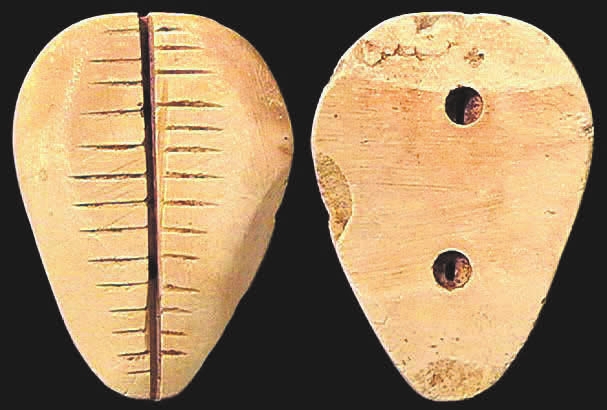
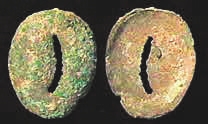
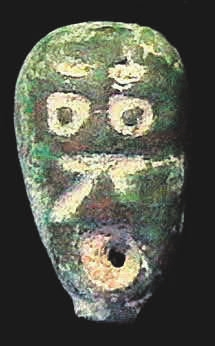
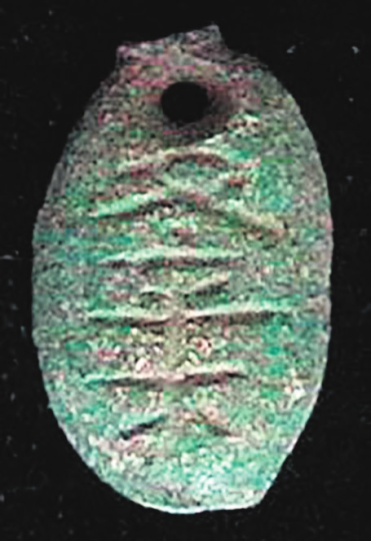
7. "Ant noses" - bronze imitations of Kauri with inscriptions. The kingdom of Chu, the era of the warring states, the 5th - III century BC. e. [3]

From China, the tradition of using Kauri has spread to India and Indonesia as money. As the money or decorations of the Kauri shell penetrated north-to Altai and the Urals, the Mongolia, Transbaikalia and the Volga region-as well as in the East Slavic lands, where they (under the name Nonovovs , millstones or snake heads ) were also used as money in the so-called non-humority period of the XII-XIV centuries.
The mass production of Kauri was established in the Maldives; It was described by the Arabian scientist al-Biruni in the XI century: “ VAD is the type of shells that collect Zinji (blacks.- M. G. ) on their islands during the tide. They put them in pits, fall asleep and leave them until the snails die and their meat does not decompose. The residents of Dibajat (Ceylon. - M. G. ) do the same , using coconut palm branches to catch these shells. They stick branches into the bottom of the sea, and during the tide of the sink they get stuck in them; When the water subsides, they collect the shells and then do the same as Zinji. Dybajat are two groups of islands. Those islands from where palm fiber, sweaty for ship tackle are brought, are called by their name Kasara, and those from which the VAD shells are brought are called Kura (Maldives. - M. G. ). The Indians in their country use them in transactions instead of small money and play gambling on them, as they play bones and chips ”[7]. In memory of this, Kauri shells are depicted on modern Maldives of paper money (Fig. 9).
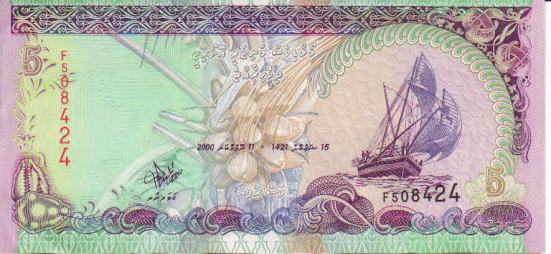
9. Maldives, 5 Rufiy model 1983
Europeans brought Kauri to North America, and Arabs to West Africa. M. Moneta does not live in the Gulf of Guinea, but there Kauri became an important monetary unit with the development of trade in the 16th century; In Gan (the British colony of the Golden Coast) they were used as money until the beginning of the twentieth century. The course of Kauri regarding European money depended greatly on geography. In the Kingdom of Congo until the middle of the XVII century, for two hundred shells, Nzimbu could be bought chicken; over three hundred - a hoe; for two thousand - a goat; for twenty thousand - a slave; and thirty - a slave; However, here we are not talking about the imported shells, but about the Luanda (current Angola) collected on the island. On the Guinean coast, the cost of a slave increased from 6370 Kauri in 1520 to 31,000 in 1718, 50,000 in 1725 and 80,000 in 1767 [6]. In India in the middle of the 19th century, a thousand Kauri were given a thousand Cauri for three English pence, while in West Africa a thousand Kauri was already worth one shilling three pence - five times more expensive. The sinks became even more expensive as they move deep into the African continent. The difference in the courses made the trading of the shells very profitable, and, for example, in 1868–1870, 8600 tons of Kauri were imported through the port of the Gamburg company of the Gamburg company (at that time at the Ceylon cost 70 pounds) [8].

In the 20th century, the role of Kauri as money everywhere came to naught, only in Papua-the new Guinea of the sink is still a legal payment tool and can be exchanged for the local currency of the kin ("Kauri" in the Kuanua language). However, the memory of Kauri was preserved in the mint of West African countries.
The name of the Khana currency since 1965, the one , comes from the word with the meaning of "Kauri" in the language of Akan, the national majority of the country; At different times, the Kauri shells were depicted on coins of 1, 20 and 200 ed (Fig. 11). Nearby, in the former French colony Gvine, coins of 50 Kauri were minted in 1971 (Fig. 12) and put into circulation during the third Guinean monetary reform of 1972, and bred during the fifth reform in January 1986. And one of the companies in South Africa produces gold and silver ingots in the form of Kauri shells (Fig. 13).
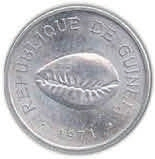
12. Guinea, 50 Kauri (1971)

And, of course, Kauri shells, like coins, are traditionally used in female jewelry.


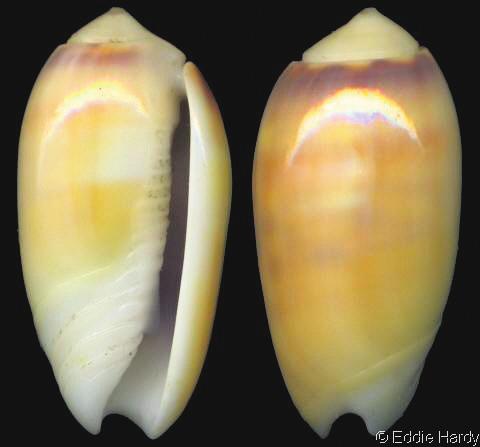 18. Oliva Carneola (Gmelin, 1791), 1.0–2.8 cm, Philippines, Indonesia, Micronesia, Polynesia [2]
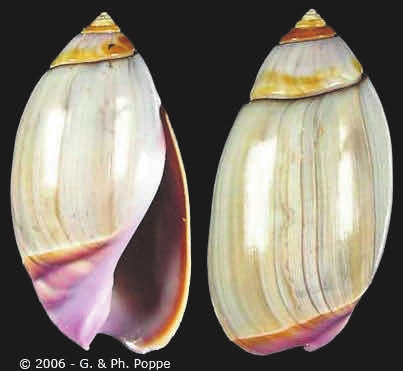 19. Olivella biplicata (Sowerby, 1927), 1.3–3.8 cm, Atlantic coast of North America from Alaska to South California [2]

Not only Kauri was used as money. On the southern islands of the Pacific Ocean, there were sinks of oliva Oliva Carneola (Fig. 18); On the Solomon Islands they were accepted in this capacity until the end of the 19th century; The Indians of South California used Olivella Biplicata (Fig. 19), the mass production of which was located in the area of the future Santa Barbara; In the north, from the Pacific to the Great Plain and Central Canada, and in the south to California, the Dentalium shells were used (Fig. 20), the ligaments of which were not estimated by the number of shells, but in total length. In addition, many Indian tribes used mugs carved from the shells of various double -leaf mollusks as money, and the inhabitants of Bengel in Portuguese West Africa were cuts of large terrestrial snails Achatine.
M. G.
1. Gastropods.com/taxon_pages/tn_family_cypraeidae.shtml#cyPraeidaecypraeinaecypraeini
2. Gastropods.com website
3. Anythinganywhere.com/commerce/coins/coinpics/chin-fd2.htm
4. Cointalk.com/threads/Jade-cowrie-OF-ANCIENT-CHINA.297740/
5. Marco Polo. Travel / Translation by I.P. Minaev. Introductory article, comments and editors of the translation by K.I. Kupin. L., 1940.
6. Podolskaya M., Burukovsky R. Zamorsky shells on ancient outfits // Our house - Tatarstan, 2010, No. 3 (011).
7. Abu-r-raikhan Muhammad ibn Ahmed al-Biruni. Collection of information for cognition of jewelry (mineralogy) / Translation by A. M. Belenitsky. M.: USSR Academy of Sciences, 1963.
8. Coins.moost.ru/gh/cowry.php
9. TV2.tude/tv2old /rakushka-za-kotoruyu-davali-byka