
Translated material
Poet, entrepreneur and Prote
Nikolai Nekrasov has finally gained a full-fledged and modern biography. The famous literary critic, a specialist in his life and creativity, Mikhail Makeev created a biography, at first glance, is very tight and even emphasized non -reflexive. The author evaded the position explaining his position and the method of preface and final generalizations. The book begins deliberately exleto , from the thesis about Nekrasov’s indifference to his roots, and ends with the scene of Nekrasov’s funeral and rumors about the absence of wealth acquired by the “capitalist”. Nothing superfluous (and personal) - nothing that would go beyond the limits of a short Nekrasov life. However, this is only the surface behind which the depth, the fondance and full -blooding of the presentation are hidden. Behind the external asceticism, restraint and unpretentiousness of the author, a well -thought -out strategy is visible (and not just formal restrictions on the ZhZL series, in which very different types of narrative and quality of the biography are released). In Makeev’s book, a new approach to the life and work of Nekrasov is hidden in a condensed, saturated with political, economic and ideological excursions, a tightly shot down narrative. What is the novelty of this approach?
Nekrasov appears in the book of Makeev not as a folk grieving poet and an entrepreneur-“capitalist”, but as an integral person, in the perception of which there was no conflict between the legitimate earnings of money and the sinking of the hardcents of the common people. On the inflating of this contradiction, the entire pre -revolutionary reception of Nekrasov was built, and in Soviet literary criticism it existed implicitly, but was taboo. Although Makeev does not specifically explain how this conflict is removed (it would be possible to do this for a great transparency and digestibility), the entire canvas of the narrative is poked and embroidered in order to remove it.
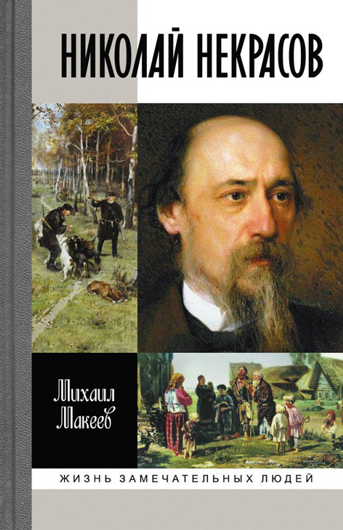 © Young Guard, 2017
The reader gradually understands that Nekrasov, who abandoned the gymnasium and did not receive any serious education, was an amazingly enterprising person who could quickly make optimal decisions, absorb progressive ideas, modeling behavior, develop and overcome difficulties. If he was mistaken-as with the reputation of Belinsky, who had tanned his reputation during the launch of an updated “contemporary” in 1847 or when the ants-lover of the flattering ode in 1866, he knew how to extract ethical lessons from failures and even sublimate moral torment into strong poetic texts. And, not indulging in despondency for too long, he went on. In the mid-1840s, Nekrasov firmly learned from Belinsky a very progressive ideology of ministry of social justice and honest accumulation, most reminiscent of Protestant ethics, memorable to all of the Goncharovsky heroes of the Sr. and Stolz. Thanks to the “frantic Vissarion”, Nekrasov and democratic beliefs absorbed precisely as a system of views, but not a way of life (his lordly manners were noted by many contemporaries). Finally, perhaps the most important lesson of Belinsky was to gain a new poetic voice by Nekrasov: found by the poet in the mid-1840s, the intonation of condensed sociality (on the verge of immorality, as the censors said), the ability to reliably imitate different class voices in a poetic newspaper feuilleton was met in the circle of great criticism and set the new vector of Russian development poetry. One might think that the social lyrics and the publication of the magazine benefiting society and material benefit to the publisher are two facets of a single strategy, between which there was no contradiction in the mind of Nekrasov. But many readers thought differently: if his competitor, the publisher, Kraevsky, “made millions”, then, therefore, Nekrasov made up a huge capital?
And here the reader of the book of Makeev’s book awaits disappointment: neither the new Rothschild nor the Stolz Nekrasov. Unlike Kraevsky, Nekrasov ordered a potentially profitable “contemporary” unwritten, attributing the huge debts of the deceased and arrested employees (Dobrolyubov, Chernyshevsky and their relatives), and taking the money from the box office. Having carefully studied all the preserved office (that is, accounting) books of the magazine in the 1860s, Makeev concludes that if we can talk about Nekrasov’s net profit from “Contemporary”, then in these years it was only 15 thousand rubles, taken from the box office to cover their expenses. Perhaps, in the late 1850s, with a sharp increase in the number of subscribers, the magazine brought income, but later the publication became scarce. Neither securities nor bank deposits (all of them were, for example, at Goncharov) are in the will of Nekrasov. Where did the money take the purchase of the Karabikh estate (about 15-20 thousand rubles), at home in Chudovskaya Luke, trips abroad, inspections from the best European doctors, 50 thousand rubles of compensation with Avdotya Panaeva?
Makeev assumes that the main income of Nekrasov from the late 1850s to the early 1870s made card winnings from commercial games (such as Prefero), however, there is almost no detailed reconstruction of this interesting side of Nekrasov’s life in the book, alas, although the author flies in the Bohemian life of Nekrasov in the St. Petersburg English club, where the poet’s partners were partners on the poet. The game was the Minister of the Imperial Court Alexander Adlerberg, chamberlain Alexander Abaza and other bright specimens of the aristocratic and power elite of the then empire. Moreover, the details scattered according to the book allow us to speculate about changing the type and structure of Nekrasov’s income for 30 years: if in his youth he really compiled a small start-up capital thanks to publishing enterprises (at the “St. Petersburg collection” he earned 2000 rubles with clean) and invested it in the publication of “Contemporary” in the hope of a large and stable income, then from the late 1850s only card The winnings brought large amounts, since the magazine with a large turnover, but often in the absence of cash at the cash desk, did not give such a profit.
So Makeev’s book turns from the dull life of the description, which previously dominated in non -pissing, into an acute and intriguing explanation of the economic logic and poetic thinking of Nekrasov, between which there was much in common (the preceding, strictly scientific, book of the author). The author thoughtfully and leisurely explains to the modern reader why Nekrasov made certain financial and creative decisions, why he was mistaken. Describing the errors of the hero, Makeev does not seek to poke and justify Nekrasov, although in some passages, I admit, such a desire is still felt - for example, in an episode with the riot of young employees of the “Contemporary” Zhukovsky, Antonovich and Eliseev against the publisher. But even if this is so, the author each time shows what kind of ideology both sides of the conflict have professed and which it is seen in a large historical perspective.
Nekrasov’s life, presented to the reader in two related prospects - from the point of view of his publishing business and from the point of view of his poetic formation - of course, could be supplemented by numerous deviations about the Campaign and Hunting Passion of Nekrasov (enough about women in the book is said enough). But already quite enough for the popular science genre. This is a biography of an entrepreneur and poet in one person.
If we talk about the leitmotifs on which any biography rests, it seemed to us that one of the rods of the narrative undoubtedly was the idea of a peculiar “proteism” of Nekrasov (Makeev does not use this concept, which is customary to describe the property of Pushkin’s poetic thinking). The author penetratively explains the success of Nekrasov’s poetry among the reader and his role in the history of Russian poetry with an amazing ability to attribute to himself and survive as any other other people's sorrows and social ulcers. In fact, this property can be projected on Nekrasov’s poetics - to his innovative polyphony, the ability to convey someone else's word and “other” point of view in poetry. This multidimensionality and mobility of the poetic world of Nekrasov, the ability to listen and hear the music of social changes, the noise of time, urban hum, rural silence and groans and were in that distinguished him from other poets and eventually made it canonical. This property (social susceptibility, multiplied by historicism) is well closed with the peculiarity of the character of Nekrasov, which Makeev calls the desire to hold the thread of modernity in his hands and respond to social changes in the journal and in poems. It seems that it was this passion for constant listening to time, the passion for the forefront of changes and did not allow Nekrasov to lose heart and give up (although such periods were in his life, according to Makeev, in 1874-1875), helped to courageously demolish the closure of the magazine, numerous illnesses and manage to work during the most terrible of them - the slow and adequate painful dying, which It caused a chilling horror even in such a cynic as Saltykov-Shchedrin.
As a result, the reader acquired not just another (what account?) The biography of the “Great Russian Poet”, but an important explanatory narrative, which, we hope, will be seen not only in Russia and refresh the look at Nekrasov, not at all popular and not convertible in Western Russian, but often called by the Russian Heine, Baudelaire or Whitman - with all the consequences that follow.
Mikhail Makeev. Nikolai Nekrasov. - M., 2017 (series "Life of wonderful people"). 463 p.